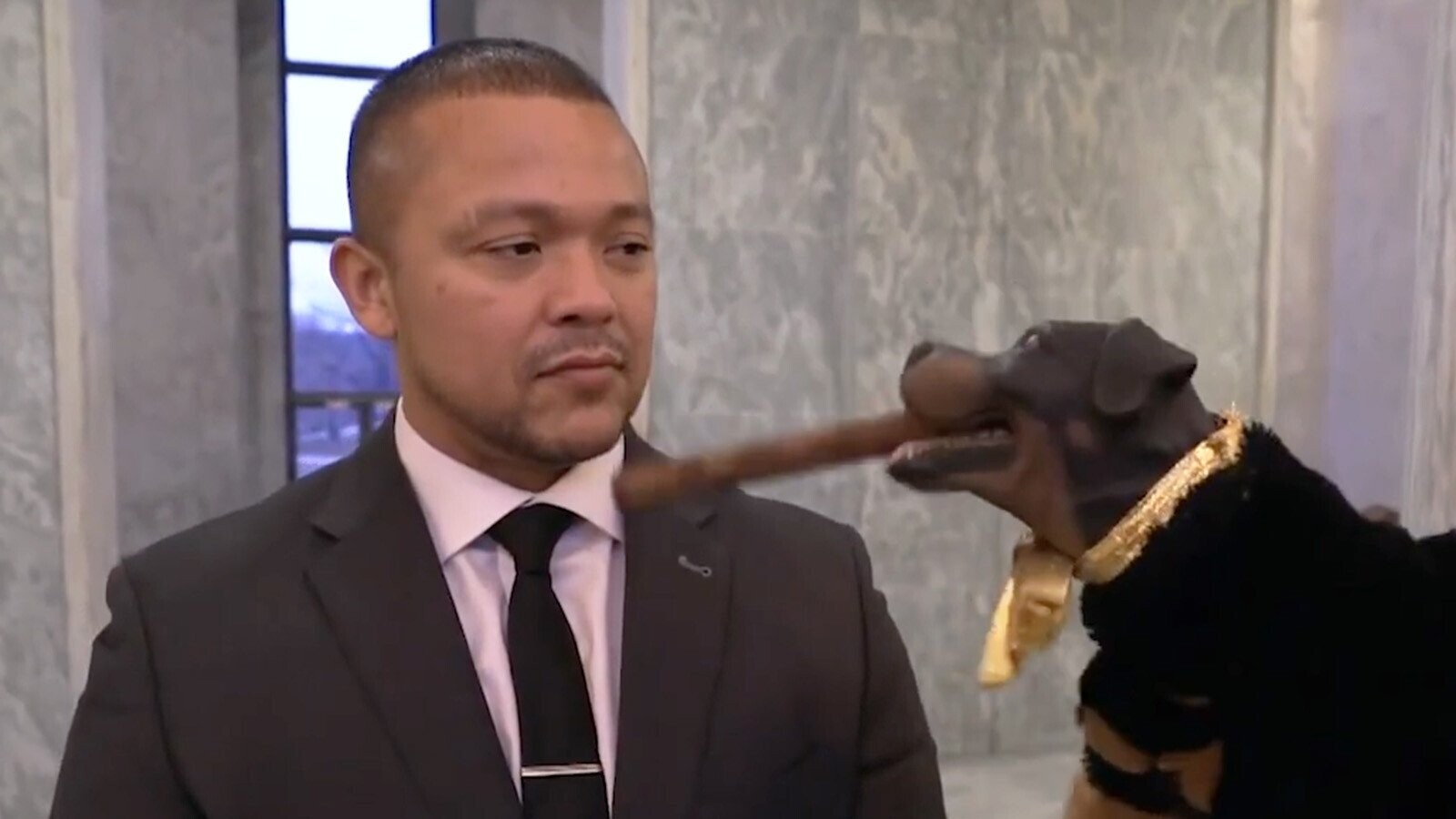
Triumph the Insult Comic Dog has built an entire career on walking into tense rooms, waving a cigar around, and saying what every publicist in the building is praying he will not say. Created and performed by Robert Smigel, the rubber Rottweiler first became famous on Late Night with Conan O’Brien, where his specialty was simple: insult people directly to their faces, then somehow survive on charm, timing, and the fact that it is hard to punch a puppet without looking like the villain in a children’s movie.
Most of the time, Triumph’s targets laugh. They roll their eyes, play along, and accept the roast as the price of being famous, overly enthusiastic, or dressed as a wizard in public. But not always. Sometimes the joke lands like a tennis ball in a wedding cake. Security gets involved. Lawyers wake up. Rappers get irritated. Supporters at courtrooms stop smiling. Cable news discovers a new chew toy.
This article looks at five real moments when people got legitimately mad at Triumph the Insult Comic Dog, why those situations escalated, and what they reveal about insult comedy, celebrity culture, fandom, and the dangerous power of a puppet with absolutely no indoor voice.
Who Is Triumph the Insult Comic Dog?
Before we enter the doghouse, a little background helps. Triumph is a cigar-chomping puppet dog voiced by Robert Smigel, a veteran comedy writer associated with Saturday Night Live, Late Night with Conan O’Brien, and later projects including The Jack and Triumph Show. His act is built around exaggerated arrogance, old-school insult comedy, and a strange talent for making people laugh while actively making their day worse.
Triumph’s most famous catchphrase, “for me to poop on,” became a tiny pop-culture missile in the early 2000s. He appeared at award shows, political events, movie premieres, concerts, court-adjacent media circuses, and anywhere else a producer could ask, “What if we sent a dog puppet into this fragile human situation?” The answer was usually: comedy, chaos, and at least one person asking security to do something.
1. Westminster Dog Show Security Had Enough
One of Triumph’s earliest and most important battlegrounds was the Westminster Kennel Club Dog Show. On paper, it was perfect. Real dogs, serious handlers, polished pageantry, and a fake dog who behaves like the worst guest at a country club luncheon. The contrast practically wrote itself.
The problem was that Westminster was not exactly designed for a puppet heckler. Dog shows are disciplined events. Handlers spend months preparing. Judges take the work seriously. Owners are proud. Into that world came Triumph, making jokes, bothering people, and treating the entire scene like a buffet of human dignity.
Security eventually removed Triumph and the crew. The ejection became part of the legend because it proved something important about the character: Triumph was not merely a studio bit. He could function in the wild, where real people had real patience limits. The joke was not just that he insulted people. The joke was that he did it in places where everyone else was trying very hard to behave.
Why People Got Mad
The Westminster incident worked because Triumph invaded a formal space. His humor depends on breaking etiquette. At a dog show, etiquette is half the event. Once he started turning a prestigious competition into a comedy ambush, the tension became obvious. For viewers, it was hilarious. For security, it was probably paperwork with paws.
2. Pets.com Turned Puppet Beef Into a Lawsuit
The strangest Triumph feud may be the Pets.com sock puppet controversy, because it involved not just hurt feelings, but legal action. Around the dot-com boom, Pets.com had a sock puppet mascot that became highly visible through commercials, media appearances, and a major advertising push. Some observers thought the mascot looked suspiciously close to Triumph’s general concept: a talking hand puppet animal with attitude.
Smigel and Triumph leaned into the comparison, and the situation escalated. Pets.com sued, arguing that Triumph’s jokes and comments harmed the sock puppet’s image. Yes, for one shining moment in American legal history, puppet reputation management became a serious business concern.
What makes this case so memorable is that Triumph’s normal weaponmockerymet the one thing even a loud puppet cannot simply roast away: corporate lawyers. The lawsuit reportedly sought millions of dollars and turned a comedy-world joke into a real dispute. The dot-com bubble later burst, Pets.com collapsed, and the legal drama faded. But for Triumph fans, the episode remains a classic example of someone taking the insult dog very, very seriously.
Why People Got Mad
Brands are protective creatures. A company can spend a fortune building a cute mascot, only to have Triumph stroll in and attach a cloud of sarcasm to it. Pets.com was not just annoyed by a joke; it saw a potential threat to brand identity. In other words, Triumph did not just step on toes. He stepped on a marketing budget.
3. Michael Jackson Supporters Did Not Appreciate the Courthouse Comedy
Triumph’s comedy becomes far more volatile when it leaves entertainment events and enters emotionally charged real-world scenes. One of the clearest examples came during coverage around Michael Jackson’s 2005 trial. Jackson had intense supporters who gathered outside the courthouse, many of whom viewed the proceedings with deep loyalty and emotion.
That was already a tense environment. Then Triumph arrived.
According to later interviews and retrospectives, Robert Smigel described this as one of the most difficult and anger-producing Triumph assignments. The reason is easy to understand. Fans outside a courtroom are not the same as fans waiting for a movie premiere. They are not there for playful pop-culture banter. They are defending someone they admire during a serious legal event. Add a puppet making sharp jokes and you get instant emotional combustion.
This is where Triumph’s comedy reveals its sharpest edge. Insult comedy works best when the audience agrees to the game. At a courthouse, many people did not agree to the game. They were not buying tickets to be roasted. They were standing in support of a celebrity during a high-stakes trial. Triumph’s presence turned their public devotion into material, and some people understandably did not laugh.
Why People Got Mad
The anger came from context. The jokes landed in a place where people were already upset, defensive, and emotionally invested. Triumph’s style may be absurd, but the setting was not. That mismatch made the bit memorable, but also uncomfortable in a way that even veteran comedy fans can recognize.
4. Eminem Was Not in the Mood at the 2002 MTV VMAs
The 2002 MTV Video Music Awards produced one of Triumph’s most famous confrontations: the run-in with Eminem. At the time, Eminem was one of the biggest and most controversial artists in music. The room was packed with celebrities, cameras, egos, handlers, and the invisible fog of award-show anxiety. In other words, a perfect habitat for Triumph.
Triumph approached Moby during a segment, with Eminem seated nearby. The rapper and Moby already had public tension, so the atmosphere was not exactly a picnic basket full of calm. When Triumph got too close, Eminem pushed the puppet away and made it clear he was not playing along. MTV cut away, which is television language for “the funny dog may have wandered into actual trouble.”
The moment became even funnier in hindsight because Triumph later appeared in a neck brace for a mock press conference, turning the altercation into another joke. Eminem eventually referenced Triumph in the video for “Ass Like That,” which suggested the beef cooled into pop-culture absurdity. Still, in the moment, it was a real flashpoint.
Why People Got Mad
Eminem’s reaction made sense in the pressure cooker of live television. He may not have known exactly what Triumph was, and even if he did, an award-show ambush can feel less like comedy and more like provocation. Triumph’s genius is that he treats celebrities as if they are ordinary people standing in line at a DMV. Sometimes celebrities enjoy that. Sometimes they remember they have security.
5. The Capitol Incident Became “First-Degree Puppetry”
In June 2022, Triumph returned to the news when a Late Show with Stephen Colbert production team, including Robert Smigel, was detained while filming at a congressional office building near the U.S. Capitol. The crew had been there for prearranged interviews connected to a comedy segment, but later continued filming additional material in hallways after the building was closed to visitors.
U.S. Capitol Police arrested members of the team on unlawful entry accusations. The situation later ended without prosecution, but before that, it became a media firestorm. Some commentators treated it as a serious political scandal, while Stephen Colbert jokingly described the episode as “first-degree puppetry.”
This was different from the Westminster ejection or the Eminem shove. The anger here was institutional and political. Security officials were operating in a post-January 6 environment, where caution around Capitol buildings was understandably heightened. Meanwhile, pundits turned the event into ammunition for broader culture-war arguments. Triumph did what Triumph often does: walked into an already tense American room and made everyone reveal how tense it really was.
Why People Got Mad
The anger came from location, timing, and politics. A comedy crew filming in a congressional office building is one thing. A comedy crew doing it during a period of intense national security sensitivity is another. Once cable news entered the chat, the puppet had officially escaped the comedy section and wandered into the opinion-industrial complex.
Why Triumph Makes People So Angry
Triumph the Insult Comic Dog is funny because he violates social contracts with total confidence. He says the rude thing. He interrupts the ceremonial moment. He points at the self-importance in a room and barks until it becomes visible. That is why the character works so well at award shows, conventions, premieres, and political events. These are places where people perform identity: star, fan, candidate, expert, gatekeeper, loyal supporter. Triumph barges in and says, essentially, “Nice costume.”
But that same formula can produce real anger. The line between roast and disrespect depends on context, consent, and power. When Triumph teases Star Wars fans outside a premiere, many viewers see harmless nerd-on-nerd theater. When he jokes around a courthouse, the emotional stakes change. When he mocks a rapper during a live awards show, the target may feel blindsided. When he disrupts a formal event, security stops laughing because security is paid to stop things, not to appreciate timing.
In a strange way, Triumph is a test. If you laugh, you look relaxed. If you get mad, you risk becoming part of the bit. That is a brutal trap, and it is one reason the character has lasted. Nobody wants to be the person who lost a fight with a puppet.
What These Five Moments Say About Comedy and Public Life
The best Triumph segments are not only insult showcases. They are tiny stress tests of American culture. Dog shows reveal class rituals. The Pets.com lawsuit reveals corporate anxiety. The Michael Jackson courthouse scene reveals the emotional intensity of celebrity loyalty. The Eminem incident reveals how quickly live entertainment can turn defensive. The Capitol arrest reveals how comedy changes when it enters political space.
That is why Triumph remains more than a novelty act. The puppet is ridiculous, but the reactions are real. He exposes how seriously people take themselves, their heroes, their institutions, and their brands. He also shows the limits of “just joking.” Sometimes people laugh. Sometimes they sue. Sometimes they call security. Sometimes federal prosecutors eventually decline to move forward, but not before the phrase “puppet-related Capitol incident” becomes part of the historical record.
Experience Section: Watching Triumph Is Like Watching a Social Experiment Wearing Fur
There is a special viewing experience that comes with Triumph the Insult Comic Dog. At first, you watch for the jokes. Then you start watching the faces. That is where the real comedy lives. The half-smile. The nervous glance at a publicist. The security guard trying to decide whether he is on television enough to be careful. The fan who clearly wants to laugh but also wants to defend the honor of a movie franchise, musician, candidate, or purebred terrier.
Triumph segments feel different from ordinary celebrity interviews because they remove the protective glass. Most entertainment interviews are polite dances. The guest promotes. The host flatters. Everyone pretends the upcoming project is a life-changing artistic event and not, say, a sequel with twelve executive producers. Triumph destroys that rhythm immediately. He treats the room like a roast battle where only one participant received the calendar invite.
For viewers, that creates a funny kind of suspense. You are not only asking, “What will Triumph say?” You are asking, “Will this person survive being teased by a puppet?” That suspense powered the Star Wars premiere segment, the Westminster remotes, the VMA confrontation, and the political field pieces. Triumph turns manners into a live sporting event. Every target gets a chance to win by laughing, deflecting, or firing back. The losers are the ones who become visibly furious, because then Triumph’s entire point proves itself.
There is also a lesson for anyone who writes, performs, or publishes humor online. Tone matters, but context matters more. The same joke can feel playful at a movie premiere and cruel outside a courtroom. The same insult can seem harmless when directed at a celebrity who understands the act, but aggressive when aimed at someone who has no idea why a dog puppet is suddenly in their personal space. Triumph is funny because he dances on that line, but the five incidents above show that the line is real.
That may be why Triumph has aged better than many shock-comedy characters. The point is not simply to be offensive. The point is to puncture performance. He is at his best when the target has built a giant balloon of seriousness around themselves and Triumph arrives with a tiny rubber needle. Sometimes the balloon pops into laughter. Sometimes it pops into anger. Either way, the audience learns something.
The biggest experience-based takeaway is simple: Triumph works because he is small, fake, and fearless. A human interviewer saying the same lines might seem mean or confrontational. A puppet dog saying them becomes absurd enough to slip through defensesuntil it does not. That tension is the whole show. The laugh comes from watching people decide, in real time, whether they are going to play along or become tomorrow’s clip.
In the end, Triumph the Insult Comic Dog is not just a puppet with a cigar. He is a chaos detector. Put him near fame, fandom, politics, corporate branding, or institutional security, and he will find the weak spot. Then he will sniff it, insult it, and leave everyone else to explain why they got mad at a dog.
Conclusion
Triumph the Insult Comic Dog has survived because his comedy is both silly and revealing. The five moments above show what happens when a joke collides with pride, loyalty, legal departments, celebrity tension, and political security. Westminster security removed him. Pets.com sued. Michael Jackson supporters bristled. Eminem pushed back. The Capitol incident became a national media snack. Through it all, Triumph remained exactly what he was designed to be: rude, quick, ridiculous, and weirdly effective.
For SEO readers, pop-culture fans, and comedy nerds, the lesson is clear. Triumph’s best moments are not only about insults. They are about reactions. The dog barks, but the humans tell the story.