Note: This article is an original, publication-ready analysis based on a public family-conflict scenario and general U.S. guidance on child pedestrian safety, school routines, active transportation, and healthy family boundaries.
Every family has that one request that sounds tiny until you are the person expected to rearrange your life around it. In this story, the request was simple on paper: a woman’s sister-in-law wanted her to drive her young daughter to school. The school was close to the woman’s workplace, the drive was short, and the family treated it like a harmless favor. But, as anyone with a job, a sleep schedule, or a tiny remaining thread of patience knows, “It will only take a few minutes” is often the sentence that arrives right before chaos starts unpacking its suitcase.
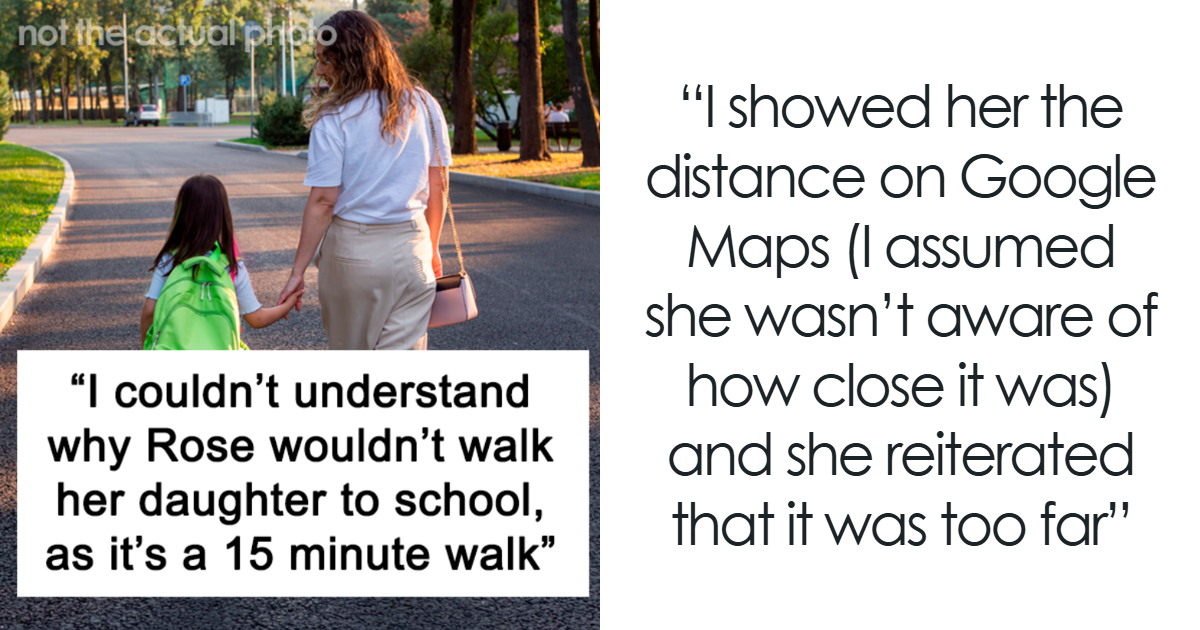
The woman said no. Not because she disliked her niece. Not because she had declared war on school drop-offs. Not because she believed children should trek through blizzards uphill both ways while carrying a clarinet and a juice box. She said no because she worked irregular healthcare shifts, sometimes overnight, sometimes very early, and committing to an 8 a.m. daily school run could affect her ability to earn money. Her suggestion was practical: since the school was about a 15-minute walk away from the family home, her sister-in-law could walk her daughter there.
That is when the family engine started smoking. Her sister-in-law was upset, her mother thought it would be “nice” to help, and her brother accused her of being selfish. The result was a familiar internet debate: where does family support end and unfair obligation begin?
What Happened: A Small School Run Turned Into a Big Family Fight
The situation began when the woman’s brother, sister-in-law, and six-year-old niece moved into the mother’s home temporarily because their own house needed repairs. The arrangement was already crowded with stress. Temporary living situations can make even calm families behave like raccoons fighting over the same trash can at midnight. Everyone is adjusting, routines are disrupted, and ordinary requests suddenly carry emotional weight.
The sister-in-law asked the woman to take the child to school because the school was only a short drive from the hospital where the woman worked. At first glance, that sounds efficient. Drop the kid, continue to work, everyone wins. Except the woman’s job did not run on a tidy nine-to-five schedule. She worked in healthcare, where shifts can start early, end late, stretch overnight, or change depending on staffing needs. Some mornings, she would not even be off work until after the school day had already begun.
The woman explained that she could not commit to a daily drop-off. The sister-in-law, however, pushed back and suggested she ask her boss to adjust her availability. That was the turning point. A favor had become a proposed change to the woman’s employment. She was no longer being asked for occasional help. She was being asked to risk fewer shifts, less income, and more workplace friction so another adult would not have to walk 15 minutes to school.
When the woman asked why her sister-in-law could not walk with her daughter, the sister-in-law said it was too far for a young child. The woman disagreed, pointing out that the route was manageable, had safe crossings, and that she herself had walked to the same school as a child. Still, the family turned the refusal into a character judgment. Suddenly, the issue was not logistics. It was loyalty.
Why This Story Hit a Nerve Online
The reason this story spread is not simply that people enjoy family drama, although let’s be honest, the internet does love a domestic dispute with a clear morning commute. The deeper reason is that many adults recognize the pattern: one person says they cannot take on a responsibility, and the family responds by treating the boundary as betrayal.
This happens often in households where one person is seen as flexible, available, younger, unmarried, child-free, living at home, or “already going that way.” The request may begin as a favor, but once the person says no, the family reaction reveals what was really expected. It was not a favor. It was an unpaid assignment with guilt frosting.
In this case, the woman was already contributing to the household by paying rent and doing housework. She was also working irregular healthcare shifts, which are physically and emotionally demanding. Yet the family focused on what she was not doing: driving her niece every morning. That imbalance is why readers often side with the person setting the boundary. When someone’s existing contributions are ignored, resentment grows quickly.
Walking to School Is Not Automatically Unreasonable
One of the biggest debates in the story is whether asking a parent to walk a six-year-old to school for 15 minutes is unreasonable. In many communities, that would be considered normal, healthy, and even pleasant on a good weather day. A short school walk can give children fresh air, movement, a calmer transition into the day, and time with a parent. It can also reduce school drop-off traffic, which in many neighborhoods resembles a slow-motion bumper-car arena operated by adults clutching coffee.
Of course, walking is not appropriate in every situation. Distance, traffic, weather, neighborhood safety, disability, caregiver health, school policy, and the child’s maturity all matter. A 15-minute route with sidewalks, crossings, and adult supervision is very different from a route with no sidewalks, high-speed roads, poor visibility, or unsafe intersections. The key issue is not “walking good, driving bad.” The issue is whether a practical, safe option exists before demanding that another adult sacrifice work stability.
For younger children, adult supervision is important. A six-year-old should not simply be sent out the door with a backpack and a motivational speech. But that was not what the woman suggested. She suggested that the child’s mother walk with her. That matters. A supervised walk is not neglect. It is a parent handling a parent’s morning responsibility.
The Real Conflict: Convenience vs. Responsibility
The sister-in-law’s position seems to come from convenience. Driving is faster. Walking takes effort. Morning routines are stressful. Anyone who has tried to get a small child dressed, fed, brushed, packed, and moving in a straight line before 8 a.m. understands that school mornings can feel like hosting a tiny, unpaid circus. But inconvenience alone does not make someone else responsible.
The woman’s position comes from responsibility. She has a job with changing shifts. She understands that restricting her availability could reduce her hours. In practical terms, she is protecting her livelihood. That is not selfish. That is adulthood, the less glamorous cousin of “family helps family.”
The brother’s reaction also deserves attention. He called the request a small ask because a neighbor used to do it. But a favor performed by one person does not become a permanent entitlement from someone else. The neighbor’s availability did not create a family transportation policy. If the usual arrangement ended, the parents needed a new plan: walk, rearrange the shared car, ask the school about options, coordinate with other parents, use public transport if available, or alternate responsibilities. What they could not fairly do was declare that the woman’s work schedule should become the backup plan.
Why “Just Ask Your Boss” Was the Wrong Suggestion
Asking someone to talk to their employer sounds simple when you are not the one absorbing the consequences. For shift workers, especially in healthcare, availability can affect scheduling, income, reputation, and future opportunities. If the woman told her boss she needed to be unavailable around school drop-off every weekday, the employer might assign her fewer shifts or less desirable hours. That is not a tiny favor. That is a potential financial hit.
This is where the family’s logic breaks down. They framed the school run as a 5-minute drive. But the actual cost included waking up earlier, coordinating with a child, dealing with traffic, arriving on time, adjusting shifts, and being responsible every school day regardless of fatigue or overnight work. A five-minute drive can become a daily obligation with emotional penalties attached if anything goes wrong.
When families minimize the cost of a request, they often create conflict. A better approach would have been: “Could you help on rare days when you are already free?” That leaves room for kindness without converting kindness into a contract. Instead, the request became a demand for reliability from someone whose schedule was not reliable by design.
Family Help Should Be Mutual, Not Mandatory
Healthy families help each other. They offer rides, meals, childcare, emergency support, and occasionally pretend not to notice when someone eats the last slice of cake. But healthy help has limits. It respects the helper’s capacity. It does not punish someone for saying no. It does not assume that a person’s time is less important because they are not the parent in the situation.
The woman did not refuse every possible form of help. She refused a daily commitment she could not safely or realistically make. That distinction matters. Boundaries are not the opposite of love. Often, boundaries are what prevent love from becoming resentment in a hoodie.
In families, resentment usually grows when expectations are unspoken. The sister-in-law may have assumed that because the woman lived in the same house and worked near the school, she should help. The woman assumed that a parent who was available could walk. The mother assumed that helping would be “nice.” The brother assumed refusal meant selfishness. None of these assumptions solved the actual transportation problem. They only created a blame triangle.
What the Sister-in-Law Could Have Done Instead
The sister-in-law had several options that did not require someone else to risk her job. First, she could test the walk for a few days. A 15-minute walk with a six-year-old may require planning, but it is not automatically impossible. She could leave earlier, make the route fun, use a stroller or scooter if appropriate, pack rain gear, and create a routine. Children often adapt faster than adults expect, especially when the routine is consistent.
Second, she and her husband could review their shared car arrangement. If he starts work early and she works only one shift a week, perhaps he could carpool, use public transportation, bike, or adjust his own commute temporarily. That may be inconvenient, but the child’s transportation is primarily the parents’ responsibility.
Third, they could contact the school. Many schools know about local walking groups, bus eligibility, parent networks, or aftercare options. A school office may not magically produce a golden carriage, but it may know practical solutions other families already use.
Fourth, they could ask for occasional support instead of daily support. Families are often more willing to help when the request is specific, limited, and respectful. “Can you help next Tuesday because I have an appointment?” is very different from “Can you become our weekday transportation department?”
What the Woman Could Say to Keep the Boundary Clear
When families apply pressure, long explanations can accidentally invite debate. A clear boundary works better when it is short, calm, and repeated consistently. The woman could say: “I love my niece, but I cannot commit to school drop-off because of my work schedule. I may be able to help in a true emergency when I am available, but I cannot be part of the regular plan.”
That statement does three things. It reassures the family that the refusal is not personal. It gives the actual reason without overexplaining. And it closes the door on daily expectation while leaving room for emergency kindness.
If the brother continues calling her selfish, she could respond: “I understand you are stressed, but calling me selfish will not change my work schedule. You and Rose need a plan that does not depend on me being available every morning.” That may sound firm, but sometimes firm is necessary. Families can survive disappointment. They cannot thrive when one person is pressured into a role they cannot sustain.
Why the Mother’s Role Matters
The mother’s reaction is interesting. She initially understood the woman’s no, but she also said it would be a nice thing to do. That is the kind of soft pressure that often makes family conflicts worse. It sounds gentle, but it can make the person setting the boundary feel guilty for not being “nice enough.”
A stronger response from the mother would have been neutral support: “She works irregular shifts and cannot be the school-run plan. Let’s help you figure out another option.” That keeps the family from turning one adult’s refusal into a moral trial.
In shared homes, the homeowner or senior family member often becomes the unofficial judge. Their words carry weight. If they frame the refusal as disappointing, others may pile on. If they frame it as reasonable, the conflict may cool down. In this case, the mother could help by redirecting the family away from blame and toward logistics.
The Bigger Lesson: Proximity Is Not Permission
One of the strongest lessons from this story is that proximity is not permission. Living in the same house does not mean someone is available. Working near a school does not mean someone is responsible for school transport. Being younger, unmarried, child-free, or “already headed that direction” does not erase a person’s own obligations.
This idea applies beyond school drop-offs. It appears in requests for unpaid babysitting, airport rides, elder care, pet sitting, errands, emotional support, and emergency cash. Family support is valuable, but it becomes unfair when one person’s life is treated as more adjustable than everyone else’s.
A better family culture asks before assuming, accepts no without punishment, and treats every adult’s time as real. The woman in this story was not refusing to be part of the family. She was refusing to let the family rewrite her work life because walking felt inconvenient to someone else.
Was She Wrong?
Based on the details, the woman’s refusal was reasonable. She had a legitimate work conflict, the request required daily commitment, and the parents had an available alternative: a supervised walk to school. The sister-in-law may have been stressed, tired, and overwhelmed by the temporary housing situation, but stress does not automatically transfer responsibility to another adult.
The most reasonable compromise would be occasional help when the woman is genuinely free, not a standing obligation. That protects her job while still allowing family support in emergencies. It also forces the child’s parents to create a sustainable routine rather than depending on someone whose schedule cannot support the task.
In other words, the issue is not whether family should help. Family should help when they can. The issue is whether family can demand help that risks someone else’s income. The answer is no. A boundary is not selfish just because someone else dislikes it.
Practical Experiences Related to This Topic
Many families have lived through some version of this story, even if the details are different. A cousin needs a ride. A sibling needs childcare. A parent assumes the adult child at home is “free.” A neighbor’s carpool falls apart. At first, everyone is polite. Then someone says no, and suddenly the group chat starts acting like a courtroom with emojis.
One common experience is the “temporary favor” that quietly becomes permanent. Someone agrees to help for a week, then the week becomes a month, and soon the helper is being treated as unreliable if they ever need a day off. This is especially common with school routines because they happen every weekday. A single ride is easy. A daily ride is a schedule. A daily schedule is a responsibility. And a responsibility that belongs to a child’s parent should not be casually transferred without agreement.
Another common experience is the undervaluing of shift work. People with regular office hours sometimes assume everyone can simply “ask the boss” or “move things around.” But shift-based jobs often depend on availability. Healthcare workers, retail workers, restaurant staff, warehouse workers, emergency personnel, and caregivers may not have the freedom to block out school drop-off time. Even when they technically can ask, the request may affect income or scheduling. Families should be careful not to treat another person’s job as flexible just because they do not understand how it works.
Parents also know that walking to school can be both a practical routine and a bonding experience when the route is safe. Some children complain the first few days, then begin to enjoy pointing out dogs, collecting leaves, racing to the next stop sign, or explaining complicated playground politics in dramatic detail. A short walk can become a predictable part of the day. It can help children learn traffic awareness, neighborhood landmarks, patience, and responsibility. It may even save parents from the school drop-off line, a place where time slows down and every SUV becomes a philosophical obstacle.
Still, families should not romanticize walking without checking real conditions. A safe walk requires planning. Adults should consider sidewalks, crossings, lighting, traffic speed, weather, visibility, and the child’s ability to follow directions. They should practice the route, teach crossing rules, and build in extra time. If the child is very young, anxious, disabled, or easily distracted, the adult may need to provide more support. The point is not that every child should walk. The point is that a supervised 15-minute walk on a safe route is not an outrageous suggestion.
A useful rule for families is this: before asking someone else to change their life, first ask what you can change in your own routine. Can the parent leave earlier? Can the other parent adjust transportation? Can the school suggest a carpool? Can the walk be shared with another family? Can the request be occasional instead of daily? These questions keep responsibility where it belongs while still leaving room for support.
The emotional experience of saying no can be harder than the logistics. People often fear being called selfish, cold, unhelpful, or dramatic. But the first time someone sets a boundary, family members who benefited from the old pattern may react badly. That reaction does not mean the boundary is wrong. It may simply mean the family is adjusting to a new reality: help is appreciated, but it is not automatic.
The best family agreements are specific. Instead of “Can you help with school?” try “Can you drive her on Friday only?” Instead of “We need you,” try “Would you be available if there is an emergency and we ask first?” Instead of guilt, use gratitude. A person who feels respected is much more likely to help when they genuinely can.
In this story, the woman’s boundary could actually make the family stronger if everyone learns from it. The parents can build a realistic school routine. The grandmother can stop acting as referee. The brother can take responsibility instead of outsourcing blame. The sister-in-law can try the walk and discover whether it is truly too far or simply less convenient than a ride. And the woman can keep her job, her sleep, and perhaps a little bit of peace in a crowded house.
Conclusion
The story of a family turning on a woman after she suggested her sister-in-law walk her daughter to school is not really about 15 minutes on foot. It is about expectations, boundaries, work, parenting, and the way families sometimes confuse support with obligation. The woman was not wrong to say no to a daily school run that conflicted with her healthcare shifts. She offered a reasonable alternative: the child’s own parent could walk her on a safe, short route.
Families work best when help is requested respectfully, not demanded through guilt. A school drop-off may look small from the outside, but daily commitments have real costs. When adults respect each other’s time, jobs, and limits, they are more likely to find solutions that do not leave one person exhausted, resentful, or blamed for refusing to carry a responsibility that was never theirs.