Note: This article is based on real public reporting about Zoe Spawton’s “What Ali Wore” photography project and the life of Ali Akdeniz, the stylish Turkish-born tailor photographed in Berlin.
The Man Who Turned a Morning Walk Into a Fashion Show
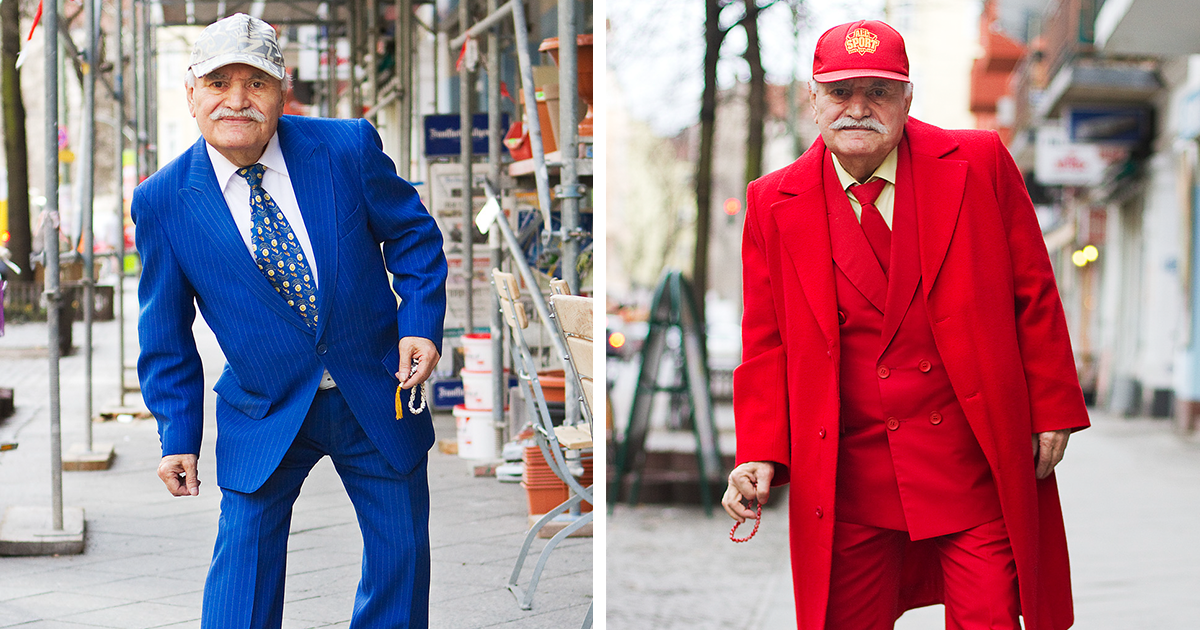
Most people walk to work in whatever survives the laundry basket. Ali Akdeniz walked through Berlin like the sidewalk had personally invited him to headline Fashion Week. Every morning, the Turkish-born tailor passed the café where photographer Zoe Spawton worked, and every morning he seemed to arrive in a completely different outfit: sharp suits, bold colors, military-inspired looks, hats with personality, coordinated shoes, and the kind of confidence no department store can sell.
At the time the project became widely known, Ali was in his eighties, yet his style felt anything but old-fashioned. He did not dress like someone trying to impress the internet. In fact, when Spawton first noticed him in 2012, the internet was not the point at all. She simply saw an older man with extraordinary taste walking past her workplace in Berlin’s Neukölln district. His clothes had rhythm. His accessories had intent. His posture said, “Yes, I planned this,” and also, “No, you may not borrow my hat.”
Spawton began photographing him regularly, and the images became the foundation of her beloved blog, What Ali Wore. Over the next three years, the project grew from a casual neighborhood encounter into a widely shared portrait series about fashion, friendship, aging, migration, and the quiet art of noticing people who might otherwise pass by unnoticed.
Who Was Ali Akdeniz?
Ali Akdeniz was a Turkish-born man who lived in Berlin for decades and became known around the world for his sharp daily outfits. Public reports describe him as a former doctor who later worked as a tailor, and that background helps explain why his wardrobe looked so intentional. He understood clothing not as decoration but as construction. A jacket was not just a jacket; it was architecture. A hat was not just a hat; it was punctuation.
Ali reportedly had a large family, with children living in Turkey, and he spent many years in Germany before later returning to his hometown region of Trabzon. In Berlin, he was not a celebrity at first. He was simply a man going about his routine, walking past the same café in the morning, wearing clothes that made the ordinary street feel like a runway.
What made Ali special was not only that he dressed well. Plenty of people own nice clothes and still manage to look like they were assembled during a small emergency. Ali understood proportion, color, contrast, and mood. One day he might wear a tailored suit with a matching tie and hat. Another day he might appear in denim, camouflage, leather, athletic pieces, or bright colors. His outfits were playful but disciplined, expressive but never messy. He dressed like someone who had lived long enough to stop asking permission.
How Zoe Spawton Discovered a Style Icon
Zoe Spawton, an Australian photographer living in Berlin, first noticed Ali while working at a café. He passed by regularly, often around the same morning hour, and his outfits were impossible to ignore. At first, their relationship was simple: a glance, a greeting, a smile. Language was a challenge because Spawton spoke limited German and Ali spoke Turkish and German, with only some English. But style has always been a language with excellent pronunciation.
Eventually, Spawton asked if she could take his photo. Ali agreed. The first portrait led to another, then another, and soon a routine formed. The project was not staged in the glossy, commercial sense. It was street photography with a heartbeat: one subject, one photographer, one daily route, and one wardrobe that seemed to have no bottom.
As the portraits accumulated, Spawton published them online under the title What Ali Wore. The name was simple, almost diary-like, and that simplicity was part of its charm. It invited viewers to focus on the essentials: What did Ali wear today? How did he put it together? What did the outfit reveal about his personality, humor, pride, and history?
Why “What Ali Wore” Became So Popular
The project went viral because it offered something the internet often pretends to love but rarely slows down to honor: real individuality. Ali was not chasing trends, sponsorships, or likes. He was not posing beside a rented sports car while explaining “five hacks for confidence.” He simply had confidence. That is much harder to fake.
Viewers responded to the photographs because they felt personal. Ali’s style was bold, but the images were gentle. He stood on everyday streets, often with his bag, sometimes with a slight stoop, sometimes with a small smile. His presence was charismatic without being loud. He looked like a man who had stories, and each outfit seemed to be one chapter.
Another reason the series resonated is that it challenged lazy ideas about aging. Fashion media has often treated style as the property of youth, as if good taste expires somewhere between the first gray hair and the first enthusiastic conversation about orthopedic shoes. Ali proved the opposite. He showed that personal style can become richer with age because it gathers memory, courage, and experience.
His outfits did not say, “I am trying to look young.” They said, “I am fully myself.” That distinction matters. The best-dressed people are not always the trendiest. They are the ones whose clothes seem to belong to their lives.
The Details That Made Ali’s Outfits Work
Color With Confidence
Ali understood color the way a good cook understands seasoning. He could use it boldly without letting it overpower the whole dish. Reports and images from the project show him in blue, green, white, yellow, burgundy, gray, black, mustard, and other strong tones. Sometimes he wore solid blocks of color. Sometimes he balanced a bright jacket with quieter trousers. Sometimes the hat tied everything together like the final line of a poem.
Tailoring as a Signature
As a tailor, Ali knew the value of fit. Many of his strongest looks depended on clean lines: trousers that sat correctly, jackets with shape, coats with presence. Tailoring gave his outfits authority. Even when he wore playful pieces, the structure kept them polished. That is the secret many people miss when copying stylish outfits: the clothing does not have to be expensive, but it does have to look considered.
Accessories With Personality
Ali’s hats, bags, shoes, ties, and glasses were not random add-ons. They completed the sentence. A trilby could make a suit feel classic. A baseball cap could make a tailored look feel unexpected. A leather bag or compact backpack gave his outfit both practicality and character. He seemed to understand that accessories should not scream for attention; they should wink.
Mixing Formal and Casual Elements
Part of Ali’s charm came from his ability to mix categories. He could wear business attire one day and a more rugged or military-inspired look the next. This variety kept the project fresh. It also made his style feel modern. Today, many people talk about blending tailoring, workwear, sportswear, and vintage pieces. Ali was doing it with ease long before half the internet learned the phrase “personal aesthetic.”
A Story About Friendship, Not Just Fashion
Although What Ali Wore began with clothing, it became a story about connection. Spawton and Ali built a friendship across age, language, culture, and life experience. They did not need perfect grammar to understand mutual respect. Their relationship developed through small rituals: daily greetings, portraits, coffee, shared outings, and the excitement of seeing the project reach people around the world.
That human element is what made the photographs more than street-style content. Without friendship, the images might have felt like quick snapshots of an interesting stranger. With friendship, they became a record of trust. Ali was not merely being observed; he was participating. Over time, he reportedly became more comfortable in front of the camera and even enjoyed the recognition the project brought him.
The series also raises an interesting question: Who is the artist? Spawton framed, photographed, and shared the project. Ali created the outfits, carried the presence, and gave the images their soul. The answer is that both contributed. The photographer noticed the art; Ali lived it.
Why Older Style Icons Matter
Ali’s popularity fits into a larger cultural shift: more people are recognizing older adults as style leaders, not style footnotes. Projects such as senior street-style photography, fashion documentaries, and age-inclusive campaigns have helped challenge the narrow idea that beauty and originality belong only to the young.
Older style icons matter because they show what fashion looks like after a person has stopped dressing for approval. Their clothing often carries history. A coat may suggest decades of habit. A ring may hold memory. A hat may be less about trend and more about identity. When an older person dresses boldly, it can feel especially powerful because society often pressures older adults to become visually quieter. Ali refused that quietness with every coordinated look.
His style was not a costume. It was continuity. He had worked, migrated, built a life, practiced craftsmanship, and maintained his sense of dignity. His wardrobe expressed all of that without needing a speech. In a world obsessed with reinvention, Ali showed the beauty of refinement.
Lessons From Ali’s Wardrobe
Dress Like the Day Deserves an Effort
One of the most inspiring parts of Ali’s routine is that he dressed well for ordinary mornings. He was not waiting for a gala, a wedding, or a magazine editor to call. He treated daily life as worthy of presentation. That does not mean everyone needs to wear a three-piece suit to buy bread. It means the way we dress can change how we move through the world.
Know Yourself Better Than You Know Trends
Trends can be fun, but personal style begins when you stop obeying every new instruction. Ali’s outfits worked because they felt specific to him. He knew his silhouettes, his favorite accessories, and his attitude. That kind of consistency cannot be downloaded from a fashion app. It develops through trial, error, and a healthy willingness to look interesting.
Small Details Create Big Impact
A hat, a polished shoe, a carefully chosen tie, or a color repeated in two places can transform an outfit. Ali’s looks remind us that style is often built in the details. The difference between “wearing clothes” and “being dressed” is usually intention.
Confidence Is the Best Tailor
Fit matters, but confidence is what lets an outfit breathe. Ali wore bold pieces because he seemed comfortable in them. He did not look like he was asking the street for feedback. That self-assurance made even unusual combinations feel natural.
The Legacy of “What Ali Wore”
The What Ali Wore project eventually reached international audiences, earned major attention, and helped turn Ali into an unlikely style icon. After years in Berlin, Ali later returned to Turkey. He passed away in 2020 at the age of 91, but the photographs continue to circulate because they capture something timeless.
They remind us that a person’s everyday routine can hold extraordinary beauty. They remind photographers that powerful stories may be standing outside the café, walking past at the same time every morning. They remind writers, artists, and viewers that attention is a form of respect. And they remind everyone with a closet that getting dressed can be a small act of joy.
Ali’s legacy is not only that he wore memorable outfits. It is that he made people look again. He turned a morning commute into a performance of identity. He made age look stylish, work look dignified, and clothing look alive. Not bad for a man simply walking to his tailor shop.
Extra Experiences and Reflections Inspired by Ali’s Story
There is something deeply relatable about the idea of seeing the same person every day and slowly realizing they are extraordinary. Many neighborhoods have an “Ali” of some kind: the woman who waters her plants in pearl earrings, the retired teacher who wears a blazer to the grocery store, the old man who matches his socks to his umbrella with suspicious precision. At first, we may only notice them in passing. Then one day, we understand that their routine is a kind of art.
Ali’s story encourages us to pay closer attention to the people who create beauty without announcing it. In daily life, we often move too quickly. We check our phones, rush through errands, and reduce strangers to background scenery. Spawton’s project shows what can happen when someone pauses long enough to ask, “May I take your picture?” That simple question opened the door to a friendship, a visual archive, and a global audience.
For anyone interested in photography, the experience behind What Ali Wore is a useful reminder that great subjects do not always require dramatic locations. You do not need mountains, neon signs, fog machines, or a model balancing on a chair for reasons no one can explain. Sometimes the strongest story is on the same street every morning. The challenge is being alert enough to see it and respectful enough to approach it with care.
For anyone interested in personal style, Ali’s wardrobe offers practical inspiration. Start with fit. Choose colors that make you feel awake. Keep accessories that mean something. Repeat what works, but leave room for surprise. Most importantly, dress for your own sense of dignity. The goal is not to become a copy of Ali. That would miss the point. The goal is to become more unmistakably yourself.
There is also a lesson here about aging. Many people fear becoming invisible as they grow older. Ali’s photographs push against that fear. He did not disappear into beige anonymity. He stepped into the morning wearing color, structure, and wit. His style did not deny age; it gave age a magnificent outfit. That is why the images still feel fresh. They are not about pretending to be young. They are about continuing to be present.
On a personal level, this story feels like a gentle challenge: What would happen if we treated ordinary days with a little more ceremony? Maybe we would polish the shoes. Maybe we would wear the jacket we keep saving for “someday.” Maybe we would compliment the stylish stranger at the bus stop instead of silently admiring their coat from six feet away like a shy detective. Small acts of attention can change the emotional weather of a day.
Ali and Zoe’s friendship also suggests that connection does not require perfect similarity. They came from different generations, cultures, and languages. Yet the project worked because curiosity met generosity. Spawton saw beauty in Ali’s routine, and Ali allowed that beauty to be shared. Their collaboration became a reminder that art is not always something placed on a museum wall. Sometimes it is a conversation between two people who choose to notice each other.
In the end, the lasting magic of What Ali Wore is not just the clothes, though the clothes are fabulous enough to make any closet feel underemployed. The magic is the idea that style can be a daily declaration: I am here. I have lived. I still choose color. I still choose care. I still choose to meet the morning properly dressed.
Conclusion
Every morning, Ali Akdeniz turned a Berlin sidewalk into a lesson in self-expression. Through Zoe Spawton’s patient photography, his daily outfits became more than charming street-style images. They became a record of craftsmanship, confidence, friendship, and the beauty of being fully visible at any age.
The story of the 86-year-old tailor photographed over three years continues to resonate because it feels honest. Ali was not styled by a marketing team. He was not chasing viral fame. He was simply living with flair, discipline, and humor stitched into every outfit. His legacy reminds us that style is not about youth, price tags, or perfection. It is about identity, attention, and the courage to greet the day as yourself.