Research basis: U.S. tariff implementation, temporary offsets, vehicle-label rules, supply-chain analysis, and market impact were synthesized from current material published by the White House, NHTSA, USTR, CAR, Yale Budget Lab, Resources for the Future, S&P Global Mobility, Cox Automotive, Kelley Blue Book, Edmunds, Cars.com, Brookings, USITC, Tax Foundation, and Reuters.
Shopping for an American-made car sounds like the obvious way to dodge tariff trouble. Pick a vehicle assembled in the United States, admire the factory location on the window sticker, maybe hum a few bars of “Born in the U.S.A.,” and drive away feeling economically bulletproof.
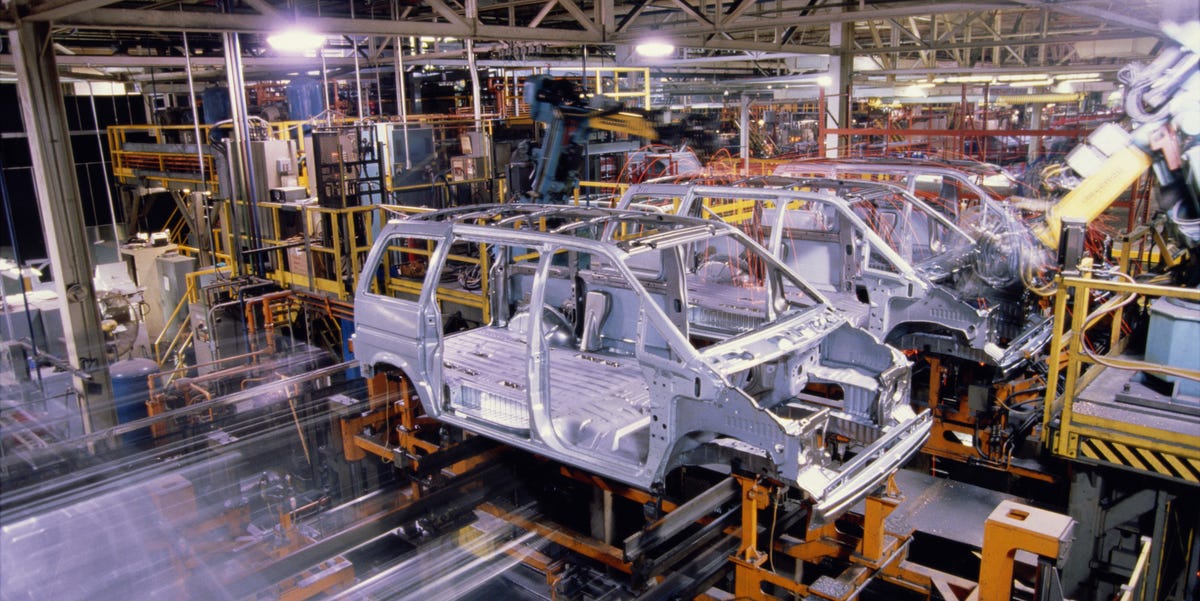
Unfortunately, modern cars are not built like backyard grills. They are closer to rolling international group projects, made from thousands of parts that may cross borders several times before becoming a finished SUV, pickup, sedan, or electric vehicle. A car can be assembled in Tennessee, Texas, Michigan, Ohio, Alabama, or California and still rely on imported electronics, engines, transmissions, steel, aluminum, batteries, sensors, wiring, tires, glass, and other components.
That is why buying American can reduce tariff exposure, but it cannot guarantee protection from higher prices. The tariff does not need to sit directly on the hood of a foreign-built car to affect your budget. It can sneak in through the supply chain, the parts counter, the dealer lot, the financing office, and even the used-car market.
Why “American-Made” Is Not a Tariff Force Field
The first problem is that “American-made” means different things to different people. For one shopper, it means an American brand. For another, it means final assembly in the United States. For someone else, it means the vehicle has a high percentage of domestic parts. Those definitions overlap sometimes, but not always.
A Detroit badge does not automatically mean a car was built in Detroit. Likewise, a vehicle from a Japanese, Korean, German, or other foreign-owned automaker may be assembled in the United States and support American factory jobs. The badge on the grille tells you who owns the brand. It does not provide a full customs map of every component hiding behind the dashboard.
Final Assembly Is Only One Piece of the Puzzle
Final assembly matters because a vehicle built outside the United States can face more direct tariff exposure when it enters the country. However, final assembly is the last chapter of a much longer story.
Before a vehicle reaches the assembly line, its parts may have traveled through factories in several countries. A transmission may come from one place, electronic modules from another, battery materials from another, and stamped steel components from yet another. Even if the final bolts are tightened in the United States, the automaker may still face higher costs for imported inputs.
That is the great automotive plot twist: a U.S.-assembled car can be less exposed than a fully imported vehicle, but it is rarely immune. The tariff does not care whether the cupholders have a patriotic personality.
The Window Sticker Helps, but It Does Not Calculate Your Tariff Bill
The American Automobile Labeling Act requires most new passenger vehicles to display information about U.S. and Canadian parts content, final assembly location, engine origin, and transmission origin. That label is useful. It gives shoppers a much better picture than brand loyalty alone.
Still, it is not a tariff calculator. The reported domestic-content percentage combines U.S. and Canadian content, is generally calculated by vehicle line rather than every individual VIN, and may be rounded. It also does not show every origin detail for every supplier, mineral, chip, or component.
In other words, the label can help you ask smarter questions, but it cannot promise that the vehicle is protected from tariff-related cost pressure.
How Car Tariffs Reach U.S.-Built Vehicles
The most visible tariff impact is simple: imported vehicles can cost more when import duties are added. But the more important consumer story is what happens after those costs spread through the automotive ecosystem.
Tariffs are paid by importers, not by a tiny customs officer living in your glove compartment. Manufacturers and suppliers then decide how to handle the added cost. They may raise sticker prices, reduce incentives, adjust lease offers, trim standard features, change sourcing, delay shipments, or accept lower profits for a while.
None of those choices feels exactly the same to a car buyer, but they all can make the deal worse.
Imported Parts Make Domestic Production More Expensive
Automakers with U.S. factories still buy components from abroad. When tariffs raise the cost of those components, the expense can move downstream. A vehicle might avoid a direct tariff on final assembly but still absorb higher costs through imported electronics, batteries, metal, driveline components, or supplier subassemblies.
Steel and aluminum matter, too. Cars may look like plastic, paint, glass, leather, and touchscreens from the outside, but underneath they remain very metal-intensive machines. If material costs rise, suppliers may face higher bills. Those suppliers then pass some of the pressure to automakers, who may eventually pass some of it to buyers.
This is why tariff effects can feel frustratingly indirect. The SUV you want may be assembled down the road, but a supplier’s higher material cost can still find its way into the final price.
Temporary Relief Does Not Mean Permanent Safety
The federal policy created temporary offsets for certain tariff costs on parts used in U.S.-assembled vehicles. In the first phase, qualifying manufacturers could offset tariff exposure equal to 3.75% of the suggested retail value of eligible U.S. production. The next phase lowered that figure to 2.5%.
That relief can soften the blow for manufacturers with substantial U.S. or North American content. It does not mean every locally assembled vehicle is automatically tariff-free, and it does not mean the buyer receives a neat discount labeled “Congratulations, You Bought Domestic.”
It is more accurate to think of it as a cushion than a bunker.
The North American Supply Chain Is More Tangled Than a Box of Holiday Lights
The U.S., Canada, and Mexico have spent decades building a deeply integrated auto industry. Parts can cross the border several times before they become a finished vehicle. A raw material may become a stamped panel in one country, a larger assembly in another, and part of a completed car in a third.
That integration is efficient when trade rules are predictable. It becomes more complicated when tariffs depend on country of origin, regional-content rules, component classifications, and shifting trade agreements.
Under the U.S.-Mexico-Canada Agreement, qualifying goods can receive preferential treatment. However, USMCA eligibility is not the same thing as a magical “no tariff ever” stamp. Vehicle and component treatment can depend on the non-U.S. value in the product, whether the item meets the relevant origin rules, and the tariff program in effect at the time.
For consumers, the lesson is simple: Canada and Mexico are not “foreign” in the same practical way as a car imported from across an ocean, but they are still part of a supply chain affected by tariff rules, customs treatment, and changing trade policy.
Why a Domestic Badge Can Be Misleading
A shopper who wants to support American workers may reasonably look at a domestic brand first. But the better question is not “Who owns the brand?” It is “Where was this particular vehicle assembled, where do its major components come from, and how exposed is the model to tariff-driven cost increases?”
A U.S.-assembled Honda Accord, Honda Ridgeline, Jeep Gladiator, Jeep Grand Cherokee, Tesla Model 3, Tesla Model Y, or Lexus TX 350 may have more direct U.S. production involvement than some vehicles sold under traditionally American badges but assembled elsewhere.
That does not make one category morally superior. It simply proves that automotive nationality is not as tidy as a flag decal.
Cars.com’s 2026 American-Made Index, for example, ranks vehicles using final assembly location, U.S. and Canadian parts content, engine origin, transmission origin, and U.S. manufacturing workforce. Even the highest-ranking vehicles in that type of analysis are not necessarily made from 100% domestic materials and components.
How Tariffs Can Affect More Than the Sticker Price
When people hear “car tariff,” they usually imagine a higher MSRP. That can happen, but the impact may show up in several less obvious ways.
- Smaller discounts: A vehicle’s sticker price may stay put while dealer incentives shrink.
- Higher lease payments: Rising vehicle values and reduced incentives can make leases less attractive.
- Fewer trims: Automakers may simplify configurations or prioritize higher-margin models.
- Longer waits: Supply adjustments can affect which models and trims arrive on dealer lots.
- Costlier repairs: Imported replacement parts may become more expensive over time.
- Used-car pressure: Used vehicles are not directly hit by a new-car tariff, but stronger demand for used inventory can raise prices.
This is why buying a used car is not always a perfect escape route. It may avoid the direct tariff on a newly imported vehicle, but it can still be caught in the market’s ripple effect. Used-car pricing has a habit of noticing when new cars become harder to afford.
How to Buy Smarter When Car Tariffs Are in the Mix
The goal is not to panic-buy a vehicle because a headline used the word “tariff” in a scary font. The goal is to shop with better questions.
1. Check the Final Assembly Location
Ask where the exact model is assembled. Do not rely only on the brand. Some automakers build several versions of the same nameplate in different countries, and production locations can change by model year or trim.
2. Read the Domestic-Content Label
Look for the vehicle’s U.S./Canadian parts-content information, plus the countries of origin for the engine and transmission. It will not reveal every tariff detail, but it gives you a more useful starting point than guessing from the logo.
3. Compare Out-the-Door Prices, Not Just MSRP
A tariff-related cost can show up through reduced incentives, dealer add-ons, financing terms, or lease residual values. Compare the total out-the-door number, including taxes, fees, financing, and any required accessories.
4. Ask About Incoming Inventory
A dealer may have vehicles that entered the country or were produced before a policy change, while future inventory may carry different cost pressures. The dealer may not break out a tariff line item, but they can often explain whether a model’s pricing or incentives are changing.
5. Think Beyond Purchase Day
If you plan to keep a vehicle for many years, consider maintenance costs, parts availability, insurance, depreciation, and reliability. A slightly cheaper purchase price can lose its charm quickly if replacement components become expensive or difficult to source.
Real-World Car Shopping Experiences in a Tariff Market
For buyers, the tariff experience often feels less like a dramatic government policy debate and more like a series of small annoyances that pile up during a Saturday at the dealership.
Imagine a shopper named Alex who walks into a dealer convinced that buying a U.S.-assembled crossover will solve the problem. Alex has done the homework, checked that the vehicle is assembled in the United States, and feels pleased with the choice. Then the sales representative explains that the promotional financing rate ended last month, the lease offer is less generous than before, and the preferred trim has a longer wait because inventory is tight.
No one says, “Hello, Alex, here is your tariff bill.” Instead, Alex sees a higher payment, fewer incentives, and less flexibility. The tariff impact arrives wearing a name tag that says “market adjustment,” “revised program,” or “limited availability.”
Another shopper, Maya, decides to avoid the entire mess by buying used. That can be a sensible move, especially when a well-maintained certified pre-owned vehicle offers strong value. But Maya quickly discovers that used cars are popular whenever new-car prices rise. The vehicle that seemed like a bargain six months ago now has a surprisingly ambitious price tag. It has confidence. It has attitude. It may even have a dealer-installed pinstripe from 2018, but it is priced like a collector’s item.
Then there is the shopper who focuses entirely on the badge. Chris wants an American brand and assumes that means fewer trade-related problems. But after comparing vehicle labels and assembly locations, Chris learns that a foreign-brand vehicle assembled in Alabama or Ohio may have a stronger domestic-production footprint than another model carrying an American brand name.
That discovery can be oddly liberating. It shifts the shopping process away from automotive tribalism and toward practical comparison. Instead of asking, “Is this brand American enough?” the better question becomes, “Which vehicle gives me the best combination of assembly location, supply-chain resilience, price, reliability, features, and ownership costs?”
Buyers may also notice that the best deals are not always on the models they expected. A manufacturer with stronger U.S. production capacity may have more flexibility on certain vehicles. Another automaker may protect a popular model’s price but reduce rebates. A third may offer attractive financing while quietly limiting trim availability. The result is a market where the deal matters as much as the vehicle.
The smartest shoppers tend to compare several vehicles across several brands, request written out-the-door quotes, and avoid falling in love with one exact color-and-trim combination before checking the numbers. Being flexible about paint color may save money. Being flexible about a moonroof may save even more. Being flexible about a giant chrome wheel package can save enough to fund a small vacation and several emotionally necessary snacks.
Tariffs do not make every car purchase a disaster. They simply make the old shortcut of “buy American and stop worrying” less reliable. A thoughtful buyer can still find a good vehicle and a reasonable deal. The key is understanding that modern cars are global products, even when they are proudly assembled close to home.
Conclusion: Buy American, but Buy Informed
Buying a U.S.-assembled vehicle can be a smart way to support domestic manufacturing and potentially reduce direct exposure to some import tariffs. But it is not a guaranteed shield against tariff-related price increases.
Imported parts, metal costs, North American supply chains, supplier pricing, inventory changes, and reduced incentives can all affect the final deal. The most practical strategy is not blind loyalty to a badge. It is comparing the exact vehicle, its assembly location, its parts-content label, its availability, and its true out-the-door price.
In the tariff era, the safest purchase is not necessarily the car with the loudest patriotic commercial. It is the one you understand before signing the paperwork.