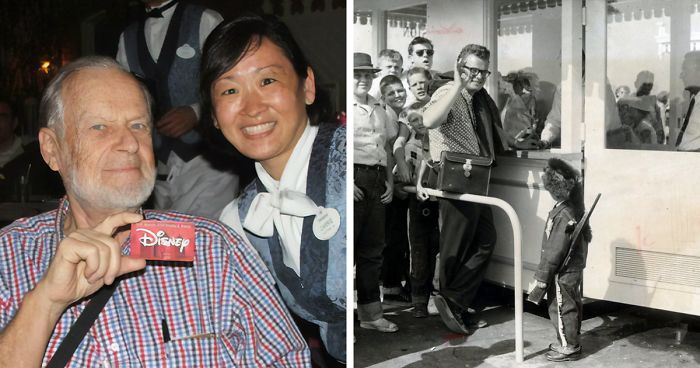
Some headlines sound like they were sprinkled with pixie dust and then approved by a nostalgia committee. This is one of them. The story of Disneyland’s first-ever customer is real, charming, and just a tiny bit more complicated than the viral version makes it seem. Yes, a young man named David “Dave” MacPherson really did make Disneyland history in 1955. Yes, he really received a lifetime pass. And yes, for decades he kept returning to the Happiest Place on Earth like a man who had discovered the world’s most cheerful loophole.
But the deeper story is even better than the headline. It involves Walt Disney’s wildly ambitious new park, a gloriously chaotic opening, a teenager-free level of patience at 2 a.m., a one-dollar ticket, and the kind of American optimism that says, “You know what? I’m going to be first in line at Disneyland, and I might as well make it a personality trait.”
For Disney fans, theme park historians, and anyone who enjoys a good “I was there before it was cool” story, MacPherson’s place in Disneyland lore feels delightfully permanent. His annual visits became more than a quirky personal tradition. They turned into a living connection between modern Disneyland and the original park that opened in the middle of orange groves in 1955, with wet asphalt, long lines, and very big dreams.
The Day Disneyland Opened and Chaos Put on a Name Tag
Disneyland officially opened on July 17, 1955, in Anaheim, California, but that first day was not the public debut most people imagine. It was an invitation-only preview event packed with celebrities, media, Disney insiders, and, thanks to counterfeit tickets, a whole lot of uninvited guests who apparently believed “private event” was more of a suggestion than a rule. The result was the famously messy opening day later nicknamed Black Sunday.
It was hot. Really hot. Women’s heels sank into soft asphalt. Food and drink ran short. Some attractions broke down. A gas leak created more drama than anyone needed on opening weekend. In other words, Disneyland’s first day was less “storybook perfection” and more “please don’t let the frontier explode.” And yet, even in that glorious mess, the park’s future was obvious. Walt Disney had built something people had never quite seen before: a place where storytelling, architecture, entertainment, and family travel all collided in one highly choreographed fantasyland.
Then came July 18, 1955, the first day Disneyland opened to the general public. That was the day Dave MacPherson entered the story in a way that would stick for generations.
Who Was Dave MacPherson?
MacPherson was a 22-year-old college student from Long Beach, California. While most sane people were probably sleeping or at least enjoying the radical mid-century invention known as “not standing in line for hours,” MacPherson decided he wanted to be the first regular paying guest to enter Disneyland. Not a celebrity. Not a Disney relative. Not some lucky insider with a fancy invite. Just the first everyday person through the front gate.
So he acted on the idea with the kind of commitment usually reserved for Olympic training or limited-edition sneaker drops. He arrived at the park in the early morning hours and got in line around 2 a.m. By dawn, thousands of people were behind him. He had done it. The man didn’t merely beat the crowd. He became the crowd’s opening act.
MacPherson bought ticket number 2 because ticket number 1 had already been purchased by Roy O. Disney, Walt’s brother and business partner. That detail matters because it explains why MacPherson is often described with slightly different titles. Depending on the source, he is called Disneyland’s first customer, first public customer, first paying guest, or first regular guy through the gate. The labels vary, but the achievement is the same: he became the first member of the paying public to make Disneyland history.
The Small but Important Asterisk in the “First Customer” Story
Now for the part that makes the story more interesting, not less. Disney’s own historical material also identifies two children, Christine Vess and Michael Schwartner, as the first guests through the turnstiles. That official photo has been part of Disneyland history for decades. So which story is true?
Actually, both can be true depending on what you mean by “first.” Christine Vess and Michael Schwartner are often credited as the first guests through the turnstiles in the ceremonial sense. MacPherson, meanwhile, is widely remembered as the first paying public customer to buy a ticket and enter the park on its first day open to the general public. In plain English, Disneyland history has both a symbolic first family-friendly photo moment and a practical first guy-who-stood-in-line-all-night moment.
And honestly, that feels very Disneyland. Even the origin story comes with multiple camera angles.
The Lifetime Ticket That Turned Into a Legend
Because MacPherson had become Disneyland’s first paying public guest, he was awarded a lifetime pass. That alone would have been enough to lock in an unbeatable family brag for the next hundred Thanksgivings. But what transformed the story from fun trivia into genuine legend was what he did afterward: he kept using it.
Year after year, MacPherson returned to Disneyland. He didn’t treat the pass like a framed relic or a conversation piece tucked in a drawer. He used it the way Disney probably hoped people would use the park itself: as a recurring place of joy, memory, and ritual. That choice matters. Plenty of people receive honors. Far fewer turn them into traditions.
There is something wonderfully human about that annual return. It suggests that MacPherson didn’t see Disneyland as just a historical milestone attached to his name. He appears to have seen it as a place worth revisiting, even as the park changed around him. And change it did.
Disneyland Then vs. Disneyland Now
When MacPherson first walked into Disneyland in 1955, the park looked very different from the Disneyland modern visitors know. The original park was built around five lands: Main Street, U.S.A., Adventureland, Frontierland, Fantasyland, and Tomorrowland. Admission cost one dollar, but rides were not all included. Those famous ticket books, the ones that later gave the world the phrase “E-ticket ride,” did not even arrive until later in 1955. Early visitors paid for admission and then paid separately for attractions.
That old system now feels almost quaint. Today’s Disneyland is a much larger, more technologically advanced, and highly layered experience. Guests plan reservations, mobile-order lunch, chase virtual queues, and debate ride strategy like they are plotting a moon landing with churros. The park has expanded, evolved, and reinvented itself again and again, yet it still hangs onto its original emotional architecture: arrival, wonder, movement, music, memory.
That is part of why MacPherson’s story resonates. His pass linked the hand-painted, opening-year Disneyland to the polished, multi-generational destination that followed. He was not just revisiting a theme park. He was revisiting an idea that kept changing while somehow staying recognizable.
Why People Love This Story So Much
There is a reason this story keeps resurfacing online and making people smile. It combines three ingredients the internet can never resist: history, luck, and commitment. Add Disneyland, and you basically have nostalgia espresso.
First, there is the romance of being first. Humans are weirdly obsessed with firsts. First footprints on the moon. First tweet. First person to camp outside a store for a new gadget. We love moments when someone gets there before the rest of the world and accidentally becomes part of the permanent record.
Second, there is the fantasy of the lifetime pass itself. A single ticket bought for one dollar leading to decades of visits feels less like accounting and more like a fable written by an extremely generous cashier. Even people who have never visited Disneyland immediately understand the appeal. A lifetime pass is not just free admission. It is permission to keep returning to a place built around delight.
Third, the story taps into something bigger than Disney fandom. It is really about continuity. The world changes. Prices rise. Technologies evolve. Entire generations grow up. Yet one man kept coming back to the same gates, carrying a direct thread to the park’s beginning. In a culture that moves fast and forgets faster, that kind of continuity feels almost radical.
What the Story Says About Walt Disney’s Original Vision
Walt Disney famously wanted Disneyland to be a place where parents and children could have fun together. That idea sounds obvious now because every modern theme park owes something to it. In the early 1950s, it was not obvious at all. Many amusement parks were rough around the edges, poorly maintained, or aimed at thrill and spectacle more than immersive experience. Disneyland proposed something different: cleanliness, narrative, themed design, and an atmosphere that invited adults to participate rather than merely supervise.
MacPherson’s story fits that vision in an unexpectedly perfect way. He entered as a young adult and kept returning through the decades as Disneyland became a place for couples, friends, families, children, and grandparents. His annual visits mirror the park’s own promise: come back later, and the magic should still work.
That is no small promise. Most entertainment ages out. The songs change, the fashions age badly, and eventually somebody says, “Wow, this was really a 2003 idea.” Disneyland, for all its updates and occasional controversies, has proven unusually durable. Its icons still land. Its rituals still matter. Its Main Street still knows how to make grown adults walk slower and smile for no practical reason.
The Real Secret Behind the Lifetime Ticket Story
The most memorable part of this story is not the free entry. It is the return. A lot of people talk about wanting a lifetime pass to something. Fewer people actually honor the spirit of it. MacPherson did. He kept showing up. In that sense, he became the kind of guest every great destination hopes to earn: not just a customer, but a loyal witness.
His visits also remind us that places become meaningful because people bring their lives to them. Disneyland is part architecture, part performance, and part personal memory machine. A first visit matters. A fiftieth visit matters differently. By the time someone has spent years or decades returning, the place stops being just a destination. It becomes part of the family story, part of the calendar, part of identity.
That may be the quiet genius of Disneyland and the reason MacPherson’s story keeps finding new audiences. It is not merely about a lucky guy with a golden perk. It is about how joy, repeated often enough, turns into tradition.
Experiences That Make This Story Feel Bigger Than One Ticket
If you have ever walked into Disneyland early in the morning, you already understand why a lifetime ticket is not just a prize but practically a philosophy. There is a particular feeling at rope drop that no spreadsheet can explain. The music is light but calculated, the storefronts on Main Street look cleaner than reality has any right to be, and even seasoned adults suddenly behave like they have been personally invited into a cartoon. You are not just entering a park. You are stepping into an atmosphere designed to make wonder feel organized.
That is why MacPherson’s story lands so well. People can imagine what he kept coming back for. Maybe it was the rush of walking under the railroad tunnel and seeing the park open up ahead. Maybe it was the ritual of returning to familiar attractions while noticing what had changed. Maybe it was the simple thrill of knowing that one spontaneous decision in 1955 had connected him to decades of family entertainment history.
There is also something moving about experiencing a place that carries visible layers of time. At Disneyland, old and new sit side by side in a way that feels intentional. A guest can admire vintage details on Main Street, ride attractions rooted in the park’s early identity, and then turn a corner into a newer land built with modern technology and franchise firepower. For visitors, that creates a rare sensation: you are not just consuming entertainment in the present; you are strolling through an evolving cultural archive that still serves snacks.
Families especially feel this. Grandparents remember ticket books. Parents remember their own first ride photos. Kids show up ready to meet characters and hunt for popcorn buckets that somehow become treasured household objects. Everyone arrives with a different version of Disneyland, and somehow the park makes room for all of them. That is part of the emotional engine behind stories like MacPherson’s. His annual visits symbolize the larger habit millions of families have built around the park: return, compare, remember, repeat.
And then there are the tiny experiences that never make headlines but often become the real reason people love Disneyland. The smell of candy drifting from Main Street. The pause before fireworks when the crowd collectively looks up. The strange emotional power of hearing a familiar attraction soundtrack and instantly remembering a completely different year of your life. The way a ride you loved as a child feels smaller when you revisit it as an adult, yet somehow more meaningful. The way one generation explains an old detail to the next generation like passing down a family recipe, except the recipe is mostly churros and queue strategy.
Seen through that lens, MacPherson’s lifetime ticket becomes more than a novelty. It becomes a symbol of repeated experience. Not one giant magical moment, but many smaller ones stacked over time. That may be why people keep sharing the story. It reminds us that the best places are not always the ones that amaze us once. They are the ones that keep giving us reasons to come back, even after the surprise is gone and what remains is something better: affection, ritual, and a sense that part of your own timeline is now tied to theirs.
Conclusion
The headline about Disneyland’s first-ever customer using his lifetime ticket every year since 1955 survives because the core of it is true, memorable, and deeply satisfying. David MacPherson really did become Disneyland history by being first in line on the park’s first public day. He really did receive a lifetime pass. And for years, he kept returning, turning one lucky morning into a tradition that outlived trends, technologies, and plenty of theme park map redesigns.
At the same time, the full story is a little richer than the simplified viral version. Disneyland’s earliest guest history includes ceremonial firsts, public firsts, and archival firsts. But that does not weaken the legend. It strengthens it. Because the best historical stories are not flat; they have texture.
In the end, MacPherson’s legacy is not just that he got there first. It is that he kept coming back. In a place built on imagination, that might be the most fitting legacy of all.