Note: This article is based on real design reporting and public information from reputable design, architecture, travel, and lifestyle sources, including Remodelista, Gardenista, Faye McAuliffe Design, Architectural Digest, Vogue, Houzz, Milwood Design, Visit California, Discover Los Angeles, Atlas Obscura, and LA design coverage.
Some homes announce themselves with a dramatic chandelier, a heroic staircase, or a sofa so sculptural it looks like it requires its own insurance policy. A Faye McAuliffe interior tends to do something quieterand better. It exhales. Her Venice, LA sensibility is calm without being cold, minimalist without acting superior about it, and layered without tumbling into “I bought every object at the flea market and now I live inside a still life.”
That balance is what makes a designer visit with Faye McAuliffe so compelling. Her work sits naturally inside the Venice, California design ecosystem: beach light, artist energy, practical materials, a little grit, a little poetry, and a strong belief that a home should not be merely decoratedit should be lived in, worked in, reorganized, admired, and occasionally rescued from a chaotic pile of tote bags.
McAuliffe, a Los Angeles-based interior designer, has been associated with refined, functional, and inspiring residential spaces. Earlier design coverage introduced her through her Venice roots and her former project “You Are the River,” describing a creative background shaped by fine art, fashion design, wardrobe styling, and a minimalist household filled with original art. That origin story matters, because her interiors often feel less like rooms assembled from a catalog and more like compositionsedited, textured, and personal.
Why Venice, LA Matters to the Faye McAuliffe Look
Venice is not just a backdrop here; it is practically a co-designer. Founded in the early 1900s as “Venice of America,” the neighborhood still carries traces of canals, beach cottages, arcaded streets, experimental architecture, and a stubbornly creative attitude. It is a place where a polished concrete floor can coexist with a garden full of unruly greenery, where a minimalist chair does not look lonely because the sunlight is doing half the decorating.
Venice design has long been shaped by contrast. There are early cottages, modernist experiments, industrial studios, surf culture, art galleries, boutique retail, and the highly specific smell of ocean air mixed with espresso. Abbot Kinney Boulevard has become one of Los Angeles’s best-known design corridors, home to shops selling Japanese tableware, Scandinavian furniture, vintage pieces, ceramics, rugs, lighting, and objects that make visitors say, “I don’t know what this is, but I suddenly need it.”
McAuliffe’s aesthetic fits this environment because it does not fight the neighborhood’s contradictions. Instead, it organizes them. Her interiors often make room for industrial bones, handmade furniture, simple linens, honest wood, sculptural lighting, and useful storage. The result is not beach-house cliché. No anchor pillows required. No distressed sign reading “SANDY TOES.” Venice already knows it is near the beach; the living room does not need to shout.
Faye McAuliffe’s Design Background: Art, Fashion, and the Eye of an Editor
One of the most useful ways to understand Faye McAuliffe’s work is to think of it as editing. Her background in fine arts and fashion design helps explain the precision. A wardrobe stylist must understand silhouette, proportion, texture, and personality. Those same skills transfer beautifully to interiors. A chair has a silhouette. A rug changes the entire “outfit” of a room. A bad lamp can ruin the look faster than socks with sandals at a black-tie wedding.
In earlier interviews, McAuliffe described being shaped by a minimalist home filled with original art. That combinationrestraint plus visual intelligenceshows up repeatedly in her work. The spaces are not empty. They are selective. A white wall is not a failure of imagination; it is breathing room. A black pillow on white bedding is not just contrast; it is punctuation. A floating sideboard is not just storage; it is a way of keeping the floor visually calm.
The Venice House: A Lesson in Subtle Color and Strong Texture
The best-known “designer visit” associated with Faye McAuliffe focused on a Venice home whose owners wanted a relaxing space after completing a demanding renovation. That detail is deeply relatable. Many people survive a renovation only to find themselves emotionally unable to choose a side table. They can discuss plumbing rough-ins with military precision, but ask them to pick a rug and they begin staring into the middle distance.
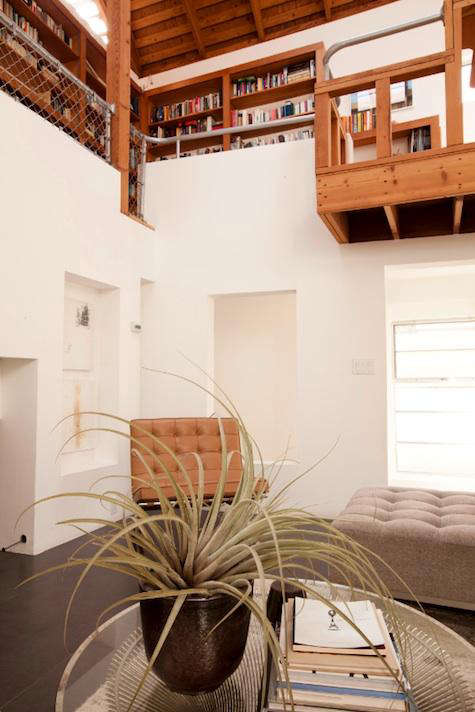
McAuliffe’s solution was not to bury the house under decorative noise. Instead, she used a subtle color scheme and focused on texture and finishes so the interiors would not compete with the architecture. This is a key lesson for anyone designing a home with strong original details: when the building has a voice, do not bring a megaphone. Bring harmony.
Architectural Character Comes First
The Venice house had distinctive architectural features, including exposed ceilings, industrial materials, and original elements connected to the home’s 1970s design lineage. Rather than disguising those details, McAuliffe worked with them. Industrial features like chain-link references, tall ceilings, and structural openness can easily feel harsh if paired with the wrong furniture. Her approach softened the space through textiles, warm wood, simple forms, and a restrained palette.
Cohesion Over Theme
In an open interior, one room visually borrows from the next. McAuliffe recognized that when a person stands in the living room and sees several other spaces, every choice has to speak the same language. That does not mean everything must match. Matching is easy; cohesion is harder. Cohesion means the dining chairs, sideboard, lighting, bedding, tables, and textiles all feel like they belong to the same household, not like strangers trapped together during a delayed flight.
Signature Elements of the Faye McAuliffe Venice Style
While each project is individual, several design principles appear again and again in McAuliffe’s work and in the broader Venice interiors she is associated with. These ideas are useful for homeowners, renters, stylists, and anyone who has ever bought a “temporary” chair and kept it for seven years.
1. Minimalism With Warmth
McAuliffe’s interiors show that minimalism does not have to feel like a gallery where you are afraid to breathe too loudly. Warm minimalism depends on natural textures, human-scale furniture, soft light, useful objects, and surfaces that invite touch. Think linen, birch, cedar, leather, cane, wool, ceramic, and matte finishes rather than shiny perfection.
2. Sculptural Lighting
Lighting is one of the fastest ways to understand a room’s personality. In McAuliffe’s Venice project, memorable lighting choices included modern, sculptural pieces that added form without clutter. A floor lamp can function like a vertical drawing in the room. A wall-mounted lamp can free up tabletop space while looking effortlessly intentional. Translation: yes, your lamp can be useful and attractive. We should expect this from all lamps. They have one job and a supporting role.
3. White Space That Actually Works
White walls, white linens, and pale surfaces can become sterile if treated as an endpoint. McAuliffe uses white as a framework. It reflects Venice’s bright coastal light and allows artwork, wood grain, black accents, plants, and shadows to register. The trick is layering. White cotton, white plaster, white paint, and white ceramic are not the same visually. Their differences create depth.
4. Furniture With Quiet Authority
In the Venice home, a strong dining table anchored the space. That is a McAuliffe-style move: choose fewer pieces, but make them count. A dining table should not apologize for existing. It should hold meals, laptops, flowers, bills, art projects, and the occasional emergency snack plate. In a restrained interior, the major furniture pieces carry more responsibility, so proportion and material matter.
5. Practical Storage That Disappears Gracefully
A floating sideboard in the Venice project offered storage without visual heaviness. This is the glamorous side of practicality. Good storage is not about pretending nobody owns phone chargers, dog leashes, receipts, and mystery screws from furniture assembly. It is about giving those objects somewhere civilized to go. Beautiful rooms are not created by having no stuff; they are created by having a plan for stuff.
Venice Indoor-Outdoor Living: The Real California Luxury
California design is often reduced to big glass doors and a few succulents, but the indoor-outdoor tradition is deeper than that. In Venice, where gardens, patios, roof decks, and courtyards are part of daily life, interiors often need to acknowledge the outdoors. McAuliffe’s work with outdoor spaces, including a low-cost roof deck project made with cedar slats, repurposed filing cabinets, outdoor furniture, and paper lanterns, shows a designerly willingness to be inventive rather than precious.
That project is especially revealing. It proves that style is not always about budget; it is about decisions. Turning old filing cabinets into planters is the kind of move that sounds unhinged until it works beautifully. Then everyone pretends they believed in it from the start. The cedar fence, dark painted planters, simple seating, and lantern glow created an outdoor room with resourcefulness and charm.
This is a valuable Venice lesson: outdoor areas do not need to be overdesigned. They need shade, seating, plants, light, and a reason to linger. If your roof deck or patio can handle morning coffee, evening drinks, a book, and one dramatic conversation about where to put the olive tree, it is doing its job.
How Faye McAuliffe Connects to LA’s Creative Family Tree
McAuliffe’s design story also connects to a larger family and artistic context in Venice. Milwood Design traces its beginnings to artist David McAuliffe, who founded Angles Gallery in Venice in 1978 and exhibited pioneers of minimalist art. Milwood’s own furniture philosophy emphasizes simplicity, honesty, utility, and handcrafted work in Venice. This background helps explain why Faye McAuliffe’s interiors often feel closely linked to art, furniture, and everyday function rather than surface decoration alone.
Another example is the Coldsmoke Venice shop, where Faye McAuliffe helped translate a rugged, refined brand identity into a physical space. The store combined natural light, minimalist modern elements, burnt cedar using the Japanese shou sugi ban technique, bleached birch, leather, earthy tones, and furniture with strong art-world references. It is an excellent case study in commercial interior design that feels residential in the best way: comfortable, aspirational, and grounded.
In both residential and retail settings, McAuliffe’s work suggests that “minimal” should never mean generic. The material story matters. The way light hits cedar matters. The decision to use leather instead of plastic matters. Design is not only how a place looks in a photograph; it is how it feels when someone walks in and instinctively lowers their shoulders.
How to Bring the Faye McAuliffe Venice Look Home
You do not need a Venice address, a Frederick Fisher-designed house, or a roof deck overlooking swaying palms to borrow from this style. You do, however, need discipline. Warm minimalism rewards patience and punishes panic buying. Before ordering another accent chair at midnight, consider these practical ideas.
Start With a Calm Palette
Use whites, creams, warm grays, soft blacks, natural woods, and muted earth tones as your base. The goal is not to remove color completely; it is to let texture do more of the work. Add color through art, books, flowers, ceramics, or a single upholstered piece rather than sprinkling random accents everywhere like decorative confetti.
Choose Texture Before Pattern
If a room feels flat, do not immediately reach for loud pattern. Try linen curtains, a wool rug, a leather sling chair, a raw wood bench, woven baskets, handmade ceramics, or plaster-like wall finishes. Texture ages better than trend-driven prints and gives a room that “collected over time” feeling even if you collected most of it during one highly focused weekend.
Let Lighting Create Mood
Overhead lighting alone is rarely flattering. It can make even a beautiful room feel like a dentist’s waiting area. Use floor lamps, wall sconces, table lamps, and lanterns to create layers. In a Venice-inspired interior, lighting should feel soft, sculptural, and a little atmospheric, especially at night.
Use Fewer, Better Objects
Edit surfaces. Keep the objects that have shape, story, usefulness, or emotional value. Remove the objects that are merely standing around hoping no one asks what they contribute. A McAuliffe-inspired room does not need clutter to feel personal. It needs intention.
Make Storage Beautiful
Floating cabinets, built-ins, low sideboards, simple shelving, and handsome boxes can transform daily mess into visual calm. The goal is not to become a person who owns only three spoons and a linen robe. The goal is to let real life happen without letting real life pile up on every horizontal surface.
Experience Add-On: A Design-Minded Visit to Faye McAuliffe’s Venice, LA
To experience the spirit behind “Designer Visit: Faye McAuliffe in Venice, LA,” imagine planning a day around observation rather than shopping alone. Start near the Venice Canals, where the neighborhood’s early dream of California-meets-Italy still floats quietly behind footbridges and small homes. The canals are not grand in the European sense; they are intimate, odd, and charming. That intimacy is useful for understanding Venice interiors. The best spaces here are not about monumentality. They are about atmosphere.
From there, walk toward Abbot Kinney Boulevard and look at how different design languages sit side by side. A century-old bungalow might be next to a clean-lined boutique. A shop may pair Japanese ceramics with California plants. A restaurant might use industrial materials but soften them with wood, warm light, and people who look like they own very good sunglasses. This is the Venice design education: contrast without chaos.
Step inside a few home and design shops, not necessarily to buy anything, but to train your eye. Notice the scale of a hand-thrown bowl, the negative space around a chair, the quiet confidence of a neutral rug, the way natural materials make a room feel expensive without screaming. Venice shopping can be dangerous because everything looks like it would improve your life immediately. Stay strong. Or at least measure before purchasing a bench.
For a McAuliffe-inspired lunch break, choose a place where the interiors feel relaxed rather than overproduced. Pay attention to the furniture: Are the tables doing visual work? Is the lighting flattering? Are the materials honest? Does the space make you want to linger? These are the same questions a good interior designer asks in a home. Restaurants are excellent classrooms because they must balance beauty, durability, comfort, traffic flow, and spills. So many spills.
In the afternoon, study the outdoor rooms of Venice: patios, roof decks, courtyards, tiny gardens, and balconies doing heroic things with limited square footage. McAuliffe’s filing-cabinet planter project is a reminder that outdoor design rewards imagination. A great patio is not defined by how much was spent, but by how thoughtfully it supports real rituals: watering plants, reading after work, hosting friends, eating takeout under lantern light, or sitting quietly while pretending not to check email.
Back at home, translate the experience into a design audit. Walk through your rooms and ask what feels too loud, too heavy, too temporary, or too disconnected. Look for opportunities to simplify without stripping away character. Maybe the bedroom needs white linens and one strong textile. Maybe the living room needs a better lamp, not a complete identity crisis. Maybe the dining area needs a real table that anchors the space instead of a wobbly compromise purchased during a moving-week emergency.
The most important takeaway from a Faye McAuliffe-style Venice visit is that good design does not perform elegance; it practices it. It shows up in proportion, restraint, material honesty, and comfort. It respects the architecture but does not become trapped by it. It gives people room to live. And yes, it probably includes at least one beautiful chair that makes guests ask where you found it.
Conclusion: The Quiet Power of Faye McAuliffe’s Venice Design
Faye McAuliffe’s Venice, LA design world is a lesson in restraint with feeling. Her interiors show how subtle color, strong texture, sculptural lighting, practical storage, and meaningful objects can create rooms that are calm but never boring. In a neighborhood famous for canals, artists, modern architecture, design shops, beach light, and creative reinvention, her work feels perfectly placed.
What makes the approach so appealing is its humanity. These are not rooms designed only for photographs. They are spaces for people who work, rest, host, read, cook, collect, edit, and occasionally hide clutter five minutes before guests arrive. The design is refined, but it does not scold. It understands that beauty and usefulness should be friends.
For anyone chasing a Venice-inspired home, the formula is simple but not simplistic: honor the architecture, edit the palette, layer natural materials, choose furniture with purpose, let light do its magic, and leave space for life to unfold. That is the essence of a great designer visitand the reason Faye McAuliffe’s LA style still feels fresh, grounded, and quietly irresistible.