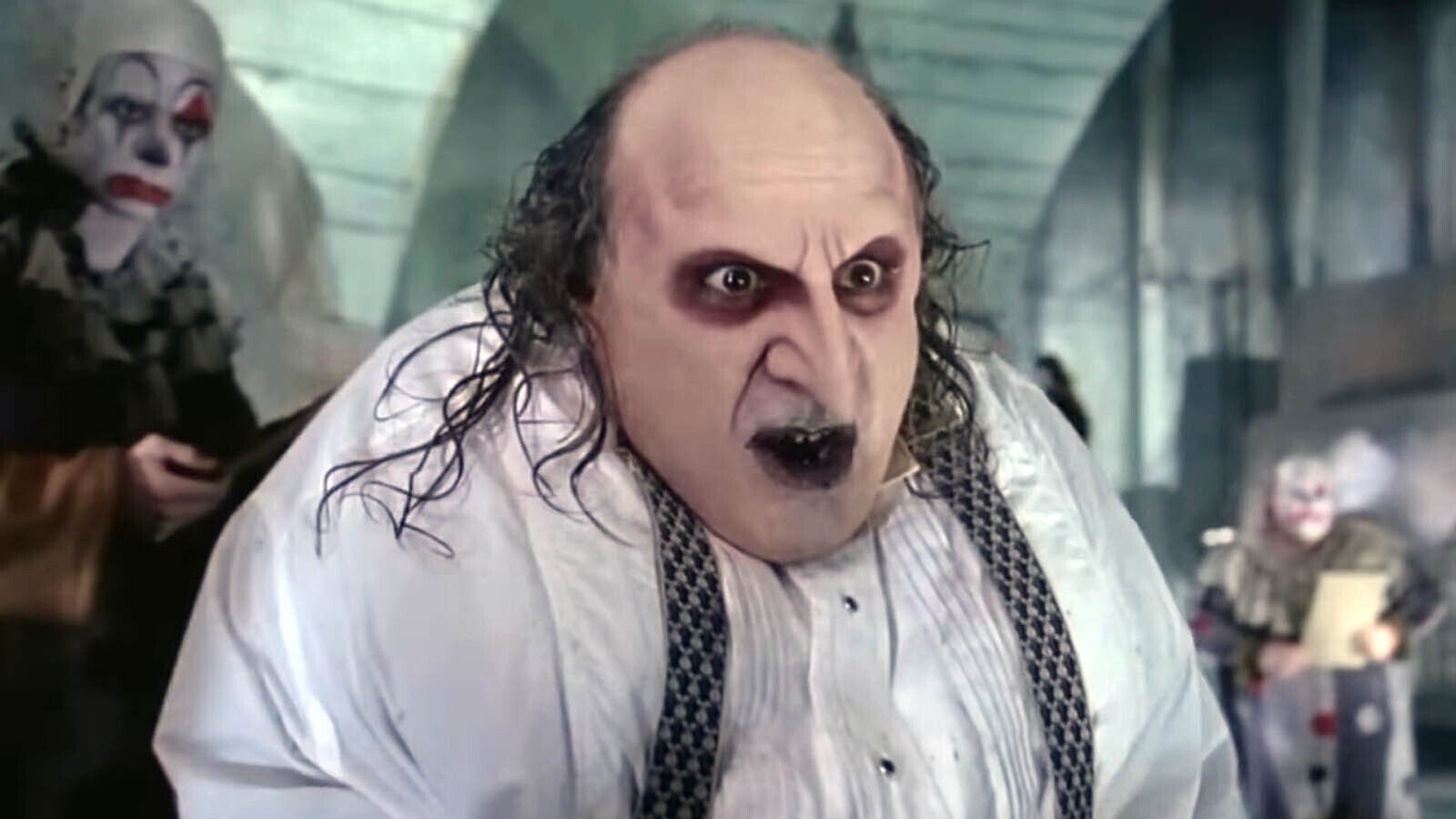
Danny DeVito has played enough unforgettable characters to fill a very strange, very loud, and probably very short elevator. Louie DePalma from Taxi. Frank Reynolds from It’s Always Sunny in Philadelphia. Harry Wormwood from Matilda. Phil from Disney’s Hercules. And, of course, Oswald Cobblepot, better known as the Penguin, in Tim Burton’s Batman Returns.
But if you ask fans which role still waddles through pop culture with the most gothic swagger, DeVito’s Penguin is usually near the top. Decades after the 1992 superhero film first hit theaters, the actor has made it clear that he would be open to putting the flippers back on, especially if Burton were involved. And honestly? The internet did not need much convincing. The moment people hear “Danny DeVito” and “Penguin” in the same sentence, the nostalgia machine starts making noises like a haunted circus organ.
The idea of Danny DeVito returning as the Penguin is more than a fun “remember when?” headline. It says something about how certain performances become permanent fixtures in movie history. Some roles are popular for a season. Others become Halloween costumes, memes, fan debates, comic-book side quests, and late-night “who played it best?” arguments. DeVito’s Penguin belongs to the second categorythe strange, slimy, brilliant category.
Why Danny DeVito’s Penguin Still Matters
When Batman Returns arrived in 1992, superhero movies were not the billion-dollar assembly line they are today. Tim Burton’s Gotham was not polished, bright, or designed to sell lunchboxes without making parents raise an eyebrow. It was shadowy, theatrical, weird, and full of characters who looked like they had escaped from a nightmare after stopping at a very dramatic costume shop.
Into that world stepped Danny DeVito as Oswald Cobblepot. His Penguin was not just a gangster with a fancy umbrella. He was a tragic carnival creature, a rejected child, a political manipulator, and a full-blown Burton monster wrapped into one unforgettable performance. DeVito did not play the character as a simple villain. He played him as a wounded, furious outsider who wanted acceptance, power, revenge, and maybe a decent sewer-cleaning service.
That is part of why the role still works. DeVito gave the Penguin humor, menace, sadness, and theatrical exaggeration. One minute he was disgusting. The next, oddly pitiful. Then, without warning, he was funny enough to make the audience laugh against its better judgment. It is not easy to make a comic-book villain both repulsive and sympathetic, but DeVito managed it with the confidence of someone who knew exactly how far to push the performance.
The Tim Burton Factor
Any conversation about DeVito returning as the Penguin has to include Tim Burton. DeVito has suggested that a return would make the most sense if Burton were involved again, and that condition feels important. The Penguin in Batman Returns is not just a character; he is a product of Burton’s entire visual universe.
Burton’s Gotham was built on contrast. It had Christmas lights and cruelty, snow and decay, fairy-tale visuals and political ugliness. In that setting, DeVito’s Penguin felt completely at home. He was not simply dropped into the movie; he seemed grown from the movie’s pipes, shadows, and circus posters.
A modern return without that atmosphere might feel like putting a haunted snow globe inside a corporate office. Technically possible, but spiritually confusing. Burton understood the character as both grotesque and vulnerable, which allowed DeVito to go big without losing the emotional thread. That combination is hard to recreate, and fans know it.
How Makeup Helped Create a Movie Monster
One reason DeVito’s Penguin remains so memorable is the physical transformation. The makeup and prosthetics gave him a pale face, sharp features, darkened teeth, unusual hands, and a silhouette that instantly separated him from every other screen villain of the era.
But the makeup did not do the acting for him. That is the trick. Great character design can create an unforgettable first impression, but it takes a performer to keep that image alive for two hours. DeVito used the costume and prosthetics like instruments. His posture, walk, voice, facial expressions, and bursts of manic energy turned the Penguin into something more than a makeup achievement.
Many modern superhero movies rely on digital effects to create impossible characters. Batman Returns leaned heavily into practical design, performance, sets, and physical atmosphere. That is one reason the movie still feels tactile. The Penguin looks like he exists in the room. You can practically smell the damp Gotham sewer, which is not a compliment to the sewer but is definitely a compliment to the filmmaking.
Why Fans Want Another Crack at the Role
The appeal of a DeVito comeback is not just nostalgia. It is curiosity. What would an older Penguin look like? Would he be a ghostly memory? A multiverse visitor? A twisted elder statesman of Gotham crime? A darkly comic narrator? A one-scene shock appearance? A voice role in animation? There are plenty of ways to revisit the character without pretending 1992 never ended.
The modern superhero landscape has also changed. Multiverse stories have made it easier for older versions of famous characters to return. Audiences have already accepted multiple Batmen, multiple Jokers, and multiple versions of Gotham. In that context, DeVito’s Penguin does not feel impossible. He feels like the kind of surprise cameo that would make theater audiences collectively drop their popcorn.
Still, the best version of this idea would need restraint. A full reboot built only on nostalgia could feel thin. But a carefully written return, especially one that respects Burton’s original tone, could be fascinating. DeVito’s Penguin does not need to compete with newer versions. He only needs the right setting, the right mood, and maybe one perfectly timed growl.
Danny DeVito vs. Colin Farrell: Two Penguins, Two Eras
Part of the renewed conversation around the Penguin comes from Colin Farrell’s acclaimed take on the character in The Batman and HBO’s The Penguin. Farrell’s version is more grounded, more crime-drama oriented, and more connected to the gritty underworld of Matt Reeves’ Gotham. He is less gothic nightmare, more ambitious mob operator.
That contrast actually helps DeVito’s version stand out even more. Farrell’s Penguin shows how the character can function in a modern prestige-TV crime story. DeVito’s Penguin shows how the same villain can become a tragic comic-book opera. Both interpretations work because they commit fully to their worlds.
Comparing them is fun, but it is not necessary to choose only one. Batman mythology has always survived through reinvention. The Joker, Catwoman, Riddler, and Penguin all change depending on the era. DeVito’s version remains iconic because it captured one very specific flavor: grotesque, theatrical, wounded, funny, and deeply strange.
The Role Fits DeVito’s Career Perfectly
Danny DeVito has built a career on characters who are bigger than their screen time. He understands how to turn a line reading into a punchline, a posture into a personality, and a villain into someone audiences cannot stop watching. That skill goes all the way back to Taxi, where Louie DePalma could be rude, outrageous, and somehow irresistible as a sitcom presence.
Later roles reinforced that gift. In Matilda, DeVito made Harry Wormwood cartoonishly awful without draining the movie of warmth. In It’s Always Sunny in Philadelphia, Frank Reynolds became a chaos machine, proof that DeVito could keep reinventing himself for new generations. His career is not built on looking like everyone else or playing it safe. It is built on commitment.
That is why the Penguin remains such a natural fit. Oswald Cobblepot requires an actor who can handle comedy, menace, sadness, and absurdity all at once. DeVito does not merely handle that mixture; he seems to enjoy swimming in it.
Could a Penguin Return Actually Work?
Yes, but only if the story has a real reason to exist. A cameo for applause is fun for ten seconds. A meaningful return can last much longer. If DeVito came back as Penguin, the project would need to understand what made the original performance powerful.
The first requirement would be tone. DeVito’s Penguin belongs in a heightened world. He should not be sanded down into a regular gangster in a black coat. The second requirement would be purpose. What does this version of Oswald Cobblepot have left to say? Is he a warning from another Gotham? A symbol of old-school villainy? A tragic echo? A bizarre mentor? The third requirement would be visual imagination. If the character returns, he should return with style.
There is also the question of format. A feature film is one option, but animation may be even more flexible. DeVito could voice an older Penguin in a stylized Batman project without needing to recreate every physical detail. A limited appearance in a multiverse film could also work. The key is not quantity. The key is impact.
Why This Story Keeps Getting Attention
The headline “Danny DeVito would love another crack at this iconic role” works because it touches several pop-culture nerves at once. It has nostalgia. It has Batman. It has an actor people genuinely like. It has a character with multiple famous versions. And it has the delicious possibility of unfinished business.
There is also something charming about DeVito’s openness. He does not sound like an actor running away from an old comic-book role. He sounds like someone who understands that the Penguin gave him a playground. And who would not want to revisit one of the strangest playgrounds in superhero cinema?
For fans, the excitement is not only about seeing the costume again. It is about seeing that specific energy return: the rasp, the bite, the theatrical weirdness, the sense that anything could happen when DeVito appears on screen. In an era when franchise storytelling can sometimes feel overly polished, a little old-school chaos sounds refreshing.
The Legacy of Batman Returns
Batman Returns has had an unusual journey. At the time of release, its darker tone and disturbing imagery divided some viewers. Over time, however, many fans and critics have reappraised it as one of the boldest superhero films ever made. It feels personal in a way many franchise films do not. It is unmistakably a Tim Burton movie before it is a brand extension.
DeVito’s Penguin is central to that legacy. Remove him, and the movie loses much of its strange emotional gravity. He is the dark mirror to Michael Keaton’s Batman and the grotesque counterpart to Michelle Pfeiffer’s Catwoman. All three characters are wounded outsiders wearing costumes, but each handles pain differently. Batman hides inside discipline. Catwoman transforms pain into sharp-edged freedom. Penguin turns rejection into spectacle and revenge.
That triangle gives the film its lasting bite. It is not merely a story about good guy versus bad guy. It is a story about identity, loneliness, performance, and what happens when society throws people away. Not bad for a movie that also includes an army of penguins. Cinema is a majestic art form.
Experiences Related to Danny DeVito Wanting Another Crack at the Penguin
For many viewers, discovering DeVito’s Penguin is a memorable experience because the character does not behave like a standard superhero villain. He is not sleek, cool, or conventionally intimidating. He is messy, theatrical, and unsettling. Watching him for the first time can feel like opening a comic book and finding a fever dream inside. That is part of the fun.
One common experience is revisiting Batman Returns years after seeing it as a child. As kids, many viewers remembered the umbrellas, the penguins, the creepy lair, and the general feeling that Gotham needed several health inspections. As adults, they often notice the deeper sadness in DeVito’s performance. The Penguin is horrifying, yes, but he is also desperate to be seen. That added layer makes the movie more interesting on repeat viewings.
Another experience comes from comparing different Penguins across generations. A fan might watch DeVito’s gothic version, then Farrell’s grounded crime-boss version, then animated versions from Batman television shows. Each one reveals a different side of the character. DeVito’s version is the most operatic. Farrell’s is the most street-level. Animated versions often lean into the aristocratic criminal mastermind angle. Together, they show why the Penguin has lasted so long: he can adapt.
There is also the experience of watching younger audiences discover DeVito through It’s Always Sunny in Philadelphia first, then realizing he was also one of the most memorable Batman villains ever. That discovery can be hilarious. One minute someone knows him as Frank Reynolds causing chaos in a bar; the next, they are watching him command Gotham’s sewer kingdom in heavy prosthetics. The surprise is part of DeVito’s magic. His career does not move in a straight line. It zigzags gleefully through comedy, drama, family films, comic-book madness, and prestige producing.
The idea of DeVito returning as Penguin also creates a familiar fan experience: hopeful speculation. People imagine scenes, posters, trailers, and reunion moments before anything is confirmed. Could Michael Keaton’s Batman cross paths with him again? Could Burton direct a short, strange epilogue? Could DeVito voice the character in an animated special? Fan imagination fills the gaps quickly, sometimes faster than a studio can schedule a meeting.
That excitement says a lot about the role’s durability. Not every performance invites that kind of dreaming decades later. DeVito’s Penguin does because it feels unfinished in the best way. The character’s original story had a clear ending, but the performance left behind a larger mythology. Fans do not simply remember what happened; they wonder what else could have happened.
In the end, the experience of revisiting this role is really about appreciating fearless acting. DeVito did not tiptoe into the Penguin. He lunged, waddled, snarled, joked, and fully surrendered to the absurdity. That kind of commitment is rare. Whether or not he ever gets another crack at Oswald Cobblepot, the first crack was strong enough to echo for more than thirty years.
Conclusion
Danny DeVito returning as the Penguin may or may not happen, but the fact that fans still want it proves how powerful the original performance remains. His Oswald Cobblepot was not just another Batman villain. He was a grotesque tragic figure, a dark comic creation, and one of the most distinctive characters in superhero movie history.
If DeVito ever does get another crack at the role, the project would need to honor what made the first version special: Tim Burton’s strange atmosphere, the practical artistry of the transformation, and DeVito’s fearless mix of humor and pain. Until then, Batman Returns remains the wonderfully weird gift that keeps on waddling.