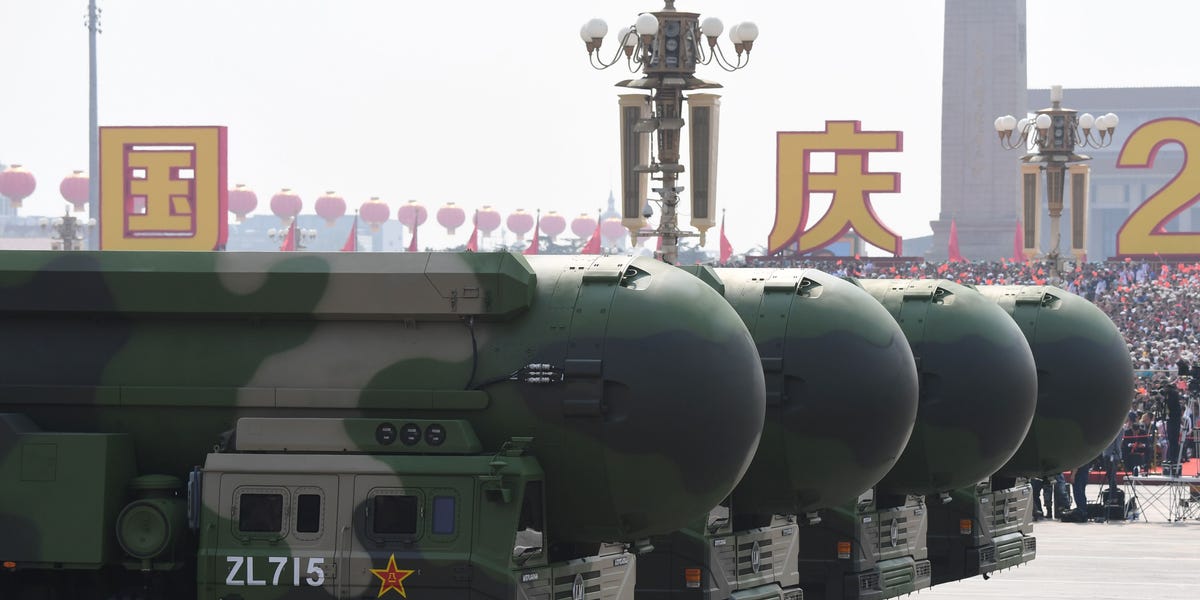
China’s nuclear arsenal has become one of the hottest topics in global security, and not the fun kind of hotmore like “everyone in the room suddenly checks the exits” hot. U.S. officials and defense analysts say Beijing is expanding and modernizing its nuclear forces at a pace that looks remarkable by historical standards. China, meanwhile, insists the story is exaggerated, politically motivated, and based on a “China threat” narrative that Washington keeps reheating like leftover takeout.
The result is a high-stakes debate with two competing soundtracks. In one, the Pentagon warns that China has moved beyond its old posture of a small, minimal nuclear deterrent and is building a larger, more diverse force. In the other, Beijing says its nuclear policy remains defensive, restrained, and committed to “no first use.” Both sides choose their words carefully, because in nuclear strategy, a single adjective can walk into a room wearing steel-toed boots.
This article breaks down what China denies, what the United States claims, why analysts call the expansion significant, and why this issue matters far beyond Washington and Beijing. No panic button requiredbut yes, the subject deserves serious attention.
What Is China Actually Denying?
China has repeatedly rejected claims that it is racing to build a massive nuclear arsenal. Its officials argue that Beijing maintains nuclear weapons only at the minimum level needed for national security and that it does not seek an arms race with the United States or Russia. That wording is important. China is not necessarily saying nothing is changing. It is saying the changes are being misrepresented.
In other words, Beijing’s message is: “Modernization? Yes. Reckless expansion? Absolutely not.” That distinction gives China room to update missiles, submarines, command systems, and supporting infrastructure while still claiming its overall nuclear strategy remains defensive.
Chinese officials also point out that the United States and Russia still possess far larger nuclear stockpiles. From Beijing’s perspective, Washington accusing China of dangerous expansion can sound like a giant complaining that someone else bought bigger shoes. China’s diplomatic line is that countries with the largest arsenals should reduce first before demanding more from smaller nuclear powers.
Why the Pentagon Calls the Expansion Remarkable
The U.S. Department of Defense has described China’s nuclear buildup as rapid, broad, and unusually opaque. In recent annual reports, the Pentagon estimated that China had surpassed 600 operational nuclear warheads by mid-2024 and could exceed 1,000 by 2030 if current trends continue. That would still leave China below the total inventories of the United States and Russia, but the speed of growth is what has alarm bells doing cardio.
For decades, China was widely understood to maintain a relatively small nuclear force designed mainly to survive an attack and retaliate. That posture supported Beijing’s long-declared “no first use” policy. The newer U.S. assessment suggests China may be moving toward a larger and more flexible nuclear force, one capable of giving Chinese leaders more options during a crisis.
The Pentagon and independent analysts have pointed to several visible signs: new missile silo fields, more road-mobile missile systems, improved submarine-launched missiles, and efforts to strengthen what is often called a nuclear triadland-based missiles, sea-based missiles, and aircraft capable of delivering nuclear weapons. Think of it as a three-legged stool, except nobody wants this stool wobbling in a crisis.
China’s “Minimum Deterrence” Argument
China’s official nuclear doctrine has long emphasized “minimum deterrence.” The basic idea is that China does not need numerical equality with the United States or Russia. It only needs enough survivable nuclear capability to convince any adversary that attacking China with nuclear weapons would bring unacceptable retaliation.
That logic is not unique to China. Many nuclear-armed states define their forces around deterrence rather than battlefield use. What makes the current debate tricky is that “minimum” is not a fixed number. A country’s leaders may decide that what counted as enough in 2005 no longer feels sufficient in 2026, especially if they worry about missile defenses, advanced conventional weapons, cyberattacks, space-based surveillance, and regional conflicts.
From Beijing’s point of view, a larger and more survivable nuclear force may be presented as a way to preserve deterrence, not abandon restraint. From Washington’s point of view, the same buildup may look like preparation for coercion or escalation during a Taiwan crisis or a broader Indo-Pacific conflict. Same chessboard, very different commentary track.
Why Missile Silos Changed the Conversation
One reason the debate intensified is the reported construction of new missile silo fields in western China. Open-source researchers, satellite imagery analysts, and U.S. defense officials have pointed to large-scale silo construction as evidence that China’s nuclear posture is changing in a visible way.
Silos do not automatically reveal how many missiles or warheads are actually deployed. Some could be empty. Some could be used as decoys. Some could hold missiles in the future. This uncertainty is part of the problem. In nuclear strategy, ambiguity can deter, but it can also make everyone nervous enough to refresh their briefing notes six times before breakfast.
For U.S. officials, the silos suggest China is building the infrastructure for a much larger force. For China, the existence of new infrastructure does not necessarily prove aggressive intent. Beijing can argue that survivability matters: fixed silos, mobile missiles, submarines, and other systems together make it harder for an adversary to believe it could neutralize China’s deterrent.
The Role of Taiwan and Indo-Pacific Tensions
China’s nuclear modernization cannot be separated from the broader strategic picture. Tensions over Taiwan, disputes in the South China Sea, U.S. alliances with Japan, South Korea, Australia, and the Philippines, and the growing military presence of both powers in the Indo-Pacific all shape how each side interprets the other’s intentions.
U.S. analysts worry that a larger Chinese nuclear arsenal could make Beijing more confident in a regional crisis. If Chinese leaders believed their nuclear force could deter U.S. intervention, they might take greater risks around Taiwan or other flashpoints. That concern is not a prediction that conflict is inevitable. It is a warning about how nuclear weapons can influence conventional decision-making.
China sees the issue differently. Beijing argues that U.S. alliances, missile defense systems, strategic bombers, submarines, and advanced conventional strike capabilities create pressure on China’s security environment. From that angle, modernization is framed as a response to American power, not a challenge to it.
Arms Control: The Missing Safety Rail
One of the biggest concerns is the lack of a strong arms control framework that includes China. The United States and Russia have decades of experience with nuclear treaties, inspections, counting rules, and crisis communication. That system is fraying, but at least the habit exists. With China, the habit is much thinner.
Washington has repeatedly urged Beijing to join nuclear arms control talks. China has generally resisted formal limits, arguing that its arsenal is much smaller than those of the United States and Russia. Beijing’s position is essentially: “Come back after the two biggest stockpiles shrink more.” The U.S. response is: “By the time we wait, the numbers and risks may be much bigger.” And around we go, like a diplomatic washing machine set to “strategic spin.”
Experts often suggest that the first step may not be a formal treaty. Instead, the two sides could build risk-reduction measures: regular strategic stability talks, clearer crisis communication channels, agreements on human control of nuclear weapons, and more transparency about doctrine. These steps would not solve everything, but they could reduce the chance that confusion turns into catastrophe.
Why Transparency Matters So Much
China’s nuclear force is harder to assess than those of the United States and Russia because Beijing releases far less information. That opacity is partly intentional. Secrecy can protect a smaller deterrent by making it harder for adversaries to target. But secrecy also creates suspicion. When outside analysts see construction, testing, and modernization but receive few official details, they fill the gaps with estimates.
Those estimates may be careful, but they are still estimates. Different organizations may count warheads, launchers, missiles, or “operational” weapons differently. A warhead stored separately from a launcher is not the same as a warhead mounted and ready for use. A completed silo is not the same as a loaded silo. These distinctions matter, especially when headlines compress complex nuclear posture into one alarming number.
This is why the phrase “remarkable expansion” can be both useful and incomplete. The expansion may indeed be remarkable compared with China’s previous posture. But the exact meaning depends on what is being counted, how ready those forces are, and what China plans to do with them.
How China’s Nuclear Policy Has Traditionally Worked
Since its first nuclear test in the 1960s, China has presented itself as a restrained nuclear power. Its “no first use” pledge says China will not be the first to use nuclear weapons under any circumstances. Beijing has also historically kept a smaller arsenal than the United States and Russia, relying on survivability rather than numerical parity.
That posture gave China a distinctive identity in nuclear politics. It could criticize superpower arms racing while maintaining its own deterrent. The challenge now is that modernization on a large scale makes China’s old image harder to defend without more transparency. If the arsenal grows quickly, outside observers naturally ask whether doctrine is changing too.
China says the answer is no. Many U.S. analysts say the answer is unclear. That uncertainty is the heart of the debate.
What This Means for the United States
For U.S. policymakers, China’s nuclear modernization complicates nearly every part of defense planning. During the Cold War, Washington mainly focused on a two-party nuclear balance with Moscow. Today, the United States must think about Russia, China, North Korea, and the possibility of coordination among rival nuclear-armed states.
This does not mean the world is automatically sliding into a sequel nobody asked for: “Cold War II: Now With More Wi-Fi.” But it does mean strategic planning is becoming more complex. U.S. officials must consider whether existing nuclear forces, missile defenses, alliances, and communication channels are suited for a world in which China is a much larger nuclear player.
The risk is not only war. It is miscalculation. If one side misunderstands the other’s doctrine, readiness, or red lines, a crisis could escalate faster than leaders expect. Nuclear stability depends on more than weapons; it depends on communication, predictability, and restraint.
What This Means for the World
China’s nuclear buildup is part of a broader global trend. Nearly all nuclear-armed states are modernizing their arsenals. Arms control agreements are weaker than they were a decade ago. New technologiescyber tools, artificial intelligence, space systems, hypersonic weapons, and advanced surveillanceare changing how countries think about deterrence.
That matters because nuclear risk is not a local problem. A crisis involving China and the United States would shake global markets, alliances, supply chains, and diplomatic systems. Even countries far from the Indo-Pacific would feel the consequences. Nuclear weapons are like the world’s worst group project: even if you did not sign up, you are still affected by the grade.
The best outcome is not for every country to shout louder. It is for nuclear-armed states to rebuild habits of communication and restraint. That includes China, the United States, Russia, and other nuclear powers. Denials and accusations may win headlines, but transparency and dialogue reduce danger.
Experience-Based Takeaways: How to Read This Issue Without Getting Lost
Following the debate over China’s nuclear arsenal can feel like trying to read a weather forecast written by lawyers, generals, and satellite analysts at the same time. The first experience-based lesson is simple: do not treat every number as equally solid. A warhead estimate is not the same thing as a confirmed deployment. A missile launcher is not the same as a fully armed missile. A newly built facility may show intent, preparation, or strategic signaling, but it does not always reveal the full operational picture.
The second lesson is to separate capability from policy. China may be building the capability for a larger nuclear force while still claiming a defensive policy. That sounds contradictory, but in international security, countries often argue that bigger forces are necessary to preserve stability. The United States says something similar about parts of its own modernization program. The key question is whether the buildup makes crises more stable or less stable.
The third lesson is that denials are not always simple falsehoods. When China denies a “remarkable expansion,” it may be rejecting the political framing rather than every factual detail. Beijing can acknowledge modernization while denying that it is seeking parity, superiority, or an arms race. Readers should look for what is specifically denied and what is left unsaid. Diplomatic language often has more trapdoors than an old mystery mansion.
The fourth lesson is that transparency is not just a moral preference; it is a practical safety tool. When countries provide little information, their rivals plan for worst-case scenarios. Worst-case planning then pushes military budgets, deployments, and doctrines in harder directions. That cycle can become self-reinforcing. One country says, “We are only responding to you,” while the other says, “Funny, we were about to say the same thing.”
The fifth lesson is to watch arms control, not just arsenal size. The future danger will depend not only on how many weapons China builds, but also on whether Washington and Beijing can create reliable channels for crisis communication. Even modest agreements can matter. A hotline, a recurring dialogue, or a shared statement on human control of nuclear decisions may sound boring compared with missile counts, but boring is underrated when the alternative is nuclear confusion.
The final lesson is to resist headline whiplash. One headline may suggest China is racing toward nuclear dominance. Another may emphasize that the United States and Russia still hold much larger arsenals. Both can contain truth, but neither tells the whole story. The balanced view is this: China’s nuclear arsenal is growing and modernizing in ways that are strategically important; China denies that this represents reckless expansion or an arms race; and the world would benefit from more transparency, more dialogue, and fewer dramatic adjectives wearing combat boots.
Conclusion
China’s denial of a “remarkable” nuclear expansion is not the end of the story. It is the beginning of a larger debate about deterrence, transparency, military modernization, and trust. The United States sees evidence of rapid growth and diversification. China sees accusations that ignore American and Russian nuclear dominance. Independent analysts see a fast-changing nuclear landscape filled with uncertainty.
The most important takeaway is not that one side has the perfect narrative. It is that nuclear stability depends on reducing ambiguity before ambiguity becomes dangerous. China’s arsenal may still be smaller than those of the United States and Russia, but its growth is reshaping strategic calculations. Denials may calm domestic messaging, but dialogue is what calms crises.
Note: This article is based on public, non-operational information from reputable government, defense, arms control, and foreign policy sources. It does not include technical instructions, classified material, or guidance related to the use of weapons.