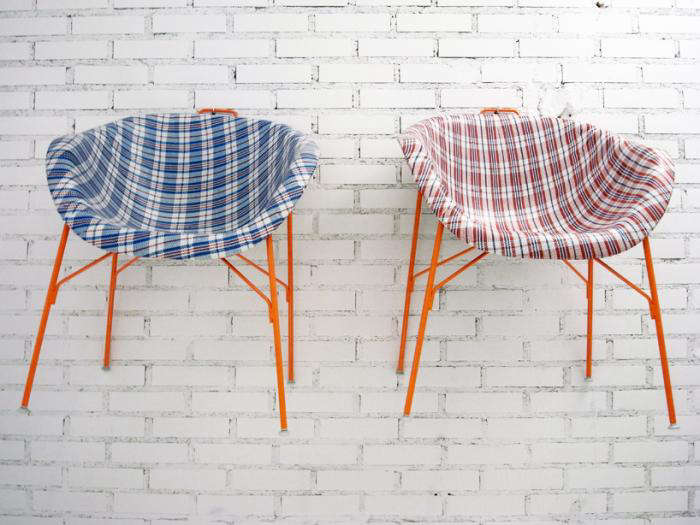
Most chairs are hired to do one job: keep a person from landing on the floor. A rare few are promoted to a more glamorous position. They set the mood, start conversations, sharpen a room’s pen. Paola Navone’s Eu/phoria chair for the Italian furniture company Eumenes belongs to that second group.
Its name is not shy. Neither is the chair. A broad, curved shell rests on a slender steel support, while vivid checks, technical textiles, and unexpected color combinations turn a familiar modernist silhouette into something mischievous. It looks as though a sensible mid-century chair packed a weekend bag, went to a street market, and returned with better stories.
Yet the Eu/phoria chair is more than visual comedy. Its material origins, manufacturing logic, ergonomic shape, and emotional appeal make it a useful case study in how modern furniture can combine comfort, technology, sustainability, and delight.
Meet the Eu/phoria Chair
A Playful Idea From Paola Navone
Paola Navone is known for an eclectic design language shaped by architecture, craft, travel, color, and an unusually relaxed attitude toward convention. Rather than treating modern design as a strict uniform of beige, chrome, and serious facial expressions, she often mixes industrial methods with folk references, familiar patterns, and cheerful irregularity.
The Eu/phoria project reflects that approach. Introduced for Eumenes in the early 2010s, it uses a generously proportioned monocoque shell supported by a powder-coated steel structure. The collection appeared in multiple versions, ranging from exposed patterned shells to softer upholstered models. Some of the textiles recalled the oversized checks and woven grids of inexpensive market bagsa humble visual reference elevated into high-design furniture. That contrast is central to the chair’s personality. The form is polished, engineered, and contemporary, but the surface can feel casual and familiar. It refuses the idea that sophisticated furniture must whisper.
From Automotive Interiors to the Living Room
The shell was developed using Woodstock®, a thermoformable composite made from polypropylene and wood powder or wood-processing residue. The material had applications in automotive interiors before being translated into furniture. In the Eu/phoria chair, it could be shaped into a broad, continuous seat while retaining the flexibility and durability needed for everyday use. This material choice gives the chair a memorable design story, but it also serves a practical purpose. A molded shell can distribute support across the back and hips without requiring a forest of joints, rails, and braces. It also allows the designer to create a continuous visual gesture: the seat, sides, and back read as one welcoming scoop rather than a collection of assembled parts.
Why the Chair Feels Euphoric
Color Creates the First Spark
People often describe color as though every hue has a fixed emotional instruction manual: blue equals calm, yellow equals happiness, and red equals energy. Real responses are more complicated. Context, brightness, saturation, culture, lighting, scale, and personal memory all matter. Still, research on interior environments indicates that color can influence preference, emotional response, perceived comfort, and the atmosphere of a space. The Eu/phoria chair uses color as an invitation rather than a command. Bright frames, lively grids, and contrasting shells introduce energy without requiring the entire room to become a carnival. A single chair can work as a visual exclamation point. A set can create rhythm, especially when colors are mixed rather than matched with military precision.
Curves Communicate Comfort Before Anyone Sits
Rounded forms tend to look less defensive than sharp, boxy ones. The Eu/phoria shell bends around the sitter, creating a visual impression of enclosure without becoming a giant upholstered cocoon. That impression matters because furniture is judged twice: first by the eye and then by the body.
Modern shell chairs have long used continuous curves to combine structure and support. Charles and Ray Eames explored the adaptable single-shell form in molded plywood, fiberglass, and plastic. Eero Saarinen’s Womb Chair employed an enveloping fiberglass body intended to support relaxed positions, while Verner Panton pushed the concept toward a sculptural, self-supporting chair. Eu/phoria joins this family but adds Navone’s pattern-heavy, anti-solemn personality. >A Light Base Keeps the Mood Buoyant
The steel support appears visually lighter than the shell. This balance prevents the chair from looking bulky, even though the seat is broad. Open space around the legs lets flooring remain visible and helps the object float within a room.
That quality is useful in compact interiors, where a fully upholstered chair with a heavy base may consume more visual space than its measurements suggest. Eu/phoria has presence, but it does not sit in the corner like a parked delivery truck.
Mid-Century DNA Without the Museum Hush
The molded shell is one of modern furniture’s most durable ideas. During the twentieth century, designers experimented with plywood, fiberglass, plastics, foam, and metal to produce seats that were lighter, more affordable, easier to manufacture, and better suited to changing lifestyles. The chair stopped being merely a small wooden building and became a sculpted surface.
Eu/phoria clearly participates in that history, but it does not behave like a reverent reproduction. Its patterns interrupt the clean, universal language associated with classic shell chairs. Instead of pretending to disappear into any setting, it announces that an individual with tasteand possibly a sense of humorlives here.
This is why the chair remains visually relevant. Contemporary interiors often contain familiar modernist ingredients: pale walls, simple tables, exposed flooring, and restrained cabinetry. A highly expressive chair can keep such rooms from feeling like beautifully photographed waiting areas.
Comfort: Joy Still Needs Back Support
A chair can resemble a tropical bird, a cloud, or a minor celebrity, but it still has to cooperate with the human body. Good seating allows the sitter to use the backrest, supports the thighs without pressing behind the knees, and provides enough width and depth for the intended activity.
Dining, working, reading, and lounging place different demands on a chair. A dining chair should support an upright position and fit comfortably beneath the table. A reading chair benefits from a more relaxed back angle and space for changing positions. A task chair needs adjustability because people rarely maintain one perfect posture throughout a workday.
Eu/phoria’s broad shell and curved back suggest relaxed occasional seating rather than a highly adjustable office chair. It can be appropriate for conversation, dining, hospitality spaces, bedrooms, and short periods of desk use, depending on the version and the sitter. For eight-hour computer work, adjustable height, lumbar support, seat depth, arm support, and movement become far more important than sculptural charm.
Ergonomic guidance also emphasizes that seat depth should allow the user to reach the backrest without the front edge pressing behind the knees. Back support, suitable dimensions, and the ability to vary posture are essential considerations for prolonged sitting. The practical lesson is simple: emotional design and ergonomic design should be friends, not rivals. Before buying any statement chair, sit in it long enough for the initial visual crush to settle down. Check whether your feet rest comfortably, whether the seat edge presses into your legs, and whether the back curve supports rather than merely photographs well.
Is the Eu/phoria Chair Sustainable?
The chair’s use of wood-processing residue and polypropylene was inventive, especially because it redirected an automotive material into furniture. Using waste-derived content can reduce demand for virgin feedstocks, and a durable chair that remains desirable for years may avoid the rapid replacement cycle associated with disposable furniture.
However, “contains recycled material” is not the same as “environmentally perfect.” Composite materials can be difficult to separate at the end of a product’s life. Upholstery, adhesives, coatings, transportation, repairability, chemical emissions, and local recycling infrastructure also affect the environmental picture. Responsible evaluation looks beyond one green-sounding ingredient.
For modern buyers, useful questions include: Can the upholstery be replaced? Are spare parts available? Has the product been tested for durability and chemical emissions? Can components be disassembled? Does the manufacturer disclose material content?
Furniture standards and third-party programs can provide measurable criteria covering durability, emissions, material selection, and broader sustainability performance. Organizations such as BIFMA and UL Solutions maintain standards or certification programs intended to help buyers evaluate these qualities. Certifications are helpful, but longevity remains wonderfully unglamorous and important. The greenest chair is often the one people love enough to maintain, repair, and keep.
How to Style Chairs With a Sense of Euphoria
Let One Chair Lead the Room
In a restrained living room, a patterned Eu/phoria chair can act as the focal point. Give it breathing room beside a simple floor lamp, a small side table, and a textured rug. Repeating one of the chair’s colors in a cushion, artwork, or vase creates cohesion without turning the space into a matching set.
Mix Colors Around a Dining Table
A group of identical chairs in different colors can feel collected rather than chaotic when the table is visually simple. Wood, white laminate, glass, or dark stone can provide a stable center. Keep nearby accessories quieter so the seating carries the rhythm.
For a subtler arrangement, choose several chairs in one finish and introduce a single contrasting chair at the head of the table. This gives the setting personality without making every dinner feel like a board meeting held inside a box of crayons.
Use Contrast Instead of Imitation
Do not search for a sofa, curtains, rug, and wallpaper wearing the same pattern. That is not coordination; that is witness protection for the chair. Pair a lively shell with matte surfaces, natural wood, solid textiles, and uncomplicated lighting. Contrast makes the design look intentional.
Place It Where People Can See the Profile
Sculptural chairs deserve more than being shoved against a wall. Angle the seat slightly into the room so its curved shell and steel support remain visible. This also encourages conversation and creates a more relaxed arrangement than lining every object around the perimeter like nervous guests at a school dance.
Use Lighting to Reveal the Shape
Soft directional light emphasizes the curve of the shell and creates gentle shadows beneath the base. Avoid placing a highly reflective or colorful chair under harsh overhead lighting alone. A nearby floor lamp, wall light, or window can reveal its form more effectively.
Where Expressive Chairs Work Best
Living Rooms
An expressive chair can break up a large sofa arrangement and create a separate reading or conversation zone. It is particularly useful when the rest of the furniture is neutral and low-profile.
Dining Areas
Shell chairs offer a clean silhouette around a dining table and are often easier to visually organize than bulky upholstered seating. Patterned versions introduce movement without taking up additional floor space.
Bedrooms
A single joyful chair can give a bedroom a finished look while providing a place to read, put on shoes, or temporarily hold clothing that will definitely be folded later. Definitely.
Creative Workspaces
Studios, agencies, showrooms, and collaborative offices often benefit from furniture that communicates experimentation. A memorable chair can become part of a company’s visual identity, although it should not replace genuinely ergonomic task seating for prolonged work.
Hotels, Restaurants, and Reception Areas
Hospitality interiors need recognizable moments. An unusual chair can help guests remember a lobby, lounge, or restaurant long after they forget the exact shade of the walls. Durability, cleanability, fire requirements, and commercial-use testing should still guide the final specification.
What to Look for When Buying an Expressive Chair
Whether shopping for an original Eu/phoria chair, a vintage example, or another joyful statement seat, evaluate the whole object rather than falling for the front-view photograph.
- Provenance and authenticity: Verify the manufacturer, designer attribution, labels, documentation, and seller history when collectible value matters.
- Structural condition: Inspect the steel frame, welds, glides, shell edges, and mounting points. A beautiful chair should not wobble like it knows a secret.
- Surface condition: Look for fading, cracking, delamination, stains, stretched fabric, or amateur repairs.
- Fit: Confirm the seat height, width, depth, and table clearance. A chair can be iconic and still collide with your knees.
- Maintenance: Ask how the textile should be cleaned and whether replacement upholstery or components are available.
- Purpose: Decide whether the chair will be used for meals, work, reading, conversation, or display.
- Indoor air quality: When buying newly manufactured furniture, look for material disclosures and credible low-emission testing or certification.
Measurements are especially important when purchasing online. Use masking tape to mark the proposed footprint on the floor, then compare the seat height with nearby tables. A chair that looks compact in a white photography studio may develop the wingspan of a small aircraft when it arrives in a city apartment.
The Emotional Job of a Chair
Furniture organizes behavior. A dining chair invites people to gather. A lounge chair gives permission to stay. A rocking chair creates rhythm. A vividly patterned chair can do something equally valuable: it can interrupt routine.
That emotional function is not superficial. Homes are not neutral containers for objects. Their colors, textures, lighting, proportions, and furnishings influence whether they feel restorative, stimulating, formal, playful, or impersonal. Research into environmental and interior psychology has examined how design elements can affect satisfaction, stress, mood, and perceptions of comfort. A joyful chair cannot solve a bad week, but it can make the room that receives you at the end of that week feel more alive.
Eu/phoria succeeds because its optimism is built into the object rather than pasted on as decoration. The shell is generous. The base is light. The material story is unexpected. The patterns treat everyday visual culture as worthy of design attention. Together, those decisions create a chair that performs its practical role while delivering a tiny theatrical event.
An Extended Experience: Living With a Chair That Changes the Room
Imagine bringing one expressive chair into a quiet apartment. On the first day, it feels almost too present. The room may have spent years practicing beige diplomacy, and suddenly there is a broad checked shell sitting near the window like a guest who arrived wearing magnificent glasses. You notice it every time you walk past. That is the point.
During the first week, the chair becomes a test of the surrounding space. A patterned throw that once looked harmless may begin competing with it. A small table may seem too fussy. You move a lamp, remove two decorative objects, and rotate the rug. The chair has not merely entered the room; it has started editing.
Then the social effects appear. Visitors ask about it before they ask about the artwork. Someone touches the shell. Someone else guesses that it is vintage. The person who normally chooses the sofa sits in the chair, turns slightly toward the group, and stays there through coffee.
A distinctive seat creates a small role within the room. It becomes the curious person’s chair, the storyteller’s chair, or the chair claimed by the friend who always arrives first. Ordinary furniture accommodates social life. Memorable furniture occasionally directs it.
Daily use makes the experience less theatrical and more intimate. The chair catches a jacket in the morning, supports a ten-minute phone call in the afternoon, and becomes a place to read while dinner cooks. Its boldness gradually stops feeling bold. It becomes familiar without becoming invisible, which is a difficult trick for any object.
The physical experience also becomes clearer. A molded shell feels different from a traditional upholstered armchair. It supports through shape rather than deep cushioning. The sitter is held, but not swallowed. This can feel pleasantly alert during conversation or a meal.
For a long evening with a novel, some people may want a seat cushion, an ottoman, or a softer lounge chair. Euphoria is not the same as numbness; comfort can include a little structure. A chair does not need to imitate a mattress to treat the body well.
Over time, the chair’s imperfections become part of ownership. A small mark appears near the base. Fabric may soften. Light changes the colors throughout the day. Instead of ruining the object, these changes can make it feel less like a showroom specimen and more like household history. Durable design earns character because it stays long enough to collect evidence of life.
The chair may also change how new objects are selected. Before buying another lamp, table, or rug, you consider whether it supports the room’s emerging personality. Purchases become slower and more deliberate. One strong object can reduce the urge to fill a space with numerous smaller decorations.
The most satisfying moment may arrive months later, when you stop thinking of the chair as a statement piece. It simply belongs. Removing it would make the room feel quieter, flatter, and oddly unfinished. That is the real experience of successful expressive furniture: it begins as an exclamation point and ends as part of the grammar of home.
Of course, not every euphoric chair needs checks, bright orange steel, or a famous designer’s signature. The broader lesson is to choose at least one seat that gives more than adequate service. Look for a form that makes you curious, a material you want to touch, a color that improves the light, or a silhouette that changes as you walk around it.
Practicality keeps a chair in the house. Affection keeps it out of the landfill.
Conclusion
Chairs with a sense of euphoria remind us that usefulness does not require emotional silence. Paola Navone’s Eu/phoria chair takes the proven logic of the molded shell and gives it a more adventurous life through industrial materials, vivid pattern, open structure, and a generous attitude toward color.
Its strongest lesson is not that every room needs this exact chair. It is that seating can support both the body and the atmosphere. The best expressive chairs are comfortable enough to use, durable enough to keep, distinctive enough to remember, and joyful enough to make an ordinary actsitting downfeel briefly special.