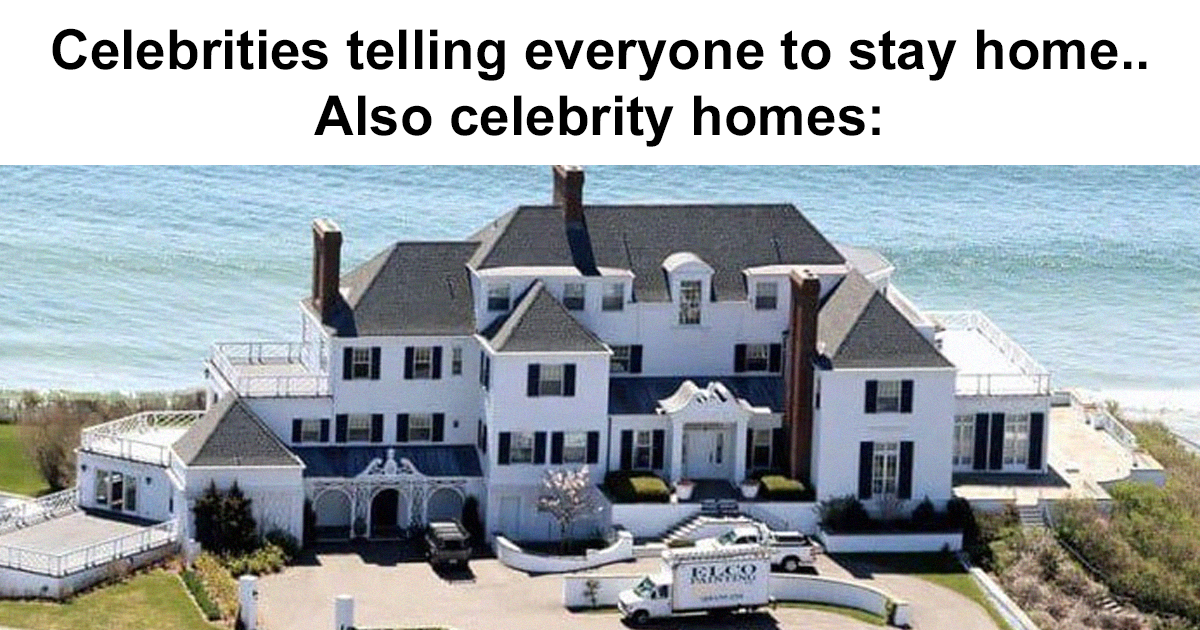
There was a strange moment during the early COVID-19 quarantine when millions of people looked at their phones and collectively realized something important: perhaps they did not need a celebrity to explain being stuck aansion with an infinity pool, a home theater, six fireplaces, and a kitchen island roughly the size of Delaware.
As lockdowns disrupted work, schools, travel, and ordinary social life, social media became the world’s nervous living room. People refreshed feeds for news, reassurance, jokes, and proof that somebody else had also reached the stage of quarantine where eating cereal over the sink counted as dinner. Celebrities naturally joined the conversation. The problem was that some of their quarantine content landed with all the grace of a diamond chandelier falling into a kiddie pool.
Perhaps the defining example was Gal Gadot’s celebrity-filled rendition of John Lennon’s “Imagine.” Intended as a morale-boosting singalong, the video rapidly became an emblem of tone-deaf celebrity quarantine content and attracted widespread mockery. The cultural backlash became so memorable that later discussions of pandemic entertainment repeatedly returned to it as a cautionary example. ernet did what the internet does when presented with an awkward display of wealth, sincerity, and questionable timing: it made memes.
Below are 27 of the funniest meme-worthy themes behind the great celebrity quarantine roast. The jokes were not always gentle, but they revealed something fascinating about fame, relatability, social media, and just how quickly public patience can disappear when a star says, “We’re all the same,” while sitting beside an indoor waterfall.
Why Celebrity Quarantine Content Suddenly Felt So Annoying
Celebrity culture traditionally depends on distance. Movie stars arrive on red carpets looking approximately 400 percent more polished than the average human being at a grocery store. Musicians appear on giant stages. Famous people are photographed stepping out of restaurants that require reservations before you are born.
Quarantine changed the camera angle.
Suddenly, celebrities were posting directly from home. The intention was often to seem intimate and relatable. Unfortunately, home videos also revealed exactly how differently wealthy people experienced isolation.
The economic backdrop mattered. The U.S. unemployment rate climbed to 14.7 percent in April 2020, with 23.1 million people unemployed according to the Bureau of Labor Statistics. CDC research also documented major racial and ethnic disparities in COVID-19 hospitalization and other pandemic outcomes. Against that reality, messages suggesting the virus had made everyone socially or materially equal were especially vulnerable to criticism. not simply jealous of swimming pools. They were reacting to a mismatch between the message and the messenger.
And that mismatch was premium meme fuel.
27 Meme-Worthy Ways the Internet Roasted Celebrity Quarantine Content
1. “Imagine” Paying My Rent Instead
The celebrity “Imagine” singalong became the unofficial opening ceremony of quarantine cringe. Famous faces softly singing into smartphones were supposed to communicate unity. Many viewers had a different reaction: nice harmonies, but does the chorus include instructions for applying for unemployment benefits?
The meme version was brutally simple. People imagined landlords accepting celebrity vocals as payment. Sadly, “Imagine there’s no late fees” was not official housing policy.
2. Quarantine Is Hard When Your Mansion Has Too Many Wings
One recurring meme compared an ordinary apartment lockdown with celebrity isolation. On one side: a person working at a folding table three feet from the refrigerator. On the other: a celebrity explaining boredom while wandering through a landscaped estate.
The internet’s response was essentially, “Have you tried quarantining in the east wing for a change?”
3. Ellen’s “Jail” Joke Gets a Reality Check
Ellen DeGeneres faced criticism after joking that quarantine felt like being in jail while broadcasting from a luxurious California home. The joke was widely treated as a striking example of pandemic-era celebrity disconnect. rs immediately volunteered as prison architects. Apparently, jail now came with enormous windows, designer furniture, private outdoor space, and no actual incarceration. The Department of Corrections must have undergone a surprising HGTV makeover.
4. Madonna Discovers Equality in a Rose-Petal Bath
Madonna called COVID-19 “the great equalizer” in an Instagram video filmed from a bathtub filled with rose petals and surrounded by candles. Critics questioned both the message and the visual setting. make a speech about universal equality harder to deliver than appearing to broadcast from the world’s most luxurious spa commercial.
The memes practically wrote themselves: “We are all equal,” said the woman whose bathtub apparently had a floral department.
5. David Geffen’s Yacht Becomes the Internet’s Favorite Isolation Pod
Billionaire David Geffen attracted intense criticism after posting about isolation from a massive yacht in the Grenadines. Reports described the vessel as worth hundreds of millions of dollars, and Geffen later deleted his Instagram account after the backlash. ers responded with their own quarantine updates: “Isolated safely between my bed and the laundry chair. Hope everyone is staying healthy.”
Same basic idea. Slightly fewer helipads.
6. The Celebrity Quarantine Meltdown Starter Pack
Photos of famous people appearing bored or emotionally exhausted inspired another meme format: the “celebrity meltdown starter pack.”
Ingredients included luxury pajamas, perfect natural lighting, a large garden, a distressed facial expression, and a caption explaining that this was “day three.”
Meanwhile, ordinary parents were conducting Zoom meetings while a child attempted to microwave a crayon.
7. “How Did They Get Tested So Fast?”
Early in the pandemic, public frustration also focused on reports of celebrities, athletes, and other prominent people receiving COVID-19 tests while ordinary patients described difficulty accessing testing. Media coverage documented a widespread perception that fame and wealth offered faster access. magined a fictional testing checklist:
Symptoms? Maybe.
Doctor’s referral? Unclear.
Blue check mark? Right this way, sir.
8. “Please Stay Home,” Says Person With a Tennis Court
The public-health advice itself was sound. Staying home and reducing contact were important pandemic precautions. But meme creators noticed that the phrase “just stay home” sounded remarkably different depending on the available square footage.
A celebrity filmed beside a pool was compared with four roommates sharing one bathroom.
Technically, both were indoors. Spiritually, these were different planets.
9. The Extremely Relatable Celebrity Pantry Tour
Quarantine produced endless videos about cooking and pantry organization. Some were useful. Others appeared to introduce viewers to ingredients normally found only when a private chef whispers the password to a secret farmers market.
“Just use what you have,” said the celebrity, casually reaching for organic saffron, truffle salt, and a lemon harvested by monks.
The average viewer opened a cabinet containing three crackers and a suspicious can of beans.
10. Home Gyms Bigger Than Local Fitness Centers
Celebrity workout videos became another target. Viewers were encouraged to “keep moving” as stars exercised in private gyms equipped with racks of weights, specialized machines, giant mirrors, and enough floor space to land a small plane.
People responded by lifting laundry detergent bottles.
Resistance is resistance, friends.
11. The Swimming Pool Accidentally Entering the Frame
A classic quarantine-content technique involved carefully framing a “casual” video so that an enormous pool remained accidentally visible in the background.
Very accidental.
Completely unavoidable.
There simply was no other direction to point the camera across the 14,000-square-foot property.
12. “No Makeup Today” With Professional Lighting
Stars embraced the supposedly raw quarantine selfie. The captions announced messy hair, no makeup, and total authenticity.
The internet examined the soft lighting, immaculate skin, suspiciously artful framing, and bedroom that looked ready for an Architectural Digest cover.
Apparently, some people wake up naturally surrounded by three-point lighting.
13. Day Three: Celebrity Has Forgotten Civilization
Many memes mocked how quickly famous people presented themselves as overwhelmed by isolation.
“Day three. Time has no meaning.”
Regular viewers, already familiar with canceled shifts, childcare emergencies, and crowded homes, responded: “Ma’am, it is Wednesday.”
Quarantine may have distorted time, but Instagram’s dramatic caption department remained fully operational.
14. The Invisible Private Chef Problem
When celebrities documented elaborate meals without discussing who prepared them, meme creators invented an unseen army of quarantine assistants.
One frame showed a celebrity saying, “I just threw something together.”
The imagined second frame showed twelve exhausted culinary professionals crouching behind the kitchen island.
The joke was exaggerated, of course. That is what memes do. But the broader question about invisible labor was not entirely silly.
15. Zoom Background or Luxury Real Estate Listing?
Remote interviews introduced viewers to celebrity interiors. Suddenly, fans knew who owned dramatic bookshelves, giant artwork, ocean views, and suspiciously tasteful sculptures.
Memes transformed celebrity Zoom appearances into real estate listings.
“Today, we discuss the new movie. Behind me: five bedrooms, seven bathrooms, and a fireplace currently playing my emotional support fire.”
16. The Great Celebrity Haircut Emergency
Haircuts became serious content. Stars posted dramatic updates about roots, bangs, beards, and home styling disasters.
The internet, facing a historic health crisis, responded with appropriate sensitivity.
Just kidding. It made side-by-side memes comparing a celebrity’s half-inch of visible roots with civilization collapsing in an action movie.
17. Sourdough, But Make It an Exclusive Lifestyle Brand
Ordinary people baked bread during quarantine. Celebrities baked bread during quarantine. Influencers somehow made bread look like it required a creative director.
The meme version featured a normal loaf labeled “my quarantine bread” beside a perfectly photographed celebrity loaf labeled “a meditation on gluten, solitude, and human rebirth.”
Sir, it is carbohydrates.
18. “We’re All in the Same Boat” Gets a Yacht Update
Few quarantine phrases were roasted as enthusiastically as “we’re all in the same boat.”
The internet improved the metaphor: we might be in the same storm, but some people have yachts, some have rowboats, and some are desperately holding an inflatable pizza slice that has been losing air since Tuesday.
The phrase captured the inequality that made certain celebrity messages so irritating.
19. Celebrities Asking Unemployed Fans to Donate
Celebrity fundraising could raise awareness and meaningful sums, but commentators questioned appeals that appeared to place financial responsibility on ordinary fans while famous promoters possessed significant personal wealth. The debate became especially intense as unemployment surged. lated those appeals into: “Together, we can help. By ‘we,’ I specifically mean you and your remaining $14.63.”
20. The Seven-Minute Motivational Monologue Nobody Ordered
Some stars turned their phones vertically and became philosophers.
They discussed gratitude. Energy. Slowing down. Rediscovering the self. Finding opportunity in uncertainty.
Meanwhile, one viewer was refreshing a grocery delivery website like a Wall Street trader attempting to secure a carton of eggs.
The memes asked an important question: can enlightenment wait until after toilet paper becomes available?
21. Healing Crystals Enter the Public-Health Conversation
Quarantine social media sometimes blurred wellness, spirituality, and medical information. That created fertile ground for jokes about celebrities recommending vague “energy” practices during a health emergency.
Meme version: “Doctors recommend evidence-based precautions.”
Celebrity version: “I have placed this quartz near a north-facing window.”
The quartz declined to comment.
22. Another Acoustic Song Has Hit the Timeline
Not every celebrity performance failed. Music often provided genuine comfort, and livestreaming created new forms of shared entertainment. Time reported that DJ D-Nice’s Club Quarantine attracted enormous online crowds, while performers and television hosts experimented with home-based broadcasts. ume of random acoustic performances still inspired memes.
Every time somebody picked up a guitar, the timeline reacted like a village hearing an approaching tornado siren.
23. The Product Promotion Disguised as Self-Care
“I’ve really been focusing on wellness,” a celebrity might say before carefully rotating a branded bottle toward the camera.
Internet detectives noticed.
The resulting memes compared supposedly spontaneous quarantine routines with televised shopping channels.
Nothing says “authentic isolation” like a discount code valid through midnight.
24. Celebrity Couple Pranks Reach Critical Mass
Famous couples turned their homes into content studios. There were challenges, dances, pranks, cooking experiments, and relationship quizzes.
Some viewers loved them. Other people had reached their daily entertainment limit after one spouse pretended not to recognize the other spouse’s favorite sandwich.
The memes begged Hollywood couples to rediscover quiet hobbies.
May we suggest puzzles?
25. “Try This Easy Workout” Requires $40,000 of Equipment
The “easy home workout” genre occasionally included equipment most viewers did not own.
A treadmill. Multiple kettlebells. A rowing machine. Resistance systems. Possibly a small Olympic training village.
The internet modified the routine for apartment living: ten refrigerator-door squats, twelve trips to check whether the mail arrived, and a three-hour plank performed emotionally on the couch.
26. Fans Become Unpaid Celebrity Crisis Consultants
One fascinating part of quarantine culture was watching regular social media users provide immediate public-relations advice.
“Delete this.”
“Read the room.”
“Maybe do not compare your mansion to prison.”
“Please speak to your publicist before entering another bathtub.”
In another era, celebrities employed expensive teams to avoid messaging disasters. During quarantine, Twitter offered the same service for free, although with considerably more profanity.
27. “We Asked for Help and Got Content”
The final meme theme summarized the entire celebrity quarantine backlash.
People wanted clear information, financial security, medical supplies, competent leadership, and some reassurance about the future.
Certain celebrities offered a montage.
That does not mean art, comedy, or entertainment were worthless. Quite the opposite. People desperately needed moments of relief. But the most successful quarantine content generally understood the assignment: entertain us, help somebody, share useful information from credible sources, or simply be honest.
Do not tell a person worried about rent that your marble kitchen has taught you the true meaning of simplicity.
Why the Quarantine Memes Worked So Well
Memes Exposed the Gap Between Relatability and Reality
Celebrity social media had spent years perfecting a particular style of performance. Stars were glamorous, but approachable. Wealthy, but “just like us.” They drank coffee. They wore sweatpants. They had bad hair days. They sometimes even lost their car keys, proving conclusively that fame had not transformed them into advanced celestial beings.
Quarantine stress-tested that formula.
When the whole country was suddenly thinking about physical space, job security, healthcare access, and personal risk, the material differences between ordinary and celebrity lives became more visible. Vox, Vanity Fair, and The Atlantic were among the publications that analyzed this change in the public relationship with fame and the backlash against displays of performative solidarity. d wear sweatpants, but the camera still showed a mansion behind the sweatpants.
Memes became a fast, funny method of saying: “We see the difference. Please stop pretending we don’t.”
The Problem Was Often Tone, Not Fame
It would be inaccurate to say audiences rejected every famous person who posted from home. Some quarantine entertainment was warmly received.
DJ D-Nice’s virtual dance parties created a shared online experience. Josh Gad’s story readings, home concerts, comedy, and informal broadcasts were frequently highlighted as comforting alternatives. Vanity Fair’s own quarantine-content guide collected performers and public figures who created deliberately useful, funny, or charming distractions. nce was often surprisingly basic.
Good quarantine content did not demand applause for the creator’s empathy. It gave the audience something.
A laugh. A song. A dance party. A story for children. A fundraising effort. A useful skill. A sense of community.
Bad quarantine content often seemed to ask audiences to admire the celebrity for experiencing feelings.
Congratulations on being bored. The nation will prepare a commemorative plaque.
The Internet Was Processing Anxiety Through Humor
The memes were also about more than celebrity culture. During frightening periods, jokes can become a shared social language. A ridiculous image of a billionaire “struggling” on a yacht gave people a target for frustration that was easier to process than daily statistics, economic uncertainty, or fear about loved ones.
That does not make every online pile-on fair. The New Yorker later examined the broader dangers and excesses of pandemic-era public shaming, a reminder that digital accountability can quickly become disproportionate harassment. en context. A joke can turn an awkward ten-second clip into a person’s entire public identity. Good intentions can exist alongside bad execution.
Still, the celebrity quarantine meme boom revealed a genuine cultural frustration. Audiences were tired of being marketed relatability. In a crisis, the performance became easier to detect.
My Experience Watching the Great Celebrity Quarantine Roast Unfold
Looking back at the celebrity quarantine content era feels like opening a digital time capsule filled with banana bread, Zoom squares, toilet paper jokes, and famous people making extremely confident decisions with front-facing cameras.
My strongest memory of that period is how quickly the mood online changed. At first, almost any celebrity check-in felt mildly interesting. Everyone was trying to understand a bizarre new reality. Film sets had stopped. Concerts were canceled. Talk shows were improvising. Famous people were suddenly using the same slightly awkward home-video format as coworkers joining a Monday meeting.
There was something genuinely human about that.
Then came the overproduction of sincerity.
After the “Imagine” video started circulating, the response felt immediate because the internet had already developed a heightened sensitivity to tone. People were anxious. Some had suddenly lost jobs. Essential workers were leaving home because their jobs could not be performed beside a swimming pool. Parents were trying to turn kitchens into classrooms. Others were isolated alone and did not know when ordinary social life would return.
Against that atmosphere, a polished montage of beautiful famous people singing about a world without possessions was almost scientifically engineered for memes.
I remember the jokes being funnier because they were not really about the quality of the singing. The fundamental joke was the gap between intention and usefulness. It was as though someone had arrived at a house fire, performed a tasteful interpretive dance about water, and then waited for applause.
That same pattern repeated whenever celebrity content tried too aggressively to establish sameness.
The mansion videos were especially fascinating. Before quarantine, an enormous celebrity home was aspirational content. People watched mansion tours specifically because the houses were ridiculous. A bathroom containing a fireplace? Fantastic. A closet with its own seating area? Sure. Why shouldn’t socks have a lounge?
But during lockdown, the meaning of space changed. Suddenly, square footage represented comfort, privacy, safety, and flexibility. A garden was not just a pretty background. It was somewhere to go. A home office was not decorative. It was the difference between working in peace and answering emails from a bed shared with a laptop, a dog, and mounting despair.
That is why the “same boat” memes stayed with me. They condensed a complicated discussion about inequality into one visual metaphor. Yes, everyone was affected by the same global crisis. No, everyone did not experience its risks and consequences in the same way.
I also noticed that audiences seemed willing to forgive awkward production. In fact, rough content often worked better. A musician playing from a living room could be charming. A late-night host struggling with home equipment could be funny. A celebrity showing an imperfect routine without delivering a grand speech about humanity usually seemed harmless.
The trouble started when content became emotionally self-important.
There is an unwritten rule of the internet: the harder you insist that a moment is profound, the more likely someone is already adding SpongeBob text to it.
Quarantine memes enforced that rule with astonishing efficiency.
At the same time, I think the best lesson from this period is not “celebrities should be silent.” Famous people can direct enormous attention toward charities, public-health guidance, artists, local organizations, and communities that need support. Research published after the initial pandemic period also continued examining how messages from prominent public figures interacted with online discourse and public sentiment. Celebrity communication matters precisely because large audiences pay attention. is simpler: context matters more than content volume.
Before posting, imagine the person viewing your message. What might they be experiencing? Does your video acknowledge reality, or accidentally erase it? Are you offering something, or are you asking strangers to celebrate your feelings? Is there a rose-petal bathtub in the frame while you discuss equality?
That last question should probably become a standard public-relations checklist item.
Years later, the quarantine celebrity memes remain funny because they captured a temporary breakdown in the machinery of fame. The studios closed. Red carpets disappeared. Professional crews went home. Celebrities pointed phones at themselves and attempted to manufacture connection in real time.
Sometimes it worked beautifully.
Sometimes the internet replied with 27 memes before breakfast.
And honestly, that was one form of community too.
Conclusion: The Internet Didn’t Cancel Celebrity CultureIt Roasted the Packaging
The great celebrity quarantine backlash was not simply a festival of bitterness. It was a cultural correction delivered through reaction images, sarcastic captions, and millions of people collectively typing, “Read the room.”
Gal Gadot’s “Imagine” video, Ellen’s quarantine joke, Madonna’s rose-petal bathtub speech, David Geffen’s yacht post, and countless luxury-background videos became meme material because they highlighted a fundamental contradiction. Celebrities wanted to emphasize shared experience at the exact moment the pandemic was exposing enormous differences in wealth, work, health risks, and access to resources.
Yet audiences also embraced entertainers who created genuine fun, connection, or practical value. That distinction matters. The internet was not demanding that famous people apologize for having houses. It was asking them not to use those houses as sets for speeches about how everyone was experiencing exactly the same hardship.
Celebrity quarantine memes were funny because the jokes contained a recognizable truth: relatability cannot be manufactured by putting on sweatpants and switching to the selfie camera.
Sometimes the best celebrity content is a performance. Sometimes it is an act of service. Sometimes it is simply knowing when not to post from the yacht.
Note: This article is a cultural commentary on widely reported quarantine-era celebrity incidents and recurring meme themes. The 27 entries describe the styles of jokes and reactions that defined the online backlash rather than reproducing copyrighted meme images or captions verbatim.