Note: This article is written for web publication in standard American English and is based on real public information about Hackaday, the Jolly Wrencher logo, DIY screen printing, maker culture, Hackaday.io, Supercon badge culture, and open hardware communities.
Some anniversaries arrive with champagne, confetti, and a tasteful slideshow. Others arrive wearing a slightly crooked DIY screen-printed T-shirt with ink on the sleeve, a stencil stuck to the table, and the proud expression of someone who absolutely meant for the logo to be “a little distressed.” That second kind of anniversary feels much more appropriate for Celebrating A Decade Of Bootleg Hackaday Merch.
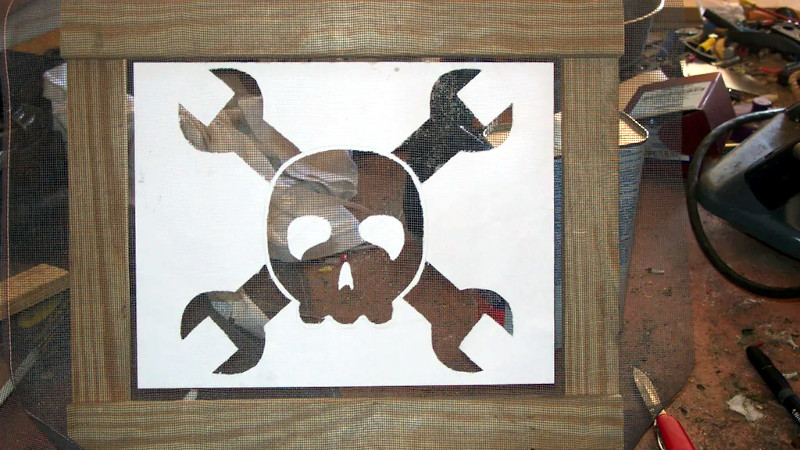
The story begins with a very maker-ish problem: someone wanted a legitimate Hackaday T-shirt and stumbled across a 2012 Instructables guide showing how to make a Hackaday-style shirt on the cheap. The result was not a corporate merch drop, not a limited-edition capsule collection, and definitely not a glossy fashion campaign. It was a community artifact: a homemade tribute to Hackaday’s famous skull-and-crossed-wrenches emblem, better known as the Jolly Wrencher.
That is why this topic is more than a joke about unofficial shirts. Bootleg Hackaday merch sits at the perfect intersection of hacker humor, DIY screen printing, open hardware culture, fan art, and the wonderfully stubborn belief that if you cannot buy the thing, you can probably build the thing. Maybe not perfectly. Maybe not without ruining one shirt first. But build it anyway.
What Is Bootleg Hackaday Merch?
Bootleg Hackaday merch refers to unofficial, fan-made items inspired by Hackaday’s branding, especially the Jolly Wrencher logo. The most famous example is the DIY shirt project that appeared in 2012 and later became the subject of Hackaday’s own 2023 reflection on a decade of unofficial Wrencher apparel.
In ordinary business language, “bootleg merch” sounds suspicious, like someone selling questionable concert shirts in a parking lot. In Hackaday language, the phrase lands differently. It suggests a hobbyist with a printer, a wooden frame, a squeegee, a blank shirt, and the confidence of a raccoon operating a CNC machine at midnight. The key difference is intent. A personal fan-made shirt is one thing; selling counterfeit goods using someone else’s trademark is another.
Hackaday’s public tone around these projects has historically been playful rather than aggressive when the work is non-commercial and community-minded. The brand’s identity has always lived close to the workbench. A Jolly Wrencher on a shirt, PCB, oscilloscope trace, 3D print, or badge add-on feels less like “merchandise strategy” and more like a secret handshake between people who know what flux smells like.
The Jolly Wrencher: A Logo Built for Mischief
The Jolly Wrencher is one of the best logos in maker culture because it does what a great emblem should do: it communicates the entire vibe in one glance. A skull says danger, curiosity, and possibly “do not touch that capacitor yet.” Crossed wrenches say tools, repair, modification, and practical problem-solving. Together, they say: “We void warranties, but we do it with style.”
Unlike clean corporate icons that look best on pitch decks, the Jolly Wrencher looks at home on everything. It can be screen printed onto cotton, milled into metal, etched into copper, rendered on an oscilloscope, printed in resin, or turned into a PCB add-on for a conference badge. That flexibility is one reason the logo has become so beloved. It is simple enough to reproduce, bold enough to survive imperfect fabrication, and funny enough to feel human.
That matters because hacker and maker culture is deeply visual. Communities gather around signs: badges, stickers, patches, T-shirts, silkscreen art, laptop decals, and tiny circuit boards. The object says, “I was there,” but it also says, “I understand this weird little world.” In that sense, bootleg Hackaday merch is not just clothing. It is wearable documentation.
Why the 2012 DIY Shirt Became a Tiny Legend
The 2012 Instructables project had a classic maker formula: low-cost materials, practical steps, and a result that looked good enough to wear proudly. The guide walked through a DIY screen-printing process using a homemade frame and basic supplies. That approach fits perfectly with Hackaday’s audience because it takes a consumer problem and turns it into a fabrication challenge.
Want a shirt? Most people open an online store. A hacker asks: What mesh count should I use? Can I make the frame from scrap wood? Will this ink survive the washing machine? Is the stencil backwards? Why is there paint on the cat?
This is exactly why the project aged well. The point was never only the finished shirt. The point was the process. It taught readers how screen printing works, how designs transfer to fabric, how simple tools can create repeatable results, and how a recognizable logo can become a hands-on learning exercise. A decade later, the shirt is almost a souvenir from an earlier internet: less polished, more experimental, and wonderfully unbothered by perfection.
DIY Screen Printing and the Maker Mindset
Screen printing is a perfect gateway craft for hardware people. It has frames, tension, alignment, pressure, curing, materials, repeatability, and failure modes. In other words, it is basically engineering, except the circuit board is a shirt and the solder mask is ink.
Maker resources have long shown that home screen printing can be done with simple tools. Some guides use photo emulsion and bright light exposure. Others use vinyl cutters to create stencils. Makerspaces often teach screen printing because it combines digital design with physical production. You prepare the artwork, cut or expose the stencil, push ink through mesh, cure the print, and learn very quickly whether your design had too many tiny details.
That workflow explains why bootleg Hackaday merch feels so natural. The process has the same rhythm as building a small electronics project. You start with a file, translate it into a physical mask, test it on material, troubleshoot the ugly first attempt, and refine it until it works. Every shirt becomes a prototype. Every smudge becomes a data point. Every surprisingly good print becomes proof that the garage is still a valid manufacturing facility, at least spiritually.
Hackaday, Hackaday.io, and the Culture of Showing Your Work
Hackaday is more than a blog about hardware hacks. It is part of a larger ecosystem of project documentation, open hardware, electronics experimentation, and community feedback. Hackaday.io, in particular, has become a major platform where makers document hardware projects, share logs, collaborate with teams, and publish the messy middle stages that polished product pages usually hide.
That “show your work” attitude is essential to understanding why unofficial merch is celebrated rather than dismissed. A corporate brand might prefer perfect consistency. A maker community often prefers evidence of effort. The off-center print, the hand-cut stencil, the slightly uneven ink coveragethese are not always flaws. Sometimes they are proof that a human made the thing.
Hackaday’s community also has a long relationship with physical artifacts. Conference badges, PCB art, add-on boards, stickers, project enclosures, 3D-printed cases, and wearable electronics all carry meaning. They turn abstract participation into something you can hold. In that world, a bootleg shirt is not just apparel. It is a project log you can put in the laundry.
From Shirts to SAOs: The Wrencher Keeps Escaping
The Jolly Wrencher has not stayed politely on T-shirts. It has migrated into many forms, including PCB art and Supercon badge culture. One notable example is the Jolly Wrencher SAO, a Simple Add-On board designed for hacker conference badges. It turned the logo into a functional and decorative PCB, complete with prototyping space and clever design details.
This is where the Hackaday aesthetic becomes especially powerful. A logo can be decorative, but a hacker asks whether it can also hold components, route signals, glow through FR4, or connect to a badge. The answer, delightfully, is often yes. The Wrencher becomes a board. The board becomes a conversation. The conversation becomes a weekend of soldering, debugging, and swapping add-ons with strangers who immediately become friends.
Other examples have pushed the logo even further: 3D-printed cases, oscilloscope art, tiny fabricated versions, and experimental prints at surprisingly small scales. These projects show that the Wrencher is not merely a brand mark. It has become a test pattern for the hacker imagination. If your tool can reproduce the Jolly Wrencher, your tool has officially joined the club.
The Ethics of Fan-Made Hacker Merch
Any discussion of bootleg merch needs a practical ethical line. Making a one-off shirt for yourself is very different from selling unofficial merchandise that uses someone else’s trademark. The first is fan expression. The second can become a legal and commercial problem, especially if it confuses buyers or competes with official goods.
For maker communities, the healthiest approach is simple: respect the people and organizations behind the symbols. Do not pretend unofficial merch is official. Do not mass-produce items for profit without permission. Do not use community goodwill as camouflage for a cash grab. If the project is personal, educational, or shared as a process rather than a product, it fits the spirit much better.
This is especially important because open hardware culture already depends on trust. People share files, tutorials, code, schematics, mistakes, and improvements because they believe others will use them responsibly. Bootleg Hackaday merch is funny because it is rooted in affection. Remove the affection and replace it with opportunistic selling, and the joke stops being charming.
Why Makers Love Unofficial Objects
Unofficial objects have a special place in hacker culture because they feel alive. They are not focus-grouped. They are not always scalable. They are not designed to satisfy a brand manual written by someone named “Derek from Strategy.” They exist because one person had an idea and enough tools to make it dangerous.
That is why bootleg Hackaday merch has emotional value. It represents participation. The wearer is not just buying identity; they are making identity. The shirt says, “I like Hackaday,” but it also says, “I understand why making this myself was funnier than simply ordering one.”
There is also nostalgia involved. The internet of 2012 felt more tutorial-driven, forum-driven, and blog-driven. People still posted build logs with grainy photos and long explanations. The homemade Wrencher shirt belongs to that era. It reminds readers of a time when web projects felt less optimized and more personal, when “here’s how I made this” was reason enough to publish.
What Brands Can Learn from Bootleg Hackaday Merch
There is a marketing lesson here, although saying that out loud may cause several engineers to roll their eyes. Strong communities do not merely consume symbols; they remix them. When people voluntarily recreate a logo on shirts, boards, cases, and weird machines, it means the brand has crossed from recognition into belonging.
For technology brands, that is rare. Many companies can sell merch. Fewer can inspire fans to fabricate unofficial versions for the joy of it. Hackaday’s advantage is that its audience already thinks in tools, materials, and transformations. The community does not look at a logo and ask, “Can I buy this?” It asks, “Can I cut this out of vinyl, mill it, etch it, print it, solder it, or display it on a scope?”
The best response from a brand is not always to clamp down. Sometimes it is to celebrate the creativity while setting reasonable boundaries. Encourage personal projects. Share design inspiration. Protect trademarks from commercial abuse. Keep the spirit playful. In other words: let the hackers hack, but do not let the counterfeiters set up a booth.
Experience Notes: What a Decade of Bootleg Hackaday Merch Teaches Makers
Anyone who has tried to make DIY merch learns the same lesson within the first hour: the project is never “just a shirt.” It begins with confidence. You imagine a clean black tee with a crisp white Jolly Wrencher on the front. You gather supplies, clear a table, and tell yourself this will be simple. Then reality enters wearing safety glasses. The stencil has a tiny bridge you forgot to preserve. The ink is thicker than expected. The shirt shifts half an inch during printing. The test pull looks like the logo got into a bar fight with a photocopier.
That is the real experience behind homemade hacker merch, and it is exactly why the finished object matters. A store-bought shirt arrives complete. A bootleg maker shirt arrives through negotiation. You negotiate with materials, temperature, pressure, alignment, drying time, and your own patience. By the end, the shirt carries a story that no receipt can provide.
There is also a social experience that happens around these objects. Wear a homemade Hackaday-inspired shirt to a makerspace, electronics meetup, or hardware conference, and people notice. Not because it looks like luxury fashion, but because it looks like evidence. Someone will ask how you made it. Someone else will suggest a better stencil material. A third person will explain, in heroic detail, why you should have used a different mesh. Congratulations: your shirt is now a group debugging session.
The same thing happens with PCB badges and add-ons. A Jolly Wrencher-shaped board is more than a decoration. It invites questions: What software did you use? Did you order the board or mill it? Are the eyes LEDs? Does it actually do anything? In hacker culture, “does it actually do anything?” is not an insult. It is an invitation to make version two.
That may be the most valuable lesson from a decade of bootleg Hackaday merch: objects become meaningful when they invite modification. A perfect product is finished. A maker object is never finished. It is a snapshot of curiosity at a specific moment. The 2012 shirt, the Supercon add-on, the 3D-printed case, the tiny Wrencher test printall of them say, “Here is what I could make with the tools I had.”
For new makers, this is encouraging. You do not need a factory to participate. You do not need flawless results. You can begin with a cheap blank shirt, a stencil, a borrowed vinyl cutter, a makerspace screen-printing station, or a weekend experiment at the kitchen table. The first version may be rough. Good. Rough means you learned where the edges are.
For experienced makers, the anniversary is a reminder not to outgrow play. It is easy to become serious about tools, tolerances, and workflows. But the best projects often begin with a silly idea: What if the Hackaday logo were a shirt? What if it were a badge? What if it were microscopic? What if it glowed? What if it were chocolate? The question sounds ridiculous until someone builds it. Then it becomes documentation.
Conclusion: The Best Merch Is a Project
Celebrating A Decade Of Bootleg Hackaday Merch is really about celebrating a decade of maker instinct. It is about the urge to reproduce, remix, and reimagine the symbols of a community using whatever tools happen to be nearby. The Jolly Wrencher works because it belongs on the bench as much as it belongs on a website. It looks right in ink, copper, plastic, light, and probably cookie dough if someone has the correct cutter.
The DIY shirt that kicked off this little legend remains charming because it captures the heart of Hackaday culture: learn by doing, share the process, laugh at the imperfections, and respect the community that inspired the project. Bootleg merch, at its best, is not about stealing a brand. It is about saluting a culture with a squeegee in one hand and a troubleshooting mindset in the other.
After ten years, the unofficial Wrencher still feels fresh because it represents something durable: makers do not wait passively for permission to be creative. They build, print, cut, solder, remix, and occasionally get ink on the table. That is not a bug. That is the whole point.