When homes suddenly became offices, classrooms, playgrounds, cafeterias, and mildly dysfunctional television studios, family life entered a new and unusually crowded era. Belgian animation director and illustrator Joeri Christiaen captured that strange chapter in 30 warm, funny, and painfully recognizable lockdown illustrations.
A Family Lockdown Diary Drawn One Night at a Time
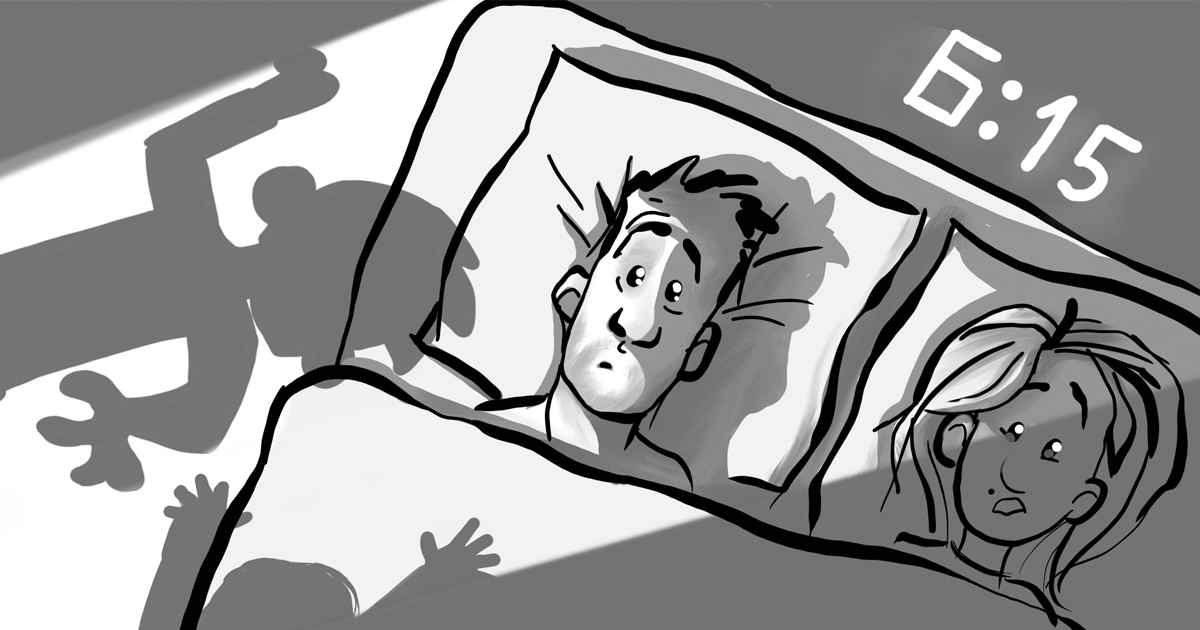
Joeri Christiaen began drawing his family’s lockdown experience on the day confinement started. The first illustration was apparently meant to be a casual creative exercise. Six weeks later, it had become a late-night ritual.
That evolution makes perfect sense. During lockdown, days had a habit of melting together like an ice cream cone abandoned near a sunny window. Monday looked suspiciously like Thursday. Weekends lost their traditional sparkle because everyone had already been home since breakfast on Tuesday.
Christiaen’s drawings gave each day a shape. They transformed small domestic incidents into visual diary entries: children interrupting work, parents attempting to supervise lessons, adults searching for quiet corners, and everyone learning that “personal space” was now mostly a historical concept.
Across the 30 pictures, the home is not portrayed as a peaceful retreat from the world. It is the entire world. Every responsibility, emotion, relationship, and unfinished chore has been compressed into the same few rooms.
Who Is Joeri Christiaen?
From Belgian Animation Schools to International Productions
Christiaen is a Belgian animation writer, artist, and director based in Paris. Before documenting lockdown family life, he had already built a substantial career in traditional animation, storyboarding, television, and short films.
After studying traditional animation at the Royal Academy in Ghent, Belgium, he worked as a lead animator on the acclaimed animated feature The Triplets of Belleville. He later developed projects including Plankton Invasion, 850 Meters, and My Knight and Me.
He also co-founded La Cabane Productions and served as director and art director on Mush-Mush and the Mushables. That professional background is visible in his lockdown drawings. Even when an illustration captures an ordinary household moment, it feels staged like a scene from an animated film.
A Director’s Eye for Domestic Comedy
An experienced animation director knows that comedy often depends on timing, posture, contrast, and reaction. Christiaen applies those same principles to family life.
A parent may be trying to look calm while the surrounding room quietly announces complete defeat. A child may occupy only a small part of the composition yet control every adult’s attention. A carefully planned activity may collapse before it has properly begun.
The jokes are visual, but they are also emotional. The funniest images work because the frustration underneath them is real.
Why These 30 Lockdown Pictures Feel So Familiar
The Home Became an Office, School, and Playground
Before lockdown, different parts of life happened in different places. Adults worked at offices. Children learned at school. Families relaxed at home. Then the walls between those roles disappeared almost overnight.
The kitchen table might host a math worksheet at 9 a.m., a conference call at 10 a.m., lunch at noon, and an ambitious craft project involving glitter by 2 p.m. By evening, the same table looked as though it had survived a minor weather event.
Christiaen’s illustrations capture that collision of functions. His characters are not merely busy. They are switching identities every few minutes: employee, parent, teacher, cook, technical-support specialist, referee, cleaner, and finder of objects that were “definitely right there a second ago.”
U.S. Census Bureau research later showed just how widespread this educational upheaval was: nearly 93% of households with school-age children reported participating in some form of distance learning during the early pandemic. The statistics were enormous, but Christiaen translated the experience into something more intimatea tired parent staring at another task while a child waits nearby with limitless confidence in the adult’s expertise.
Remote Work Was Never Designed for Tiny Co-Workers
Many lockdown jokes center on video meetings because video meetings created their own bizarre domestic theater.
Employees tried to maintain professional expressions while children appeared in doorways, partners whispered urgent questions, and mysterious crashing sounds came from rooms that had been quiet only moments earlier. The mute button became both a communication tool and an emotional support device.
Pew Research Center found that half of parents working remotely with children younger than 18 found it difficult to complete their work without interruptions. Christiaen’s pictures explain that number without requiring a chart. The interruption was not an occasional event. It was the atmosphere.
His humor avoids treating children as villains. The children are simply living in their home, which has inconveniently been declared a branch office. From their perspective, the adult staring at a laptop is the one behaving strangely.
Homeschooling Exposed the Limits of Adult Confidence
Lockdown homeschooling required many parents to perform a role for which they had received approximately seven minutes of preparation and one password that did not work.
The drawings reflect the special frustration of trying to teach a child who behaves perfectly well for a classroom teacher but suddenly becomes a labor negotiator at home. A simple assignment can generate philosophical questions, snack requests, bathroom trips, software problems, and an urgent need to sharpen every pencil in the building.
Christiaen finds comedy in the gap between expectations and reality. Parents may begin the day imagining a calm educational schedule. By lunch, the objective has become keeping everyone reasonably dressed.
The Emotional Truth Behind the Jokes
Being Together Was WonderfulUntil It Was Extremely Together
Lockdown created more family time, a phrase that sounded charming until families discovered that it meant every minute, every day, with very limited opportunities to miss one another.
Christiaen’s collection recognizes both sides of that experience. There is affection, playfulness, and closeness. There is also exhaustion, irritation, and a desperate longing to sit alone in a silent room where nobody asks for a snack.
That tension gives the series its honesty. It does not present family togetherness as either a sentimental blessing or a domestic nightmare. It is both, often within the same five-minute period.
Parents Were Carrying Invisible Mental Loads
The illustrations also hint at the mental labor happening beneath the visible chaos. Parents were tracking work deadlines, school schedules, food supplies, health information, household rules, children’s emotions, and their own anxiety at the same time.
Even apparently quiet moments could feel crowded. A parent sitting still might be mentally reviewing tomorrow’s online lessons, the next grocery trip, an unanswered email, and whether the child had spent the entire afternoon wearing one sock.
Public-health researchers identified disrupted routines, interrupted learning, missed milestones, financial uncertainty, and parental emotional strain as important pressures on families. Christiaen places those large concerns inside recognizable scenes rather than presenting them as abstract problems.
Children Were Struggling Too
The children in the drawings bring energy and comedy, but the series also encourages viewers to remember what lockdown meant for them. School, playgrounds, classmates, grandparents, sports, parties, and ordinary adventures suddenly disappeared.
Children did not always have the vocabulary to describe uncertainty or isolation. Instead, those emotions could emerge as restlessness, clinginess, arguments, unusual sleep patterns, or a powerful objection to putting on pants.
The drawings are funniest when viewed with empathy. Children were not simply creating chaos; they were also trying to understand a world that had changed without consulting them.
How the Illustrations Turn Stress Into Comedy
Exaggerated Body Language Says More Than a Speech Bubble
Christiaen uses posture to communicate exhaustion immediately. Slumped shoulders, stretched limbs, frozen expressions, and bodies crowded into limited spaces reveal exactly how each character feels.
This is one reason the pictures can connect with viewers across countries and languages. A parent collapsed beside a pile of responsibilities requires very little translation.
Domestic Clutter Becomes Part of the Cast
Lockdown homes were rarely showroom-ready. Toys, laptops, cables, dishes, worksheets, laundry, and mysterious craft supplies accumulated faster than anyone could remove them.
In the illustrations, that clutter is not merely background decoration. It tells the story. A crowded room shows the number of activities competing for attention. An abandoned object suggests an earlier plan that was enthusiastically started and quietly forgotten.
The mess makes the family believable. Perfect rooms would weaken the joke. Real lockdown life came with crumbs.
Small Problems Receive Epic Treatment
A defining pleasure of the series is the way ordinary annoyances are presented as major dramatic events. Finding privacy, finishing a call, completing an assignment, or getting everyone through bedtime can feel like a heroic quest.
This exaggeration does not make the struggle seem unimportant. It validates it. When daily routines become unusually difficult, turning them into comedy says, “Yes, this is absurd, and no, you are not the only person losing an argument with a printer.”
Why Lockdown Humor Helped People Feel Less Alone
Christiaen received messages from friends and strangers who looked forward to the drawings because they made them smile, moved them, or helped them feel less isolated. That response reveals why relatable comics became so important during the pandemic.
Humor created recognition. A viewer could see a chaotic illustrated household and realize that other families were also improvising. Other parents were also tired. Other children were also refusing to cooperate with schedules designed in optimistic fonts.
Research reported by the American Psychological Association found that humorous pandemic memes could help people feel calmer and more content. Medical organizations such as Mayo Clinic have also explained that laughter can ease tension, lighten mental burdens, and support social connection.
Of course, humor does not erase grief, anxiety, financial hardship, or illness. Christiaen’s pictures do not pretend that it does. Instead, laughter creates a brief space in which difficult experiences can be acknowledged without becoming overwhelming.
A good family comic does not say, “Everything is fine.” It says, “Everything is ridiculous, but at least we noticed together.”
What the Series Reveals About Modern Parenting
Perfect Parenting Was Never a Realistic Goal
Lockdown destroyed the illusion that capable parents always have organized schedules, nutritious snacks, patient voices, educational activities, and coordinated storage containers.
Christiaen’s characters survive through improvisation rather than perfection. Plans change. Patience runs out. Screens stay on longer than expected. Dinner occasionally becomes whatever is easiest to place on a plate.
The collection suggests that good parenting is not a flawless performance. It is the repeated decision to keep showing up, even while tired, confused, interrupted, or wearing the same sweatshirt for the fourth consecutive day.
Parents Need Privacy Without Feeling Guilty
Several themes in the series revolve around adults trying to find time for themselves. That desire can produce guilt, especially when families are already coping with isolation.
Yet needing solitude is not a rejection of family. It is a basic human requirement. A closed door, a quiet walk, a few pages of a book, or ten uninterrupted minutes with a cup of coffee can make the next round of togetherness much kinder.
The pictures gently defend the parent who wants both family closeness and temporary invisibility.
Children Bring Both Disorder and Meaning
The children are responsible for much of the chaos, but they also give the scenes warmth. Their curiosity, creativity, and refusal to respect professional boundaries prevent the adults’ world from becoming entirely gray.
They may interrupt a serious meeting, but they also expose how strange adult priorities can look. They may disrupt a schedule, but they create moments that later become the stories families remember.
Thirty Pictures That Function as a Shared Memory
Viewed individually, the illustrations are snapshots of domestic comedy. Viewed as a complete set, they become a record of how family routines changed during a historic period.
The collection remembers the crowded tables, improvised workspaces, virtual lessons, interrupted calls, endless meals, indoor games, parental fatigue, and unexpected tenderness. These details may appear ordinary, but ordinary details are often what disappear first when people look back on major events.
Official histories preserve dates, policies, case numbers, and public announcements. Personal art preserves how it felt to hear a child calling from another room while a supervisor waited on a screen.
Christiaen’s 30 lockdown pictures belong to that second kind of history. They document the emotional texture of confinementthe awkward, affectionate, exhausting reality between the headlines.
Conclusion: Family Chaos Made Visible
Joeri Christiaen’s lockdown illustrations succeed because they do not force family life into a simple category. The pictures are funny without dismissing hardship, affectionate without becoming sentimental, and honest without turning cynical.
They remind viewers that families survived lockdown through imperfect routines, shared jokes, occasional arguments, creative distractions, and a remarkable quantity of snacks. Most importantly, they show that struggling to manage everything was not evidence of failure. Under extraordinary conditions, “good enough” was often an impressive achievement.
Years later, the 30-picture series still resonates because its central subject is larger than lockdown. It is about the eternal family challenge of loving people deeply while also wishing they would stop touching your laptop.
Extended Experiences: What Lockdown Family Life Taught Us
One of the most memorable experiences of family lockdown was discovering how quickly a carefully designed schedule could collapse. A household might begin Monday with color-coded plans for work, exercise, school, meals, and creative time. By Wednesday, the schedule had become a decorative object attached to the refrigerator.
Many parents learned that routines were helpful only when they remained flexible. A child who could concentrate in a classroom might struggle to complete a ten-minute exercise at home. An adult who had been productive in an office might find it impossible to write one email while listening for suspicious silence in the next room.
The experience also changed how families thought about productivity. Before lockdown, an unfinished task could feel like poor organization. During lockdown, unfinished tasks often meant that something more urgent had appeared: a frightened child, a broken connection, an unexpected meeting, or a meal that somehow needed to be prepared again even though everyone had eaten only a few hours earlier.
Another common experience involved renegotiating screen time. Devices were simultaneously classrooms, offices, entertainment centers, social spaces, and emergency babysitters. Parents who had previously enforced strict limits often relaxed them because screens were no longer serving a single purpose. A video call with grandparents was not equivalent to watching random clips, even though both involved staring at glass.
Families also discovered the importance of tiny private rituals. One parent might wake early for quiet coffee. Another might stay up late to draw, read, exercise, or simply enjoy a room that was no longer producing questions. These moments were not selfish luxuries. They were maintenance.
At the same time, lockdown created experiences that some families valued. Parents witnessed parts of their children’s days that had previously happened elsewhere. Siblings invented elaborate games. Ordinary walks became events. Baking a simple loaf of bread could occupy an afternoon and generate enough dishes to suggest a commercial kitchen had opened overnight.
Humor became one of the most useful household tools. Families joked about failed lessons, strange haircuts, improvised meals, and the ceremonial changing of sweatpants. Laughing did not deny that the situation was difficult. It allowed people to admit difficulty without being completely controlled by it.
Christiaen’s drawings preserve these experiences because they focus on the moments people actually lived rather than the polished versions they might later tell. The parent is tired. The room is messy. The plan is failing. The family is still together.
That may be the most enduring lesson of the series. Family resilience rarely looks heroic while it is happening. It looks like restarting the internet, apologizing after an argument, inventing another indoor activity, and trying again tomorrow. Sometimes it also looks like hiding in the bathroom for five minutes with a cookie. History should make room for that too.