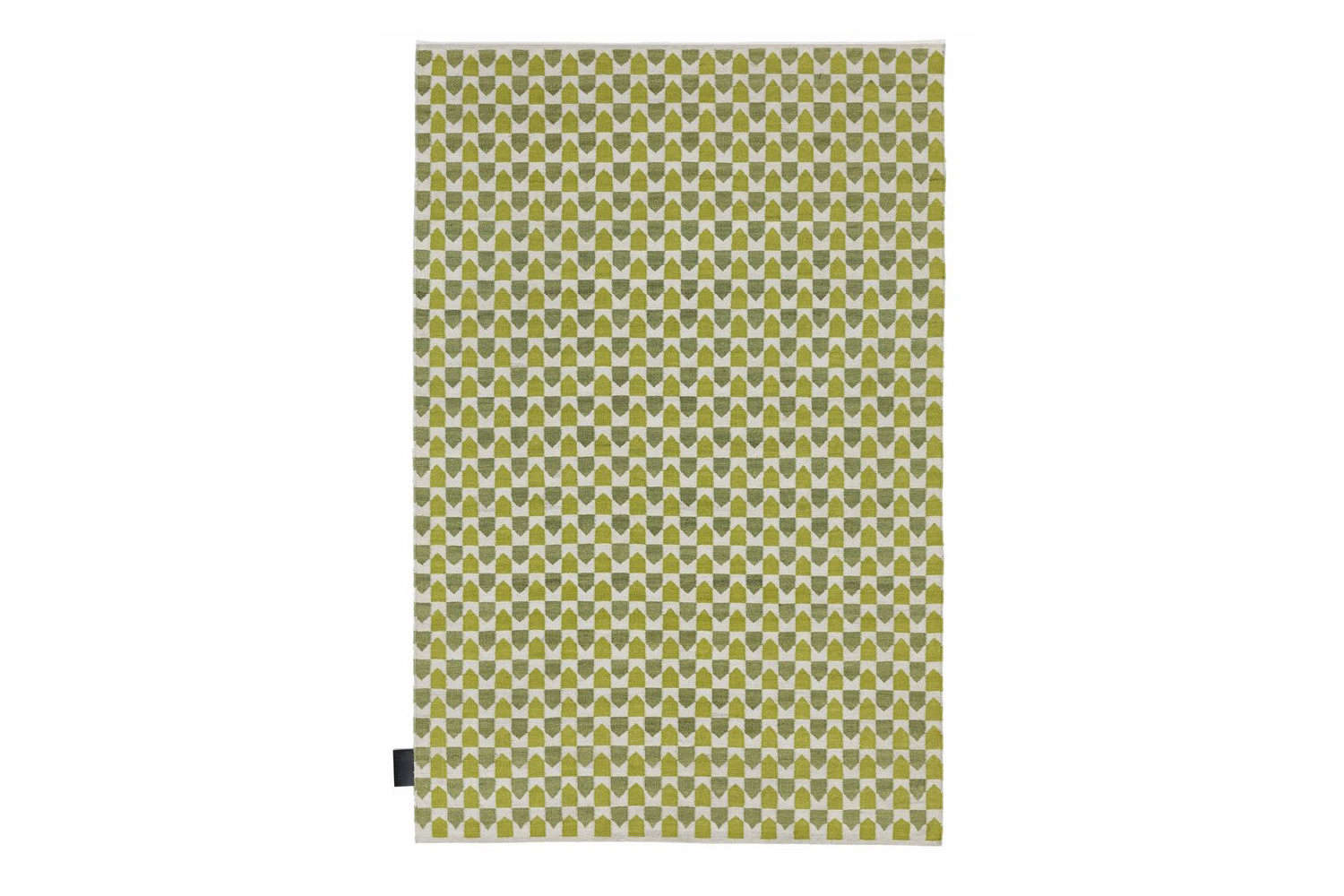
Asplund’s Point Carpet is the kind of rug that quietly walks into a room, says absolutely nothing, and somehow makes every chair, table, lamp, and coffee mug look more expensive. Designed by Sandra Adrian Asplund for the Swedish design brand ASPLUND, the Point Carpet belongs to that stylish Scandinavian family of interiors where minimalism does not mean boring, natural materials do the heavy lifting, and a simple geometric pattern can carry a whole room without shouting across the floor.
At first glance, Asplund’s Point Carpet looks like a clean, modern wool rug with a subtle dotted rhythm. Look closer, though, and it becomes more interesting. It is hand woven from 100% wool, made with dyed natural yarn, finished with a folded and invisibly stitched edge, and designed with a reversible pattern. In everyday human language: it is practical, elegant, tactile, and smart enough to give you two usable sides instead of one. If rugs had résumés, this one would be annoyingly impressive.
Although the original Asplund’s Point Carpet has been discontinued, it remains worth discussing for homeowners, interior designers, collectors, and Scandinavian design fans. Why? Because it represents a useful lesson in choosing a rug that balances beauty, durability, craftsmanship, and calm visual impact. Whether you are trying to identify the rug, find a similar alternative, or understand why Swedish wool carpets work so well in modern homes, this guide covers the design story, materials, styling ideas, care tips, and real-life experience of living with a carpet like Asplund’s Point.
What Is Asplund’s Point Carpet?
Asplund’s Point Carpet is a hand-woven wool carpet designed by Sandra Adrian Asplund. It was offered through ASPLUND, a Swedish furniture and carpet company known for refined Scandinavian design, architectural simplicity, and long-lasting interior pieces. The rug was part of ASPLUND’s “Naturals” direction, a collection concept focused on natural yarns, subtle color shifts, and material honesty.
The Point Carpet was available in several colorways, including Bitter Blue, Grey Blue, Greige, Greens, and Whites. Its listed sizes included 80×150 cm, 80×260 cm, 160×240 cm, and 200×300 cm, making it suitable for everything from narrow hallways to full living room layouts. Prices originally ranged from lower entry sizes to larger investment pieces, with the biggest version positioned as a premium design rug.
The standout feature is the reversible pattern. Many rugs look lovely on the first day and then slowly develop one “good side” and one “please ignore this side” situation. A reversible flat-woven wool carpet gives the owner more flexibility. You can rotate it, flip it, manage wear more evenly, and refresh the look of a room without buying a new rug every time your sofa arrangement has an identity crisis.
The Design Appeal: Quiet Geometry, Big Personality
The Point Carpet is built around a simple dotted pattern. That may sound modest, but in interior design, modest details often age better than loud trends. The pattern gives the rug movement without overwhelming the space. It can sit comfortably in a minimalist living room, a Nordic-inspired bedroom, a calm office, or a hallway that needs texture but not drama.
Its dots create rhythm. The wool gives warmth. The flat-woven structure keeps the profile clean. Together, these qualities make Asplund’s Point Carpet a strong example of modern Scandinavian rug design: useful, beautiful, restrained, and built around materials rather than gimmicks.
Why the Pattern Works
Geometric rugs can be tricky. Too bold, and the rug starts competing with artwork, furniture, and architecture. Too plain, and it disappears like it forgot to RSVP to the room. The Point Carpet lands in the middle. Its repeated point motif adds enough structure to anchor the space while staying soft enough for daily living.
This makes it especially useful in rooms with clean-lined furniture. A rectangular sofa, a slim coffee table, and neutral walls can look a little stiff without texture. Add a wool rug with a repeated pattern, and suddenly the room feels intentional instead of under-furnished. The carpet becomes the visual handshake between the furniture and the floor.
Material Matters: Why 100% Wool Is a Big Deal
One of the most important facts about Asplund’s Point Carpet is its 100% wool construction. Wool is one of the most respected rug materials because it is naturally resilient, comfortable underfoot, and capable of holding color beautifully. A good wool rug has a grounded quality that synthetic fibers often try to imitate but rarely fully achieve.
For everyday homes, wool offers several practical advantages. It can bounce back from foot traffic better than many delicate fibers, it adds acoustic softness to hard-floored rooms, and it brings a layer of warmth that is especially welcome in minimalist interiors. In a space filled with wood, stone, glass, or metal, a wool carpet prevents the room from feeling like a stylish museum where nobody is allowed to sit down.
The Point Carpet’s hand-woven structure also matters. Flat-woven rugs usually have a lower profile than thick pile rugs, which makes them easier to use under furniture, in dining areas, or in spaces where doors need clearance. They do not have the plush sink-in feeling of a shag rug, but they make up for it with durability, easy layering, and crisp visual texture.
Colors: From Greige Calm to Bitter Blue Character
The original color range of Asplund’s Point Carpet was thoughtfully restrained. Bitter Blue and Grey Blue offered cool, atmospheric tones. Greige delivered the flexible beige-gray balance that designers love because it plays nicely with wood, white walls, black accents, and almost every sofa known to humankind. Greens brought a natural, earthy note, while Whites created the lightest and airiest expression.
Choosing the right color depends on the room’s job. In a living room, Greige or Grey Blue can anchor the space without pulling too much attention. In a bedroom, Whites or muted Greens can create a restful mood. In a hallway, a deeper blue or green may be more forgiving than a pale tone, especially if shoes, pets, or snack-wielding humans are part of the household ecosystem.
How to Match the Rug With Furniture
If your furniture is mostly neutral, the blue or green versions can add personality without turning the room into a circus. If your furniture already includes colorful upholstery, patterned pillows, or bold art, Greige or Whites may be safer. The goal is not to make every item in the room scream for attention. The goal is harmony, which is basically interior design’s polite way of saying, “Please let the sofa and rug stop fighting.”
Best Rooms for Asplund’s Point Carpet
Because the Point Carpet was produced in several sizes, it works as a model for multiple room types. The smaller 80×150 cm version is ideal for compact entryways, bedside areas, or small reading corners. The 80×260 cm runner size fits hallways, galley kitchens, or transitional spaces where a long strip of texture can make the home feel more finished.
The 160×240 cm size is a classic choice for apartments, medium living rooms, home offices, and bedrooms. The 200×300 cm version is the statement piece, best for larger living rooms, open-plan layouts, or dining areas where the rug needs enough surface area to visually hold the furniture together.
Living Room
In a living room, the rug should connect the main seating pieces. Ideally, at least the front legs of the sofa and chairs should rest on the rug. This creates a single conversation zone instead of a collection of furniture pieces that look like they are waiting for a group project to begin.
Bedroom
In a bedroom, a wool flatweave like the Point Carpet adds softness without bulk. Place a larger rug under the lower two-thirds of the bed, allowing it to extend on both sides. For smaller rooms, use two smaller rugs along the sides of the bed for a symmetrical, hotel-like effect.
Entryway or Hallway
The runner size is especially appealing for narrow spaces. A patterned wool runner can turn a hallway from “place where laundry travels” into a proper design moment. Use a rug pad underneath to reduce slipping and protect both the carpet and floor.
How to Care for a Wool Carpet Like Asplund’s Point
A high-quality wool rug is not difficult to maintain, but it does appreciate good habits. Regular vacuuming helps remove grit before it settles into the fibers. For a flat-woven wool rug, use a gentle suction setting or an attachment that does not aggressively pull at the weave. If the vacuum sounds like it is trying to eat the carpet, that is not cleaning; that is a hostage situation.
Rotate the rug every few months so foot traffic and sunlight affect it evenly. If the carpet is reversible, flip it occasionally to extend its usable life and refresh the room. Blot spills immediately with a clean cloth. Do not rub, because rubbing can push stains deeper into the wool and distort the fibers. For serious stains or full cleaning, professional rug cleaning is the safest route, especially for hand-woven wool pieces.
Simple Care Checklist
- Vacuum gently and regularly to remove dust and grit.
- Rotate the rug to balance wear and light exposure.
- Use a quality rug pad to prevent slipping and reduce friction.
- Blot spills immediately; never scrub aggressively.
- Keep prolonged direct sunlight in mind, especially with darker colors.
- Choose professional cleaning for deep stains or annual refreshes.
Is Asplund’s Point Carpet Still Available?
The original Asplund’s Point Carpet has been listed as discontinued. That means shoppers may not find it through regular retail channels, although vintage design marketplaces, resale platforms, showroom samples, or private sellers may occasionally surface pieces. Because discontinued design rugs can be difficult to verify, buyers should ask for clear photos, dimensions, condition details, material confirmation, and any original tags or purchase documentation.
If you cannot find the original, look for similar rugs with the same design DNA: 100% wool, flat-woven or hand-woven construction, muted Scandinavian color palettes, reversible usability, and a small-scale geometric pattern. The goal is not necessarily to copy the Point Carpet exactly, but to capture its quiet confidence.
How to Choose a Similar Rug
When searching for an alternative to Asplund’s Point Carpet, start with material. Wool should be near the top of the list. Then consider construction. A flatweave, kilim, dhurrie, or hand-woven wool rug will usually come closer to the Point Carpet’s slim, structured personality than a thick tufted rug.
Next, look at pattern scale. The Point Carpet’s dotted pattern is small enough to feel refined, so avoid oversized graphics if your goal is a similar mood. Color is also important. Muted blues, warm grays, greige, soft green, ivory, and off-white are the most natural alternatives. Finally, check the edge finish. A clean folded or carefully bound edge gives the rug a more tailored appearance.
Buyer Tip
Before purchasing, use painter’s tape to mark the rug dimensions on the floor. This simple trick prevents the classic area-rug mistake: buying a rug that looked generous online but arrives with the visual presence of a bath mat. Bigger is often better when the rug needs to anchor furniture, but the correct size always depends on the room and layout.
Why Designers Still Appreciate Rugs Like This
Designers often return to pieces like Asplund’s Point Carpet because they solve multiple problems at once. They soften hard floors, define zones, add warmth, introduce pattern, and improve acoustics. They also do these things without demanding that the entire room be redesigned around them.
This is the secret strength of Scandinavian design. It is not about emptiness. It is about editing. Every object should have a reason to be there. A rug like the Point Carpet earns its place because it is functional, durable, visually calm, and expressive enough to make the room feel considered.
Experience: Living With an Asplund’s Point Carpet-Inspired Rug
Living with a rug like Asplund’s Point Carpet teaches you that good design does not always announce itself on day one. Some pieces impress instantly with bright color or dramatic pattern. Others become favorites slowly, like a reliable chair, a perfect coffee cup, or the one lamp everyone in the house mysteriously prefers. A wool flatweave with a restrained point pattern belongs to the second group. It grows on you because it works quietly every single day.
In a living room, the experience starts with how the rug changes the sound of the space. Bare floors can make footsteps, chair movement, and general family chaos feel sharper. Add a wool carpet, and the room becomes softer. Conversations feel warmer. The sofa area feels more gathered. Even a small apartment can feel more designed because the rug creates a visual island for daily life.
The reversible quality is one of the most practical pleasures. After months of use, you can flip the rug and suddenly the room feels refreshed. It is not a full makeover, but it has the emotional effect of tidying your desk or changing your phone wallpaper: small effort, surprisingly satisfying result. For households with pets, kids, guests, or enthusiastic snackers, reversibility also reduces stress. A rug that can be rotated and flipped is simply more forgiving.
The flat-woven texture also changes how furniture behaves. Chairs sit more evenly than they might on a high-pile rug. Coffee tables do not wobble as dramatically. Doors are less likely to scrape. Robot vacuums, if you use one, generally have an easier time with low-profile rugs than with thick, fluffy styles. In other words, the rug looks elegant but does not act precious.
Color makes a big difference in the daily experience. A greige or gray-blue version feels calm and flexible, especially in rooms with oak, walnut, white walls, or black metal accents. A green version feels more organic and relaxed, pairing beautifully with plants, linen curtains, and warm wood. A pale version looks airy and sophisticated, though it asks for a little more care in busy households. White rugs are beautiful, but they do have a talent for attracting coffee in slow motion.
One of the best lessons from the Point Carpet is that pattern does not have to be loud to be useful. The dotted design helps hide tiny signs of life better than a perfectly plain rug, but it does not dominate the room. This makes it ideal for people who like visual interest but do not want their floor covering to become the main character in every photo.
Over time, a wool rug like this becomes part of the rhythm of the home. You vacuum it, rotate it, step on it half-awake in the morning, watch sunlight move across it in the afternoon, and occasionally panic-blot a spill while promising yourself that drinks will never again be allowed near the sofa. They will be, of course. That is why practical materials matter.
The biggest experience-based takeaway is simple: Asplund’s Point Carpet works because it respects real life. It is designed, but not fussy. It is elegant, but not fragile in spirit. It has enough personality to be noticed and enough restraint to be lived with. That balance is harder to find than it sounds, and it is exactly why discontinued design pieces like this continue to attract attention.
Conclusion
Asplund’s Point Carpet is more than a discontinued Swedish wool rug. It is a useful case study in how thoughtful design can make a home feel calmer, warmer, and more complete. With its 100% wool construction, hand-woven texture, reversible pattern, muted color palette, and refined geometry, it captures many of the best qualities of Scandinavian interiors: simplicity, function, craftsmanship, and quiet charm.
For anyone trying to recreate the look, focus on wool, flat-woven construction, subtle pattern, balanced sizing, and colors that support the room instead of overpowering it. The original may be hard to find, but its design lessons are easy to apply. Choose well, care for it properly, and your rug will do what the best rugs always do: make the room feel finished without making a fuss.