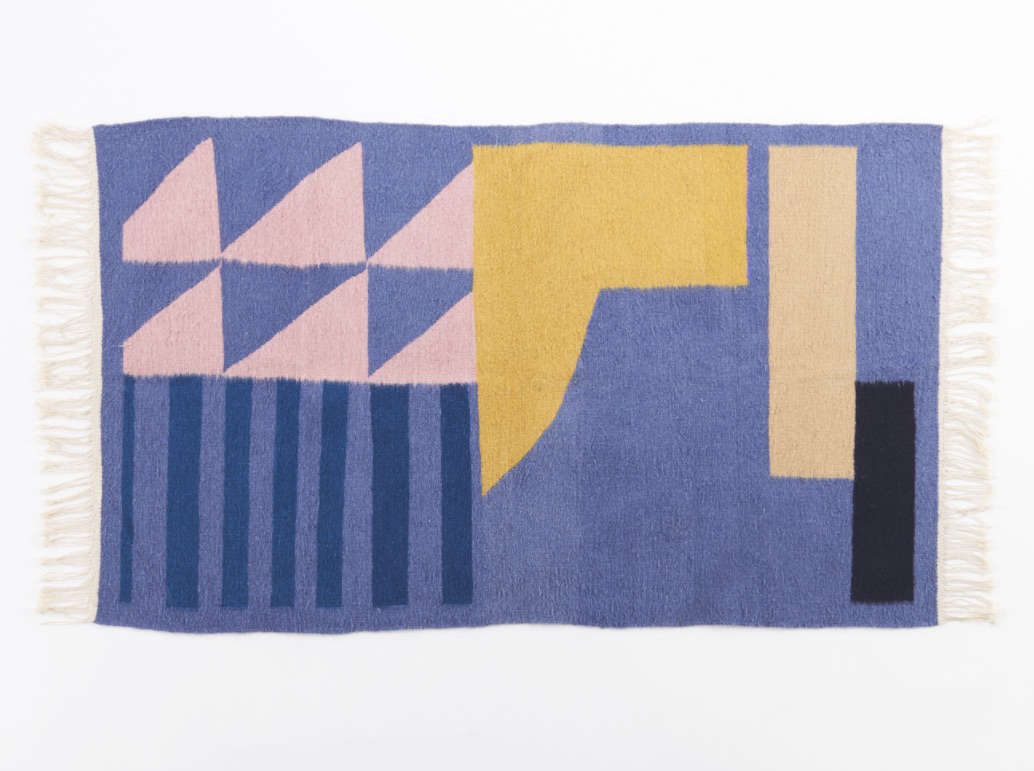
The Artisans Solidaire Kasserine Wool Geometric Rug is the sort of home accessory that quietly refuses to be background scenery. Handwoven in Tunisia, made from wool, and energized by graphic geometry, it brings texture, cultural character, and a distinctly contemporary attitude to the floor. In other words, it does considerably more than prevent your coffee table from feeling lonely.
An archived product listing describes the piece as a 100% wool, 3-by-5-foot flatweave kilim created by Artisans Solidaires Kasserine. The listing originally appeared through Tunisian design retailer Soukra and was featured by Remodelista, which presented the rug as a modern expression of Tunisia’s long textile history.
Although availability may vary, the rug remains an excellent case study in how traditional craftsmanship can enter an American home without looking like a museum prop. Its manageable size, natural material, and bold pattern make it suitable for entryways, reading corners, bedrooms, offices, and layered living spaces.
A Modern Rug Rooted in Kasserine Craft
Kasserine is located in western Tunisia near the Algerian border. The Artisans Solidaires Kasserine collective is composed mainly of women who work with natural materials and inherited techniques to create rugs, baskets, pottery, and other household objects. Their designs draw from the forms and patterns of traditional Tunisian interiors while adapting them for contemporary spaces.
That combination of continuity and experimentation is central to the appeal of the Kasserine wool geometric rug. It is not merely an old pattern reproduced for tourists, nor is it a generic modern rug with an exotic-sounding label attached at the last minute. The design sits between those extremes: regional craft knowledge provides the foundation, while simplified geometry gives the rug a fresh visual language.
Why the Geometric Design Feels Contemporary
Geometric rugs work especially well in modern interiors because they create structure without requiring floral prints, elaborate borders, or highly detailed imagery. Lines, blocks, diamonds, and repeated shapes can organize a room visually, much as architecture organizes physical space.
A geometric pattern also introduces movement. Your eye follows the shifts in direction, color, and proportion, which can make a small room feel livelier. The rug becomes a functional artwork underfootalthough unlike framed artwork, it must occasionally survive shoes, furniture legs, crumbs, and the household member who insists that carrying an uncovered mug across the room is perfectly safe.
Tunisian textile traditions have long incorporated loom-woven wool and fine geometric decoration. The Metropolitan Museum of Art, for example, catalogs Tunisian wool textiles featuring plain-weave construction and brocaded geometric patterns, demonstrating that the relationship between wool, the loom, and graphic ornament has deep regional roots.
What Makes the Rug Distinctive?
It Is Made from 100% Wool
Wool gives an area rug natural warmth, surface character, and resilience. Its fibers have a springy structure that helps them recover from ordinary pressure, making wool a practical choice for home textiles as well as an attractive one.
The material also contributes subtle variation. Even when a wool rug uses strong geometric shapes, the woven fibers soften the edges just enough to prevent the pattern from feeling cold or mechanical. The result is graphic but not sterile, handmade but not overly rustic.
Shoppers comparing wool products should still check the product label and retailer information carefully. In the United States, wool textile labeling generally identifies fiber content, country of origin, and the business responsible for marketing the item. A genuine “100% wool” declaration should therefore be more than decorative marketing poetry.
The Flatweave Kilim Construction Is Versatile
Unlike a thick, high-pile carpet, a flatweave rug is formed by weaving warp and weft fibers together without creating a raised pile. This construction produces a thinner profile that is easier to position under furniture and less likely to interfere with doors.
Flatweaves are also relatively easy to move, rotate, and layer. House Beautiful notes that flat-woven rugs are made on a loom and are valued for their durability, cleanability, and usefulness in active areas.
That does not mean a handmade kilim is indestructible. It means the rug is practical when treated with reasonable care. Think “durable textile,” not “decorative landing pad for muddy hiking boots.”
The 3-by-5-Foot Size Encourages Creative Placement
At three feet wide and five feet long, the Kasserine rug is best understood as an accent rug rather than a room-filling foundation. It can define a compact zone, add color to a transition area, or provide visual emphasis beneath a small furniture grouping.
Interior designers often describe rugs as anchors for a room. Architectural Digest recommends considering the rug early in the decorating process because it can guide later decisions about upholstery, paint, finishes, and accessories.
With a smaller rug, the goal is not to force every piece of furniture onto its surface. The goal is to give the textile enough breathing room that the design can be appreciated.
Where to Use the Artisans Solidaire Kasserine Rug
In an Entryway
A 3-by-5-foot geometric rug can create an immediate focal point near the front door. It introduces warmth to tile, concrete, or hardwood while establishing the home’s personality before a guest has time to judge the mail piled on the console.
Confirm that the door clears the rug comfortably. Because a flatweave has a low profile, it is often easier to accommodate than a plush rug, but a rug pad should still be thin enough to preserve clearance.
Beside a Bed
Place the rug lengthwise beside a twin, full, queen, or king bed to create a soft landing in the morning. This arrangement is particularly effective when a room is too small for a large area rug or when you want the geometric pattern to remain visible instead of hiding most of it beneath the bed frame.
The warm texture of wool can balance crisp white bedding, linen curtains, and minimalist furniture. Add a woven basket or ceramic lamp to repeat the rug’s handmade character without turning the room into a themed display.
In a Reading Nook
A lounge chair, compact side table, floor lamp, and Kasserine rug can transform an unused corner into a complete reading area. Position the front legs of the chair on the rug, leaving enough of the design exposed to frame the arrangement.
This is also a clever way to add a bold pattern without asking it to dominate an entire living room. The rug provides personality in a controlled dosemore espresso shot than gallon jug.
In a Home Office
The geometric design can provide energy in a workspace, particularly one filled with neutral furniture. Use the rug beside the desk, beneath a stationary guest chair, or in front of a bookcase.
Avoid positioning rolling office-chair casters directly on a loose flatweave. Repeated rolling can distort the weave, move the rug, or turn a normal video call into an unexpected balance exercise.
Layered Over a Larger Rug
Layering is one of the best solutions when a small rug has an irresistible design but cannot anchor the entire room by itself. Place the Kasserine rug over a larger natural-fiber, low-pile, or solid-colored foundation.
A neutral base allows the handmade geometric pattern to act as artwork. It also gives the 3-by-5-foot rug a more intentional relationship with a sofa, bed, or dining arrangement.
How to Style a Wool Geometric Rug
Keep the Supporting Palette Controlled
Begin by identifying two or three colors within the rug. Repeat those shades sparingly through pillows, artwork, ceramics, or throws. You do not need to match everything precisely. In fact, precise matching can make a room feel less curated and more like a catalog page that has developed self-awareness.
Let one color become dominant, use another as a secondary accent, and reserve the boldest tone for small details. This creates visual continuity without drowning the room in pattern.
Mix Materials, Not Competing Motifs
The rug pairs naturally with wood, leather, linen, clay, brushed metal, and woven plant fibers. These materials add depth while allowing the geometric design to remain the main pattern.
Another geometric print can work nearby, but change its scale. For example, combine the rug’s medium-sized shapes with a tiny check, narrow stripe, or oversized abstract artwork. Two patterns of identical scale are more likely to argue than cooperate.
Use It in Minimalist and Eclectic Rooms
In a minimalist space, the rug becomes a concentrated point of color and texture. Against pale walls and clean-lined furniture, every handmade irregularity becomes visible and valuable.
In an eclectic room, it can bridge vintage furniture, global craft pieces, modern lighting, and contemporary art. Its geometry offers order, while its woven surface prevents the room from feeling too polished.
Why Artisan-Made Textiles Matter
Handcrafted home goods preserve more than visual styles. They carry technical knowledge: how to prepare fibers, maintain tension, operate a manual loom, combine colors, and produce stable edges. These skills are learned through repetition and are often transferred between generations.
Artisan cooperatives can also create shared systems for production, marketing, training, and access to international customers. However, buyers should avoid assuming that every handmade product is automatically certified fair trade. Look for transparent information about who made the item, where it was produced, what materials were used, and how the seller works with artisans.
The Fair Trade Federation describes long-term partnerships, respect for artisans, environmental responsibility, and sustainable trade as important features of fair-trade enterprises. Those principles provide useful questions for evaluating any artisan retailer, even when a specific product does not carry formal certification.
How to Care for a Kasserine Wool Rug
Vacuum Carefully
Use low suction and avoid an aggressive rotating brush unless the manufacturer specifically approves it. Vacuum in the direction of the weave, and treat edges or fringe gently. Regular removal of dry soil helps prevent particles from becoming embedded in the fibers.
The Carpet and Rug Institute recommends routine vacuuming, careful handling of rug edges, and periodic restorative cleaning to extend a rug’s useful life.
Blot Spills Instead of Scrubbing
When a spill occurs, absorb it quickly with a clean white cloth or plain paper towel. Work from the outer edge toward the center so the spot does not spread. Do not rub vigorously, because friction can distort fibers and push the liquid deeper into the weave.
The Carpet and Rug Institute advises blotting liquid spills rather than scrubbing them, while Consumer Reports similarly warns that scrubbing and heat can damage wool rugs or set stains.
Rotate the Rug
Rotate the rug every few months to distribute sunlight and foot traffic more evenly. Rotation is especially useful in entryways, beside beds, or near windows where one section receives more wear than the rest.
Better Homes & Gardens also recommends rotating specialty rugs to balance wear and reduce uneven fading.
Use a Rug Pad
A properly sized pad can reduce slipping, provide light cushioning, and limit friction between the wool and the floor. Choose a pad suitable for your flooring material, and trim it so it remains hidden beneath the rug.
For a thin flatweave, avoid an excessively thick pad that changes the rug’s proportions or creates a raised edge. The aim is stability, not turning a kilim into a miniature trampoline.
Choose Professional Cleaning When Necessary
Do not assume that a handmade wool rug can be placed in a washing machine or cleaned with a standard carpet-cleaning appliance. Consumer Reports cautions against using ordinary carpet cleaners on delicate, natural, antique, or handwoven materials.
Check the original care instructions and consult a cleaner experienced with wool flatweaves. Test any treatment in a hidden area first, particularly when the rug contains strong or contrasting dyes.
Everyday Ownership Experience: What Living with This Rug Is Really Like
Living with a small handmade wool rug differs from owning a large machine-made carpet. The Kasserine rug is more visible as an individual object. You notice where it was placed, how its lines relate to nearby furniture, and how the colors change between daylight and warm evening lamps.
During the first few days, the most immediate effect is visual. A plain corner that previously looked unfinished suddenly appears intentional. A wooden floor gains warmth. A basic chair and table begin to read as a designed seating area rather than two pieces of furniture that happened to stop in the same location.
The 3-by-5-foot size is both a strength and a limitation. It is easy to move when experimenting with layouts. One week it can sit near the front door; the next it can anchor a reading chair. You can rotate it without recruiting three relatives and promising pizza. On the other hand, it is not large enough to unify a full-size living room unless it is layered over a bigger rug.
Underfoot, a flatwoven wool rug feels firmer than a tufted or shaggy carpet. Buyers expecting cloud-like softness may need to adjust their expectations. The pleasure comes less from deep cushioning and more from the combination of natural fiber, woven texture, and subtle warmth. A quality rug pad can make the surface more comfortable without hiding its flatweave character.
Handmade construction also means the rug may not possess the mathematical uniformity of a machine-produced textile. Minor variations in line width, edge alignment, or color concentration should not automatically be treated as flaws. They are evidence of a human process. Those irregularities often become more appealing over time because they prevent the design from looking digitally perfect or mass-produced.
Daily maintenance is manageable, but the rug rewards attention. Dust and crumbs are visible on a bold flat surface, especially when light strikes it from the side. A gentle vacuuming schedule keeps the pattern crisp. The rug should also be checked occasionally for curling corners, shifting, or uneven wear.
Spills create the most stressful ownership moments. Wool is forgiving in some respects, but panic-cleaning can do more harm than the original accident. The sensible response is to blot immediately, avoid harsh chemicals, and consult the care instructions. This is not the moment to test a cleaning hack discovered in a fourteen-second social media video narrated by someone holding three unrelated bottles.
Styling the rug tends to become easier after living with it for a while. Initially, owners may try to match every color in the pattern. Later, most discover that the room feels calmer when the rug is allowed to lead. A neutral chair, simple wood table, and one or two coordinated accessories are often enough.
The experience is also emotional. A handmade textile invites curiosity about its makers and place of origin. It can become a conversation piece not because it is expensive or flashy, but because it has a clear material identity and a recognizable craft story. Visitors may ask where it came from, how it was made, or why its pattern feels both traditional and modern.
Over time, the most successful placement is usually the one where the rug can be seen rather than mostly covered. In a reading nook, entryway, or open area beside a bed, the geometry remains legible. Heavy furniture can flatten sections and conceal the very qualities that made the rug appealing.
Ultimately, living with the Artisans Solidaire Kasserine Wool Geometric Rug is less about achieving a perfect showroom and more about adding a meaningful visual layer to an ordinary room. It introduces wool, geometry, handcraft, and Tunisian design in a format compact enough for real homes. It may not solve every decorating problem, but it can make a neglected corner look considerably more confident.
Conclusion
The Artisans Solidaire Kasserine Wool Geometric Rug succeeds because it connects traditional Tunisian weaving with contemporary interior design. Its 100% wool composition, flatweave kilim construction, compact dimensions, and graphic pattern make it a flexible accent for modern, eclectic, rustic, and minimalist spaces.
Its greatest value lies not in chasing a passing rug trend but in combining material quality with human craftsmanship. Styled with restraint and maintained carefully, it can bring warmth and personality to an entryway, bedroom, office, or reading corner for years. It is useful, expressive, and just dramatic enough to make the floor feel included in the decorating conversation.
Note: The original price and specifications cited in archived listings may have changed. Confirm current availability, dimensions, fiber content, care instructions, and sourcing information with the retailer before purchasing.