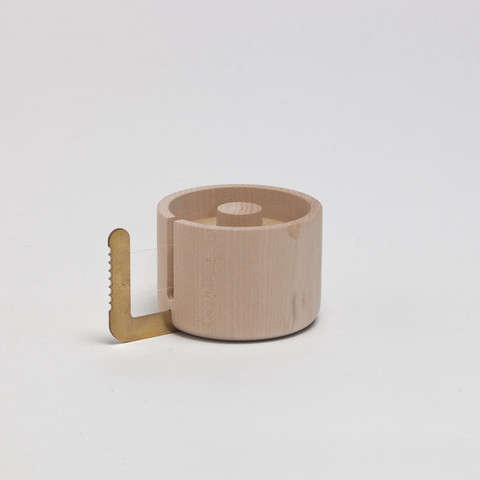
There are desk accessories that demand attention: glossy monamps with enough personality to audition for a sitcom. Then there is the tape dispenser. It sits quietly, usually near the edge of the desk, looking like it has accepted its fate as office furniture.
But the humble desktop tape dispenser deserves better. It is a practical little machine that saves time, reduces clutter, prevents the familiar hunt for the tape’s invisible end, and occasionally helps rescue a project held together by optimism and one last strip of clear adhesive.
This installment of Another Desktop Series gives the tape dispenser its overdue moment in the spotlight. We are looking at why this small desk tool still matters in a digital workplace, what makes a good tape dispenser work, how to choose one for your setup, and why a weighted block with a tiny serrated blade can feel strangely satisfying.
The Tape Dispenser: A Tiny Tool With a Long Career
Adhesive tape became a useful everyday invention long before inboxes, cloud storage, and “quick Slack message” became workplace vocabulary. Pressure-sensitive masking tape entered the market in the 1920s, while transparent cellulose tape followed in the early 1930s. By the end of that decade, the familiar snail-shaped tape dispenser had entered the picture, giving users a simple way to pull, tear, and repeat without wrestling a loose roll across the desk. p>That basic formula has lasted because it solves a very ordinary but very real problem: tape is useful only when you can access it quickly. A roll by itself is a slippery donut of mild inconvenience. A dispenser turns it into a ready-to-use tool.
The best designs do not overcomplicate the job. They hold the roll in place, keep the tape end available, guide the tape toward a cutting edge, and stay planted when you pull. That is the entire mission. It is not glamorous, but neither is finding the loose end of tape with your fingernail while a package waits on the floor.
Even museums have treated the tape dispenser as more than office clutter. The Museum of Modern Art has included tape dispenser designs in its collection, including examples made from Lucite, steel, and anodized aluminum. That is a useful reminder that everyday objects can be functional, visually memorable, and quietly clever at the same time. h2>Why a Desktop Tape Dispenser Still Belongs on a Modern Desk
It is easy to assume that paperless work means tape has become irrelevant. Then a return label needs to be attached, a card has to be mounted, a cable label peels loose, a child brings home a school project, or someone decides to wrap a gift five minutes before leaving for a birthday dinner. Suddenly, tape is the hero of the hour.
A desktop tape dispenser earns its place because it removes friction from small tasks. You do not have to open a drawer, locate scissors, tear tape with your teeth like a confused raccoon, or watch the roll bounce across the desk. You reach, pull, cut, and move on.
Fast Access Beats Perfect Storage
Organization is not only about hiding supplies in matching bins. It is also about putting frequently used tools where they are easiest to reach. A tape dispenser works best when it lives near the actions that require it: beside the printer, near the mail tray, at a craft station, or next to the gift-wrap drawer.
That placement turns a tape dispenser into a small productivity tool. The time saved per task may be tiny, but it adds up. More importantly, it protects momentum. When you are labeling documents, assembling presentation materials, or packing customer orders, interruptions are annoying. A reliable dispenser prevents a basic supply from becoming a mini scavenger hunt.
One-Handed Use Is the Real Luxury Feature
The defining feature of a traditional desktop tape dispenser is not its color or shape. It is stability. A weighted base and non-skid bottom allow the user to pull tape with one hand while keeping the dispenser in place. This is why basic black dispensers have survived generations of office redesigns: they may not be exciting, but they do not scoot away like a startled beetle when you need a three-inch strip of tape.
Many standard office models are designed around one-inch tape cores and tape widths up to three-quarters of an inch, while heavier dispensers accommodate larger three-inch cores and wider rolls. That distinction matters when choosing a dispenser for home use, office use, crafts, shipping, or retail packing. h2>What Makes a Good Tape Dispenser?
A tape dispenser is a simple object, but small design details make a large difference in daily use. Before buying one, think less about whether it looks adorable and more about whether it will behave itself on a busy desk.
1. A Stable, Weighted Base
A lightweight dispenser can be fine for occasional use, but a weighted model is better for everyday tasks. The base should remain in place when you pull tape, rather than following your hand across the desk like it wants to attend the meeting too.
Look for a non-skid pad or rubberized underside, especially if your desk has a smooth surface such as glass, laminate, polished wood, or metal. Stable models reduce frustration and make it easier to pull clean, controlled strips.
2. A Reliable Cutting Blade
The serrated metal blade is the tiny star of the show. A good blade cuts tape cleanly without shredding it, folding the edge, or forcing you to yank hard enough to wake up the entire household.
A blade should also keep the tape end accessible after cutting. That sounds obvious, but anyone who has stared at a roll of transparent tape under bad lighting knows this is not a small favor. Some modern dispensers extend the tape slightly beyond the blade so the next piece is easier to grab.
3. The Right Core Compatibility
Not every tape roll fits every dispenser. Standard office tape often uses a one-inch core, while wider packaging, masking, and shipping tape may use a larger three-inch core. A dispenser that supports both can be useful for a mixed-use desk, but it may take up more space.
For a normal home office, classroom, or study desk, a compact dispenser for standard clear tape is usually enough. For a shipping station, craft business, floral shop, or busy retail counter, a larger heavy-duty dispenser can make more sense.
4. Refillable Design
A tape dispenser should be a long-term desk companion, not a disposable plastic decoration. Refillable models allow you to replace the tape roll while keeping the base, spindle, and cutter in service for years.
Several current classic desktop dispensers use recycled plastic and are designed for refilling, which makes a durable dispenser a more sensible choice than repeatedly replacing small disposable handheld dispensers. h3>5. A Shape That Matches Your Workspace
Function comes first, but style is allowed to attend the party. Tape dispensers now come in minimal black, brushed-metal finishes, bright colors, animal shapes, transparent acrylic, novelty sculptures, and modular desk-organizer systems.
A playful dispenser can make a student desk or creative workspace feel more personal. A simple metal or black model can blend into a professional office. A modular version can connect with pen holders, cable trays, sticky-note docks, and other small tools. The point is not to buy a tape dispenser that becomes the main character. The point is to choose one that belongs in the story.
Choosing the Right Tape Dispenser for Your Setup
For the Home Office
Choose a compact, weighted desktop tape dispenser with a standard one-inch core. Clear office tape is usually enough for envelopes, document repairs, labels, and quick household fixes. A classic black or neutral finish works with nearly any desk style and avoids the visual energy of a toy store explosion.
For Students and Classrooms
A colorful or lightweight dispenser can make sense for school use, especially if it is easy to refill and simple to carry. Teachers may prefer heavier dispensers for a supply table because they stay put during frequent use. Students may prefer compact options that fit easily inside a desk organizer or shared workspace.
For Crafters and Gift Wrappers
Crafting often involves multiple tape types: clear tape, double-sided tape, masking tape, washi tape, and sometimes packaging tape. A multi-roll dispenser can be useful if you regularly switch between materials. Some tabletop models are built to hold several rolls and use guides to keep them separated, which is helpful when your craft table already looks like a cheerful tornado passed through it. h3>For Small Businesses and Shipping Stations
For packaging, labels, bundling, and frequent box sealing, consider a heavy-duty tabletop dispenser or a dedicated packing tape tool. Larger dispensers can support wider rolls, bigger cores, and multiple tape types. A sturdy steel or reinforced frame is worth considering when the dispenser will be used many times a day.
Industrial and warehouse-oriented models also show how much the category expands beyond the familiar office desk. There are multi-roll units, definite-length dispensers, double-sided tape tools, tabletop packing dispensers, and mounted systems built for repetitive work. h2>How to Keep a Tape Dispenser Working Well
Fortunately, maintenance is not complicated. You are not servicing a jet engine. Still, a few small habits can keep a dispenser from becoming weirdly annoying.
- Replace tape rolls before the cardboard core turns into a sad empty bracelet.
- Keep the cutting blade free of adhesive buildup by wiping it carefully with a soft cloth.
- Load the tape so it feeds smoothly toward the blade, with the adhesive side positioned correctly.
- Use the correct tape width and core size for the dispenser.
- Keep the dispenser on a dry, level surface so the non-skid base can do its job.
When tape tears unevenly, the problem is often simple: the roll is misaligned, the blade has adhesive residue, or the tape is not suited to the dispenser. Fixing the setup usually takes less time than angrily blaming the tape dispenser, although blaming the tape dispenser is admittedly more dramatic.
The Quiet Satisfaction of a Well-Designed Desk Tool
Good desk accessories do not demand attention every minute. They disappear into the rhythm of work until the moment you need them. The tape dispenser is a perfect example. It sits there during emails, calls, spreadsheets, and half-finished coffee. Then, suddenly, it solves a tiny problem in two seconds.
That is why a tape dispenser can feel more satisfying than its size suggests. It turns an awkward task into a clean movement: pull, tear, stick. There is no app update, no subscription, no password reset, and no “Are you still watching?” prompt. Just a strip of tape exactly when you need it.
In a world full of digital tools, that kind of mechanical honesty is refreshing. A tape dispenser does not pretend to transform your life. It simply makes small things easier, one crisp rip at a time.
Desktop Experience: Living With a Tape Dispenser for a Week
To understand why a tape dispenser matters, imagine a normal workweek with one placed in the right spot. Not in the back of a drawer. Not behind a stack of notebooks. Right there, within reach of the keyboard, printer, or mail tray.
Monday begins with an ordinary task: sealing a return envelope. Without a dispenser, the tape roll is somewhere in a drawer crowded with batteries, mystery keys, and pens that have chosen retirement. With a dispenser, the job takes five seconds. Pull. Tear. Seal. The envelope is done before your coffee has fully decided whether it wants to help.
Tuesday brings a small desk repair. A label on a storage box has peeled at one corner, and a page in a reference folder has a tiny tear. Neither problem is important enough to deserve a full project. Both are important enough to become irritating every time you notice them. A strip of tape handles each one quickly, restoring order with the quiet confidence of a tool that has done this before.
Wednesday is presentation day. Printed notes need to be attached to a board, a cable label needs reinforcement, and one paper sign needs to survive being moved from the desk to a meeting room. This is when the tape dispenser becomes less like stationery and more like a dependable assistant. It does not ask for clarification. It does not schedule a follow-up call. It simply provides tape.
Thursday is less glamorous but more revealing. You are packing a small gift, sending paperwork, and taping a receipt to a return form. These are the kinds of tasks that feel annoying when each one requires opening a drawer and hunting for supplies. When tape is ready, they become a sequence of tiny completed actions. That creates a pleasant sense of progress, even if the grand achievement of the day is “I attached a receipt without losing it.”
Friday is where personality enters the equation. Maybe the tape dispenser is a classic black model that makes the desk feel more orderly. Maybe it is a gold bird, a bright color, a transparent acrylic block, or a cheerful novelty shape that makes visitors smile. It does not have to be serious to be useful. A desk tool can be practical and still have a little fun with its job description.
By the end of the week, the tape dispenser has done something interesting: it has made itself invisible in the best possible way. It has become part of the desk’s natural rhythm. You stop thinking about where the tape is because you know. You stop struggling to find the tape end because the dispenser keeps it ready. You stop treating small paper-and-package jobs like annoying interruptions because they now take only a moment.
That is the real experience of a good desktop tape dispenser. It is not dramatic. It is not revolutionary. It is simply one more example of how a thoughtful object can reduce friction in everyday life. Sometimes productivity is a complicated system with dashboards, automation, and color-coded spreadsheets. Sometimes productivity is a weighted base, a sharp little blade, and tape that stays exactly where you expect it to be.
Note: This article is written for web publication in standard American English and intentionally excludes visible source links.