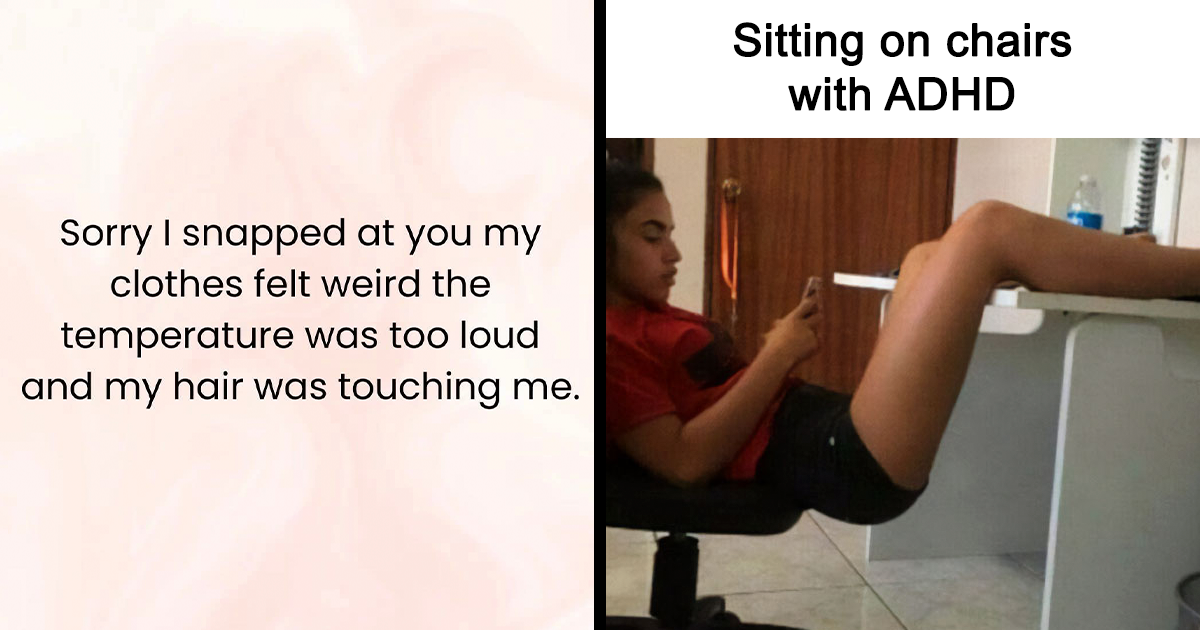
Online, ADHD is sometimes reduced to misplaced keys, colorful planners, and the occasional “Squirrel!” joke. Those moments can be funny, but they are only the gift-shop postcard version of a much larger place. Attention-deficit/hyperactivity disorder can affect work, education, relationships, finances, sleep, emotional regulation, and the exhausting daily business of making yourself do something you genuinely want to do.
That is why honest posts about ADHD and neurodivergence matter. A painfully accurate observation about task paralysis or time blindness can interrupt years of shame with one powerful thought: “Wait, other people experience this too?”
ADHD Is More Than Being Distracted
ADHD is a neurodevelopmental disorder involving persistent patterns of inattention, hyperactivity, impulsivity, or a combination of these features. Symptoms begin during childhood, although some people are not diagnosed until adulthood. For a clinical diagnosis, symptoms must create meaningful difficulties in more than one area of life.
People can also experience ADHD very differently. One person may appear visibly restless and impulsive. Another may sit quietly while losing the thread of every conversation, deadline, and instruction. A third may look impressively organized because anxiety, perfectionism, and elaborate coping systems are working overtime behind the scenes.
The broader term neurodivergent, often abbreviated as ND, describes people whose brains function in ways that differ from what society treats as typical. It may include people with ADHD, autism, dyslexia, dyspraxia, Tourette syndrome, and other neurological or developmental differences. Neurodivergence is an umbrella concept, not a clinical diagnosis.
76 ADHD and Neurodivergent Posts That Feel Uncomfortably Accurate
Executive Dysfunction: Knowing Is Not the Same as Doing
- I have been thinking about starting the task for three hours. Apparently, thinking is not starting.
- The task takes five minutes, but my brain has placed a dragon in front of it.
- I am not relaxing while procrastinating. I am marinating in guilt with my shoes still on.
- “Just do it” is useful advice only when the missing ingredient is information rather than activation.
- I completed twelve unnecessary jobs to avoid the one important job. Productivity wore a fake mustache today.
- My brain refuses to begin without perfect instructions, yet immediately improvises after receiving them.
- I can organize an entire community event but cannot make one routine phone call.
- The hardest step is sometimes not the work. It is switching from the thing I am currently doing.
- I opened the document, felt overwhelmed, and somehow ended up researching the history of paper clips.
- Executive dysfunction is being hungry, having food, and remaining motionless because preparing it has too many steps.
Time Blindness and the Mysterious Disappearance of Tuesday
- There are only two times: not yet and why is everyone calling me?
- I estimated 20 minutes because that is the number my heart selected.
- An appointment at 3 p.m. means the entire day is now called “waiting for 3 p.m.”
- I was early, so I did one tiny activity. Historians now refer to this as my late period.
- Timers help, but first I must remember why the timer is making that noise.
- I did not ignore the deadline. The deadline remained theoretical until it entered the room holding a chair.
- Five minutes can feel like an hour, while three hours can vanish during one interesting project.
- Leaving on time requires finding my keys, shoes, wallet, phone, and the version of myself who planned ahead.
- I put everything on my calendar, including time to check my calendar. We are building infrastructure.
- When someone says “later,” I need a date, a time, and preferably a small ceremonial bell.
Working Memory: The Thought Was Here a Second Ago
- I walked into the room with a purpose. The room has declined to reveal it.
- Please write down the instructions before my brain turns them into decorative fog.
- I interrupted because I feared losing my thought, then lost it while apologizing for interrupting.
- Out of sight does not mean unimportant. It means my working memory has closed the tab.
- I can remember a commercial from 2004 but not the sentence I just read twice.
- My reminders need reminders, and those reminders would like to form a union.
- I bought another household item because I forgot the three identical ones in the cabinet.
- Verbal directions containing “and then” are where my internal loading symbol appears.
- I wrote a note in a safe place. It is now safe from everyone, including me.
- Forgetting is not proof that I did not care. Sometimes caring is the reason forgetting hurts so much.
Hyperfocus, Interest, and Attention That Will Not Change Lanes
- I cannot focus on the email, but I can learn everything about medieval plumbing before breakfast.
- Hyperfocus sounds like a superpower until you miss lunch, messages, and your original objective.
- My attention is not absent. It is extremely present somewhere I did not authorize.
- A new hobby arrived. Please respect my privacy while I purchase professional equipment immediately.
- I spent six hours perfecting a detail nobody requested and six minutes on the deadline.
- Novelty starts the engine. Repetition makes the engine pretend it has never met me.
- If the project is urgent, interesting, challenging, or personally meaningful, my brain may suddenly hire a full staff.
- I paused the enjoyable activity because I needed water. That was two business days ago.
- “Why not focus like that on everything?” Because attention is not a desk lamp with one obedient switch.
- I researched the best productivity system instead of using any productivity system.
Emotions, Rejection, and a Nervous System With the Volume Up
- A neutral message ending with a period has launched an unauthorized internal investigation.
- I know the criticism is small. My body has already declared a national emergency.
- Being told I am “too sensitive” has never made an emotion pack its suitcase.
- I can calm down, but not always on someone else’s preferred schedule.
- Years of being called lazy can turn one unfinished chore into a character trial.
- I am not asking you to approve every reaction. I am asking you to understand its intensity.
- Rejection-sensitive dysphoria is a popular community term, not a formal diagnosis, but the described pain can feel very real.
- Sometimes I overexplain because being misunderstood has historically been expensive.
- My frustration escalated quickly because the problem was the final pebble, not the first one.
- Emotional regulation is a skill and support need, not a contest in pretending nothing hurts.
Masking and the Cost of Looking “Fine”
- I look organized because I am terrified of what happens when one system fails.
- Good grades did not mean I was fine. They meant distress happened to produce acceptable paperwork.
- Masking is rehearsing normality so carefully that nobody sees the recovery period afterward.
- I was called quiet, not distracted, because all the hyperactivity happened inside my head.
- People praised my independence while I privately built a ladder from panic and perfectionism.
- “You do not look like you have ADHD” usually means my coping labor has become invisible.
- I stopped fidgeting in public and started clenching every muscle instead. Apparently, that counted as improvement.
- Some women and girls are overlooked because inattentive symptoms may attract less attention than disruptive behavior.
- Late diagnosis can bring relief, grief, anger, and an urge to reinterpret one’s entire biography.
- I was not suddenly more impaired after diagnosis. I finally had language for what was already happening.
ADHD at Work, School, and Home
- Written instructions are not special treatment. They prevent spoken details from evaporating during the walk back to my desk.
- A quiet workspace can reveal ability that a noisy room keeps buried under sensory traffic.
- Breaking a project into smaller steps is useful, provided “break it down” is not another enormous assignment.
- I need accountability without humiliation, structure without infantilization, and feedback that identifies an actual next step.
- At home, clutter is often a collision between limited storage, decision fatigue, working memory, and too many unfinished transitions.
- Body doubling does not mean someone completes the task for me. Their presence can make beginning feel possible.
- Flexible scheduling helps some people, while others need predictable routines. Neurodivergent support is not one-size-fits-all merchandise.
- An accommodation removes a barrier; it does not remove the essential responsibilities of a job or course.
Validation Without Turning ADHD Into a Personality Quiz
- Relating to a post can start useful reflection, but one viral checklist cannot provide a diagnosis.
- Everyone gets distracted sometimes. ADHD involves persistent patterns and meaningful impairment, not one chaotic afternoon.
- ADHD can explain behavior without automatically excusing every consequence.
- A diagnosis is not a moral pardon or a moral failure. It is information for making better decisions.
- Medication helps many people, but individual treatment decisions belong with qualified clinicians.
- Coping strategies are tools, not proof that a person can overcome every barrier through sufficient enthusiasm.
- ADHD may include strengths, but nobody must call a disability a superpower to deserve dignity.
- The most useful response to “I am struggling” is often curiosity: “What part is hard, and what would help?”
Why These ADHD Posts Help People Feel Seen
Clinical descriptions are essential, but they rarely describe what a symptom feels like at 8:43 a.m. when someone is barefoot, late, and searching the refrigerator for a phone. Community language translates broad concepts into lived moments. “Executive dysfunction” becomes staring at a laundry basket while feeling physically unable to begin. “Working-memory difficulty” becomes forgetting a request while walking across the room.
Recognition can reduce shame. A person who has spent years hearing “careless,” “dramatic,” or “unmotivated” may discover that their difficulties have patterns. That discovery does not eliminate responsibility, but it can replace punishment-only thinking with practical problem-solving.
Representation also exposes how narrow stereotypes delay support. ADHD is not limited to loud, restless boys. Adults can have it. High achievers can have it. Parents, professionals, quiet not limited to loud, restless boys. Adults can have it. High achie students, and people who appear meticulously organized can have it. Symptoms may also overlap with anxiety, depression, autism, learning disabilities, sleep disorders, trauma, and other conditions, which is one reason a comprehensive evaluation matters.
From Relatable Content to Useful Support
Use External Supports Instead of Demanding Perfect Memory
Visible clocks, written instructions, labeled storage, automatic reminders, checklists, and calendar buffers move information out of working memory and into the environment. The goal is not to create a flawless control center worthy of a spacecraft. It is to make the next useful action easier to see.
Reduce the Size of the Starting Line
“Clean> the kitchen” is vague and large. “Put the cups in the dishwasher” has a clear finish line. A five-minute entry step, a body double, or a timer may lower the activation barrier. These tools will not solve every episode of task paralysis, but they can give the brain a door instead of asking it to climb through a wall.
Ask for Appropriate Accommodations
Depending on individual needs and eligibility, helpful workplace accommodations may include written directions, reduced distractions, uninterrupted work periods, flexible breaks, assistive planning tools, or changes in how assignments are communicated. In education, eligible students may receive services or accommodations through an individualized program or Section 504 plan.
Seek a Qualified Evaluation When Symptoms Disrupt Life
There is no single laboratory test that confirms ADHD. Clinicians generally review current symptoms, childhood history, functioning in different settings, and possible alternative explanations. Treatment can include medication, behavioral approaches, psychotherapy, skills training, educational support, workplace changes, or a combination tailored to the person. Medication should be prescribed and monitored by an appropriate healthcare professional and never shared.
Conclusion: ADHD Deserves More Than a Punchline
Humor can be a wonderful survival tool. Laughing about a missing coffee cup is different from treating ADHD as an adorable collection of harmless mishaps. Behind many funny neurodivergent posts are missed opportunities, damaged self-esteem, exhausted coping systems, and people working far harder than observers realize.
The most valuable posts do more than generate an “I do that!” reaction. They replace isolation with language, language with self-understanding, and self-understanding with the possibility of better support. Neurodivergent people do not need to be inspirational, exceptionally productive, or endlessly amusing to be believed. They deserve room to be complicated human beings whose needs, limitations, abilities, and experiences are taken seriously.
Real-Life ADHD Experiences: What “Trying Harder” Often Looks Like
Consider the employee who arrives each morning with a perfectly organized notebook. Coworkers assume organization comes naturally to her. They do not see the six alarms, the duplicate charging cables, the emergency bag by the door, or the Sunday evening panic session used to reconstruct the coming week. When she finally receives an ADHD diagnosis, people are surprised. She is not. She is tired.
Her diagnosis does not magically complete reports or make mornings effortless. It changes the questions she asks. Instead of “Why am I incapable of being an adult?” she asks, “Which part of this process keeps breaking?” She begins requesting written priorities after meetings and blocks uninterrupted time for demanding assignments. Her work was never poor because she lacked intelligence. The environment simply required cognitive juggling while repeatedly throwing her additional flaming objects.
Another familiar experience belongs to the student who understands the lesson but cannot consistently submit homework. Teachers see incomplete assignments and assume insufficient effort. At home, the student spends hours opening the school portal, forgetting a password, finding the worksheet, becoming overwhelmed by five pending tasks, and shutting down. A smaller task list, explicit deadlines, regular check-ins, and assistance organizing materials may reveal knowledge that the missing-work column concealed.
Relationships carry their own misunderstandings. One partner forgets to complete a household task and the other hears, “This does not matter to me.” The partner with ADHD hears, “You are unreliable and selfish.” Both people become defensive before discussing what happened. A shared task board, recurring reminder, or weekly planning conversation may work better than relying on memory and resentment. ADHD can explain the pattern, while repair still requires acknowledgment, cooperation, and follow-through.
Then there is the late-diagnosed adult looking backward. Old report cards suddenly sound different: “bright but inconsistent,” “talks excessively,” “does not work to potential.” Past hobbies, impulsive decisions, chaotic desks, and deadline-fueled all-nighters rearrange themselves into a recognizable picture. Relief may arrive beside grief. The person can feel grateful for an explanation while mourning support that might have prevented years of self-blame.
Not every neurodivergent experience is painful. Many people describe creativity, curiosity, humor, intense enthusiasm, unusual connections between ideas, or deep engagement with meaningful interests. These qualities can be cherished without pretending that ADHD is always a gift. A person can value how their mind works and still want medication, accommodations, therapy, coaching, or fewer administrative forms designed by someone who apparently considers “simple paperwork” a recreational activity.
Feeling seen means being allowed to hold both truths. ADHD may contribute to joy, spontaneity, and originality, while also creating disabling barriers. Support should not require tragedy, and dignity should not depend on transforming every struggle into a hidden advantage. Sometimes the most affirming message is wonderfully ordinary: your difficulty is real, you are not uniquely broken, and you are allowed to use tools that make life more manageable.