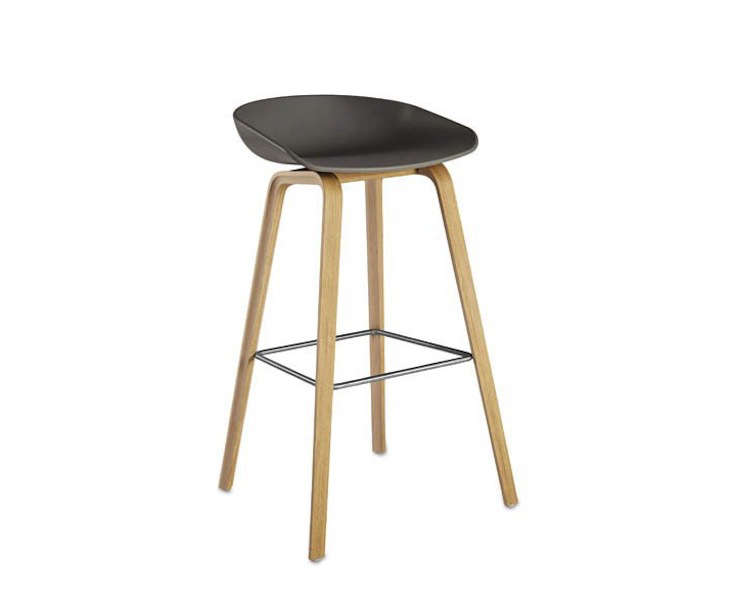
The About A Stool AAS32 is the sort of furniture that appears almost effortless. It has a curved shell, four slender wooden legs, a tidy metal footrest, and very little decorative fuss. Yet behind that simple silhouette is a carefully balanced combination of proportion, comfort, material choice, and Scandinavian practicality.
Designed by Danish furniture designer Hee Welling for HAY, the AAS32 belongs to the larger About A Collection. It was created to work in many settings without behaving like the loudest object in the room. Place it at a marble kitchen island, a compact breakfast bar, a creative office counter, or a busy café, and it settles in as though it has always lived there. It is confident, but thankfully not the furniture equivalent of someone entering a party with a trumpet.
This guide examines the AAS32’s design history, materials, dimensions, comfort, styling potential, maintenance needs, advantages, limitations, and everyday ownership experience.
What Is the About A Stool AAS32?
The HAY About A Stool AAS32 is a fixed-height counter or bar stool with a molded shell seat, a gently raised backrest, four wooden legs, and a metal crossbar that serves as a footrest. The current AAS32 2.0 version uses an injection-molded shell made from 100% recycled post-consumer plastic.
The letters “AAS” stand for About A Stool. The number 32 identifies this particular combination of a molded shell and wooden base within HAY’s modular seating family. Related versions use different bases, upholstery treatments, or metal frames, but the AAS32 is especially recognizable because of the warm wooden legs beneath the clean plastic shell.
Official product documentation describes the stool as suitable for private homes, workplaces, hospitality interiors, and other public environments. Depending on the market and configuration, buyers may find different shell colors, wooden finishes, heights, and front-upholstered options.
The Design Story Behind the AAS32
Hee Welling’s Quiet Approach to Furniture
Hee Welling grew up around furniture production as the son of a cabinetmaker. He later studied design in Helsinki and earned a master’s degree in furniture design from the Royal Danish Academy of Fine Arts. His work is known for logical construction, restrained forms, careful proportions, and the belief that well-designed objects should be useful to a broad audience rather than admired only from behind velvet ropes.
That philosophy is easy to spot in the AAS32. There is no ornamental carving, dramatic cantilever, or complicated mechanism. Instead, every component has a job. The shell holds the body. The curved back provides modest support. The legs raise the user to counter height. The metal rail gives restless feet somewhere civilized to go.
The broader About A Stool concept dates to 2009 and became one of HAY’s widely recognized Scandinavian seating collections. The series demonstrates how a basic seating form can change character through different bases, colors, heights, and upholstery choices while retaining the same visual identity.
Why the Shape Works
The shell’s continuous curve is central to the design. Rather than dividing the seat and back into separate pieces, the AAS32 uses a single sculpted form that rises gently behind the sitter. This creates a softer visual profile and avoids the bulky appearance common to fully upholstered bar chairs.
The wooden legs angle slightly outward, giving the stool stability while making the base look lighter. The metal footrest visually connects the legs and provides a durable contact point for shoes. Without that rail, the AAS32 would still look attractive, but sitting on it would involve feet dangling in midair like two forgotten commas.
AAS32 Dimensions and Specifications
The AAS32 is commonly offered in counter-height and bar-height versions. Names and exact configurations can vary by retailer, but current United States specifications list the following measurements:
| Specification | Counter Height | Bar Height |
|---|---|---|
| Overall height | 30 inches | 34 inches |
| Seat height | 25 inches | 29 inches |
| Width | 18.5 inches | 19.75 inches |
| Overall depth | 17 inches | 18 inches |
| Seat depth | 14 inches | 14 inches |
| Approximate weight | 16.75 pounds | 17.75 pounds |
The current United States listing also states that the stool arrives fully assembled and includes molded wooden legs, plastic floor glides, a recycled-plastic shell, and a five-year warranty subject to the retailer’s terms.
Choosing Between Counter Height and Bar Height
Selecting the correct AAS32 height matters more than selecting the perfect color. A slightly imperfect color combination can look intentional. A stool that wedges your thighs against the countertop simply looks like a measuring error.
Choose the 25-Inch Seat for Most Kitchen Counters
The counter-height AAS32 has a seat height of approximately 25 inches. It generally works with kitchen counters and islands measuring around 34 to 37 inches high. This leaves roughly 9 to 12 inches between the seat and the underside of the surface, which is a commonly recommended range for comfortable knee clearance.
Choose the 29-Inch Seat for Taller Bars
The bar-height model has a seat height of approximately 29 inches. It is better suited to bars, pub tables, and raised counters measuring about 40 to 42 inches high.
Measure from the floor to the underside of the countertop, not merely to the top surface. Thick countertops, deep aprons, structural supports, and decorative trim can reduce usable legroom. Standard seating guides generally recommend counter stools with seats around 24 to 27 inches for 34- to 36-inch counters and bar stools around 28 to 32 inches for 40- to 42-inch surfaces.
Is the HAY AAS32 Comfortable?
For a minimalist stool, the AAS32 offers a thoughtful level of comfort. The shell is not flat; it curves beneath the sitter and rises behind the lower back. That shape helps keep the body centered and feels more supportive than a basic round or rectangular stool.
However, the AAS32 should not be confused with a deeply cushioned dining chair. Its recycled-plastic shell is firm, and its backrest is relatively low. It is well suited to breakfast, coffee, casual meals, conversation, laptop sessions, and social gatherings. For a three-hour formal dinner or an eight-hour workday, many users would prefer additional padding and a taller back.
What the Stool Does Well
- The curved shell distributes pressure more naturally than a completely flat seat.
- The raised sides create a lightly enclosed, secure sitting position.
- The footrest reduces strain caused by unsupported legs.
- The low back offers some support without visually blocking the countertop.
- The modest overall depth works well in kitchens where space is valuable.
Possible Comfort Limitations
The 14-inch seat depth is intentionally compact. Taller users or people who prefer deeper seating may find it less lounge-like than a full-size upholstered stool. The shell can also feel firm during long meals, particularly when compared with foam-padded seating.
Where available, a front-upholstered configuration or compatible seat pad can soften the experience. Upholstery adds warmth and comfort but also introduces fabric care, stain concerns, and more visual weight. The plain shell is easier to wipe clean, making it appealing for families, kitchens, and commercial spaces where someone will eventually introduce the stool to tomato sauce.
Materials and Construction
Recycled Plastic Shell
The current AAS32 2.0 shell is made from injection-molded, 100% recycled post-consumer plastic. The molding process makes it possible to create the stool’s continuous curves, consistent surface, and relatively lightweight form.
Recycled content is a meaningful improvement, although it does not make any new furniture impact-free. Material sourcing, manufacturing, shipping, maintenance, and product lifespan all contribute to environmental performance. The best sustainability story still includes buying thoughtfully, maintaining the product, and keeping it in service for many years rather than treating furniture like a seasonal phone case.
Wooden Legs
The four-leg base may be offered in oak, walnut, or dark-stained finishes, depending on the seller and regional collection. Wood gives the stool a warmer, more residential personality than the steel-base versions in the About A Stool family.
The legs are slender but visually grounded. Their outward angle helps create a stable footprint, while the molded construction gives them a smooth, controlled shape. Because natural wood and veneer can show tonal variation, two stools may not look as though they were printed by the same office copier. That variation is part of the material’s appeal.
Metal Footrest and Floor Glides
The footrest provides both comfort and structural visual balance. Finish options may include stainless steel or coated steel, depending on the leg and shell combination. Plastic glides at the base help reduce direct contact between the wooden legs and the floor, though owners should still check that the glides are suitable for delicate hardwood, stone, or soft flooring.
How to Style the AAS32
Light Scandinavian Kitchen
Pair natural oak legs with a white, cream, pale gray, dusty blue, or muted green shell. This combination works especially well with white oak cabinets, quartz counters, light terrazzo, warm white walls, and simple pendant lights.
Dark Contemporary Interior
A black shell with black-stained oak creates a more graphic silhouette. It can anchor a pale kitchen or blend into dark cabinetry for a sleek, almost architectural effect. Add warm lighting or textured materials nearby so the room does not begin to resemble a very fashionable server closet.
Warm Modern or Midcentury-Inspired Room
Walnut legs add richness and pair naturally with brass, smoked glass, warm stone, leather, and earthy paint colors. A clay, brick, cream, or deep green shell can make the stool feel softer and more expressive without abandoning its minimalist roots.
Color as a Controlled Accent
The AAS32 is a practical way to introduce color because the shell has a clean, uninterrupted surface. Two or three colored stools can provide energy without requiring permanent changes to cabinets or countertops. Muted blue and green feel calm, while brick, clay, or warmer shades create a livelier focal point.
The stool has also appeared in professionally designed American residential interiors, illustrating how its quiet form can work beyond strictly Scandinavian rooms.
Planning Space Around the Stools
Although the AAS32 is less than 20 inches wide, the available countertop should not be divided into 20-inch slots like a furniture parking garage. People need room for elbows, dishes, bags, and the occasional dramatic hand gesture.
Allow roughly 24 inches of counter width per stool as a practical minimum. Increasing that allowance toward 26 to 30 inches creates a more relaxed arrangement. Also consider the stool’s back and the walkway behind it. In a busy kitchen, insufficient clearance can turn breakfast into a low-speed collision course.
American kitchen-planning guides commonly suggest approximately 20 to 24 inches of counter length per sitter, while broader stool-selection guidance recommends around 24 to 30 inches for comfortable spacing.
Best Uses for the About A Stool AAS32
- Kitchen islands: Its compact back and moderate depth preserve sightlines across an open-plan room.
- Breakfast bars: The wipeable shell suits coffee, snacks, homework, and hurried weekday meals.
- Home bars: The bar-height version adds Scandinavian polish without feeling overly formal.
- Office kitchens: Its cleanable surface and restrained appearance work in shared environments.
- Informal meeting counters: The low back supports short conversations without creating a bulky conference-room look.
- Cafés and hospitality spaces: The design is visually distinctive enough to feel intentional but neutral enough to repeat across a room.
The standard AAS32 is primarily an indoor stool. Do not assume that a plastic shell automatically makes the complete product outdoor furniture. The wooden base, metal finish, adhesives, and glides may not be designed for repeated exposure to rain, intense sunlight, or temperature changes.
Advantages and Potential Drawbacks
Advantages
- Recognizable Scandinavian design without excessive ornament.
- Available in counter-height and bar-height versions.
- Current shell uses recycled post-consumer plastic.
- Wooden legs add warmth to the molded seat.
- Compact dimensions suit many kitchens and apartments.
- Low back preserves an open visual line across the counter.
- Shell is generally easier to clean than full upholstery.
- Multiple colors and wood finishes support varied interiors.
Potential Drawbacks
- Firm shell may not suit people seeking plush seating.
- Low back provides less support than a full-back bar chair.
- Fixed height offers no adjustment for unusual counter dimensions.
- Wooden legs require more moisture awareness than an all-metal base.
- The designer price category may be difficult to justify for budget-focused projects.
- The compact seat may feel less generous to larger or very tall users.
- It does not swivel, which some users prefer at kitchen islands.
How to Clean and Maintain an AAS32 Stool
Cleaning the Plastic Shell
Use a soft cloth with warm water and a small amount of mild detergent. Wipe the shell, remove any soap residue, and dry it with a clean cloth. Avoid abrasive pads, harsh solvents, and aggressive kitchen cleaners, which may dull or damage the surface.
Caring for the Wooden Base
Dust the legs regularly with a soft cloth. For light cleaning, use a slightly damp cloth and dry the wood immediately. Do not saturate the legs, leave spills standing, or apply random furniture oils without checking the manufacturer’s instructions for the specific finish.
Maintaining the Footrest
Wipe the rail with a soft damp cloth and dry it afterward. Shoes can leave dirt, moisture, and small abrasive particles on a footrest, so occasional cleaning helps protect the finish.
Protecting the Floor
Inspect the glides periodically for trapped grit, wear, or damage. A tiny piece of debris beneath a glide can turn an elegant stool into a surprisingly efficient floor-scratching machine.
These methods align with furniture-care guidance recommending mild detergent for plastic surfaces and minimal moisture for finished wood.
What to Check Before Buying
- Measure the counter: Confirm both surface height and clearance to the underside.
- Select the right seat height: Choose approximately 25 inches for most kitchen counters or 29 inches for taller bars.
- Calculate spacing: Plan around 24 to 30 inches of counter width per sitter.
- Review the finish combination: Shell, legs, and footrest should coordinate with nearby cabinetry, flooring, and hardware.
- Confirm the exact configuration: Colors, upholstery, glides, finishes, and stock vary by market.
- Test comfort when possible: Body proportions and seating preferences differ.
- Buy from an authorized retailer: Confirm authenticity, delivery terms, return policies, and warranty coverage.
Final Verdict: Is the AAS32 Worth Considering?
The About A Stool AAS32 succeeds because it does not try to solve every seating problem. It is not a recliner, an office chair, or a padded throne for five-course dinners. It is a refined counter and bar stool designed for casual sitting, modern interiors, and flexible use.
Its strongest qualities are proportion, versatility, material contrast, and visual restraint. The curved shell feels more considered than a basic flat stool, while the wooden legs prevent the design from appearing cold or overly commercial. The recycled-plastic update also makes the current model more relevant to buyers who are paying closer attention to material choices.
Choose it when you value authentic design, a compact footprint, easy maintenance, and a stool that can survive several interior trends without suddenly looking like evidence from a forgotten renovation show. Choose something more padded when long-duration comfort, a tall back, swiveling, or adjustable height matters more than minimalist form.
Real-World Experience: What Living With the AAS32 May Feel Like
The following ownership scenario is based on verified dimensions, materials, maintenance guidance, and the stool’s documented design features rather than a claim of personal hands-on testing.
On the first day, the most noticeable quality of the AAS32 is often not the stool itself but what it does to the room. Because the back is low and the legs are visually light, the kitchen island remains open rather than barricaded by furniture. Natural oak versions make a room feel warmer, while darker combinations create a sharper outline against pale cabinets.
Sitting down reveals why the shell is more sophisticated than it appears in photographs. The seat does not feel like a flat cafeteria tray. Its edges rise subtly, and the back curves around the body just enough to establish a stable position. You are encouraged to sit properly without feeling strapped into an ergonomic contraption designed by a committee of chiropractors.
During a quick breakfast, the stool feels entirely at home. The footrest is easy to locate, the back supports a relaxed upright posture, and the compact seat makes getting on and off simple. At a 36-inch island, the 25-inch version places most adults at a natural eating height. The experience becomes less successful when the wrong model is paired with the counter. A 29-inch stool beneath a standard island may leave too little thigh clearance, while a 25-inch stool at a tall bar can make dinner feel like a meeting conducted from the children’s table.
Daily maintenance is one of the design’s practical strengths. Crumbs brush away easily, and most small spills can be handled with a soft damp cloth. A plain shell avoids the anxiety that comes with pale upholstery and a guest holding red wine. The wooden legs require a little more respect: wet shoes, mop water, and unattended spills should not be allowed to linger around the base.
After an hour of conversation, opinions about comfort may divide. Many people will appreciate the shell’s supportive curve and firm feel. Others will begin wishing for cushioning, especially if they prefer deep seats or have pressure-sensitive hips. A seat pad can help, though it slightly changes the original visual simplicity.
The stool is light enough for many adults to reposition without a wrestling match, but it still feels more substantial than a flimsy utility stool. Floor glides help during ordinary movement, although dragging any stool repeatedly across dusty hardwood is an ambitious way to test both the glides and one’s security deposit.
Over time, the AAS32’s restrained appearance may become its greatest advantage. It does not depend on a dramatic trend, oversized upholstery, or novelty material. Cabinet colors may change, pendant lights may come and go, and somebody may eventually declare that beige is exciting again. The stool’s basic relationship between a curved shell, warm wood, and a slender footrest is likely to remain visually useful.
The everyday experience is therefore less about luxury and more about balance. The AAS32 is comfortable without becoming bulky, distinctive without being theatrical, and practical without looking purely utilitarian. It quietly improves a counter area, then lets the people, meals, and conversations receive most of the attentionwhich is generally what good furniture should do.