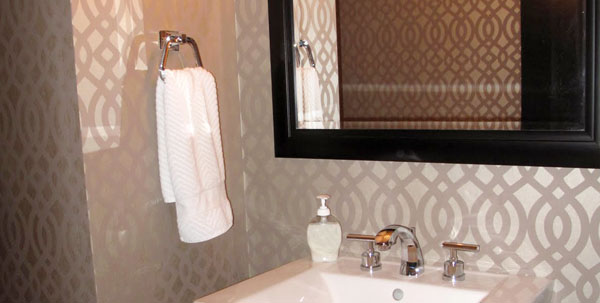
A half bath may be the smallest room in the house, but it has absolutely no interest in behaving modestly. Because it usually contains only a toilet and sink, a powder room can handle decorating choices that might feel overwhelming in a bedroom or expensive across an entire living room. Covering the walls in an Imperial Trellis pattern is one of the most effective ways to turn this practical little space into a memorable design moment.
Imperial Trellis is an iconic Schumacher wallcovering associated with Hollywood Regency glamour. Its interlocking geometric lines create a structured lattice that feels traditional, modern, playful, and polished at the same time. Schumacher describes the wallcovering as washable and medium in scale, with a 27-inch width, a horizontal repeat of approximately 6 3/4 inches, and a vertical repeat of approximately 12 5/8 inches. Those measurements matter when estimating materials and planning where the design will land around mirrors, doors, corners, and plumbing fixtures.
The result can be dramatic without becoming chaoticprovided the rest of the room understands that the wallpaper is the star. Think of the pattern as the lead singer. The vanity, lighting, mirror, floor, and hardware are the supporting band. Give every element a solo and your half bath may begin resembling a very fashionable yard sale.
Why Imperial Trellis Works So Well in a Half Bath
A half bath is an ideal location for bold wallpaper because its limited square footage naturally controls the visual impact. Guests experience the pattern in a quick, concentrated dose, while homeowners avoid committing to hundreds of square feet of an energetic design. Design publications regularly recommend powder rooms as places to experiment with geometric wallpaper, rich colors, and theatrical finishes that might feel too intense elsewhere.
Unlike a full bathroom, a traditional half bath does not contain a bathtub or shower. That means substantially less steam and prolonged humidity, making it a more practical environment for paper wallcoverings. Handwashing still produces occasional splashes, of course. Apparently, some people wash their hands as though they are trying to extinguish a countertop fire. Proper wall preparation, a small backsplash, and reasonable ventilation remain important.
The Pattern Adds Architecture Without Construction
Imperial Trellis creates the impression of architectural framework. Its repeating curves and straight lines suggest garden latticework, decorative molding, and vintage hotel interiors. This visual structure can make plain drywall feel intentionally designed without adding paneling, trim grids, or expensive millwork.
The pattern also directs the eye around the room rather than allowing it to stop at a single blank wall. When installed on all four walls, the continuous repeat can make the boundaries feel less obvious. Counterintuitively, that may help a compact powder room feel more complete and expansive. Large or medium-scale patterns are not automatically wrong for small spaces; what matters is how much of the repeat remains visible and how well the surrounding elements are edited.
Choosing the Right Imperial Trellis Color Palette
The pattern is available in several color directions, including light neutrals, green, aqua, charcoal, silver, yellow, and glossy black options. The best choice depends on the amount of natural light, the floor material, the style of the surrounding home, and how dramatic you want the room to feel.
Green and White for Classic Energy
A green-and-white trellis wall creates a fresh, garden-inspired powder room. Pair it with a white pedestal sink, polished nickel faucet, warm brass sconces, and a marble or marble-look floor. The green brings personality, while the white plumbing fixtures prevent the room from becoming too heavy.
This palette works especially well in traditional, transitional, coastal, and preppy interiors. To connect the half bath with nearby rooms, repeat the green in a small piece of art, a hand towel, or a decorative tray rather than buying seventeen matching accessories. Coordination is elegant. Total surrender to a theme is how one accidentally creates a gift shop.
Black and White for Hollywood Regency Drama
Black or onyx-inspired Imperial Trellis walls deliver the strongest graphic impact. Use them with a white sink or vanity top so the fixtures remain easy to see. Polished nickel, chrome, lacquered black, and aged brass can all work, but choose one dominant metal finish and use another only as an accent.
A black-and-white room benefits from layered lighting. A ceiling fixture alone may create shadows around the face and flatten the wallpaper. Sconces positioned near the mirror provide better illumination and allow glossy details to sparkle. Add one small piece of colorful artwork if the room needs relief from the monochrome palette.
Soft Aqua or Silver for an Airier Look
Soft aqua, silver, or pale neutral versions of the pattern suit half baths with limited daylight. These quieter colorways preserve the geometry while reflecting more light than darker backgrounds. They pair naturally with white oak, pale marble, brushed nickel, glass, and soft gray flooring.
For a calm contemporary result, keep the ceiling white and select a frameless or thin-framed mirror. For a more traditional interpretation, add crown molding, a shaped mirror, and a furniture-style vanity. The same pattern can wear sneakers or evening clothes; the surrounding materials decide the dress code.
Should You Wallpaper Every Wall?
In most half baths, covering every wall produces a more intentional result than creating a single accent wall. Imperial Trellis relies on repetition, and allowing the pattern to continue around corners creates an enveloping jewel-box effect. An isolated feature wall can work, but it may appear unfinished if the remaining walls are not carefully coordinated.
Consider a partial-wall installation when the room includes existing beadboard, tile, or substantial wainscoting. Wallpaper above painted paneling is a practical way to reduce material costs and protect the lower walls from bumps and splashes. Paint the paneling in a color pulled directly from the wallpaper’s background or linework.
Wallpapering the ceiling is another possibility for an especially dramatic powder room. However, extending Imperial Trellis across both walls and ceiling can become visually intense. This approach works best with a restrained vanity, simple floor, minimal artwork, and excellent installation. The ceiling is not the place to discover that your pattern matching skills are powered mainly by optimism.
Preparing Half-Bath Walls for Wallpaper
Wall preparation determines whether a beautiful wallpaper installation lasts for years or begins lifting at the seams before the new hand soap is empty. The surface should be smooth, clean, dry, and properly sealed. Repair nail holes, dents, peeling paint, and cracks before installation. Sand patched areas until they are flush with the surrounding wall.
A wallcovering primer helps create a uniform surface, supports adhesion, and makes future removal less destructive. York Wallcoverings recommends painted or primed surfaces and notes that ideal walls should be clean, properly prepared, and free from old adhesive or loose material. Different wallpaper constructions require different adhesives, so follow the wallcovering manufacturer’s current instructions rather than using whichever paste has been quietly aging in the garage since 1997.
Test the Walls for Hidden Problems
Before installing expensive paper, inspect the room for plumbing leaks, staining, soft drywall, mildew, and peeling paint. Wallpaper will not solve moisture damage; it will simply dress the damage nicely while it gets worse. Repair the source of any moisture, allow the wall to dry completely, and replace compromised materials when necessary.
Textured walls may require skim coating or a wall liner because strong geometric patterns emphasize uneven surfaces. A trellis line that travels over a bump can appear distorted, particularly near strong side lighting. Smooth preparation is therefore more important with a precise geometric print than with an irregular floral design.
Planning Pattern Placement and Ordering Material
Do not calculate wallpaper requirements using wall square footage alone. Imperial Trellis has a repeating pattern, so strips must be cut and aligned to maintain continuity. Pattern matching creates waste, especially around short sections above doors, behind toilets, and beside mirrors.
Measure the full height and width of every wall, subtracting openings only cautiously. Order enough material from the same production run to complete the room and keep an extra section for future repairs. A replacement roll purchased years later may vary slightly in color, and even a small difference can become obvious when two panels meet.
Decide which wall receives the strongest, most symmetrical section of the pattern. Usually, that is the wall seen immediately when the door opens or the wall behind the vanity. Mark a vertical reference line with a level rather than trusting the corner. Homes contain many things; perfectly square corners are not always among them.
Work Around Mirrors and Fixtures
Plan the mirror location before hanging the paper. A centered trellis motif behind a round or rectangular mirror looks deliberate, while a pattern awkwardly clipped on one side can feel accidental. If possible, temporarily trace the mirror shape on kraft paper and tape it to the wall while evaluating wallpaper samples.
Remove switch plates, towel rings, shelves, and other wall-mounted accessories before installation. Whenever possible, loosen the toilet tank or have a professional handle difficult areas instead of forcing paper into a narrow gap. Clean cuts around plumbing and trim contribute more to a luxury result than almost any decorative accessory.
Protecting Wallpaper From Water and Humidity
A half bath produces less humidity than a full bathroom, but it is not a desert. Use a backsplash behind the faucet when the sink sits close to the wall. Marble, quartz, ceramic tile, glass, or another wipeable material can protect the wallpaper from repeated splashing while adding a finished transition above the vanity.
Ventilation also supports the longevity of wall finishes. If the room includes an exhaust fan, keep it clean and functional. In a windowless powder room, leaving the door open after heavy use can help trapped moisture escape. For full bathrooms with showers, moisture-resistant or vinyl wallcoverings are generally safer choices than untreated paper products.
Use bathroom-appropriate paint on the ceiling, trim, door, and any wall areas not covered in paper. Satin and semi-gloss finishes generally tolerate moisture and cleaning better than flat finishes. Moisture-resistant paint does not compensate for active leaks or poor ventilation, but it provides a more durable surface for normal powder-room conditions.
Selecting Fixtures That Complement the Pattern
Keep the Vanity Visually Controlled
A wall-mounted sink or pedestal sink allows more of the wallpaper to remain visible and can make the floor feel open. A compact cabinet vanity provides valuable storage but introduces another large block of color. Paint or stain the vanity in a shade already present in the wallpaper, such as white, charcoal, dark green, or warm wood.
A stone countertop with quiet veining is usually easier to combine with Imperial Trellis than a highly dramatic slab. Pattern can mix successfully with pattern, but two dominant surfaces need differences in scale. When the wallpaper has a clear medium-scale repeat, select a countertop with subtle movement rather than bold, competing stripes.
Choose a Mirror With a Clear Silhouette
A simple round, oval, arched, or rectangular mirror creates visual rest against geometric walls. An ornate gilt mirror can work in a Hollywood Regency room, but its frame should remain readable against the pattern. Test the mirror’s outline with the actual wallpaper sample instead of assuming that anything gold automatically becomes glamorous.
Use Lighting as Jewelry
Powder-room lighting should illuminate the face while enhancing the wallcovering. Slim sconces, globe lights, shaded fixtures, and small decorative pendants are all suitable options. Select bulbs that render the wallpaper colors accurately and avoid placing oversized fixtures where they cover the pattern or crowd the mirror.
Flooring and Trim Ideas
The floor should stabilize the room rather than compete for attention. White or black hex tile, marble basketweave, understated porcelain, terrazzo with restrained coloring, and warm wood-look flooring can all complement Imperial Trellis walls.
Painted trim creates a crisp boundary around the wallpaper. White trim offers the safest contrast, while black, green, or charcoal trim can produce a more enveloping room. Pulling the trim color directly from the wallpaper is an effective way to make the design feel custom. Extending the trim color to the door creates a polished, immersive finish, particularly when the hallway side of the door remains coordinated with the surrounding home.
Common Design Mistakes to Avoid
- Skipping a physical sample: Screen colors are unreliable, and the pattern may look different under warm sconces than it does in daylight.
- Ignoring pattern placement: A geometric design should appear centered and balanced around the room’s main focal point.
- Using too many competing finishes: Busy stone, patterned floor tile, elaborate hardware, and geometric wallpaper can create visual traffic congestion.
- Installing over damaged walls: Wallpaper cannot hide peeling paint, active mildew, or significant texture.
- Forgetting splash protection: Paper directly behind a frequently used faucet needs a backsplash or careful protection.
- Underlighting dark colorways: Moody wallpaper needs layered light to reveal its depth and keep the room functional.
- Buying the exact minimum quantity: Pattern matching, trimming, mistakes, and later repairs require extra material.
Three Complete Imperial Trellis Half-Bath Concepts
1. Classic Green Garden Room
Cover all four walls in green-and-white Imperial Trellis. Add a white pedestal sink, polished nickel faucet, oval brass mirror, two cream fabric-shaded sconces, and white marble mosaic flooring. Paint the ceiling and trim warm white. Finish with one framed botanical print and a green hand towel.
2. Black-Tie Powder Room
Use a black-and-ivory trellis pattern with a glossy black vanity, white quartz top, unlacquered brass faucet, and a thin brass-framed mirror. Select black hexagonal floor tile with dark grout and add small opal-glass sconces. Keep accessories minimal: a white hand towel, a brass soap dispenser, and perhaps one vintage portrait with enough personality to judge your guests quietly.
3. Soft Aqua Coastal Retreat
Pair pale aqua trellis walls with a white oak floating vanity, brushed nickel fixtures, an arched frameless mirror, and soft gray porcelain flooring. Use white trim and a simple globe ceiling light. A small piece of abstract coastal artwork can reference the aqua without introducing obvious anchors, seashell baskets, or signs explaining where the beach is.
Experience Notes: Lessons From Real Half-Bath Wallpaper Projects
One lesson repeatedly learned in wallpapered half baths is that the sample must spend time inside the actual room. A pattern that appears crisp white in a bright showroom can look cream, gray, or even slightly green under existing bulbs. Homeowners often tape a sample to the wall, admire it for three minutes, and place an order. A better test is to move the sample around the room and view it in morning light, evening light, and with the door closed. The wallpaper affects the reflected color on the vanity, mirror, towels, and even skin tones, so lighting is part of the material selectionnot a separate decision made later.
Another common experience involves discovering how much attention a geometric pattern gives to imperfect walls. Small bumps that were invisible under matte paint suddenly bend the trellis lines and cast tiny shadows. Installers frequently spend more time preparing the room than hanging the final paper. Patching, sanding, priming, and checking corners may feel disappointingly unglamorous, but those steps create the crisp result people admire in finished photographs. The glamorous part lasts for years. The glamorous part is also secretly supported by several hours of dust, primer, ladders, and someone asking where the level went.
Pattern placement also creates memorable successes and avoidable regrets. In the best installations, the design is centered behind the sink or balanced on the first wall visible from the hallway. In weaker installations, a dominant motif disappears behind the mirror while a narrow fragment lands beside the door. Homeowners who sketch wall elevations or temporarily mark fixture outlines tend to make better decisions. Even a simple phone photograph with digital lines drawn over it can reveal where repeats should begin. The room is small, but every inch is visually close to the viewer, so awkward alignment has nowhere to hide.
Water protection is another practical lesson. Many half baths survive beautifully with paper wallpaper because there is no shower, yet the sink area still deserves respect. A shallow basin, high-pressure faucet, or enthusiastic child can send water farther than expected. Projects with a short stone or tile backsplash generally age better than installations where wallpaper meets the countertop directly. Clear caulk at appropriate transitions and prompt wiping also help. The goal is not to make the room waterproof like a swimming pool; it is to prevent repeated small splashes from becoming a slow, annoying edge-lifting experiment.
Finally, the most satisfying Imperial Trellis rooms usually stop decorating sooner than expected. Once the paper is installed, owners sometimes realize that artwork, shelves, decorative signs, plants, and multiple towel colors are unnecessary. The pattern already provides movement and character. A strong mirror, flattering lighting, functional storage, and one or two accessories may be enough. This restraint can be difficult because small rooms make every empty corner look available for one more object. Experience suggests leaving some wallpaper visible is not wasted space. It is the design doing its joband it requires no dusting.
Conclusion
Walls in a half bath with an Imperial Trellis pattern can transform an overlooked utility room into one of the most distinctive spaces in the home. The geometric design brings architectural rhythm, Hollywood Regency character, and enough visual confidence to make a tiny room feel intentionally special.
The strongest results begin with a carefully tested colorway, properly repaired and primed walls, thoughtful pattern placement, and protection around the sink. Keep the floor, vanity, and countertop relatively controlled, then use the mirror, lighting, and hardware to reinforce the chosen style. Whether the finished room feels traditional, glamorous, coastal, or contemporary, Imperial Trellis performs best when it is allowed to lead the design rather than compete with it.
Research note: This article synthesizes product specifications and practical design guidance from Schumacher, This Old House, York Wallcoverings, Sherwin-Williams, House Beautiful, HGTV, Better Homes & Gardens, Architectural Digest, Southern Living, Sunset, The Spruce, Lowe’s, and Bob Vila.