Everyday life is already ridiculous. Maria Scrivan simply catches it before it can
pretend otherwise. In her one-panel comic series Half Full, household pets
have suspiciously sophisticated opinions, ordinary objects behave like difficult
coworkers, and minor inconveniences develop the emotional weight of Shakespearean
tragedy. It is a cheerful universe in which nobody is completely in controland that
is precisely why it feels so familiar.
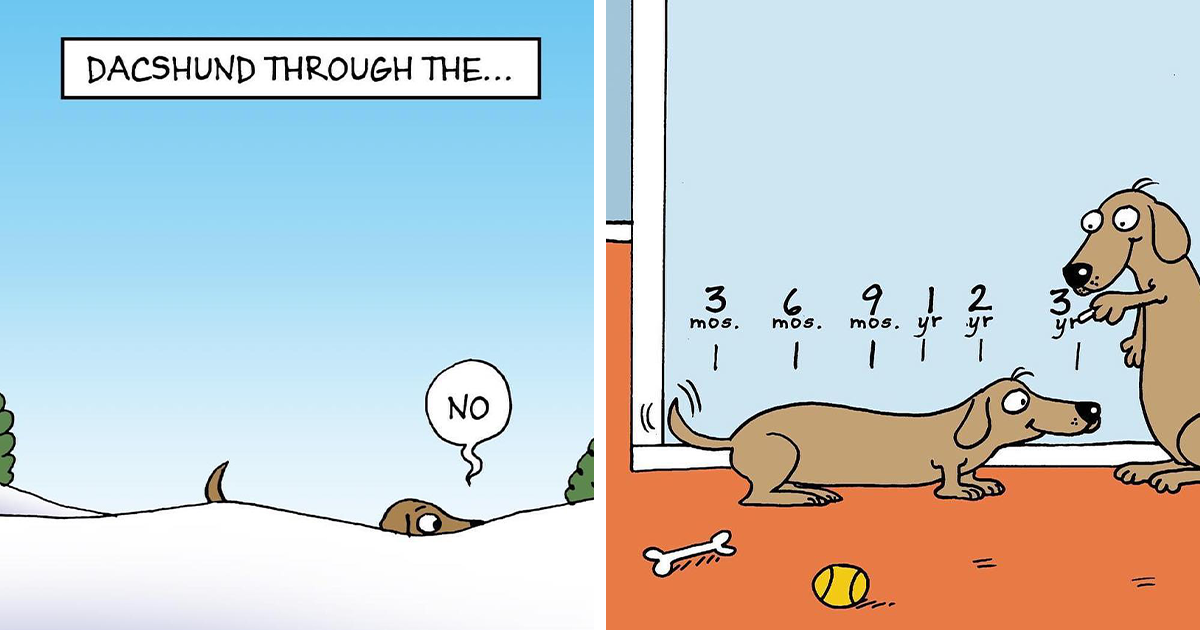
This selection of 30 absurd humor comics demonstrates Scrivan’s talent for compressing
an entire situation into one expressive image and a tightly constructed punch line.
She does not require elaborate plots or a parade of speech bubbles. A glance, an
unexpected role reversal, or one perfectly chosen sentence is often enough to expose
the comedy hiding inside work, dating, technology, food, family life, and our
complicated relationships with animals.
Who Is Maria Scrivan?
Maria Scrivan is an award-winning American cartoonist, author, and illustrator best
known for Half Full and the Nat Enough graphic novel series. Her
cartoons have appeared in newspapers, magazines, online publications, and hundreds
of greeting cards. Her professional path connects several forms of visual comedy:
the daily gag cartoon, magazine illustration, commercial humor, school presentations,
and full-length graphic storytelling.
Long before becoming a professional cartoonist, Scrivan was already using drawings as
a language. As a student, she created characters, illustrated letters, and occasionally
transformed writing assignments into comics. That instinct remains visible in her
mature work. She thinks through pictures, allowing posture, facial expressions, props,
and empty space to contribute as much as the written caption.
Scrivan’s career also reveals a serious work ethic beneath the silliness. Producing
frequent comics demands constant observation, disciplined editing, and the ability to
recognize which ideas deserve to survive. The final cartoon may take only seconds to
read, but its simplicity is earned through choosing the right setup and removing
everything that does not strengthen the joke.
Why the Half Full Comics Are So Funny
They Begin With Recognizable Frustration
Scrivan often starts with a situation readers already understand: a stubborn device,
an uncomfortable social encounter, a disappointing meal, a confusing trend, a
relationship misunderstanding, or a pet that behaves like the legal owner of the
house. These are modest problems, but modest problems are excellent comedy material.
They are widespread, emotionally safe, and annoyingly persistent.
The joke works because readers recognize the feeling before they process the absurdity.
We have all argued with a printer as though it were deliberately withholding a
document. We have all opened a refrigerator repeatedly, hoping new food might appear
through optimism. We have all received a message whose punctuation seemed important
enough to require a committee investigation. Scrivan takes that familiar emotional
response and makes it literal.
Then Reality Takes One Small Step Sideways
Absurd humor does not always require spaceships, alternate dimensions, or a walrus
running for Congress. Sometimes it needs only one impossible detail placed inside an
otherwise normal scene. A dog may speak with the confidence of a management
consultant. A cat may conduct a performance review of its human. Food may develop
anxiety about being eaten. A smartphone may act like the most demanding member of the
family.
The surrounding world remains ordinary, which makes the impossible element funnier.
Characters rarely stop to announce that something strange is happening. They accept
the situation with calm expressions, weary resignation, or mild irritation. That
deadpan response allows the ridiculous premise to feel briefly reasonableuntil the
punch line arrives and knocks the furniture over.
The Captions Are Short but Carefully Engineered
One-panel cartoons have nowhere to hide. A novel can take several chapters to build
atmosphere; a comic panel may receive three seconds of attention from a scrolling
reader. Scrivan therefore relies on verbal economy. The setup must be immediately
understandable, and the final phrase must redirect the reader’s interpretation without
needing a paragraph of explanation.
Her strongest captions often sound like lines that could be spoken in real life. The
vocabulary is accessible, the rhythm is conversational, and the tone is usually
understated. That natural delivery is important. The more casually a character
discusses an impossible situation, the more entertaining the contradiction becomes.
A Tour Through the 30 Absurd Humor Comics
Rather than spoiling every punch line, it is more enjoyable to look at the comic
territory covered by this collection. Across the 30 panels, Scrivan repeatedly returns
to a handful of subjects that seem ordinary until her characters begin talking.
Pets With Their Own Private Agendas
Dogs and cats are natural stars in Maria Scrivan comics because animal behavior already
looks like a mysterious form of performance art. A dog can spend ten minutes selecting
the perfect place to sit and then choose the laptop keyboard. A cat can ignore an
expensive toy while becoming emotionally attached to the shipping box. No surreal
transformation is necessary; the evidence is living in millions of American homes.
Scrivan pushes these behaviors one step further by imagining the internal logic behind
them. Her pets may behave like therapists, critics, children, executives, or slightly
dishonest roommates. Humans assume they are responsible for the animals, while the
cartoons quietly suggest the opposite. The pets understand the household hierarchy.
The people are still reviewing the paperwork.
Technology That Has Become Too Personal
Phones, computers, apps, and social media offer unlimited information, instant
communication, and several fresh reasons to panic before breakfast. Scrivan’s
technology humor captures the strange intimacy people now share with machines. A device
may know where its owner went, what they purchased, how badly they slept, and which
embarrassing song they played six times.
Her comics also recognize that digital tools often create the problems they claim to
solve. A notification interrupts someone to announce that they should reduce
distractions. A platform designed to connect friends encourages them to compare
vacations, lunches, and apparently effortless accomplishments. The exaggeration is
absurd, but the emotional result is painfully accurate.
Relationships, Dating, and Selective Listening
Couples in Half Full often communicate with the precision of two people using
different instruction manuals. One person speaks; the other hears a completely
customized version of the sentence. Small disagreements become negotiations. Neutral
questions develop hidden meanings. A simple household decision acquires the strategic
tension of an international summit.
Scrivan usually avoids making one character the permanent villain. The humor comes from
shared human imperfection. Everyone is insecure, distracted, hungry, stubborn, or
attempting to win an argument they no longer remember starting. That balance makes the
relationship jokes affectionate rather than cruel.
Food That Carries Emotional Baggage
Food is another reliable source of absurdity because people rarely treat it as mere
fuel. Meals can represent comfort, guilt, ambition, nostalgia, celebration, boredom,
or the consequences of shopping while hungry. Scrivan treats snacks and ingredients as
participants in the drama rather than silent objects on a plate.
The comedy becomes especially effective when healthy intentions confront actual
appetite. A person may begin the day with the confidence of a wellness influencer and
end it negotiating directly with a cookie. The joke is not that people lack discipline.
It is that discipline frequently encounters melted cheese and discovers that its
schedule has suddenly changed.
Work, Exercise, and the Performance of Productivity
Modern work culture is filled with phrases that sound energetic while revealing almost
nothing. People “circle back,” “touch base,” “move the needle,” and attend meetings to
decide whether another meeting is necessary. Scrivan’s compact format is perfect for
exposing this language. One exaggerated image can reveal the distance between being
busy and accomplishing something useful.
Exercise receives similarly affectionate treatment. Fitness goals often begin with
heroic language and encounter less heroic realities: weather, fatigue, snacks, laundry,
and the discovery that the couch has exceptional emotional intelligence. Scrivan, who
has discussed running and cycling as part of her own creative routine, understands both
the satisfaction of movement and the negotiations required to begin it.
Trends That Become Ridiculous Almost Immediately
Cultural trends move rapidly, but the behavior underneath them remains stable. People
want to participate, belong, understand the newest obsession, and occasionally prove
that they understood it five minutes before everyone else. Whether the subject is a
viral game, a wellness craze, a fashionable phrase, or a new social platform, Scrivan
focuses on the human need hiding beneath the trend.
This approach keeps the comics readable even after a particular craze fades. The
reference may belong to one moment, but the desire to avoid being left out is timeless.
Humanity has always chased novelty. The novelty simply has better graphic design now.
The Art Behind the Absurdity
Expressive Characters Do Half the Talking
Scrivan’s cartoon figures are visually direct, but they are never emotionally blank.
Raised eyebrows, narrowed eyes, stiff shoulders, and tiny changes in posture communicate
irritation or disbelief before readers reach the caption. This matters in a one-panel
format, where the image must establish relationships and mood immediately.
Animals receive the same expressive attention. A dog’s hopeful stare or a cat’s
judgmental stillness can function as a complete comic statement. The caption adds the
final twist, but the personality is already present in the drawing.
Clean Composition Keeps the Joke Moving
The panels generally avoid unnecessary visual clutter. Background details appear when
they strengthen the situation, not because every corner needs decoration. This clarity
helps readers identify the premise quickly and gives the punch line room to land.
Color adds warmth and guides attention without overwhelming the gag. The accessible
drawing style also allows the comics to travel easily between newspapers, websites,
social feeds, presentations, and greeting cards. A strong visual idea remains readable
whether it appears on a large screen or between messages on a phone.
Why Maria Scrivan’s Humor Feels Optimistic
The title Half Full captures the spirit of the series. Scrivan does not deny
that life is awkward, exhausting, confusing, and occasionally managed by software that
refuses to remember a password. Instead, she treats irritation as reusable creative
material. A bad day may still be a bad day, but it can also become tomorrow’s cartoon.
This outlook is not empty positivity. The comics recognize loneliness, insecurity,
social pressure, creative doubt, and relationship tension. Scrivan’s longer graphic
novels explore similar emotions through young characters learning about friendship and
self-worth. Humor does not erase those difficulties; it creates enough distance to see
them differently.
That may explain the broad appeal of her work. Adults recognize workplace exhaustion,
domestic negotiations, and digital overload. Younger readers understand friendship
anxiety, embarrassment, and the fear of not being good enough. Pet owners need no
explanation at all. Their animals have already briefed them.
What Aspiring Cartoonists Can Learn From These Comics
The first lesson is to observe ordinary life carefully. Cartoon ideas do not always
arrive wearing tiny hats and carrying signs marked “JOKE.” They appear as moments of
frustration, contradictions in conversation, strange signs, awkward pauses, and the
suspicious behavior of household appliances.
The second lesson is to save ideas immediately. A funny thought feels unforgettable
for approximately seven minutes. Then someone asks where the keys are, and the thought
disappears into the same dimension as missing socks. A phone note, sketchbook, or voice
memo can preserve the raw observation until it is ready to become a cartoon.
Finally, editing is essential. A one-panel joke improves when the artist removes
unnecessary words and visual distractions. The goal is not to explain why the idea is
funny. The goal is to arrange the image and caption so the reader experiences the
discovery.
A Reader’s Experience With 30 Maria Scrivan Comics
Reading a collection of Maria Scrivan comics feels less like entering a fantasy world
and more like discovering that someone has been taking notes during your week. The
characters may be talking animals or personified objects, but their complaints are
remarkably specific. Suddenly, the dog staring at your dinner is not begging; it is
conducting a detailed audit of unfair resource distribution.
The best way to experience these comics is slowly. A one-panel cartoon may look like a
tiny piece of entertainment designed for a quick scroll, yet a strong panel rewards a
second look. The initial laugh comes from the caption. The next laugh may come from a
character’s expression, a detail in the background, or the realization that the absurd
situation accurately describes something you did yesterday.
The collection also creates an entertaining pattern of recognition. One comic reminds
you of a coworker who speaks entirely in corporate phrases. Another resembles the
household debate over what to order for dinner. A pet cartoon makes you glance across
the room at an animal who is pretending not to understand English. By the tenth panel,
the gallery begins to feel uncomfortably well informed.
Sharing the comics adds another layer to the experience. People rarely send a humor
comic without an implied message. A dog panel means, “This is your pet.” A relationship
comic means, “This is us, but let us agree not to discuss which character is which.”
A technology joke may be forwarded to the family member who has forgotten the same
password every week since 2018.
The accessibility of Scrivan’s humor makes it useful as a social bridge. The jokes are
understandable without extensive background knowledge, and the subjects are broad
enough to cross age groups. Children can enjoy the expressive animals and visual
surprises, while adults notice the satire involving work, relationships, anxiety, and
online behavior.
There is also something refreshing about humor that does not require a target to be
humiliated. Many of Scrivan’s jokes invite readers to laugh at shared habits rather than
at a stranger’s misfortune. We laugh because everyone procrastinates, misunderstands a
message, argues with an object, or makes ambitious plans while standing next to a
dessert. The cartoonist is included in the joke, and so are we.
After 30 comics, the most lasting experience is not simply amusement. It is a slight
adjustment in attention. The reader begins noticing comic possibilities outside the
gallery: a sign with confusing instructions, a pet occupying an entire bed, a person
taking a photograph of food that is rapidly becoming cold, or a video meeting in which
everyone says they can hear each other while looking deeply uncertain.
That change in perspective is one of the quiet pleasures of observational humor. It
transforms inconvenience into material. The next delayed flight, broken appliance, or
uncomfortable conversation may still be irritating, but part of the mind begins
arranging it into a panel. Annoyance has not disappeared. It has simply acquired a
caption.
Conclusion: Finding the Punch Line in Ordinary Life
These 30 absurd humor comics by Maria Scrivan show why a single panel can deliver a
surprisingly complete story. Through concise captions, expressive characters, talking
animals, and gentle exaggeration, Half Full turns familiar frustrations into
moments of recognition.
Scrivan’s greatest trick is not inventing a world stranger than ours. It is revealing
how strange our world already is. People carry devices that interrupt them constantly,
ask pets for emotional support, negotiate with snacks, and schedule meetings about
productivity. The cartoonist merely adds speech bubbles and allows the truth to
introduce itself.