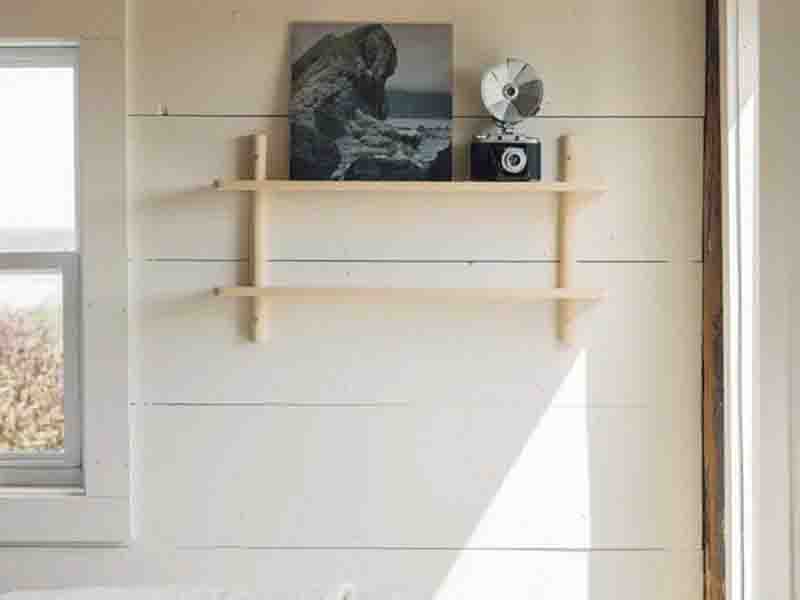
A bare wall is rarely just a bare wall. It is usually an underemployed storage tertops become crowded. A well-designed Two Tier Wall Shelf 30 solves that problem by providing two useful display levels in a compact, approximately 30-inch-wide footprint.
This style of wall-mounted shelf works especially well when you need more storage but have no interest in sacrificing floor space to another cabinet. It can organize coffee mugs in a kitchen, display plants in a living room, hold toiletries in a bathroom, or rescue an entryway from the daily migration of keys, sunglasses, and mysterious receipts.
Although the name is associated with a design-forward shelf previously featured as a handcrafted geometric piece, current versions and comparable products can differ in width, depth, shelf spacing, materials, and mounting systems. In other words, measure first. Your tape measure is less charming than a new shelf, but considerably better at preventing regret. eader>
What Is a Two Tier Wall Shelf 30?
In practical shopping terms, a Two Tier Wall Shelf 30 is a wall-mounted storage or display unit with two horizontal shelf surfaces and a width close to 30 inches. Some models use visible side brackets, while others hide their mounting hardware to create a floating appearance.
The “30” generally describes the approximate width rather than the height, depth, or weight capacity. However, product naming is not always perfectly consistent. One current narrow Kroft two-tier shelf, for example, is listed at 26 inches wide, 6 inches deep, and 16 inches high, with approximately 7 3/8 inches between the shelves. That difference illustrates why buyers should always read the actual specifications instead of relying entirely on the product title.
Why two tiers are better than one
A single shelf provides one line of storage. A two-tier design creates a miniature vertical organization system. The upper shelf can hold decorative pieces, while the lower shelf keeps frequently used objects within easier reach. This arrangement separates display items from practical items without requiring a large shelving unit.
Two levels also produce a more finished visual composition. A lone shelf can sometimes appear as though it accidentally stopped halfway through a decorating project. Two coordinated levels look intentional, balanced, and architectural.
Why a 30-Inch Two-Tier Shelf Is a Useful Size
A width of roughly 30 inches occupies a comfortable middle ground. It is wide enough to hold several useful objects but compact enough for many apartments, narrow kitchens, home offices, bathrooms, and awkward wall sections.
Compared with a 12- or 18-inch accent shelf, a 30-inch wall shelf offers enough horizontal space for grouped arrangements. Compared with a shelf measuring 48 inches or more, it is easier to center over a small desk, toilet, console table, coffee station, or nightstand.
It uses vertical space instead of floor space
Wall-mounted storage is particularly helpful in small rooms because it keeps the floor open. A floating or bracket-mounted shelf can replace a bulky bookcase when the goal is to display a modest collection rather than store an entire personal library.
Design professionals frequently recommend wall-mounted furniture and shelving in narrow living areas because these pieces provide function without adding another deep object to the room.
It encourages useful limits
A medium-size shelf gives you room to organize, but not enough room to begin a secondhand bookstore above the sofa. This built-in limitation can be beneficial. You are more likely to choose objects deliberately instead of covering every inch with things that seemed adorable at the store and now require weekly dusting.
Important Features to Consider Before Buying
Overall width, depth, and height
Width is only the beginning. Shelf depth determines what the unit can actually hold. A shallow shelf between 5 and 7 inches may be ideal for framed photographs, candles, small plants, spice jars, and decorative objects. It may be too narrow for dinner plates, large books, storage baskets, or full-size kitchen appliances.
For comparison, many wall shelves fall between approximately 5 and 14 inches deep. Kitchens often benefit from deeper shelves because plates and cookware need more surface area, while bathrooms and compact rooms can usually use shallower designs. p>Measure the tallest object you plan to display as well. Two beautiful shelves are not very helpful when the space between them is too short for your favorite vase.
Material
The best material depends on the room and intended load:
- Solid wood: Warm, durable, and naturally distinctive. It suits Scandinavian, modern, rustic, farmhouse, and mid-century interiors.
- MDF or engineered wood: Usually more affordable and visually consistent, though it should be protected from prolonged moisture.
- Metal: Strong, slim, and appropriate for industrial interiors, kitchens, garages, and utility rooms.
- Wood and metal: A versatile combination that adds warmth without losing structural definition.
- Glass or acrylic: Visually light and useful for decorative displays, but fingerprints may become your newest interior design accessory.
Solid wood and metal are often preferred for demanding applications, while acrylic, glass, and MDF may be suitable for lighter decorative objects. A finished wood surface is particularly important in kitchens or bathrooms where occasional moisture is unavoidable.
Weight capacity
Never estimate load capacity based on appearance. A thick shelf may look mighty while relying on modest anchors hidden behind the wall. Meanwhile, a slim metal shelf can sometimes support considerably more weight than expected.
Load capacity depends on the shelf material, bracket design, fasteners, wall construction, shelf depth, and whether the mounting points reach wall studs. Some 30-inch decorative two-tier models are designed for roughly 10 pounds per shelf, while heavy-duty systems may support much more. Always follow the capacity stated by the manufacturer.
Bracket style
Hidden brackets create a clean floating effect. Exposed brackets can be easier to install and may become part of the design. Black steel brackets add industrial contrast, while shaped wooden supports create a softer handcrafted appearance.
Choose hidden hardware when visual simplicity matters most. Choose exposed hardware when installation access, structural visibility, or decorative character is more important.
Finish and color
Light ash, oak, natural pine, and pale finishes can make a shelf feel airy. Walnut, roasted ash, espresso, and black finishes introduce stronger contrast. White shelves blend into light walls, allowing displayed objects to take center stage.
A practical approach is to repeat an existing room finish. Match the shelf to a nearby table, cabinet, picture frame, floor tone, or metal fixture. Perfect matching is unnecessary; coordination is the goal. Your shelf does not need to submit a DNA sample to your coffee table.
Best Places to Use a Two Tier Wall Shelf 30
Kitchen and coffee station
In a kitchen, two tiers can organize mugs, tea containers, spices, small bowls, cookbooks, and attractive pantry jars. Place everyday items on the lower level and decorative or less frequently used pieces above.
Before using a shallow decorative shelf for dishes, confirm that it is deep enough and rated for the combined weight. Standard dinner plates often need substantially more depth than small spice jars or espresso cups.
Living room
A living room shelf can become a compact rotating gallery. Use it for framed photographs, a trailing plant, a small sculpture, and two or three books. Keep some open space between objects so the arrangement feels curated rather than evacuated from a crowded drawer.
Layering objects of different heights creates dimension. Place a taller frame or plant near one end, a medium object toward the center, and a smaller piece nearby. The second tier can echo the arrangement without copying it exactly.
Bathroom
Above a toilet, near a vanity, or beside a mirror, a two-tier shelf can hold rolled washcloths, skin-care products, tissues, candles, and small containers. Frequently used items should remain on the lower tier, while the upper tier can carry decorative pieces or backup supplies.
Choose moisture-resistant finishes and avoid placing unfinished wood where it will be repeatedly splashed. Keep heavy glass containers away from unstable edges, especially if the shelf has no raised lip.
Home office
Mounted over a desk, a 30-inch double-tier shelf can organize notebooks, reference books, charging accessories, small speakers, and office supplies. Moving these objects off the desktop creates a cleaner work area without relocating them to another room where they will never be seen again.
Entryway
Use shallow trays or small bowls to collect keys, wallets, and sunglasses. Add a small plant or framed print above to keep the arrangement from feeling purely administrative. Models with hooks provide extra space for hats, reusable bags, or lightweight jackets.
Nursery or child’s room
A two-tier shelf can display board books, soft toys, framed artwork, or lightweight keepsakes. Installation security is critical in rooms used by children. Mount the unit firmly, keep heavy objects off high shelves, and position climbable furniture away from it.
How to Style the Shelf Without Creating Clutter
Use a simple three-part formula
On each level, combine three categories:
- One practical item, such as books, mugs, towels, or a storage container.
- One natural element, such as a plant, wood object, stone piece, or dried branch.
- One personal or decorative item, such as a photograph, ceramic figure, candle, or travel souvenir.
This formula keeps the shelf useful while giving it personality. It also reduces the temptation to line up 19 unrelated objects and call the result “eclectic.”
Vary object height
Arrange tall, medium, and short items rather than creating a straight row. A framed print can provide height, a stack of books can form a medium layer, and a small bowl can finish the composition.
Repeat colors and shapes
Use two or three repeated colors to connect both tiers. A black frame on the upper shelf can relate to a black candleholder below. A round vase can echo the shape of a bowl on the opposite side.
Leave breathing room
Open space is part of the design. Filling every available inch makes objects harder to appreciate and more annoying to clean. Start with fewer pieces, live with the arrangement for several days, and add only what feels missing.
How to Install a Two Tier Wall Shelf Safely
1. Inspect the hardware and instructions
Confirm that the package includes the correct brackets, screws, anchors, and mounting template. Manufacturer-supplied anchors may be suitable for common drywall, but they are not automatically appropriate for every wall type or every intended load.
2. Choose the location
Check door swings, cabinet doors, head clearance, electrical outlets, plumbing, and nearby furniture. Use painter’s tape to outline the shelf dimensions on the wall. This simple preview makes it easier to judge height and proportion before drilling.
3. Locate wall studs
Attaching shelf supports directly to studs generally provides the strongest installation. Use a stud finder and verify the location before drilling. When studs do not align with the mounting holes, use anchors specifically rated for the wall material and expected load.
4. Mark and level the mounting points
Hold the bracket or mounting template against the wall and check it with a level. Mark the hole positions carefully. A slightly crooked two-tier shelf becomes dramatically more obvious once both levels begin announcing the mistake.
5. Drill pilot holes
Use a drill bit appropriate for the screw, anchor, and wall surface. Avoid electrical wires and plumbing. Insert anchors flush with the wall if the installation requires them.
6. Secure the brackets
Tighten the fasteners firmly without crushing the drywall or stripping the screw holes. Recheck the level before fully tightening every mounting point.
7. Attach the shelf and test it
Install the shelf body according to the instructions. Apply gentle downward pressure to confirm that it is stable. Add objects gradually, beginning with lightweight pieces. Do not immediately test the shelf with a cast-iron skillet and the confidence of a television carpenter.
Common Buying and Installation Mistakes
- Assuming “30” guarantees an exact measurement: Product names and current versions can change. Read the dimension chart.
- Ignoring usable shelf depth: External depth may include brackets or framing, leaving less actual storage surface.
- Overloading the lower tier: Weight still affects the entire mounting system, regardless of which level carries it.
- Using generic plastic anchors for heavy storage: Match the fastener to the wall type and expected load.
- Installing before planning the contents: Measure books, plates, baskets, and containers before choosing shelf spacing.
- Mounting it too high: Decorative items can sit higher, but daily-use objects should remain comfortably reachable.
- Forgetting cleaning access: Leave enough space above and around objects to dust the shelf without dismantling the display.
Is a Two Tier Wall Shelf 30 Worth Buying?
It is a strong choice for people who want compact storage, visible organization, and a decorative architectural element. It works especially well in rooms where floor area is limited but an unused section of wall is available.
It may not be the right solution for large cookware, extensive book collections, heavy electronics, or items that need protection from dust. In those cases, deeper cabinetry or a heavy-duty shelving system may be safer and more practical.
Before buying, answer four questions:
- What exactly will the shelf hold?
- How deep and tall are those objects?
- Can the mounting points reach studs or suitable anchors?
- Does the listed capacity include the weight of both tiers together or each shelf separately?
A good shelf should fit the wall, the objects, and the mounting conditionsnot merely the photograph in the product listing.
Real-World Experience With a 30-Inch Two-Tier Wall Shelf
Living with a two-tier wall shelf is usually less about dramatic interior transformation and more about dozens of small daily improvements. The most noticeable change is that objects finally gain a designated home. Instead of moving coffee mugs, mail, toiletries, or notebooks from one horizontal surface to another, you can place them somewhere intentional.
The installation experience often begins with optimism and painter’s tape. Outlining a 30-inch rectangle on the wall is surprisingly useful because shelves tend to look smaller online than they do in an actual room. The tape reveals whether the unit will compete with a mirror, feel cramped beside a cabinet, or sit awkwardly above furniture.
Height is the next important lesson. A shelf displayed in a catalog may be mounted for visual drama, but a shelf used every morning needs to be reachable. When the lower tier holds coffee supplies, skin-care bottles, or office tools, it should sit where those objects can be picked up naturally. The upper level can be reserved for decorative pieces and less frequently used items.
Stud placement can also influence the final position. The ideal visual center does not always align with the strongest mounting point. In that situation, a quality anchor system or a mounting rail may allow some flexibility, but the manufacturer’s instructions and load limits should control the decision. Moving the shelf an inch or two is preferable to creating a beautiful display supported mainly by hope.
Once installed, the shelf may initially attract too many objects. This is normal. New storage creates a brief period during which every candle, plant, mug, photograph, and small ceramic animal applies for residency. The display usually improves after removing about one-third of the original arrangement.
A useful setup places everyday items toward the front of the lower shelf. Decorative objects can sit higher or farther back. In a kitchen, that might mean mugs and tea on the bottom, with a plant and small framed print above. In a bathroom, hand towels and daily products can occupy the lower level while backup supplies and décor use the upper tier.
Cleaning is easier when the arrangement includes open space. A crowded shelf requires moving eight objects to wipe one dusty patch. A restrained display can be cleaned quickly with a microfiber cloth. This difference becomes increasingly important after the first few weeks, when the shelf stops being a thrilling new purchase and becomes another object that expects housekeeping.
Wood finishes typically benefit from gentle care. A dry or lightly damp cloth is usually preferable to soaking the surface with cleaner. Water should not be allowed to collect around plant pots, soap dispensers, or bathroom containers. Small trays and coasters help protect the finish while visually grouping loose objects.
The two-tier format also encourages seasonal changes. A few pieces can be exchanged without redesigning the entire room. Spring greenery can replace winter candles. A vacation photograph can rotate in beside a souvenir. In a child’s room, favorite books can change as interests develop.
One unexpected advantage is that a two-tier shelf can make a wall feel taller. Because the eye moves from the lower level to the upper level, the display creates a vertical rhythm. This is particularly helpful above a compact desk, console, toilet, or coffee cart where a single low shelf might appear visually disconnected.
The biggest long-term lesson is to respect the shelf’s purpose. A decorative shelf should not gradually become heavy utility storage unless it was engineered for that load. Books, dishes, and filled containers become surprisingly heavy when combined. Recheck the fasteners periodically, especially after changing the contents.
When correctly measured, securely installed, and thoughtfully styled, a 30-inch two-tier wall shelf feels less like extra furniture and more like a useful part of the room. It creates order without demanding floor space, adds character without overwhelming the wall, and gives small possessions somewhere to gather besides the kitchen counter.
Conclusion
The Two Tier Wall Shelf 30 combines compact storage with decorative flexibility. Its two-level design makes better use of vertical wall space, while its moderate width can suit kitchens, bathrooms, living rooms, offices, entryways, and nurseries.
The best model is not necessarily the most expensive or visually dramatic. It is the one with the correct depth, shelf spacing, mounting hardware, finish, and load capacity for your room. Measure the wall, measure the objects, verify the current specifications, and install the shelf with hardware appropriate for the wall material.
Once mounted, keep the arrangement practical, personal, and slightly restrained. A good shelf should display your belongings, not look as though it swallowed the contents of a gift shop.
Note: Dimensions, prices, finishes, mounting hardware, and weight capacities vary among products and may change over time. Confirm the current manufacturer specifications before purchasing or installing any wall shelf.