Some movie characters are remembered for saving Christmas. Others are remembered for nearly ruining recess.
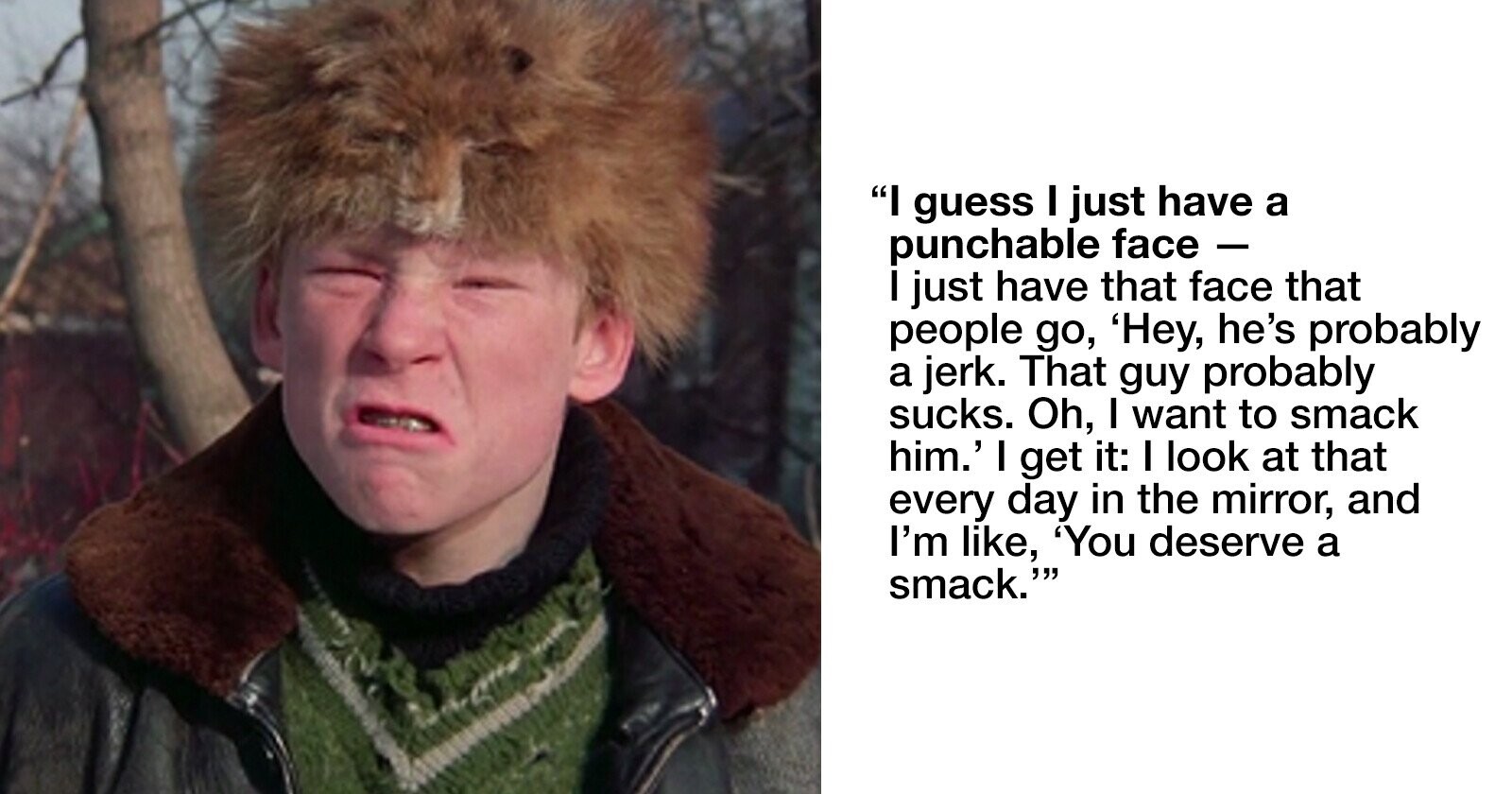
Scut Farkus, the snarling neighborhood menace from A Christmas Story, b and allegedly yellow eyes, he became the walking embodiment of childhood dread: the kid who appears at the end of the block just when you were starting to enjoy your day.
But the actor behind that legendary bully, Zack Ward, has spent decades giving the character a surprisingly human afterlife. Ward’s role as Scut Farkus in the 1983 holiday classic made him instantly recognizable to generations of viewers. Yet his public reflections on bullying, childhood, empathy, and fame have turned an old-school movie villain into something more layered than a cartoon tough guy with dental problems.
That is the real bully pulpit of Zack Ward: not a lecture from a stage, but a cultural conversation sparked by one unforgettable kid in a raccoon-skin hat.
Why Scut Farkus Still Feels So Real
A Christmas Story is full of exaggerated memories: the Red Ryder BB gun obsession, the leg lamp, the tongue on the frozen flagpole, the pink bunny suit, and the terrifying department-store Santa. Yet Scut Farkus lands differently because nearly everyone has known some version of him.
He may not have had the same name. He may not have worn the same ridiculous hat. He may not even have had green teeth. But most people remember someone who made the walk home from school feel longer, colder, and somehow more dangerous.
Scut Farkus represents the specific kind of bully who thrives on visibility. He wants an audience. He wants fear to become part of the neighborhood weather report. He does not simply pick on Ralphie and his friends; he creates a little kingdom built on intimidation.
That is why the character remains effective more than four decades after the movie’s release. The clothes are vintage. The language is old-fashioned. The snowbanks look like they belong in a Norman Rockwell painting after a minor blizzard dispute. But the emotional reality is timeless.
He Is the Villain Every Kid Recognizes
Scut Farkus is not a supervillain. He has no secret lair, no laser beam, and no dramatic cape swirling behind him. His power comes from something more familiar: he knows how to make other kids feel small.
That kind of bullying is memorable because it is often public. There are witnesses. There are laughs. There are kids who look away because they do not want to become the next target. In that sense, Scut Farkus is not just one character. He is an entire schoolyard dynamic in a single fur hat.
Zack Ward: The Boy Behind the Bully
Zack Ward was still a young performer when he played Scut Farkus, but the role gave him a kind of cinematic immortality that many adult actors never achieve. He did not merely play a bully. He played the bully in one of America’s most replayed holiday films.
Over the years, Ward has discussed how his own childhood experiences with being picked on helped him understand the role. That detail changes the way people look at Scut Farkus. The actor who made a generation of children nervous was not simply pretending to be cruel for the camera; he was drawing from the emotional reality of being on the receiving end of cruelty.
There is something almost poetic about that reversal. A kid who knew what it felt like to be mocked became famous for portraying the person everyone wanted to avoid. Hollywood loves a transformation, but this one came with braces, a snarl, and a lot more snow.
Ward’s later career has included film, television, voice work, producing, and directing. He has appeared in projects as different as Titus, Almost Famous, Freddy vs. Jason, Resident Evil: Apocalypse, and Transformers. That range matters because it reminds audiences that Scut Farkus is a role, not a biography.
Still, the role follows him in the warmest possible way. Fans do not usually approach Ward with fear. They approach him with nostalgia, laughter, and the delighted shock of realizing that the movie monster from childhood grew up to be a thoughtful adult with stories of his own.
The Strange Gift of Playing an Iconic Bully
Being associated with one character for decades can be a trap. Actors are often boxed into the role that made them famous, especially when that role is part of a holiday tradition. Yet Ward appears to understand that Scut Farkus gave him something rare: a permanent place in a shared cultural memory.
A Christmas Story did not become beloved because it presented a perfect holiday. It became beloved because it showed the season as loud, embarrassing, chaotic, funny, and emotionally intense. The Parker family does not glide through Christmas with matching sweaters and perfect cocoa foam. They survive it.
Scut Farkus is part of that survival story. He is the obstacle outside the house while Ralphie faces a different set of obstacles inside it: parents, teachers, Santa, siblings, disappointment, and the impossibility of explaining why a BB gun is obviously the most important item ever created.
Ward’s ongoing connection to the role works because he has not treated it as a joke to escape. Instead, he has treated it as an opening to discuss how childhood memories stay with people. The bully may be fictional, but the feelings attached to him are not.
From Fear to Empathy
One of the most interesting parts of Ward’s perspective is the empathy he has expressed toward Scut Farkus. That does not mean excusing the character’s behavior. Scut is still mean. He is still frightening. He still deserves every bit of cinematic side-eye he receives.
But empathy asks a different question: what might make a child behave that way?
It is a useful question because real bullying rarely exists in a vacuum. Kids who hurt others may be copying behavior, seeking status, responding to instability, or acting out feelings they do not know how to name. Understanding that does not erase accountability. It simply creates a fuller picture.
That fuller picture is what makes Ward’s story more meaningful than a simple “where are they now?” feature. He is not only the actor who played Scut Farkus. He is someone who can look at a famous bully and recognize that cruelty often has a backstory.
The Ralphie Beatdown: Catharsis, Not a Lesson Plan
No discussion of Scut Farkus is complete without addressing the scene everyone remembers: Ralphie finally snaps.
After being pushed too far, Ralphie attacks Scut in a burst of anger so intense that adults have to pull him away. For many viewers, it is one of the most satisfying moments in holiday-movie history. The underdog fights back. The bully is stunned. The audience feels a little jolt of justice.
It is powerful because it captures a feeling children often understand long before they can explain it: the moment when humiliation turns into rage.
But the scene works best as emotional storytelling, not practical advice. In real life, fighting can escalate danger and create consequences for everyone involved. A better response to bullying includes telling a trusted adult, documenting repeated behavior when appropriate, staying connected to supportive friends, and encouraging witnesses to speak up rather than laugh along.
The modern version of Ralphie’s victory is not necessarily throwing punches. Sometimes it is refusing to stay silent. Sometimes it is getting help. Sometimes it is discovering that the bully’s power shrinks the moment other people stop treating it like entertainment.
Why the Film’s Bullying Storyline Still Matters
The world of A Christmas Story is set decades before smartphones, group chats, screenshots, and social media pile-ons. Yet the emotional blueprint of bullying remains recognizable.
Today’s Scut Farkus may not be waiting behind a snowbank. He may appear in a group message, a gaming lobby, a comment section, or a video shared without permission. The setting has changed, but the basic ingredients remain the same: a power imbalance, an audience, repeated behavior, and a target who may feel trapped.
That is why the character has continued relevance. Scut Farkus gives viewers a safe way to revisit an uncomfortable subject. He is exaggerated enough to be funny, but believable enough to trigger memories. People laugh at his yellow-eyed reputation because it is absurd. They remember him because the fear behind the joke is not absurd at all.
What Adults Can Learn From Scut Farkus
Adults watching the movie often focus on Ralphie’s Christmas wish, the Old Man’s leg lamp, or the family’s disastrous holiday dinner. But Scut Farkus offers a quieter lesson: children notice who has power, who gets protected, and who is left alone.
A child dealing with bullying does not always announce it directly. They may become reluctant to go to school, avoid certain routes, lose friends, seem unusually anxious, or suddenly stop enjoying activities they once liked. The most helpful adult response is not a lecture about toughness. It is listening, believing, and acting.
That is where the bully pulpit becomes useful. The phrase usually refers to a public platform, but in everyday life, every adult has one. Parents, teachers, coaches, relatives, and older siblings all shape what children believe is acceptable. When adults respond quickly and consistently to cruelty, they make it harder for a real-life Scut Farkus to build an audience.
Scut Farkus Comes Back for a New Generation
Ward returned as Scut Farkus in A Christmas Story Christmas, the 2022 follow-up that reunited several original cast members. The sequel did not try to replace the original film’s place in holiday culture. Instead, it expanded the world by revisiting the characters as adults.
That return mattered because audiences rarely get to see a childhood villain age alongside them. Scut Farkus had existed for decades as a frozen memory: a red-haired menace in the snow, forever circling the neighborhood like a tiny winter shark.
Seeing Ward revisit the role allowed fans to acknowledge something obvious but often overlooked: people grow up. The kid who terrified Ralphie is not necessarily the adult he becomes. The actor who portrayed him certainly is not.
It also gave longtime fans a chance to revisit their own memories. The people who watched A Christmas Story as children are now parents, teachers, managers, writers, and grandparents. They understand the movie differently because they understand childhood differently.
Experiences Related to Zack Ward, Scut Farkus, and the Memory of Being Bullied
The experience of watching Scut Farkus changes as people get older. As children, many viewers see him as pure menace. He is the reason Ralphie and his friends must plan their walk home like a military operation. He is the warning that childhood freedom has limits. You can ride your bike, play in the snow, and dream about Christmas morning, but you still have to make it past the kid who enjoys making everyone miserable.
As adults, viewers often notice the silence around Scut Farkus. Where are the adults when he is tormenting other children? Why does nobody seem to know what is happening? Why does his cruelty feel so routine that Ralphie and his friends have almost built it into their daily schedule? That realization can be uncomfortable because it reflects how bullying is often normalized when adults dismiss it as “kids being kids.”
Many people carry memories of their own Scut Farkus long after school ends. Sometimes it was a child who teased them about their appearance. Sometimes it was someone who controlled a friend group. Sometimes it was a classmate who made jokes until everyone else joined in. The details vary, but the emotional memory tends to be remarkably durable. A hallway, a bus seat, a locker room, or a lunch table can stay vivid for years.
That is part of why Zack Ward’s story resonates. He did not simply play a fictional bully and move on. His own experiences with being bullied gave him a perspective that many fans recognize immediately. He understands the strange contradiction at the heart of Scut Farkus: people laugh at the character because the movie is funny, yet they remember him because the fear is familiar.
There is also a powerful experience in seeing an actor reclaim an iconic role without being trapped by it. Ward has continued to work across genres and creative roles, but he has also embraced the affection people have for A Christmas Story. That approach offers a useful lesson about identity. A label can stick to someone for years, whether it is “the bully,” “the weird kid,” “the quiet one,” or “the person who embarrassed themselves in seventh grade.” But labels are never the whole story.
For fans, meeting Zack Ward at an event or seeing him discuss Scut Farkus can create an odd but meaningful sense of closure. The childhood villain is no longer a monster under the snowbank. He is a real person who understands what it means to be hurt, remembered, and misunderstood. That does not erase the character’s nastiness. It simply turns the memory into something more thoughtful.
Perhaps that is the lasting experience of Scut Farkus. He begins as a joke, becomes a nightmare, and ends as a reminder that cruelty is learned, fear can be confronted, and people are usually more complicated than the roles they play. Even the kid with the yellow eyes may have had a story nobody bothered to ask about.
Conclusion: The Man Behind the Holiday Bully
Zack Ward’s legacy as Scut Farkus proves that even a small role can become enormous when it captures a universal feeling. In A Christmas Story, Scut is the bully everyone recognizes. In real life, Ward has helped make the character more complicated by connecting it to empathy, resilience, and the long shadow of childhood experiences.
The result is more than holiday nostalgia. It is a reminder that the people who frighten us, the people who hurt us, and even the people we remember as villains may carry histories we cannot see. Accountability still matters. Kindness still matters. Support still matters.
And yes, it is still perfectly acceptable to cheer when Ralphie finally stands up to Scut Farkus. Just remember that the best real-world ending is one where nobody has to throw a punch to be heard.