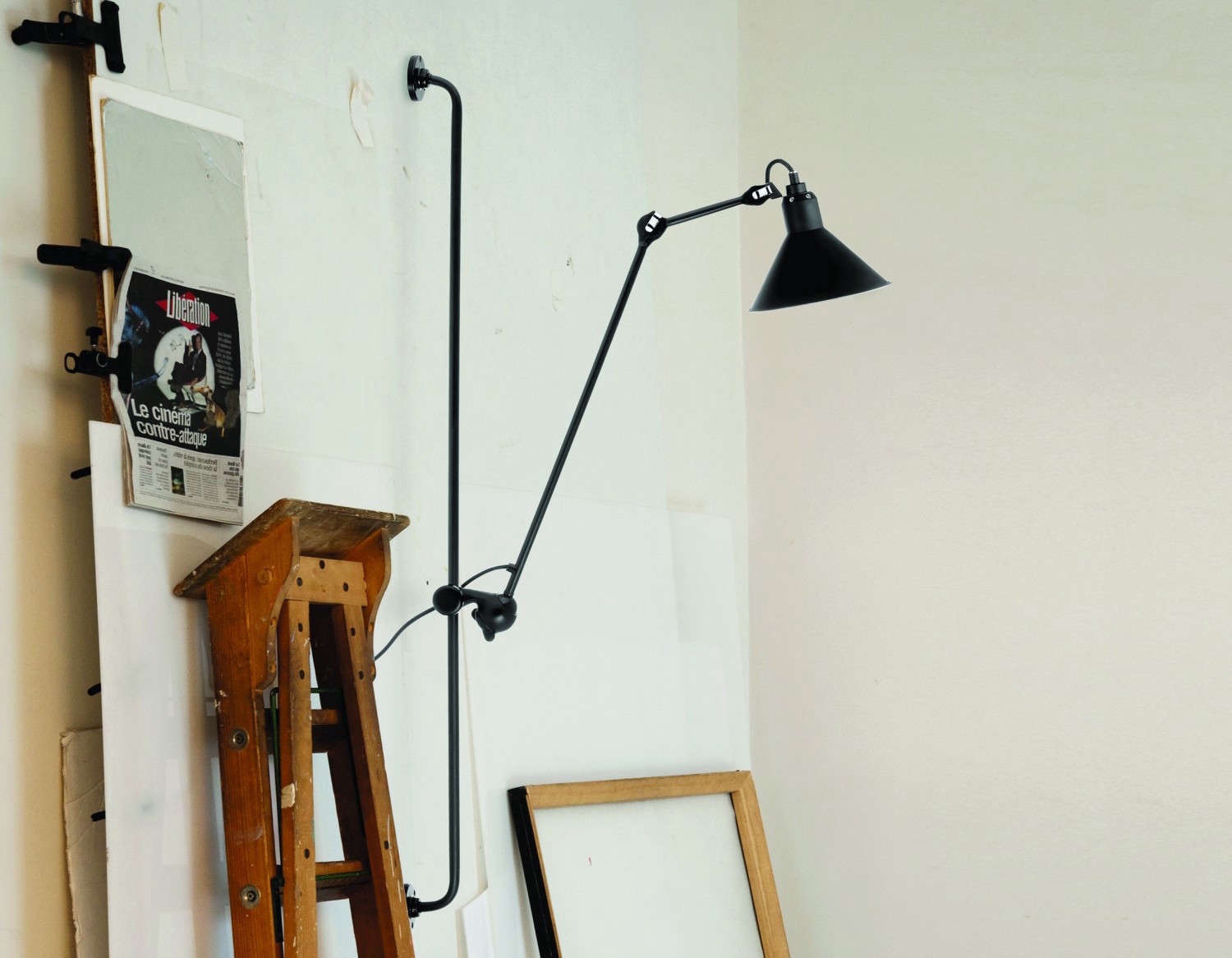
Some lights politely illuminate a room. A wall-mounted Lampe Gras arrives with the confidence of a tiny French engineer who has just solved your entire lighting problem.
With its adjustable metal arm, compact shade, visible mechanics, and unmistakably industrial silhouette, the Lampe Gras has earned a permanent place in design history. It can read as workshop practical, Paris-apartment chic, quietly modern, or delightfully “I found this in an architect’s studio and now I am interesting.”
But there is a catch: an authentic wall-mounted Lampe Gras is an investment piece. That is where the high/low question becomes useful. Should you buy the original icon, or can a more affordable adjustable wall sconce deliver the same mix of function, flexibility, and sculptural attitude?
The answer is not simply “buy the cheaper one.” A good low-cost alternative should preserve the qualities that make the original compelling: directional light, durable materials, an articulated arm, and enough personality to avoid looking like it escaped from a dorm-room catalog. The goal is design intelligence, not a suspiciously familiar knockoff wearing a fake mustache.
Why the Lampe Gras Still Looks Modern
The Lampe Gras was created in 1921 by French engineer Bernard-Albin Gras for offices and industrial environments. Its design focused on robust construction, ergonomic movement, and directed task lighting rather than decorative ornament. The original concept was especially notable for its simplified mechanical structure, with no screws or welded joints in its basic form.
That practical origin is exactly why the light still works so well in homes today. It does not rely on trendy curves, loud finishes, or decorative excess. Instead, it uses proportion, movement, and honest materials. The arm extends. The shade pivots. The fixture gets on with its job.
Modern interiors often benefit from objects that earn their visual weight. A wall-mounted Lampe Gras is not merely a pretty metal accessory; it solves an actual lighting problem. It can direct light toward a book, a desk, a countertop, a workbench, a framed painting, or the mysterious pile of unopened mail that has become part of the household ecosystem.
The High: Why Buy an Authentic Wall-Mounted Lampe Gras?
It Is a Genuine Design Icon
The authentic Lampe Gras is one of those rare fixtures that feels both historical and current. It was developed for workspaces, but decades later it still fits easily into bedrooms, living rooms, kitchens, studios, offices, and entryways. Its industrial roots give it credibility, while its clean geometry prevents it from looking like a prop from an old factory movie.
Original Lampe Gras wall models are available in several configurations, including compact articulated arms, long wall bars, dual-arm designs, and versions with round or conical shades. Popular options such as the No. 204 use double articulated arms and an adjustable reflector to direct light where it is needed.
The Adjustability Is the Main Event
The strongest reason to choose a wall-mounted Lampe Gras is not its pedigree. It is the movement. A fixed sconce may look attractive, but an articulated wall lamp can adapt throughout the day. Aim it at a book in the evening, swing it toward a desk during work hours, or angle it upward to soften the room with reflected light.
That flexibility makes it especially useful in compact rooms. Instead of adding a table lamp that consumes nightstand space or a floor lamp that competes with your laundry basket, the wall-mounted fixture works vertically. It uses empty wall space while keeping surfaces clear.
Architectural Digest notes that adjustable wall sconces can serve more than one area, allowing a single fixture to illuminate a bedside table, reading chair, or nearby work zone depending on how it is positioned.
The Materials Feel Intentional
Authentic Lampe Gras fixtures typically use steel structures with metal shades in finishes ranging from black and white to copper, brass, raw metal, blue, red, and yellow. The matte black versions feel graphic and restrained, while copper-lined shades produce a warmer, more theatrical glow.
The fixture is visually light enough for a small bedroom but substantial enough to hold its own against brick, plaster, wood paneling, built-in shelving, or a moody paint color. It behaves like useful sculpture, which is the holy grail of home design: beautiful enough to notice, useful enough to justify.
It Works Across Several Interior Styles
The Lampe Gras is often categorized as industrial lighting, but that label is too narrow. It works in modern farmhouse rooms, Scandinavian interiors, eclectic apartments, mid-century spaces, minimalist homes, and traditional rooms that need one sharper contemporary note.
In a bedroom, it can replace a table lamp. In a kitchen, it can bring focused light to a breakfast nook or open shelf. In a living room, it can become a reading light beside a chair or a sculptural accent near a fireplace. Dwell has featured Lampe Gras wall lighting in both bathroom and fireplace settings, proving that the fixture can move beyond the obvious desk-and-bedroom formula.
The Low: How to Get the Look for Less
A lower-cost alternative does not need to impersonate a Lampe Gras. In fact, it should not. The better approach is to look for a wall sconce that shares the original’s useful qualities: an adjustable arm, directional shade, metal construction, thoughtful proportions, and a finish that works with the room.
The low version should be inspired by the idea of flexible industrial task lighting, not by a desire to produce a discount copy with questionable wiring and a joint that sags like it has given up on life.
What to Look for in an Affordable Alternative
- An articulated or swing-arm design that allows the light to move toward a task area.
- A pivoting shade that helps reduce glare and directs light onto a page, desk, counter, or chair.
- A metal shade or metal arm for a more substantial, long-lasting appearance.
- A wall plate large enough to look intentional rather than accidental.
- A plug-in option for renters or a hardwired option for a permanent installation.
- A finish that coordinates with existing hardware, furniture, and wall color.
Many contemporary swing-arm sconces offer the same basic functionality in a more accessible price range. Rejuvenation, for example, sells adjustable and telescoping task sconces designed for bedside use, while Schoolhouse offers wall sconces with adjustable arms for focused lighting.
Where the Low Option Can Win
The lower-cost route can be smarter when you need multiple fixtures. Installing one authentic wall-mounted Lampe Gras beside a favorite chair may feel like a deliberate splurge. Buying four or six original fixtures for an entire house may feel like your lighting plan has begun negotiating with your retirement account.
Affordable adjustable sconces also make sense in guest rooms, rental apartments, children’s rooms, temporary home offices, or spaces where you are still experimenting with layout. A plug-in swing-arm sconce can provide useful task lighting without requiring permanent electrical work, making it particularly practical for renters.
Plug-in sconces are designed to mount on the wall while connecting to a standard outlet, and many include swing arms or pivot joints for flexibility. They are a practical way to add layered light without opening the wall or hiring an electrician.
High/Low Comparison: What Are You Really Paying For?
| Feature | High: Authentic Lampe Gras | Low: Adjustable Wall Sconce |
|---|---|---|
| Design history | Historic 1921 industrial design icon | Contemporary interpretation of task lighting |
| Visual impact | Instantly recognizable and sculptural | Depends heavily on proportions and finish |
| Adjustability | Excellent on articulated models | Available, but quality varies widely |
| Materials | Premium steel and refined finishes | Often steel, aluminum, or mixed materials |
| Installation | Often hardwired; verify specifications | Hardwired or plug-in options available |
| Best for | Design lovers, long-term homes, statement zones | Budget projects, renters, multi-room updates |
The high option gives you authenticity, stronger craftsmanship, design heritage, and a fixture that may become part of the room’s identity. The low option gives you flexibility, lower risk, and more freedom to experiment. Neither choice is automatically superior; the right one depends on where the light will live and how long you expect it to stay there.
Best Rooms for a Wall-Mounted Lampe Gras
Beside the Bed
A wall-mounted reading lamp is one of the most useful bedroom upgrades because it frees up the nightstand. The Lampe Gras works especially well beside upholstered headboards, platform beds, and compact nightstands where tabletop space is valuable.
For bedside use, position the fixture so the shade can direct light onto a book without exposing the bulb directly to your eyes. The perfect height depends on mattress height, headboard size, and whether you read upright or reclined like a Victorian novelist recovering from sea air.
Above a Desk or Home Office Nook
The Lampe Gras was born for task lighting, so it naturally makes sense over a desk. A wall-mounted lamp keeps the desktop clear, reduces visual clutter, and creates a focused work zone without requiring a giant office setup.
Choose a version with enough reach to illuminate the center of the work surface. Aim the shade away from glossy screens to reduce reflected glare. A warm-neutral LED bulb can make the area feel inviting without turning your home office into a dentist’s examination room.
Near a Reading Chair
Place one beside a lounge chair, window seat, or built-in bench to create a dedicated reading corner. The articulated arm makes it easy to move the light closer to the page, then redirect it after reading so the room remains softly lit.
In the Kitchen
A wall-mounted industrial lamp can add focused light to open shelving, a breakfast banquette, a coffee station, or a small prep area. The key is restraint. One carefully positioned fixture feels curated; six fixtures may make your kitchen look as though it is preparing for surgery.
Installation and Lighting Tips Before You Buy
Confirm Wiring, Voltage, and Certification
Before purchasing an imported or designer wall light, verify that the fixture is appropriate for your local electrical system and installation requirements. Some Lampe Gras listings specify hardwired installation, E27 bulb bases, and European voltage requirements, so buyers in North America should confirm compatibility, safety listing, and installation details with the retailer or a qualified electrician.
Do not treat electrical compatibility as a minor footnote. A beautiful lamp that cannot be safely installed is merely an expensive metal birdhouse with ambitions.
Measure Before You Commit
Wall sconces are commonly installed around 60 to 72 inches from the finished floor, although the ideal height changes based on room function, furniture placement, and ceiling height.
For a bedside fixture, use painter’s tape or cardboard to mock up the wall plate, arm reach, and shade location before drilling. Check whether the arm can extend comfortably over the mattress or chair without becoming a forehead hazard.
Choose the Right Bulb
For a living room, bedroom, or reading nook, a warm or warm-neutral LED bulb often creates the best atmosphere. The U.S. Department of Energy notes that color temperatures between 2700K and 3600K are generally suitable for many indoor general and task-lighting applications.
Think in lumens rather than just watts. Lumens measure brightness, while watts measure energy use. A focused reading light may not need a huge amount of light if the shade directs it efficiently onto the page.
Common Mistakes to Avoid
- Buying a fixture solely because it looks industrial, without checking whether the arm actually moves.
- Installing the light too high, where it creates glare rather than useful illumination.
- Choosing a giant fixture for a narrow wall or tiny nightstand.
- Ignoring the direction of the cord on plug-in sconces.
- Using a very cool bulb in a bedroom and wondering why the room feels like a conference room at 7:15 a.m.
- Assuming every imported lamp is ready for a U.S. hardwired installation.
- Buying a counterfeit instead of a thoughtfully designed alternative.
Is the Wall-Mounted Lampe Gras Worth It?
Yes, when you want more than a light fixture. An authentic wall-mounted Lampe Gras is worth considering when it will become a long-term part of your home, serve a real task-lighting function, and bring visual character to a prominent space.
It is especially compelling in rooms where furniture needs to work harder: small bedrooms, compact offices, reading nooks, narrow living rooms, and kitchens with limited counter space. The fixture does not just light the room; it makes the room behave more intelligently.
But the low route can be equally smart. A well-made adjustable swing-arm sconce can provide much of the same function for less money, particularly when you need several lights or want renter-friendly installation. The secret is to choose something that is genuinely useful and well-proportioned rather than merely “industrial-ish.”
In the end, the best wall light is not the one with the fanciest story. It is the one that lets you read comfortably, work without glare, clear your nightstand, and look at your wall with a tiny bit of satisfaction every time you walk past it.
Experience Notes: Living With a Wall-Mounted Lampe Gras
Living with a wall-mounted Lampe Gras changes your relationship with lighting in a subtle way. At first, it seems like a stylish object: a black arm, a round shade, a pleasing bit of mechanical geometry hovering above a chair or bed. Then you start using it. That is when the design makes sense.
The first noticeable benefit is the reclaimed surface space. A nightstand that once held a lamp base, tangled cord, charging cable, water glass, book, and half a dozen small objects suddenly feels more usable. The wall lamp moves the lighting upward and outward, leaving room for the things you actually need beside the bed. In a small bedroom, this can feel disproportionately satisfying. You have not added square footage, but somehow the room has stopped arguing with you.
The second benefit is control. With a conventional bedside lamp, you usually accept whatever pool of light it gives you. With an articulated wall lamp, you can pull the shade closer when reading, push it back when talking, angle it toward the wall for softer ambiance, or aim it down at a desk when answering one last email that becomes six more emails.
The mechanical movement is also part of the appeal. The arm feels purposeful rather than fussy. It invites adjustment. A good wall-mounted task lamp should not feel delicate or precious; it should feel like a tool that happens to have excellent posture.
In a reading nook, the effect is even more noticeable. A floor lamp often needs to stand behind or beside a chair, and its light can feel distant or diffuse. A wall-mounted Lampe Gras can reach over the shoulder and direct light precisely onto a book. The result is more comfortable for reading and visually calmer because there is less furniture crowding the floor.
There are trade-offs, of course. The fixture becomes a commitment once installed. You need to consider arm reach, wall placement, wiring, and whether the light will interfere with artwork, curtains, cabinet doors, or a tall headboard. It is not a lamp you casually shuffle around on a Saturday afternoon.
Still, that permanence can be part of its charm. When placed well, the lamp makes a room feel intentional. It suggests that someone thought about how the space would be used after dark, not just how it would photograph at noon. That is a small but meaningful distinction.
The best experience comes from using the lamp as both task lighting and atmosphere. Keep the bulb warm enough for comfort, avoid harsh glare, and let the metal shade create a focused pool of light. In the evening, the wall-mounted Lampe Gras can make an ordinary chair feel like a destination. Add a book, a blanket, and maybe a snack, and suddenly you have a corner of the house that feels suspiciously well organized.
Note: Product specifications, electrical compatibility, and installation requirements can vary by model and retailer. Confirm local electrical and safety requirements before purchasing or installing a hardwired fixture.