Note: This article keeps the original viral-style headline for search intent and historical context, but the science below reflects the fuller evidence, not the oversimplified internet version.
Every few years, the internet rediscovers an old headline and treats it like a fresh meteor strike. One of the more dramatic examples came from the early mask era: scientists tested 14 masks, and one seemed so bad it supposedly increased the risk of infection. That headline sprinted across social media like it had free Wi-Fi and no supervision.
But here is the grown-up version of the story: the original finding was intriguing, important, and worth discussing, yet it was also narrower than the headline made it sound. The study did not directly prove that wearing a certain mask makes you more likely to get sick in everyday life. What it did show was that one thin fleece-style gaiter appeared to break larger droplets into smaller ones during a lab test of speech, which raised real concerns about how certain lightweight face coverings perform.
Since then, the science has matured. Public health guidance, lab studies, and real-world evidence now paint a clearer picture. Not all masks work equally well. Fit matters almost as much as material. N95 and KN95 respirators offer the strongest protection. Surgical masks are usually solid performers. Multi-layer cloth masks can still help. And some options, such as loose bandanas, very thin single-layer gaiters, and face shields worn alone, are more “costume department” than “infection control.”
So let’s unpack what that famous 14-mask study actually found, why the “one mask increases infection risk” claim needs a giant asterisk, and what people should do with the evidence now. Spoiler alert: the best mask is not the one that looks coolest on a jog. Science can be brutally unromantic like that.
What the Original 14-Mask Study Actually Found
The buzz started with a Duke University experiment that tested 14 commonly available face coverings using a simple but clever setup. Researchers shined a laser through a dark box and counted the droplets that appeared when a person spoke through different masks. The idea was to compare how much respiratory spray got through each option. It was a practical experiment, the sort of science that says, “Let’s stop arguing online and point a laser at the problem.”
The overall results were not shocking. A fitted N95 performed best. Surgical masks and some cotton masks did reasonably well. Folded bandanas and certain knitted coverings performed poorly. The eye-catching finding involved a thin neck fleece or gaiter, which appeared to let through a high number of smaller droplets. That led to the theory that the material might be breaking bigger droplets into tinier particles that can remain airborne longer.
Now here is the crucial part: the study measured droplet transmission during speech, not actual infection rates in real life. That distinction matters. A lot. It is the difference between saying, “This raincoat leaks in the lab shower,” and saying, “You will definitely catch pneumonia in a drizzle.” The first statement is evidence. The second is an overconfident uncle at a barbecue.
Even so, the study served an important public health purpose. It reminded people that “a mask” is not one single product category with magical equal powers. Different designs block particles differently. A dense, well-fitted, multi-layer mask behaves very differently from a stretchy tube of thin fabric that doubles as a headband, scarf, sweat rag, and apparently bad decision.
Why the Viral Headline Ran Ahead of the Science
The phrase “actually increases the risk of getting infected” sounds definitive, cinematic, and excellent for clicks. It also goes farther than the original research really supported. The Duke experiment raised concern about one type of thin gaiter, but it did not establish that all gaiters are worse than no mask in every setting, nor did it measure whether wearers became infected more often.
That distinction became more important as additional researchers looked closer. Later studies found that gaiters are not one uniform thing. Material, thickness, stretch, and layering all matter. In other words, saying “gaiters are bad” is a little like saying “sandwiches are bad.” A dry gas-station triangle and a well-made turkey club are technically in the same family, but nobody honest confuses them.
The broader lesson is that headlines tend to flatten nuance. The original alarm was not pure nonsense. Thin, porous, single-layer face coverings can be weak performers. But weak performer does not automatically mean infection amplifier. Science rarely speaks in meme language, even when the internet insists on subtitles in all caps.
Another reason the headline aged badly is that later evidence shifted the focus from one dramatic outlier to a more practical hierarchy: respirators at the top, surgical masks in the middle, good multi-layer cloth behind them, and flimsy, loose, or novelty-style options bringing up the rear. In other words, the important question stopped being “Which single mask is cursed?” and became “Which masks offer the best protection for real human faces in real indoor air?”
What Later Research Showed
Once researchers moved beyond one early speech experiment, the picture became more grounded. Real-world and simulator-based studies repeatedly found that masking helps, but the level of help varies by type and fit.
N95 and KN95 respirators consistently lead the pack
In public health guidance and observational studies, N95 and similar respirators repeatedly come out on top. That makes sense: they are designed to filter particles efficiently and seal more closely to the face. A mask cannot do much if half the air takes the scenic route around the edges.
One CDC study of indoor public settings found that people who consistently wore masks had lower odds of testing positive, with the strongest protection reported among those using N95 or KN95 respirators. Surgical masks also helped. Cloth masks still appeared better than nothing, but they were generally less protective than respirators and standard medical masks. So yes, your grandma’s lovingly sewn floral mask deserves some respect. It just does not outrank a well-fitted respirator.
Thin gaiters did not become scientific saints, but the story got more nuanced
Follow-up work from NIOSH and other researchers showed that a single-layer polyester gaiter blocked a meaningful share of cough-generated aerosols, and folding it into a double layer improved performance further. That does not magically turn every gaiter into elite respiratory armor, but it does undercut the simplistic claim that gaiters are universally worse than wearing nothing at all.
In plain English, a thin one-layer gaiter can be mediocre. A doubled or better-designed gaiter can perform more like a basic cloth mask. The internet prefers villains, but reality prefers categories, caveats, and boring engineering details.
Face shields alone are poor source control
If the pandemic taught us anything, it is that people will absolutely try to turn office supplies into medical strategy. Unfortunately, face shields worn by themselves are weak source control for small aerosols. They may protect the eyes from splashes, but they do not reliably block the fine respiratory particles that flow around the shield like they are late for a meeting.
That means a face shield can be a useful add-on in certain environments, but as a substitute for a proper mask, it is usually not the winning move.
Fit can radically improve performance
One of the most practical findings from later research is that fit upgrades matter. A decent mask with gaps can underperform badly. A decent mask with a snug seal can do much better. CDC testing found that strategies such as double masking, knotting and tucking a surgical mask, or using a mask brace or fitter can dramatically improve performance.
This is the underrated secret of mask science: air is lazy. It will take the path of least resistance every time. If your mask leaves big side gaps, the filtered material in front becomes less relevant because the airflow is sneaking around the edges like a teenager bypassing the front door.
So Which Masks Make the Most Sense Today?
If you want the short, practical answer, here it is: choose the most protective mask you can tolerate, wear it consistently, and make sure it fits well. That is not flashy advice, but it is durable.
Best choice: N95 or equivalent respirators
For high-risk indoor settings, crowded travel, clinics, waiting rooms, or times when respiratory viruses are surging, a NIOSH-approved N95 is the gold standard for most everyday users who can wear one comfortably. KN95 and KF94 respirators can also offer strong protection when they are legitimate products and fit well.
If you are thinking, “But they are not cute,” that is fair. Infection control has never been a Paris runway. Still, when the room is crowded and the ventilation is questionable, beauty contests should probably lose to filtration.
Very good choice: a well-fitting surgical or disposable medical mask
Surgical masks remain a solid choice, especially when they sit snugly against the face. If yours gaps around the cheeks or nose, adding a fitter or using a knot-and-tuck method can improve performance. They are easy to carry, easy to replace, and much better than the sad floppy masks that used to dangle under people’s noses like decorative chin hammocks.
Reasonable choice: multi-layer cloth masks
Cloth masks are not useless. Good ones still provide some protection, especially when they are tightly woven, multi-layered, and properly maintained. They are simply not the top tier. They are the dependable sedan of masks: not flashy, not elite, but useful when the trip is short and conditions are not extreme.
What you want to avoid are loose-weave fashion masks, masks with decorative holes, masks with poor structure, and masks that have clearly retired from active duty but keep getting called back from the glove compartment.
Proceed with caution: bandanas, thin single-layer gaiters, and novelty options
This is where the original headline still has a little afterlife. Thin, stretchy, single-layer gaiters can underperform, and loose bandanas are generally weak source control. If that is all someone has, it may still be better than bare-faced coughing in a packed room, but it is not the kind of gear you should choose when better options are available.
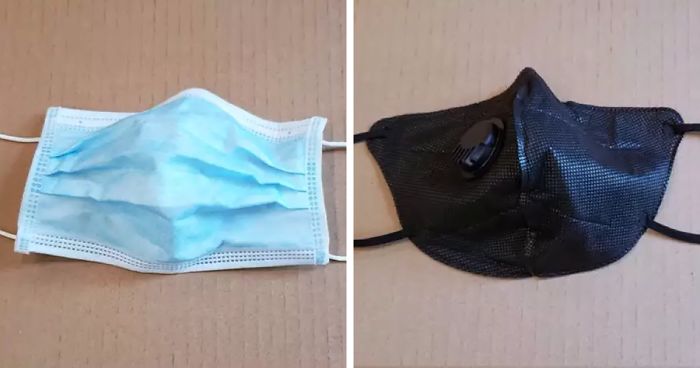
And please, for the love of lungs, retire the rhinestone vented fashion mask. If air can zip through a hole on purpose, the mask is not exactly playing defense.
Specific Real-World Examples
On a plane: A well-fitted respirator is the clear winner. Airflow on planes can be good while seated, but boarding, deplaning, and airport crowding are different stories.
At the doctor’s office: Go with the highest protection you can wear comfortably. Waiting rooms are basically small conventions for respiratory viruses.
At school or work: A surgical mask with a good fit may be sufficient for many people, but upgrading to a respirator makes sense during surges or if you are at higher risk.
For a quick errand: A good disposable or multi-layer cloth mask may be perfectly reasonable, especially in a less crowded setting.
During exercise outdoors: Breathability matters, but so does material. If you use a gaiter, thicker or doubled layers are smarter than ultrathin stretchy fabric.
Experiences People Kept Reporting Once the Mask Debate Settled Down
One of the most interesting parts of the mask story is how ordinary experience eventually lined up with the better science. Across hospitals, classrooms, airports, family gatherings, and office buildings, people kept noticing the same practical truths.
First, the masks that felt most secure often were more secure. Healthcare workers, frequent travelers, and people caring for older relatives often reported more confidence in N95-style respirators because the seal felt firmer and the air leakage was lower. They were not imagining things. A tight fit changes how air moves. When fewer gaps are present, less unfiltered air sneaks in or out. Science confirmed what many people could feel with every breath.
Second, comfort affected consistency. Plenty of people owned excellent masks they never wore correctly for more than ten minutes. The nose pinched. The straps slipped. The fit felt claustrophobic. That matters because an amazing mask in your pocket protects exactly nobody. Many users gradually learned to balance protection and wearability by trying different shapes, sizes, and strap styles until something actually worked for their face instead of the imaginary average face used by product designers in a meeting somewhere.
Third, dirty reusable masks became a sneaky weak point. People reused cloth masks for too long, tossed them into cup holders, stuffed them into jacket pockets, and treated them like immortal fabric superheroes. They were not. Reusable masks needed washing, and disposable masks needed replacing when damaged, wet, or obviously past their prime. Real-life experience turned that lesson from abstract hygiene advice into a very practical rule: if your mask smells like old coffee and regret, it is time.
Fourth, many families discovered that “good enough for one situation” was not good enough for every situation. A cloth mask might feel fine for a quiet stop at the store, but not for a crowded urgent care clinic in peak virus season. A lightweight gaiter might be tolerable on a cool outdoor run, but not ideal for a packed indoor event. Over time, people started using masks more strategically, matching the gear to the setting instead of expecting one universal option to do everything.
Finally, people noticed something public health experts had been saying all along: masking worked best as part of a bundle. Better ventilation, staying home when sick, testing when appropriate, and choosing cleaner indoor air all helped. No mask was a force field. But a strong mask worn well, in the right setting, consistently made people feel less exposed and, according to the evidence, often made them be less exposed too.
That may be the biggest lesson of all. The mask conversation was never really about one miracle product or one disastrous fabric tube. It was about layers of protection, sensible choices, and a little engineering humility. In the end, the most useful experience people gained was not panic over one headline. It was learning that small design details can have big consequences when the thing you are filtering is air.
Conclusion
The famous “14 masks” story survived because it mixed a real scientific finding with a headline that was too dramatic to die. Yes, one thin gaiter in an early study performed poorly enough to spark concern. No, that does not mean all gaiters are worse than no mask, and it definitely does not mean the whole concept of masking fell apart.
The stronger conclusion is simpler and more useful: masks work, but not equally. Respirators such as N95s offer the best protection. Surgical masks are generally strong middle-ground choices. Multi-layer cloth masks can still help. Thin, loose, novelty, or poorly fitted coverings can let you down. And fit is not a side note; it is the whole plot twist.
If there is a moral here, it is that respiratory protection is not about finding the single most viral headline. It is about using the best-designed, best-fitting option you can wear consistently. Science rarely rewards panic, but it often rewards upgrading flimsy gear.