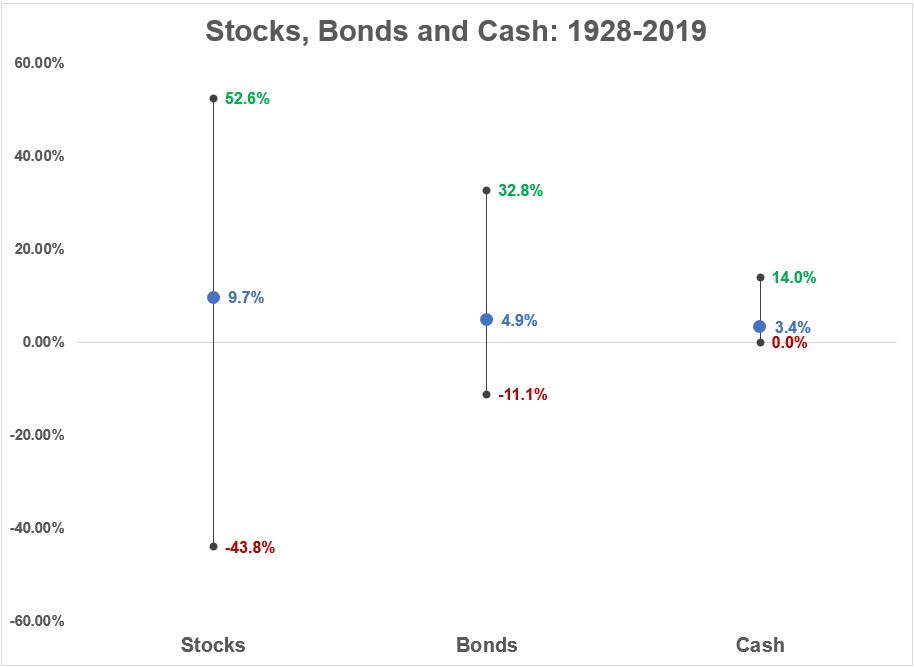
Market history is a strange teacher. It never hands out the same test twice, but it keeps asking the same questions: Can you stay patient? Can you handle discomfort? Can you avoid doing something dramatic just because the financial news is wearing a red tie and yelling?
Looking at 92 years of market return data gives investors something better than a crystal ball. It gives perspective. From the Great Depression to inflation shocks, oil crises, wars, recessions, bubbles, crashes, banking panics, pandemics, and “this time is different” headlines, the U.S. stock market has repeatedly demonstrated one uncomfortable truth: long-term returns are powerful, but they are never polite.
The lesson is not that stocks always go up. They absolutely do not. The lesson is that wealth has historically rewarded the investor who could survive bad years, reinvest through boring years, and avoid confusing short-term noise with long-term reality.
Why 92 Years of Market Return Data Still Matters
A 92-year return window is useful because it captures many different investing environments. It includes deflation, inflation, high interest rates, low interest rates, world-changing innovation, political drama, energy shocks, and several moments when investors had excellent reasons to believe the party was over.
And yet, the broad U.S. stock market produced substantial long-term wealth for investors who stayed invested. A hypothetical $100 invested in U.S. stocks in 1928 grew into hundreds of thousands of dollars by the end of 2019 when dividends were reinvested. Treasury bills and bonds also grew, but at much lower rates. That gap is the historical reward for accepting volatility, uncertainty, and the occasional feeling that your portfolio has joined a demolition derby.
This is the central bargain of equity investing: stocks are not paid to make you comfortable. They are paid to compensate you for taking risk.
Lesson 1: Average Returns Are Real, But Average Years Are Rare
One of the most dangerous phrases in investing is “the market averages about 10%.” It is not wrong, but it is often misunderstood. Long-term stock market returns have historically clustered around high single digits to low double digits before inflation, depending on the period and index used. But very few calendar years feel average.
Some years bring huge gains. Some years deliver painful losses. Many years look nothing like the long-term average. Investors who expect a smooth 8%, 9%, or 10% every year are setting themselves up for emotional whiplash. The market does not walk up the stairs like a polite guest. It sprints, trips, crawls, and occasionally falls through the staircase.
The practical takeaway is simple: do not build a financial plan that requires the market to behave neatly every 12 months. Build one that can survive ugly years and still benefit from the long-term trend.
Lesson 2: The Stock Market Rewards Patience, Not Perfect Timing
Many investors dream of getting out before every crash and getting back in before every rebound. It sounds wonderful, like having a weather app that predicts every thunderstorm and also makes tacos. Unfortunately, market timing is far harder than it looks.
The reason is that some of the strongest market days often arrive near the worst market periods. Panic selling may protect an investor from further losses for a moment, but it also creates a second decision: when to get back in. That second decision is where many portfolios quietly lose their future.
Missing only a handful of the market’s best days can meaningfully reduce long-term returns. The cruel joke is that those best days often show up when the headlines still look terrible. By the time everything feels safe again, prices may already be much higher.
Lesson 3: Bad Years Are the Admission Fee
Over long periods, negative years are not bugs in the system. They are part of the system. The U.S. stock market has historically produced positive years more often than negative years, but the down years still matter. They hurt. They test investors. They make people say things like, “Maybe I should move everything to cash until things calm down.”
The problem is that “until things calm down” is not an investment strategy. It is an emotional exit door with no clear entrance back in.
Consider the major market declines investors have endured: the Great Depression, the 1973–1974 bear market, the dot-com crash, the 2008 financial crisis, the COVID-19 crash, and the inflation-driven selloff in 2022. Each felt unique. Each had a convincing story. Each made long-term investing feel foolish in the moment. But the broader lesson from decades of return data is that permanent pessimism has been a poor strategy for a productive economy.
Lesson 4: Dividends Matter More Than People Think
When people talk about stock market returns, they often focus on price movement. Did the index go up? Did it go down? Is the chart smiling or crying?
But long-term market return data shows that reinvested dividends have been a major contributor to wealth creation. Dividends may seem boring compared with exciting growth stocks or dramatic market predictions, but boring can be beautiful. Reinvested dividends buy more shares, which can generate more dividends, which can buy still more shares. That is compounding doing its slow-motion magic trick.
Investors who ignore dividends are missing part of the market’s engine. Price appreciation gets the spotlight. Dividends quietly help pay the electric bill.
Lesson 5: Inflation Is the Silent Opponent
Nominal returns are what investors see on a statement. Real returns are what those dollars can actually buy. The difference matters.
A portfolio that grows 6% in a year when inflation is 2% has increased purchasing power. A portfolio that grows 6% when inflation is 8% has technically gone up but economically moved backward. Inflation is like a subscription fee on your future lifestyle, and it rarely sends a friendly reminder before charging you.
This is why long-term investors often need growth assets. Cash can feel safe because the account balance does not bounce around much. But over long periods, inflation can erode purchasing power. Stocks have historically offered better long-term inflation protection than cash, though with far more short-term volatility.
Lesson 6: Bonds Reduce Volatility, But They Are Not Magic
Bonds have historically played an important role in diversified portfolios. They can provide income, stability, and a cushion during certain stock market declines. But bonds are not risk-free. Interest rate changes, inflation, and credit conditions can all affect bond returns.
The 2022 market offered a fresh reminder that stocks and bonds can fall together, especially when inflation rises quickly and interest rates adjust. That does not mean bonds are useless. It means investors should understand what bonds can and cannot do.
A balanced portfolio is not designed to win every calendar year. It is designed to help investors stay invested through many different market environments. Sometimes the best portfolio is not the one with the highest theoretical return. It is the one the investor can actually hold without turning into a panic-powered raccoon.
Lesson 7: Costs Are One of the Few Things Investors Can Control
No investor can control next year’s market return. No investor can control interest rates, elections, recessions, earnings cycles, oil prices, or whether financial television discovers a new scary acronym before lunch.
But investors can control costs. Fees, expense ratios, trading costs, taxes, and unnecessary complexity all reduce net returns. Over one year, a small fee difference may look harmless. Over decades, it can become a large transfer of wealth away from the investor.
This is why low-cost investing has become such a powerful idea. The market return is uncertain. The fee drag is guaranteed. Paying less does not ensure success, but it gives compounding more room to work.
Lesson 8: Diversification Is Humility in Portfolio Form
Diversification is not exciting. Nobody brags at a dinner party, “My portfolio is sensibly allocated across asset classes.” That sentence is medically proven to make people check their phones.
Still, diversification is one of the most practical lessons from long-term market data. Different assets, sectors, countries, and styles lead at different times. The best performer in one decade can become the disappointment of the next. Concentrated bets can create enormous wealth, but they can also create enormous regret.
A diversified portfolio admits a basic truth: the future is hard to predict. Diversification will not eliminate losses, and it will not always beat the hottest trend. But it can reduce the risk that one wrong prediction destroys an otherwise good financial plan.
Lesson 9: The Market Climbs a Wall of Worry
If investors waited for a world without problems, they would never invest. There is always a reason to be nervous. Inflation, recession, elections, debt levels, wars, bank stress, valuations, technology disruption, currency shifts, and consumer confidence all take turns occupying the worry chair.
Long-term return data shows that the market has advanced despite constant uncertainty, not because uncertainty disappeared. The economy adapts. Companies innovate. Consumers spend. Entrepreneurs build. Productivity improves. New industries emerge while old ones shrink.
That does not mean every company survives or every stock wins. Many do not. But broad market indexes have historically captured the collective progress of businesses that grow, replace weaker firms, and compound earnings over time.
Lesson 10: Your Behavior Is Part of Your Return
Investment returns are not only about the market. They are also about the investor’s behavior. Two people can own the same fund and earn very different results depending on when they buy, when they sell, and whether they abandon the plan during stress.
This is why discipline matters. A good portfolio held consistently may outperform a brilliant strategy that the investor cannot stick with. The best plan is not the one that looks perfect in a spreadsheet. It is the one that survives contact with real life: job changes, recessions, scary headlines, family needs, medical bills, and that one friend who suddenly becomes a crypto philosopher at Thanksgiving.
Market data teaches math, but it also teaches temperament. Patience, humility, and consistency may sound old-fashioned, but they have historically been very competitive advantages.
What 92 Years of Market Returns Do Not Tell Us
Historical data is useful, but it is not a promise. Past performance does not guarantee future results. The next 92 years will not look exactly like the last 92. Interest rates, demographics, technology, debt, globalization, regulation, and investor behavior will continue to evolve.
Market history should not be used as a script. It should be used as a map of possible terrain. It tells us that crashes happen, recoveries happen, leadership changes, inflation matters, and compounding needs time. It also tells us that investors who demand certainty before investing may wait forever.
The goal is not to predict every turn. The goal is to build a portfolio and a financial plan that can survive many turns.
Specific Example: The Difference Between Investing and Waiting
Imagine two investors. Investor A starts investing steadily in a diversified stock portfolio and keeps contributing through good markets and bad markets. Investor B waits for the “perfect time.” Investor B is not lazy. Investor B reads news, watches valuations, follows interest rates, and keeps saying, “I’ll invest after the next pullback.”
The pullback comes. But now the news is frightening, so Investor B waits for clarity. Then the market rebounds before clarity arrives. Now Investor B waits for another dip. Years pass. Investor A owns more shares, reinvests dividends, and lets compounding work. Investor B owns a growing collection of well-reasoned excuses.
This is one of the most practical lessons from long-term return data: investing success often comes less from brilliance and more from participation. You cannot compound money that never enters the market.
How Investors Can Apply These Lessons Today
Start With a Plan
Before choosing investments, define the purpose of the money. Retirement money, emergency savings, house-down-payment money, and college savings may require different levels of risk. A portfolio without a goal is just a pile of tickers wearing a trench coat.
Match Risk to Time Horizon
Money needed soon should generally be invested more conservatively. Money intended for decades of growth can usually tolerate more volatility. Time does not remove risk, but it can improve the odds that temporary declines have time to recover.
Use Diversification on Purpose
Diversification should be intentional, not accidental. Owning 15 funds that all hold the same giant technology stocks is not true diversification. Look across asset classes, sectors, geographies, and risk levels.
Keep Costs Low
Fees compound too, just in the wrong direction. Low-cost index funds and ETFs are not the only reasonable choices, but they are powerful tools for investors who want broad exposure without unnecessary complexity.
Rebalance Instead of Reacting
Rebalancing gives investors a disciplined way to buy what has become cheaper and trim what has grown too large. It replaces emotional guessing with a rules-based process.
Stay Humble
Every generation believes its market is uniquely confusing. Every generation is partly right. But humility helps. The future will surprise us. A good portfolio should not require perfect forecasting to work.
Additional Experiences and Reflections From 92 Years of Market Return Data
One experience that long-term market data repeatedly highlights is the emotional gap between knowing history and living through it. It is easy to look at a chart from 1928 onward and say, “Of course the patient investor won.” The line eventually rises, and the past looks tidy after the fact. But real investors did not experience history as a neat chart. They experienced it one uncertain day at a time.
During a bear market, nobody gets a notification saying, “Relax, this will later become a buying opportunity.” Instead, investors see falling account balances, frightening headlines, and experts debating whether the financial system is broken. In those moments, long-term discipline feels less like wisdom and more like stubbornness. Yet market history suggests that this stubbornness, when paired with diversification and a sensible plan, has often been rewarded.
Another experience worth noting is that optimism in investing does not mean ignoring risk. Serious investors are not optimistic because they believe every year will be good. They are optimistic because they understand that productive businesses, innovation, labor, capital, and consumer demand have historically created value over long periods. That optimism is not blind. It is patient.
The 92-year record also teaches that the market has a habit of humiliating confident forecasts. Investors often assume that recent trends will continue indefinitely. After a strong decade, people expect high returns to keep rolling. After a crash, they assume losses will continue. Both reactions are natural, and both can be dangerous. Markets are cyclical, competitive, and forward-looking. They rarely reward the crowd in the most obvious way for very long.
There is also a deeply practical lesson about personal cash flow. Investors who keep adequate emergency reserves are more likely to stay invested during downturns. Cash may not be a high-return asset, but it can be a behavioral asset. It prevents forced selling. It gives households flexibility. It helps investors avoid turning a temporary market decline into a permanent loss because they needed money at the wrong time.
Long-term data also supports the value of automatic investing. Regular contributions remove some of the emotional burden from decision-making. Instead of asking, “Is today the perfect day to invest?” the investor follows a schedule. Sometimes contributions buy at high prices. Sometimes they buy at low prices. Over time, the habit matters more than the drama of each purchase.
Perhaps the biggest experience-based lesson is that investing is not a contest to look smart this quarter. It is a process of funding future needs. A retiree needs income and stability. A young worker needs growth and time. A family saving for college needs a glide path. A business owner may need liquidity. Market return data is powerful, but it must be connected to real human goals.
Finally, 92 years of returns remind us that simplicity is underrated. Many investors damage their results by constantly upgrading, rotating, hedging, predicting, and tinkering. Some changes are necessary. Most are not. A clear allocation, low costs, tax awareness, regular contributions, and periodic rebalancing may sound boring, but boring has built a lot of wealth. In investing, excitement is often expensive.
Conclusion: The Market Rewards Survivors
The most important lesson from 92 years of market return data is not that investors should be reckless. It is that long-term wealth has historically belonged to those who could endure uncertainty without abandoning the plan.
Stocks have delivered strong long-term returns because they are risky. Bonds have provided balance, though not perfection. Cash has offered stability, but inflation can quietly reduce its power. Diversification, low costs, patience, and discipline have helped investors turn market volatility from an enemy into the price of admission.
No dataset can tell us exactly what the next decade will bring. But history can help investors avoid the same old mistakes: chasing performance, panic selling, waiting forever for the perfect entry point, ignoring inflation, and paying too much for complexity.
The market does not require investors to be fortune tellers. It requires them to be realistic, patient, and prepared. That may not sound glamorous, but after 92 years of evidence, it sounds pretty effective.
Note: This article is for educational purposes only and should not be considered personalized financial advice. Investors should consider their own goals, risk tolerance, time horizon, taxes, and professional guidance before making investment decisions.