Humidity is one of those invisible home details that quietly runs the place like a tiny moisture-based landlord. Too little humidity and your skin feels like parchment, your throat complains, and your wood furniture starts acting dramatic. Too much humidity and suddenly your basement smells like a wet towel with unresolved issues. That is why a dependable hygrometer is not just a gadget for weather nerds; it is a practical tool for anyone who wants a healthier, more comfortable, better-protected home.
This guide takes inspiration from the hands-on testing approach associated with Bob Vila’s product reviews and combines it with real-world buying advice for today’s best hygrometers. Whether you need a simple digital humidity monitor for the bedroom, a smart sensor for a greenhouse, or a high-accuracy device for cigars, wine, plants, pets, instruments, or a damp basement, the best hygrometer is the one that gives you trustworthy readings without turning your life into a spreadsheet-themed escape room.
What Is a Hygrometer and Why Should You Own One?
A hygrometer measures relative humidity, usually shown as a percentage. In plain English, it tells you how much moisture is in the air compared with how much the air can hold at that temperature. Most homes feel best when indoor humidity stays around 30 percent to 50 percent. That range helps reduce the chance of mold growth, keeps indoor air more comfortable, and protects materials such as wood flooring, furniture, books, guitars, and trim.
The tricky part is that your body is not a reliable humidity sensor. A room can feel “fine” while sitting at 62 percent humidity, especially if the temperature is mild. A bathroom can spike after a shower and stay damp for hours. A basement can creep into mildew territory while the upstairs living room behaves perfectly. A hygrometer removes the guesswork and gives you a number you can act on.
Best Overall Hygrometer: Govee H5051 Wi-Fi Indoor Hygrometer
For most households, the Govee H5051 Wi-Fi Indoor Hygrometer is the strongest all-around choice. It combines a compact digital display with Wi-Fi and Bluetooth monitoring, so you can check current temperature and humidity from the device itself or through the Govee app. That dual convenience matters. Sometimes you want a quick glance while walking past the shelf; other times you want to check whether the basement is behaving while you are away from home.
The H5051 is especially useful for people who care about trends. A single reading is helpful, but a history chart is better. If your bedroom is 38 percent humidity in the morning and 55 percent at night, that pattern tells you more than one random number ever could. App-based data logging can help you decide when to run a humidifier, dehumidifier, exhaust fan, or air conditioner.
Why It Stands Out
The Govee H5051 offers accurate readings, remote monitoring, alerts, compact placement, and strong value. It is a great choice for bedrooms, nurseries, living rooms, basements, offices, and storage areas. The small round design looks modern rather than “science fair project abandoned in 1998,” which is always appreciated.
Best Value Hygrometer: Govee H5075 Bluetooth Hygrometer Thermometer
The Govee H5075 is an excellent budget-friendly hygrometer for people who want smart features without paying premium smart-device prices. It has a larger display than the H5051, updates readings quickly, and connects by Bluetooth through the Govee app. The main limitation is that Bluetooth does not provide true away-from-home monitoring the way Wi-Fi does. But for many users, that is not a deal-breaker.
This model is ideal for a garage, workshop, plant shelf, pantry, pet area, or bedroom. You can walk within range, open the app, and review recent conditions. That is extremely handy when you are trying to figure out whether your garage is too cold for batteries, whether your plant corner is too dry, or whether your bathroom fan is doing anything besides making a heroic little buzzing sound.
Best For
Choose the Govee H5075 if you want a clear display, good accuracy, app-based history, and an affordable price. It is one of the easiest hygrometers to recommend for everyday home humidity monitoring.
Best Smart Hygrometer: SensorPush HT.w Temperature/Humidity Smart Sensor
The SensorPush HT.w is designed for people who want serious monitoring in a tiny package. It has no onboard display, so it is not the right pick if you want to glance across the room and read the humidity. But as a smart sensor, it shines. It tracks temperature and humidity through an app, offers strong accuracy, and is built with water-resistant protection that makes it useful in more demanding spaces.
This is the sort of device that makes sense for greenhouses, crawl spaces, vacation homes, RVs, instrument cases, wine rooms, humidors, storage closets, and other areas where conditions matter but you do not necessarily stand there staring at a screen. Add-on gateway options can expand remote access, making it more powerful for users who want alerts while away.
Best For
Choose SensorPush if accuracy, app history, and long-term environmental tracking matter more than having a physical display. It is a premium choice, but for sensitive items or spaces, the upgrade can be worth it.
Best Hygrometer for Greenhouses: Govee Wireless Hygrometer Thermometer
Greenhouses are humidity roller coasters. Morning air may be cool and damp, afternoon sun can change everything, and watering day can send humidity climbing like it just discovered caffeine. A wireless hygrometer helps plant owners watch these swings and respond before mildew, fungal issues, or stressed plants enter the chat.
The Govee Wireless Hygrometer Thermometer is a practical choice because it can sit inside a greenhouse, plant cabinet, or propagation area while sending readings to your phone. Since some versions do not include an onboard display, it works best for app users who are comfortable checking data digitally.
Plant-Friendly Features
For tropical plants, humidity often needs to be higher than the comfort range for humans. But that does not mean the whole house should become a rainforest. A small sensor lets you create a microclimate around plants while keeping the rest of the home in a healthier range. Your monstera can live its best jungle life without forcing your drywall to participate.
Best Simple Hygrometer for Indoor Plants: AcuRite Indoor Temperature and Humidity Monitor
The AcuRite Indoor Temperature and Humidity Monitor is a strong option for users who want simplicity. It typically shows current temperature, current humidity, and daily highs and lows. That high-low tracking is especially helpful for plant owners because humidity often drops overnight or rises after watering, misting, or running a humidifier.
AcuRite models are widely available, easy to read, and simple to place on a shelf, desk, or plant stand. They may not offer the same app-based features as smart models, but that can be a benefit for people who do not want another device asking for Bluetooth permissions like it is applying for a job.
Best For
Choose AcuRite if you want a straightforward humidity gauge for houseplants, bedrooms, kitchens, or general home comfort. It is especially good for users who prefer simple displays over app dashboards.
Also Consider: ThermoPro TP55 Digital Hygrometer
The ThermoPro TP55 is a popular digital hygrometer with a large touchscreen-style display, humidity comfort indicator, and temperature readings. It is a good choice for users who want something easy to read from across a room. It commonly includes high and low records, making it useful for tracking daily changes.
This model is especially practical in bedrooms, offices, living rooms, and basements. It is not the fanciest option, but it does the core job well: show the humidity clearly and help you decide whether the air is too dry, comfortable, or too wet. Sometimes boring is beautiful. Ask any homeowner who has ever bought an appliance that simply works.
Best Hygrometer for Cigars: Analog or Digital Humidor Hygrometer
Cigar storage is one of the places where humidity accuracy matters most. A few percentage points can affect how cigars burn, taste, and age. Many cigar enthusiasts prefer a dedicated humidor hygrometer, either digital or analog, paired with proper calibration. Analog models can look elegant inside a humidor, but digital models are often easier to read and may be more precise for everyday use.
If you are buying a hygrometer for cigars, calibration is not optional. It is part of the ritual, like cutting the cigar correctly or pretending you did not just spend twenty minutes discussing cedar trays with alarming enthusiasm.
Best Hygrometer for Wine Cellars: Wi-Fi Humidity Sensor
Wine cellars and wine refrigerators need stable conditions. A Wi-Fi humidity sensor is useful because it can send alerts when humidity or temperature drifts outside your preferred range. That can help protect corks, labels, and long-term storage quality.
For wine storage, choose a hygrometer with remote alerts, reliable app history, and a wide humidity range. A model such as the Temp Stick-style wireless sensor can be worth considering for serious collectors because it is built around remote reporting and long-term data logging.
How Bob Vila-Style Testing Helps Separate Good Hygrometers From Guessy Little Boxes
Hygrometer testing should focus on accuracy, consistency, response time, setup, readability, connectivity, battery life, and value. One common calibration method uses a sealed container with a salt-and-water mixture to create a known humidity environment. After about 24 hours, the hygrometer reading can be compared with the expected humidity level. Adjustable models can then be calibrated, while non-adjustable models require the user to remember the offset.
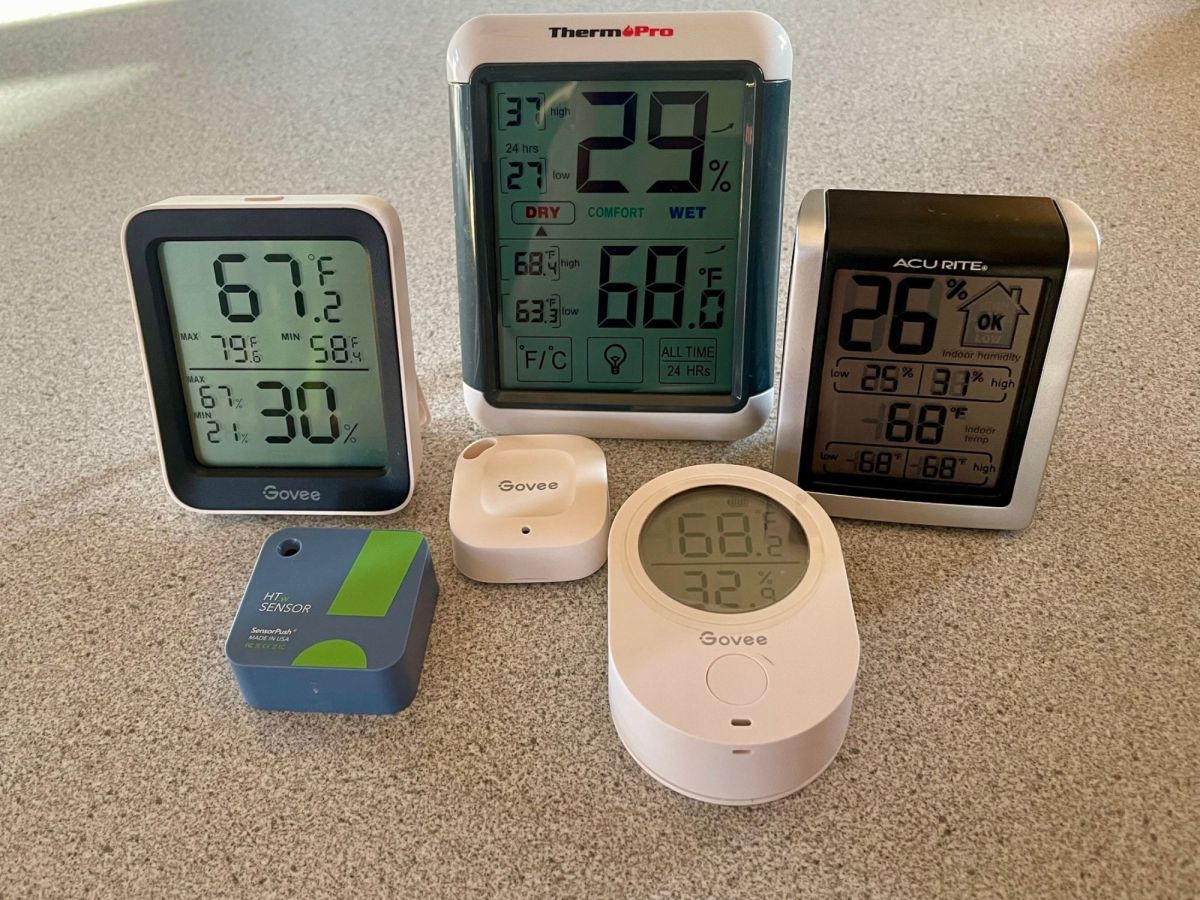
In practical testing, it is also important to place multiple hygrometers side by side and watch how they respond to real household conditions. A bathroom after a shower, a basement on a rainy day, and a sunlit room in the afternoon can all reveal whether a device responds quickly or takes its sweet time like it is waiting for a formal invitation.
Key Features to Look for in the Best Hygrometer
Accuracy
Look for a humidity accuracy rating around plus or minus 2 percent to 5 percent relative humidity. For everyday comfort, plus or minus 3 percent is usually good. For cigars, wine, instruments, or scientific use, tighter accuracy is better.
Calibration
Calibration is the ability to adjust a hygrometer so it matches a known reference. App-based calibration is convenient because it lets you correct the device without fiddling with tiny screws or muttering at the battery compartment.
Display Quality
A large display matters if the hygrometer sits across the room. Small display-free sensors are better for hidden areas where app monitoring is more important than glanceability.
Smart Connectivity
Bluetooth is useful for nearby monitoring. Wi-Fi is better for remote access and alerts when you are away. If you want to monitor a vacation home, basement, greenhouse, or wine cellar from outside the property, choose Wi-Fi or a sensor with a gateway.
Data History
Humidity trends help you solve problems. If the basement spikes every time it rains, you may need better drainage, a dehumidifier, or improved ventilation. If the bedroom drops below 30 percent every winter night, a humidifier may help.
Placement Options
The best hygrometers can sit on a table, mount to a wall, hang by a loop, or tuck into a small area. Before buying, think about where the device will actually live. A hygrometer that falls off a shelf every time the cat walks by is not “portable”; it is a tiny indoor weather casualty.
Where to Place a Hygrometer for the Most Accurate Reading
Placement matters. Keep your hygrometer away from direct sunlight, vents, radiators, humidifiers, dehumidifiers, exterior doors, and steamy appliances. The goal is to measure the room, not the dramatic microclimate next to the pasta pot.
For bedrooms, place the device near the sleeping area but not directly beside a humidifier. For basements, put it in the area that feels dampest or where you store items vulnerable to moisture. For bathrooms, place it far enough from the shower to avoid splash but close enough to track how quickly the room dries. For plants, place it at leaf height near the plant grouping.
How to Use Hygrometer Readings in Real Life
If your home is below 30 percent humidity, the air may feel dry. You might notice static electricity, dry skin, irritated sinuses, or shrinking wood. A humidifier can help, but do not run it blindly. Use the hygrometer to avoid pushing humidity too high.
If your home is above 50 percent humidity for long periods, watch for condensation, musty smells, mildew, or mold-friendly conditions. Run exhaust fans, improve ventilation, fix leaks, use air conditioning, or add a dehumidifier. A hygrometer helps confirm whether your solution is working instead of forcing you to rely on the ancient homeowner method of sniffing the air suspiciously.
Digital vs. Analog Hygrometers
Digital hygrometers are usually the best choice for most homes because they are easy to read, often include temperature, and may offer smart features. Analog hygrometers have a classic look and can work well in humidors or decorative settings, but they may require more frequent calibration and careful reading.
If you want convenience, choose digital. If you want a traditional humidor look, analog can be charming. If you want the most data, choose a smart digital model with history, alerts, and exportable readings.
Common Hygrometer Mistakes to Avoid
The first mistake is buying the cheapest model possible and assuming it is accurate forever. Hygrometers can drift. Check calibration periodically, especially if you use the device for cigars, wine, plants, or instruments.
The second mistake is placing the device in the wrong spot. A reading near a window, vent, humidifier, or shower may not represent the whole room. The third mistake is obsessing over a single number. Humidity changes throughout the day. Trends matter more than one dramatic reading at 7:03 p.m. when someone just boiled soup.
My Practical Experience With Hygrometers
After using hygrometers around the home, the biggest lesson is simple: one sensor is helpful, but several sensors are better. Humidity is not evenly distributed. A living room may sit comfortably at 42 percent while the basement quietly climbs to 61 percent. A bedroom may be dry in winter, while a bathroom stays damp long after the mirror clears. The house is not one climate; it is a collection of tiny weather zones wearing drywall.
The most useful setup is usually one main display hygrometer in the living area, one in the bedroom, and one in the problem zone. For many homes, that problem zone is the basement, laundry room, bathroom, crawl space, garage, greenhouse, or plant corner. Once you start comparing readings, patterns appear quickly. You may discover that shower humidity lingers because the exhaust fan is weak. You may notice that a dehumidifier cycles too late because its built-in humidistat reads differently from the room. You may find that a plant shelf is much drier than expected because it sits near a heating vent.
Smart hygrometers are especially useful when you care about patterns. A display tells you what is happening now; an app tells you what happened while you were asleep, at work, or away for the weekend. That historical view can prevent overcorrecting. For example, if a room briefly hits 55 percent after cooking but drops to 45 percent within an hour, that is probably not a crisis. If a basement sits above 60 percent every night, that is a real moisture-management problem.
Another practical lesson: do not place a hygrometer too close to the device you are trying to control. If you put it beside a humidifier, it may report high humidity while the rest of the room remains dry. If you place it directly in the airflow of a dehumidifier, it may show lower humidity than the room average. Position it where people, plants, or stored items actually are.
For plant lovers, a hygrometer can be both helpful and humbling. Many tropical houseplants prefer more humidity than most homes naturally provide, especially in winter. But raising the humidity of an entire room is not always wise. A better approach is to create a plant zone with grouped plants, a small humidifier, and a nearby hygrometer. That way, your calatheas can stop filing emotional complaints while your windows and walls stay safe from condensation.
For basements, a hygrometer is almost mandatory. Basements can feel cool and dry while still carrying too much relative humidity. Because cool air holds less moisture, relative humidity can climb without the room feeling tropical. A humidity monitor gives you the truth. If readings stay high, use a properly sized dehumidifier and aim for a stable range rather than constantly chasing perfection.
For bedrooms, hygrometers are useful during both winter and summer. In winter, heating systems can dry indoor air. In summer, air conditioning may reduce moisture, but not always evenly. A bedside hygrometer can help you decide whether a humidifier is needed, whether the room is too damp, or whether your comfort problem is actually temperature rather than humidity.
The final experience-based tip is to label your sensors if you use more than one. “Living Room,” “Basement,” “Bedroom,” and “Plant Shelf” are much better than “Sensor 1,” “Sensor 2,” and “Which one is this again?” A good hygrometer setup should make home humidity easier to understand, not turn your phone into a mystery novel.
Final Verdict: Which Hygrometer Should You Buy?
The best hygrometer for most people is the Govee H5051 Wi-Fi Indoor Hygrometer because it balances accuracy, display convenience, app monitoring, alerts, and value. If you want a lower-cost option with a larger screen, the Govee H5075 is an excellent pick. If you need premium smart tracking for sensitive spaces, the SensorPush HT.w is worth considering. For simple everyday use, AcuRite and ThermoPro models remain practical, affordable, and easy to read.
In the end, the best hygrometer is not necessarily the most expensive one. It is the one you will actually use, place correctly, check regularly, and trust enough to make decisions. Humidity may be invisible, but with the right hygrometer, it no longer gets to sneak around your home like a damp little goblin.