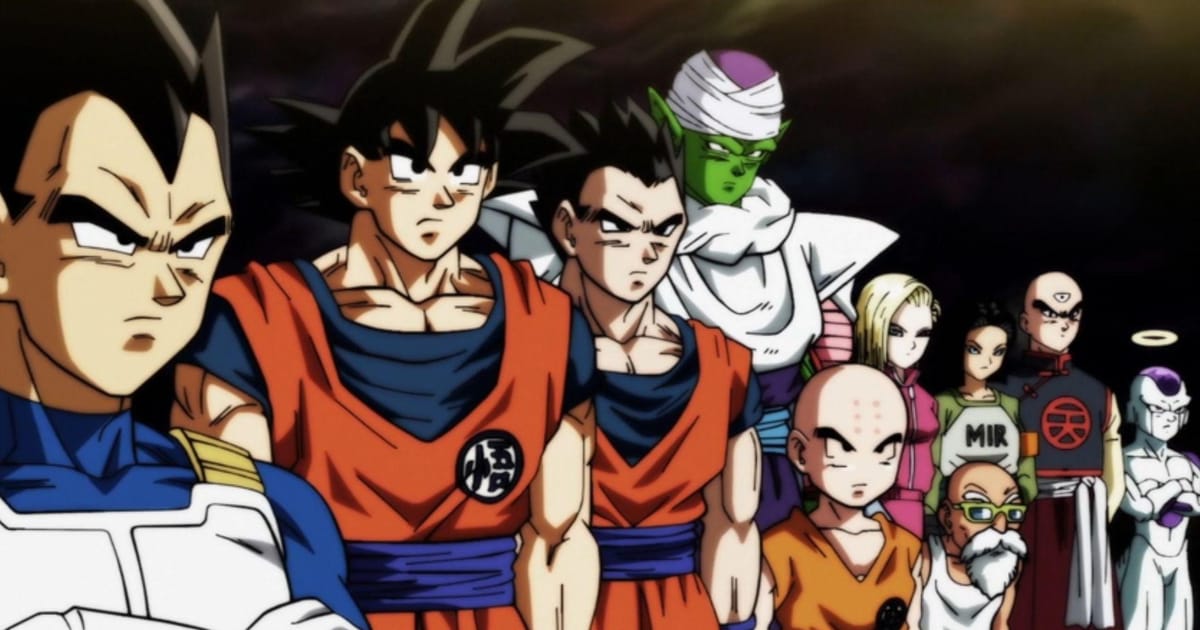
You were paying bills, answering emails, pretending to understand health insurance, and wondering why groceries now cost the same as a small moon. Meanwhile, Dragon Ball Super was over in the corner doing push-ups in 500x gravity, casually expanding the Dragon Ball universe into gods, angels, multiverses, time criminals, new Saiyan forms, and tournaments where entire realities could be erased before lunch.
If you stepped away from anime after the golden days of Dragon Ball Z, you may have assumed the story ended with Goku, Vegeta, Gohan, Piccolo, and the gang enjoying peace after Majin Buu. That would have been tidy. It would also have been wildly un-Dragon Ball. This franchise does not “settle down.” It powers up, screams at the sky, and somehow finds a stronger opponent hiding behind the stronger opponent.
Released as a continuation of the classic saga, Dragon Ball Super brought the franchise back into weekly anime life in 2015 and ran through 131 episodes, later expanding through manga arcs and theatrical films. It was not just nostalgia bait with bigger hair. It became a playground for modern Dragon Ball ideas: divine martial arts, cosmic politics, alternate universes, fan-favorite villains reborn, and character growth that made longtime viewers shout, laugh, argue online, and occasionally whisper, “Wait… Piccolo is cool again?”
This article is for the adults who missed the party because they were busy being responsible. Good news: the party is still loud, chaotic, and powered by enough energy blasts to void a homeowner’s insurance policy.
Dragon Ball Super Did Not Just Continue the Story; It Expanded the Universe
The smartest thing Dragon Ball Super did was avoid treating Dragon Ball Z like a museum exhibit. Instead of simply repeating “new alien arrives, everyone gets punched, Goku saves the day,” the series widened the world dramatically. Suddenly, Earth was not just one little blue target for space villains. It was part of a much larger cosmic system involving Gods of Destruction, Supreme Kais, angels, and multiple universes with their own warriors, rules, and terrifying lunch options.
Beerus and Whis changed the power scale forever
Beerus, the God of Destruction, arrived with the casual energy of a housecat who could erase your planet because dinner was disappointing. His mentor and attendant, Whis, brought elegance, speed, comedy, and an alarming ability to humble Goku and Vegeta without breaking a sweat. Together, they shifted the franchise away from simple villain-of-the-week escalation and into a larger mythology where power had structure, hierarchy, and consequences.
This mattered because Dragon Ball had already reached absurd levels by the end of Z. Characters were destroying planets, bending reality, and making mountains feel underqualified. Dragon Ball Super solved that problem by going vertical. Instead of asking, “Who is stronger than Buu?” it asked, “What if the universe itself has divine administrators, and what if Goku keeps annoying them?” That is not just a plot twist. That is a lifestyle.
The Super Saiyan Forms Became More Than Hair Dye With Attitude
Yes, Dragon Ball transformations are famous for colorful hair, dramatic shouting, and fans debating power levels with the seriousness of courtroom attorneys. But in Dragon Ball Super, the new transformations served a bigger purpose than merchandise-friendly color upgrades.
Super Saiyan God brought a different kind of power
The introduction of Super Saiyan God gave Goku access to divine energy, a cleaner and more controlled type of power than the raw fury associated with earlier Super Saiyan forms. Its slimmer design and calmer presence made it feel less like a muscle explosion and more like a spiritual evolution. It also helped reconnect Dragon Ball to the idea that martial arts is not only about rage. Sometimes it is about balance, discipline, and occasionally getting punched through several rock formations anyway.
Super Saiyan Blue became the workhorse form
Super Saiyan Blue became Goku and Vegeta’s main high-level form for much of the series. It combined Super Saiyan intensity with godly ki control, making it the reliable office laptop of divine transformations: not always the flashiest, but it gets used constantly and probably has too many tabs open.
More importantly, Super Saiyan Blue gave Vegeta room to grow beside Goku. While Goku often chases instinct and experimentation, Vegeta’s progress in Dragon Ball Super feels earned through discipline, pride, and an almost hilarious refusal to let Kakarot enjoy anything alone.
Ultra Instinct Became One of Modern Anime’s Biggest Moments
When people talk about why Dragon Ball Super was awesome, the conversation eventually crashes into two words: Ultra Instinct. This form was not just another hair color. It represented a state where the body reacts without conscious thought, allowing the fighter to move with near-perfect reflexes. For Goku, a character who has spent his entire life chasing stronger opponents, Ultra Instinct felt like the logical next mountain.
The timing helped too. Goku’s Ultra Instinct awakening during the Tournament of Power became a massive fan moment because it felt dangerous, mysterious, and visually distinct. The silver aura, the calmer expression, the fluid movement, and the sense that even Goku did not fully understand what was happening gave the form real dramatic weight.
For adults returning to the series, Ultra Instinct is the kind of scene that makes you remember why Dragon Ball works. It is not subtle. It is not quiet. It does not politely knock before entering. It kicks the door open, rearranges the furniture, and says, “Anime is allowed to be ridiculous, and that is beautiful.”
The Tournament of Power Turned Dragon Ball Into a Multiverse Spectacle
The Tournament of Power was one of Dragon Ball Super’s boldest arcs. Instead of one villain threatening Earth, multiple universes had to send teams into a battle royale where losing could mean total erasure. That is a much stronger motivator than a trophy and a gift card.
Jiren gave Goku a wall he could not simply punch through
Jiren, the strongest warrior from Universe 11, was designed like a walking final exam. He was not loud, flashy, or emotionally messy at first. He was just overwhelmingly strong. That made him the perfect challenge for Goku. Jiren forced the series to ask whether effort, instinct, teamwork, and belief could overcome a fighter who seemed built out of pure impossibility.
Universe 6 made Saiyans feel fresh again
Universe 6 introduced characters like Cabba, Caulifla, and Kale, giving the Saiyan legacy new energy. Caulifla’s confidence, Kale’s hidden power, and Cabba’s respectful bond with Vegeta expanded what Saiyans could be beyond the familiar history of Planet Vegeta. It also gave fans a new generation of warriors to debate about, because Dragon Ball fans can turn a five-second power-up into a graduate seminar.
Android 17 became the comeback king
One of the biggest surprises of Dragon Ball Super was Android 17. Once a villainous teenager with a dangerous smile and questionable hobbies, he returned as a park ranger, family man, and tactical genius. His performance in the Tournament of Power gave him one of the best glow-ups in the franchise. He was calm, clever, durable, and unexpectedly heroic. Somewhere, character development put on sunglasses and nodded approvingly.
Future Trunks Returned, and the Story Got Darker
The Future Trunks Saga brought back one of Dragon Ball’s most beloved characters and immediately threw him into nightmare fuel. His timeline had already suffered androids, despair, and apocalyptic trauma. Then Dragon Ball Super introduced Goku Black and Zamasu, turning the arc into a darker story about corrupted justice, divine arrogance, and the terrifying idea of someone using Goku’s body for destruction.
Goku Black worked because he blended familiarity and wrongness. Seeing Goku’s face attached to a cold, merciless enemy created an instant emotional reaction. Zamasu, meanwhile, gave the arc philosophical flavor. He was not just a brute. He believed he was morally correct, which is exactly the kind of villain who should never be allowed near magic wish-granting or sharp office supplies.
The arc was controversial in places, especially its ending, but it gave Dragon Ball Super a memorable dramatic edge. It reminded fans that Dragon Ball can be funny, bright, and absurd while still exploring tragedy and consequence.
Dragon Ball Super: Broly Made a Legendary Character Even Better
Then came Dragon Ball Super: Broly, the 2018 theatrical film that reintroduced Broly into the modern Dragon Ball continuity. Older fans knew Broly as the legendary Super Saiyan from earlier movies, a character famous for overwhelming power and a fanbase louder than a stadium full of scouters exploding. The new film kept the raw spectacle but gave Broly more humanity.
Instead of being only a rage machine, Broly became a tragic figure shaped by isolation, harsh parenting, and emotional confusion. His power was still terrifying, but his story had sympathy. That choice made the character stronger, not softer. Audiences could fear him, cheer for him, and feel bad for him at the same time, which is a rare combo unless you have ever watched a dog steal pizza and then look deeply ashamed.
The animation raised the bar
The movie’s animation was a major reason it landed so hard with fans. Battles moved with speed, weight, and creative camera work. The art style felt fresh while still clearly belonging to Dragon Ball. Goku, Vegeta, Broly, Frieza, and Gogeta all got moments that felt cinematic rather than simply “long episode on a bigger screen.”
For many fans, Dragon Ball Super: Broly proved that the franchise could evolve visually while preserving its soul. It was fast, colorful, emotional, and absolutely unhinged in the best way.
Dragon Ball Super: Super Hero Gave Gohan and Piccolo Their Flowers
Dragon Ball Super: Super Hero did something longtime fans had been requesting for years: it moved Goku and Vegeta away from the center and let Gohan and Piccolo drive the story. This was not just refreshing; it was overdue. Gohan had spent years bouncing between scholar, dad, warrior, and “guy who forgot where he put his potential.” Piccolo, meanwhile, had become one of the franchise’s most dependable characters, mentor figures, and accidental babysitters.
The film brought back the Red Ribbon Army concept, introduced Gamma 1 and Gamma 2, and gave Piccolo and Gohan major new forms. More importantly, it restored their importance. Piccolo’s strategy, dry humor, and loyalty carried much of the movie’s charm, while Gohan’s explosive power reminded everyone that this man’s potential has been sitting in the garage with a tarp over it.
The film also performed strongly in North America, showing that Dragon Ball was not just surviving as a nostalgia brand. It was still capable of bringing fans to theaters and competing in the modern anime movie boom.
The Manga Kept the Adventure Going Beyond the Anime
While the original Dragon Ball Super anime ended in 2018, the manga continued with major arcs that anime-only fans may have missed. Illustrated by Toyotarou with story involvement and supervision from Akira Toriyama during Toriyama’s lifetime, the manga explored threats such as Moro and Granolah, expanding the lore after the Tournament of Power.
The Galactic Patrol Prisoner Saga, often called the Moro arc by fans, leaned into magic, ancient evil, and galactic law enforcement. Moro was different from many Dragon Ball villains because his threat was not only physical. His magic and energy-absorbing abilities made him feel dangerous in a way that was not solved by simply punching harder, although, naturally, punching harder remained on the meeting agenda.
The Granolah arc pushed themes of revenge, survivor trauma, Saiyan history, and the complicated legacy of past violence. It also gave Vegeta meaningful development through his own divine path, showing that his growth is no longer just about catching Goku. Vegeta’s journey in Dragon Ball Super is about identity, guilt, pride, and choosing what kind of warrior he wants to become.
Why Dragon Ball Super Still Works for Adult Fans
Here is the funny thing about returning to Dragon Ball as an adult: the explosions are still fun, but different details start hitting harder. As a kid, you may have watched for transformations, villains, and energy blasts. As an adult, you notice the discipline, the friendships, the parenting, the rivalry, the absurd comedy, and the way characters keep reinventing themselves after failure.
Goku is still Goku: cheerful, battle-hungry, occasionally irresponsible, and somehow both simple and profound. Vegeta, however, may be the adult fan’s secret favorite. His arc from villain to rival to husband to father to protector remains one of the franchise’s richest long-term developments. In Dragon Ball Super, Vegeta’s pride is still there, but it has matured. He is no longer only trying to dominate. He is trying to become worthy of the life he built.
Piccolo also hits differently when you are older. He is the reliable one. The planner. The mentor. The guy who answers the phone when everyone else is busy training in another dimension. If Dragon Ball had a group project, Piccolo would be the one making the shared document while Goku asks whether the document can fight.
Was Dragon Ball Super Perfect? No. Was It Awesome Anyway? Absolutely.
No honest fan should pretend Dragon Ball Super was flawless. The early episodes had uneven animation. Some arcs retold movie material in ways that felt slower than necessary. Power scaling sometimes became a confusing math problem written on a napkin during an earthquake. Certain story choices sparked debates that may continue until the heat death of the universe.
But perfection is not why people love Dragon Ball. People love it because it has heart, momentum, comedy, intensity, and the rare ability to make a punch feel like a spiritual event. Dragon Ball Super delivered enough iconic moments, fresh characters, emotional payoffs, and pure spectacle to earn its place in the franchise.
It gave fans Beerus and Whis. It gave Vegeta new dignity. It brought back Future Trunks. It turned Android 17 into a legend. It gave Goku Ultra Instinct. It made Broly more compelling. It let Gohan and Piccolo shine again. That is not a small achievement. That is a full buffet, and yes, Goku already ate half of it.
Experience Section: Watching Dragon Ball Super as an Adult Feels Like Finding an Old Jacket With Money in the Pocket
Returning to Dragon Ball Super after years of adult life can feel strangely personal. You sit down expecting a little nostalgia, maybe a few familiar faces, maybe the comforting sound of someone yelling for twenty seconds before changing hair color. Then the show starts doing something sneaky. It reminds you of who you were when Dragon Ball first mattered to you, while also giving you new reasons to care now.
As a kid, Dragon Ball was easy to love because it was direct. Train hard. Protect your friends. Face the impossible. Eat a lot. Try again. The formula was simple, but it worked because it was sincere. As an adult, that same formula can feel oddly refreshing. Life becomes complicated. Goals get delayed. Responsibilities pile up. Your calendar looks like it was designed by Frieza. Then you watch Goku lose, smile, train, and try again, and some part of your brain says, “Fine, maybe I can answer those emails.”
The best adult viewing experience comes from noticing how much the characters have changed. Vegeta is no longer just the angry prince shouting about pride. He is a husband, father, protector, and warrior still wrestling with his past. That makes his growth in Dragon Ball Super surprisingly satisfying. His rivalry with Goku remains funny, but it no longer feels shallow. It feels like two people pushing each other because neither wants to become ordinary.
Piccolo may be even better when you are older. He has become the franchise’s unofficial responsible adult, which is hilarious considering he began life as a terrifying demon king’s successor. In Dragon Ball Super: Super Hero, his relationship with Gohan and Pan feels warm, funny, and grounded. He is not just powerful. He is dependable. Adult viewers understand how rare and valuable that is. A person who shows up on time and helps with childcare? Forget Ultra Instinct; that is the real divine technique.
Gohan’s journey also feels more relatable with age. He is not lazy; he is divided. He wants to be present for his family, succeed in his career, and still honor the warrior potential inside him. That is a very adult conflict, just with more aliens. Watching Gohan rediscover his strength is satisfying because it speaks to anyone who has ever wondered whether an important part of themselves got buried under work, bills, and routine.
Even the wildest parts of Dragon Ball Super can feel meaningful. The Tournament of Power is obviously a massive spectacle, but it is also about trust under pressure. Fighters who dislike each other must cooperate. Universes face consequences together. Characters win not just through strength, but through timing, sacrifice, strategy, and teamwork. That is a surprisingly useful message for real life, where most problems cannot be solved by launching a glowing beam across the office, no matter how tempting it may be during meetings.
The experience of catching up also brings joy because modern Dragon Ball fandom is massive, energetic, and deeply opinionated. People debate transformations, rankings, arcs, animation styles, and whether a character was “nerfed” with the intensity of sports analysts before a championship game. Joining that conversation late can be overwhelming, but it is also fun. You are not just watching a show; you are stepping back into a global fan tradition that has been growing for decades.
In the end, While You Were Busy Being An Adult, Dragon Ball Super Was Busy Being Awesome is more than a funny title. It is a pretty accurate description of what happened. While you were working, studying, commuting, parenting, budgeting, and trying to remember your passwords, Dragon Ball kept evolving. It became bigger, stranger, funnier, flashier, and sometimes more emotionally rewarding than expected.
And maybe that is the real magic of Dragon Ball Super. It lets adult fans return without making them feel foolish for caring. It says, yes, you have responsibilities now. Yes, your back hurts for mysterious reasons. Yes, you own cleaning supplies you are weirdly proud of. But you can still enjoy a story where warriors chase impossible limits, friends protect each other, villains monologue dramatically, and one cheerful Saiyan reminds everyone that growth never really ends.
Conclusion: Dragon Ball Super Was Worth Catching Up On
Dragon Ball Super was not just a sequel for fans who missed the old days. It was a major expansion of the Dragon Ball universe, introducing new mythology, new transformations, new characters, and new emotional beats for classic heroes. It carried the franchise into modern anime culture while keeping the spirit that made Dragon Ball famous in the first place: action, humor, friendship, rivalry, and the endless pursuit of becoming stronger.
If adulthood made you miss the original run, do not worry. Dragon Ball has always been about catching up to someone stronger. In this case, the stronger opponent is your own watchlist. Charge your energy, clear a weekend, and prepare for gods, tournaments, androids, Saiyans, and enough yelling to make your neighbors wonder if you have started martial arts training in the living room.
Note: This article was written as original SEO content based on real Dragon Ball Super information from official franchise sources, manga publisher details, streaming descriptions, box office reporting, and reputable entertainment coverage. No source links or citation artifacts are embedded in the article body.