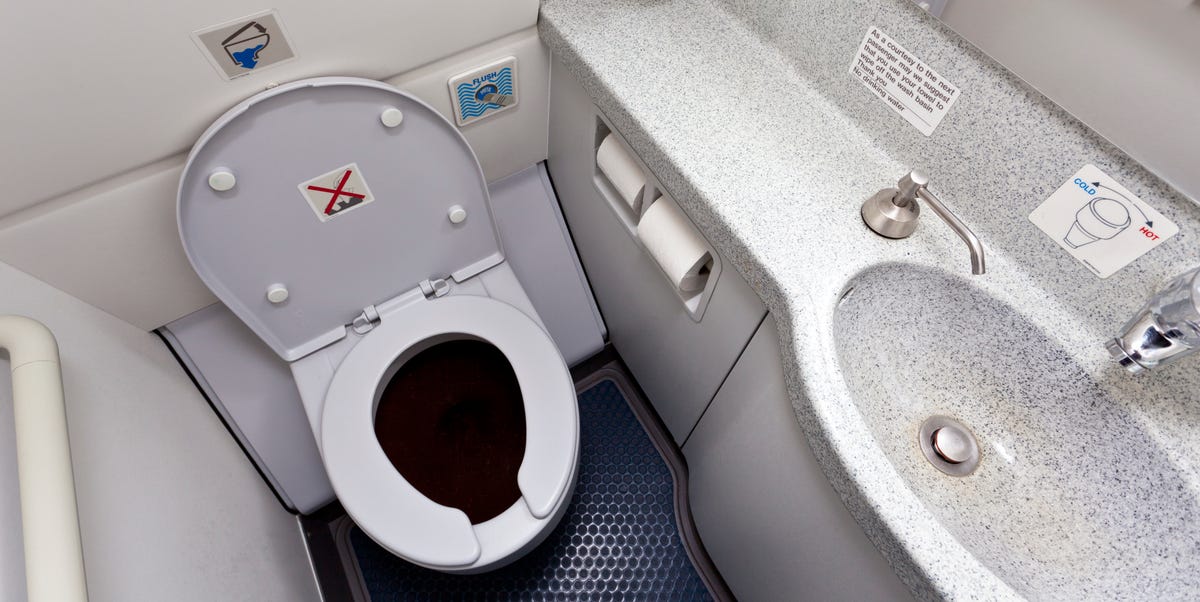
If you are looking for the glamorous frontier of pandemic prevention, you probably picture satellite maps, gene sequencers, and scientists in spotless labs. You probably do not picture an airplane toilet. And yet, somewhere between the in-flight beverage cart and the passengers pretending they are definitely not barefoot in row 31, a surprisingly powerful public health tool is waiting to be flushed into action.
That tool is airplane wastewater surveillance. In plain English, scientists collect wastewater from aircraft lavatories or from airport systems that combine lavatory waste from arriving international flights. Then they test that wastewater for genetic traces of viruses and other pathogens. It sounds weird because it is weird. It also happens to be smart, scalable, and increasingly important in the effort to detect dangerous outbreaks before they spread widely.
The logic is almost beautifully simple. Air travel helps pathogens move fast. Airports are the world’s revolving doors. If public health teams can monitor what arrives on those flights without stopping every traveler for a swab, they gain a low-friction way to spot threats early. In that sense, airplane toilets are not just plumbing. They are a global warning system wearing a very unfortunate disguise.
Why Airplane Toilets Matter More Than They Ever Should
Wastewater surveillance became one of the more unexpected heroes of the COVID-19 era. Communities learned that sewage could reveal disease trends even when people were not getting tested, reporting results, or showing up in official case counts. What goes down the drain, it turns out, often tells the truth before dashboards do.
Now researchers are applying that same idea to international travel. Instead of waiting for hospitals to notice unusual infections or border systems to roll out disruptive testing programs, scientists can check wastewater from flights and airports for evidence that a virus, variant, or other pathogen has arrived. That gives health agencies a chance to react faster, target testing more intelligently, and understand what may be entering the country from abroad.
This is especially useful in a world where future pandemics may not look exactly like COVID. The next major threat could spread before traditional surveillance catches up. It could emerge in places with limited clinical testing. It could travel quietly through global transportation networks while official numbers look suspiciously calm. Aircraft wastewater gives public health officials another set of eyes, except these eyes are staring into a tank full of jet-age sewage and trying not to make a face.
How Airplane Wastewater Surveillance Actually Works
From Lavatory Truck to Laboratory
On some flights, wastewater can be collected directly during routine servicing after the plane lands. That means no dramatic new operation and no parade of hazmat suits surrounding the gate. A sample is pulled while the aircraft is already being handled on the ground, packaged, and shipped for testing. Scientists then run PCR and sequencing to identify pathogens or variants of concern.
At some airports, researchers also use a less flashy but highly practical collection point called a triturator. This system receives lavatory waste from multiple arriving aircraft before the wastewater enters the broader sewer flow. In other words, it provides a composite sample from incoming planes without mixing in the rest of the airport’s terminal wastewater. That matters because it gives a more targeted picture of what is arriving by air rather than what is happening in the whole airport ecosystem.
Why Scientists Like This Approach
The appeal is obvious. Wastewater sampling is noninvasive. It does not require every passenger to volunteer, line up, or answer questions while trying to remember whether their charger is in the seat pocket. It also creates an efficient surveillance layer for flights arriving from countries or regions where a new pathogen may be circulating.
Researchers and public health planners see airports as valuable sentinel sites. That means they are strategic places to monitor for emerging threats because they sit at the edge of international movement. If a pathogen is likely to enter through travel, then airports make excellent listening posts. Not perfect listening posts, to be clear, but far better than shrugging and hoping the first clue comes from an emergency room cluster two weeks later.
What Scientists Have Already Learned
This is not theoretical daydreaming. During the COVID era, public health teams in the United States tested wastewater from incoming international flights and showed that the method could detect SARS-CoV-2 and identify variants. One early CDC-linked study at John F. Kennedy International Airport found that a large share of samples from selected incoming flights tested positive, demonstrating that aircraft wastewater could serve as a feasible, relatively low-resource complement to passenger testing.
That finding mattered for two reasons. First, it showed that genetic material from infected travelers really does show up in aircraft wastewater at usable levels. Second, it proved the method could operate without causing major disruption to airport operations. That may sound like a boring administrative win, but in public health, boring is often beautiful. The best surveillance systems are the ones that actually fit into real life.
The CDC’s broader Traveler-Based Genomic Surveillance program has since evolved into a multimodal system that includes traveler samples, aircraft wastewater, and other forms of sampling. Public-private partnerships helped expand the work across major airports and improve turnaround times, making the model more operational and less like a clever pilot project that dies in a conference slideshow.
More recent research and modeling have pushed the idea further. Scientists argue that sampling wastewater from select airports around the world could shorten the time needed to detect emerging outbreaks. In other words, even a relatively focused network might provide earlier warning than waiting for traditional surveillance systems to piece the story together after the pathogen has already booked itself a global tour.
Why This Could Be a Big Deal for Future Pandemics
The strongest argument for airplane wastewater surveillance is speed. Public health does not just need better data. It needs earlier data. By the time clinical case counts clearly show a problem, a fast-moving pathogen may already be circulating in multiple cities. Wastewater can help close that timing gap.
It also helps solve a classic surveillance problem: people do not always test, report, or show symptoms in neat ways that make epidemiologists happy. Travelers may be mildly ill, presymptomatic, or entirely unaware they are carrying something important. Wastewater, meanwhile, is gloriously uninterested in whether anyone filled out the right form.
There is also a cost and practicality advantage. Testing every passenger on every international flight would be expensive, slow, and politically messy. Sampling wastewater is not free, but it is a far more efficient way to screen large volumes of travel for red flags. When used wisely, it can tell health agencies where to concentrate attention instead of treating every flight like a five-alarm fire.
And the applications may extend beyond COVID-style variant tracking. Experts are increasingly interested in using wastewater systems to monitor multiple pathogens, including those with pandemic potential and even antimicrobial resistance markers. That means the same basic approach could become part of a broader early-warning architecture rather than a one-virus trick pony.
But Let’s Not Pretend It’s Magic
As promising as aircraft wastewater surveillance is, it comes with real limitations. For one thing, not every infected traveler uses the lavatory during a flight. That makes long-haul flights more productive than short ones and means the method is partly at the mercy of passenger behavior. Science is powerful, but it still cannot make people drink two airport coffees and then board on schedule.
There are also interpretation challenges. A positive signal may show that a pathogen was on the flight, but it does not immediately identify which passenger carried it, how many infected people were involved, or whether some travelers were connecting from somewhere else. That makes origin tracing less precise.
Another issue is carryover. Residual genetic material from earlier flights can potentially linger in equipment or tanks, muddying results if protocols are not carefully managed. And as with any surveillance system, detecting a signal is only half the battle. Agencies still need laboratory capacity, clear reporting pipelines, decision rules, and an action plan for what happens next.
That last point is crucial. Data without response is just expensive anxiety. If a system flags an emerging threat, authorities need to know whether the next step is more targeted testing, traveler notifications, genomic sequencing, clinician alerts, local preparedness messaging, or some combination of all four. Otherwise, the toilet did its part and the humans fumbled the handoff.
What a Smarter Early-Warning Network Could Look Like
The most practical future is probably not universal sampling of every plane, every day, forever. That would be costly, operationally heavy, and unnecessary. A smarter strategy is targeted surveillance at a relatively small number of major international airports, supported by the ability to intensify sampling when a new threat emerges.
That approach lines up with public health guidance that treats airports as sentinel nodes. The goal is not to watch everything all the time. The goal is to create a flexible network that can catch meaningful signals early, provide baseline data during quieter periods, and scale up when a pathogen of concern appears overseas.
Think of it as a smoke alarm, not a full-time courtroom transcript. You want the system placed in the right buildings, tested regularly, and ready to get loud when trouble arrives.
To make that work, agencies need sustained funding, agreed laboratory standards, strong coordination among airports and health departments, and public trust. They also need to communicate clearly that wastewater surveillance is about protecting public health, not creating a science-fiction surveillance state built around restroom logistics. The distinction matters.
The Bigger Lesson: Pandemic Preparedness Is Often Unsexy
One reason airplane wastewater surveillance is such a compelling story is that it reveals something true about modern health security: the most effective tools are not always dramatic. Preparedness is often a matter of logistics, sampling design, transport networks, reporting systems, and boring infrastructure that no one wants to celebrate until disaster strikes.
Airplane toilets fit perfectly into that pattern. They are not glamorous. They will never get a stirring movie soundtrack. No child has ever said, “When I grow up, I want to defend civilization by coordinating lavatory truck sampling at Terminal B.” But if the next pandemic is detected earlier because someone had the foresight to monitor aircraft wastewater, that quiet, awkward, very unglamorous system could save time, money, and lives.
And frankly, that is a decent bargain for a piece of equipment that already spends its entire existence dealing with humanity at its least dignified.
Experience on the Ground: What This Really Feels Like in Practice
If you want to understand the real experience of airplane wastewater surveillance, forget the movie version of science for a second. This is not a scene where one genius stares at a glowing screen and dramatically whispers, “My God.” It is a chain of ordinary tasks done very well by a lot of people who understand that outbreaks often reveal themselves through routine systems long before they show up in headlines.
At the airport level, the experience is operational first and scientific second. Ground crews are already working in a world of tight schedules, safety procedures, gate pressure, and nonstop coordination. Sampling has to fit into that environment. That is why researchers and public health teams favor methods that can be layered onto routine aircraft servicing rather than turning every arrival into a mini-crisis. In practical terms, success depends on making the public health step simple enough that the aviation system can live with it.
For laboratory teams, the experience is less about glamour and more about discipline. A sample that looks deeply unromantic can contain valuable genetic clues, but only if the chain from collection to analysis is reliable. Timing matters. Handling matters. Sequencing quality matters. Interpretation matters even more. Detecting a signal is exciting for about five seconds. After that, the work becomes all about confirmation, context, comparison, and deciding whether the signal represents background noise, a meaningful importation event, or an early sign of something that needs rapid attention.
For epidemiologists, aircraft wastewater creates a strange but useful kind of visibility. They are not looking at one sick person with one medical chart. They are looking at a pooled biological snapshot of movement, exposure, and risk. That can feel frustrating because the data are indirect, but it can also be powerful because it gives an earlier and broader picture than case-based systems often do. In many ways, the experience is one of reading a trail of clues rather than waiting for a formal confession.
For the public, this kind of surveillance is almost invisible, which is part of its strength. Most travelers will never notice it happening. They will deplane, check their phones, complain about baggage claim, and move on with their lives. That low-friction quality is not a side benefit. It is one of the main reasons the system is attractive. A good preparedness tool should not require constant public disruption to be useful.
And then there is the policy experience. This is where the idea becomes larger than the airplane toilet itself. Once officials see that wastewater can provide early warning, the conversation shifts from “Can we test this?” to “What should we do when we find something?” That is the real maturity test. A surveillance system becomes valuable only when it is tied to action: targeted follow-up testing, clinician alerts, faster sequencing, better situational awareness, and more confident response decisions.
So the lived experience of this work is not one grand moment. It is a series of disciplined, coordinated, almost humble steps. Sample. Ship. Test. Sequence. Interpret. Report. Decide. Repeat. That may not sound thrilling, but preparedness rarely does. The point is not to make the process glamorous. The point is to make it dependable enough that when the next threat travels at thirty thousand feet, someone on the ground is already listening.
Conclusion
Airplane toilets are not the whole answer to future pandemics. They are not even the prettiest part of the answer. But they may become one of the smartest pieces of the global early-warning puzzle. By turning aircraft wastewater into a practical surveillance tool, scientists and public health agencies are creating a system that is faster, less disruptive, and often more scalable than relying only on passenger testing or delayed clinical reporting.
The beauty of the idea is its realism. Pathogens travel. Planes travel. Toilets collect evidence. Scientists test that evidence. Public health gets a head start. It is not glamorous, but neither is a fire extinguisher, and no sensible person waits for glitter before choosing useful equipment.
So yes, one of the quiet weapons in the fight against future pandemics may be the airplane lavatory. Not because anyone enjoys saying that out loud, but because smart preparedness means using the infrastructure we already have in ways that help us see trouble earlier. Sometimes the future of pandemic defense is a cutting-edge gene sequencer. Sometimes it is a toilet at cruising altitude. Honestly, humanity probably deserves both.