The garage is a magical place. It begins as a clean, useful space for parking cars, storing tools, and keeping seasonal items out of the house. Then one day you open the door and discover a mysterious ecosystem of half-empty paint cans, tangled extension cords, holiday decorations from three administrations ago, and a basketball that has not bounced since 2018.
If that sounds familiar, you are not alone. Garage clutter happens because the garage is usually the easiest place to put things “for now.” Unfortunately, “for now” has a sneaky habit of turning into “forever.” The good news is that garage organization does not require a luxury renovation, a professional organizing crew, or a dramatic before-and-after montage with emotional piano music. With the right system, a weekend of effort, and a little honest decision-making, you can turn your garage into a cleaner, safer, and far more useful space.
This guide covers practical tips for organizing your garage, from decluttering and zoning to garage storage ideas, shelving, wall systems, labels, safety habits, and maintenance routines. Whether your goal is to park your car again, build a tidy workshop, store family gear, or simply stop stepping on rogue screws, these ideas will help you create a garage that works as hard as you do.
Start With a Clear Garage Goal
Before buying bins, hooks, cabinets, shelves, or a pegboard large enough to make a hardware store jealous, decide what your garage is supposed to do. A garage can serve many purposes, but it cannot serve all of them equally well at the same time.
Ask yourself: Do you want space to park one or two cars? Do you need a workbench for home repairs? Are you storing sports equipment, gardening tools, camping supplies, bikes, holiday decor, or household overflow? Do you need a drop zone for shoes, backpacks, and outdoor gear? Your answer determines the layout.
A garage used mainly for parking should keep the floor as open as possible. A garage used as a workshop needs tool storage near the work surface. A family garage with kids’ gear should place frequently used items at reachable heights. Organizing becomes much easier when every decision supports a clear purpose.
Declutter Before You Organize
Organizing clutter without decluttering first is like putting a tuxedo on a raccoon. It looks slightly more official, but it is still chaos. Before installing any garage storage system, remove everything you realistically can from the garage and sort it into categories.
Use the Four-Pile Method
Create four simple groups: keep, donate, sell, and toss. Be honest. If you have three broken leaf blowers, five duplicate hammers, a cracked cooler, and a box labeled “miscellaneous wires,” your garage is not a storage area; it is hosting a support group for retired objects.
Keep items you use, need, or truly plan to use. Donate items in good condition that no longer fit your life. Sell larger items that still have value. Toss or recycle broken, unsafe, expired, or unusable items according to local disposal rules.
Look for Common Garage Clutter Culprits
The biggest garage space-wasters are usually duplicates, outdated sports gear, old paint, damaged tools, mystery hardware, empty boxes, leftover building materials, worn-out lawn equipment, and seasonal decorations that no longer match your style. If an item has been sitting untouched for years, ask whether it deserves prime real estate.
One useful rule is the “replacement test.” If you forgot you owned it and would not buy it again today, you probably do not need to store it. That sentence alone has rescued many garages from becoming museums of good intentions.
Create Garage Zones
Once you know what you are keeping, divide the garage into zones. Zoning is one of the best garage organization tips because it gives every category a home. Instead of scattering items wherever there is space, you group similar things together.
Helpful Garage Zones to Consider
A practical garage layout may include a tool zone, lawn and garden zone, sports zone, automotive zone, cleaning zone, recycling zone, seasonal storage zone, and household overflow zone. If you have children, add a kid-friendly grab-and-go zone for helmets, balls, scooters, and outdoor toys.
Place frequently used items near the garage door or entry to the house. Store seasonal or rarely used items higher up, farther back, or in overhead storage. Heavy items should stay low. Dangerous products should be secured and kept away from kids, pets, heat sources, and high-traffic areas.
Zoning also makes cleanup faster. When everything belongs to a specific area, you do not need to perform a detective investigation every time you put away a rake.
Keep the Floor as Clear as Possible
A clean garage floor is the difference between “organized storage” and “obstacle course with spiders.” Keeping items off the floor helps reduce tripping hazards, protects belongings from moisture, makes sweeping easier, and creates room for vehicles, bikes, strollers, or work projects.
Use wall shelves, cabinets, hooks, rails, pegboards, and ceiling racks to move items upward. The floor should be reserved for large, heavy, or rolling items such as lawnmowers, snow blowers, tool chests, trash bins, and storage cabinets.
Use Vertical Garage Storage
Most garages have more wall space than floor space, and vertical storage is where the magic happens. If your walls are empty while your floor is covered, your garage is politely asking for shelves.
Install Wall Shelves
Wall-mounted shelves are excellent for bins, household supplies, gardening products, and seasonal items. Adjustable shelving is especially useful because your storage needs will change over time. Today it is camping gear; tomorrow it is holiday lights, sports gear, or a suspiciously large collection of car-cleaning products.
For safety, mount shelves into wall studs when required and follow manufacturer weight limits. Store lighter items higher and heavier items lower. Clear bins work well when you want visibility, while opaque bins create a cleaner look as long as they are clearly labeled.
Add Pegboards and Slatwall Panels
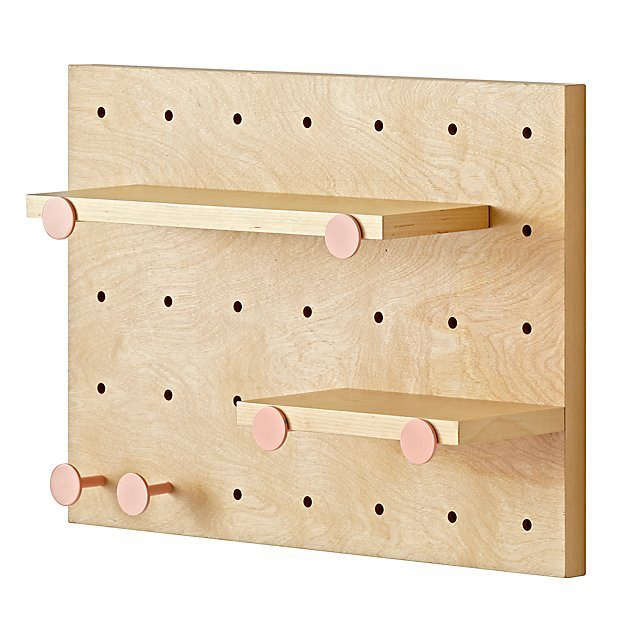
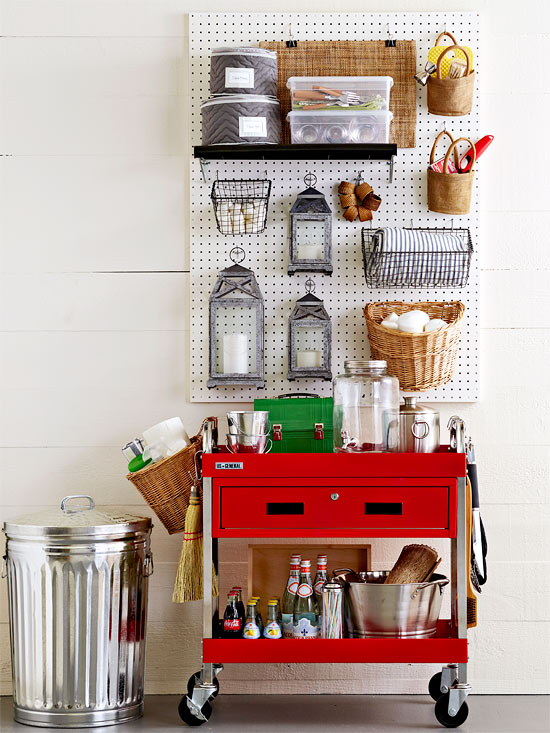
Pegboards are perfect for tools, cords, small baskets, paintbrushes, measuring tapes, and frequently used supplies. Their biggest advantage is flexibility. You can move hooks and accessories around without redesigning the whole garage.
Slatwall panels and rail systems are another strong option for garage wall organization. They can hold baskets, hooks, shelves, bike attachments, and tool holders. These systems are great when you want a polished look and the freedom to adjust storage as your needs change.
Take Advantage of Overhead Storage
Ceiling space is often forgotten, which is unfortunate because it is ideal for items you do not use every week. Overhead garage storage works well for holiday decorations, camping equipment, luggage, coolers, and bulky but lightweight bins.
The key word is “infrequent.” Do not store everyday items above your head unless you enjoy getting a ladder every Tuesday. Also, overhead racks must be installed correctly into ceiling framing and should never exceed their weight limits. When in doubt, choose professional installation or a simpler wall-based option.
Choose the Right Storage Bins
Bins are the backbone of garage organization, but not all bins are created equal. A random stack of mismatched containers can quickly become clutter wearing plastic armor.
Use Clear, Stackable, Lidded Containers
Clear plastic bins make it easier to see what is inside. Lids protect items from dust, moisture, and pests. Square or rectangular bins fit better on shelves than round containers, and stackable bins help maximize vertical space.
Group similar items together: one bin for extension cords, one for car-care supplies, one for holiday lights, one for pool gear, and one for small painting supplies. Avoid creating a “random stuff” bin unless you want to meet the same random stuff again next year, only dustier.
Label Everything
Labels are not fussy; they are future-you being kind to present-you. Label the front and side of each bin so you can read it whether the bin is stacked, shelved, or pulled halfway out. Use broad but useful labels such as “Camping Cooking Gear,” “Outdoor Extension Cords,” “Halloween Decor,” or “Bike Repair.”
For bonus points, add a simple inventory label to bins that hold many small items. This prevents the classic garage ritual of opening seven boxes to find one sprinkler head.
Organize Tools Like You Actually Use Them
Tool organization should match your habits, not a showroom display that looks beautiful but collapses after one Saturday repair project. Store tools near where you use them. Keep frequently used hand tools visible and easy to grab. Put specialty tools in drawers, cabinets, or labeled cases.
Pegboards work well for hammers, pliers, screwdrivers, wrenches, clamps, tape measures, and small saws. Magnetic strips can hold metal hand tools. Drawer organizers are excellent for drill bits, fasteners, sockets, and small accessories. A rolling tool chest is useful if you work in different areas of the garage or driveway.
The real secret is reducing duplicates. Most households do not need six tape measures hiding in six different corners like tiny construction goblins. Keep the best, donate extras, and create a dedicated place for each tool.
Make Sports Gear Easy to Grab and Easy to Return
Sports equipment can turn a garage into a foam-and-rubber avalanche. Balls roll, helmets disappear, bats lean dramatically against walls, and scooters park themselves directly behind your tires.
Use baskets or open bins for balls, hooks for helmets, wall racks for bats and sticks, and vertical stands or wall mounts for bikes. For kids, keep storage low and simple. If a child needs to open a cabinet, lift a lid, solve a riddle, and operate a pulley system to put away a soccer ball, that ball will live on the floor forever.
Store Lawn and Garden Tools Safely
Long-handled tools such as rakes, shovels, hoes, and brooms should be hung on wall-mounted racks or stored upright in a stable tool organizer. This keeps sharp edges off the floor and prevents the cartoonish but very real possibility of stepping on a rake.
Keep garden gloves, small hand tools, seed packets, plant ties, and pruning supplies together in a bin, drawer, or portable caddy. Store fertilizers, pesticides, and lawn chemicals in their original containers with labels intact, preferably in a locked or high cabinet away from children, pets, heat, and moisture.
Be Smart About Hazardous and Temperature-Sensitive Items
A garage is convenient, but it is not the right home for everything. Many garages are hot in summer, cold in winter, damp in rainy seasons, and dusty all year. That environment can damage certain belongings and create safety concerns.
Avoid storing important documents, photos, electronics, delicate fabrics, indoor toys, books, pantry food, and valuable keepsakes in the garage. These items can be damaged by humidity, temperature swings, pests, or dust.
Be especially careful with paint, gasoline, propane, solvents, and other hazardous products. Store chemicals only as directed on the label, keep them sealed, and never place them near heat sources, appliances, or ignition risks. Propane tanks should not be stored inside an attached garage. For old paint, chemicals, batteries, or automotive fluids, check local hazardous waste disposal rules rather than letting them become a permanent garage exhibit.
Add a Workbench Without Creating a Clutter Magnet
A workbench can be incredibly useful, but it can also become the place where homeless objects gather to form a tiny civilization. If you add a workbench, build storage around it.
Mount a pegboard above the bench. Add task lighting. Use drawers or small parts organizers for screws, nails, washers, anchors, and drill bits. Keep the benchtop mostly clear so it is ready for repairs, crafts, or projects. A good rule is to leave at least two-thirds of the work surface empty when the bench is not in use.
Improve Garage Lighting
Even the best garage storage ideas fail if you cannot see what you are doing. Dim garages make it harder to find items, read labels, sort tools, and clean properly. Bright overhead lighting can instantly make the space feel bigger and more functional.
Add task lighting above a workbench and consider motion-sensor lights near entry areas. Good lighting also discourages clutter because messes are much harder to ignore when they are fully illuminated. Clutter loves shadows. Do not give it a habitat.
Create a Simple Maintenance Routine
Garage organization is not a one-time event. It is a system. The best way to keep your garage organized is to build small habits into your routine.
Try a Monthly Reset
Once a month, spend 20 to 30 minutes returning items to their zones, breaking down boxes, sweeping the floor, and checking whether anything has landed in the garage that does not belong there. This small reset prevents clutter from rebuilding.
Do a Seasonal Review
At the start of each season, rotate seasonal items. Move snow gear, pool supplies, gardening tools, or holiday decorations closer to reach when needed and back to higher storage when the season ends. This keeps the garage responsive to real life instead of frozen in one awkward layout forever.
Budget-Friendly Garage Organization Ideas
You do not need a custom cabinet system to organize your garage. Start with affordable, high-impact upgrades. Heavy-duty plastic bins, wall hooks, basic shelving, pegboards, magnetic strips, clear jars for small hardware, and simple labels can transform the space without draining your wallet.
Repurpose what you already have when possible. An old bookcase can become garage shelving if it is sturdy and safe. A shoe organizer can hold spray bottles, gloves, and small tools. Clean coffee cans or jars can sort screws and nails. Just avoid flimsy storage for heavy items; saving a few dollars is not worth a shelf collapse that sounds like a garage thunderstorm.
Real-Life Experiences: What Actually Works in a Garage
In real homes, the best garage organization system is not the fanciest one. It is the one people actually use after the first week. A garage can look perfect on day one, but if the system is too complicated, clutter comes back faster than weeds after rain.
One of the most useful lessons is to organize by motion. Watch how people naturally move through the garage. If everyone enters through the interior door, that area becomes the best place for shoes, reusable shopping bags, umbrellas, pet leashes, and everyday outdoor items. If bikes leave through the main garage door, bike storage should be near that exit, not buried behind storage totes. When storage matches behavior, the garage stays organized with less effort.
Another experience-based tip is to make returning items easier than taking them out. Open bins often work better than lidded bins for items used daily, especially kids’ gear. A labeled open basket for balls will beat a beautiful closed cabinet every time if the goal is getting children to clean up. Save closed bins for seasonal, dusty, or rarely used items.
Tool storage also works best when it is visual. Many homeowners start with a toolbox, then slowly realize the toolbox has become a black hole with a handle. Pegboards, shallow drawers, and labeled organizers make it easier to see what you own. This reduces duplicate buying, which is how people end up with seventeen screwdrivers and no idea where the one good tape measure went.
Families often discover that the garage needs a “transition zone.” This is a small area for items going out of the house: donations, returns, borrowed items, recycling, and things that need to be loaded into the car. Without this zone, those items spread across the floor and pretend to be permanent residents. A single shelf or clearly labeled bin can solve the problem.
The biggest mistake is organizing too tightly. A garage needs breathing room. If every shelf is packed to the edge and every hook is full, there is no space for new items, temporary projects, or seasonal changes. Leave at least 10 to 20 percent of your storage capacity open. Empty space may feel wasteful at first, but it is what keeps the system from collapsing when life happens.
Another practical lesson is to store messy things together. Painting supplies, car wash products, gardening items, and repair materials all tend to create dust, drips, or odd little parts. Keeping each messy category in a tray, bin, or cabinet makes cleanup easier. For example, put paint rollers, brushes, painter’s tape, drop cloths, and small trays in one labeled bin. The next time a wall needs touching up, you will not have to conduct a garage-wide treasure hunt.
Finally, the best garage organization experience comes from accepting that the garage is a working space, not a magazine photo. It does not need to be perfect. It needs to be safe, easy to use, and simple to reset. If you can park the car, find the tools, grab the holiday decorations, reach the bikes, and sweep the floor without moving twelve mystery boxes, congratulations. Your garage has officially rejoined civilization.
Conclusion: Build a Garage That Works for Real Life
Organizing your garage is not about creating a flawless showroom. It is about making the space useful again. Start by deciding what your garage needs to do, then declutter ruthlessly, create zones, use vertical storage, label bins, organize tools logically, and keep hazardous or delicate items in the right place.
The smartest garage organization tips are simple: keep items off the floor, store similar things together, make frequently used items easy to reach, and maintain the system with quick monthly resets. Do that, and your garage can become more than a clutter cave. It can be a workshop, storage hub, parking space, sports station, garden center, and household command zone all in one.
And yes, you may finally find that missing screwdriver. It was probably behind the cooler the whole time.