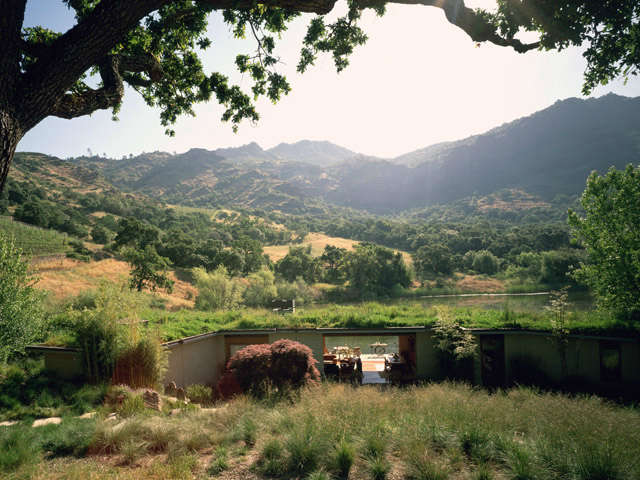
Backen, Gillam & Kroeger Architects is one of those names that does not simply belong in an architecture directory. It belongs in the mood board of modern California living: warm timber, weathered stone, honest concrete, generous glass, sun-washed rooms, and buildings that seem to say, “No worries, I was always meant to be here.” The firm became strongly associated with Napa Valley architecture, modern wine-country homes, winery design, hospitality spaces, and a quietly luxurious style that made rustic materials feel polished without losing their soul.
The story of Backen, Gillam & Kroeger Architects is also the story of Howard J. Backen, an influential American architect whose work helped define the visual language of contemporary Napa Valley. While the firm later evolved into Backen & Backen Architecture, the Backen, Gillam & Kroeger name remains deeply connected to a golden period of residential, winery, resort, restaurant, and retail design. Its projects are admired not because they shout for attention, but because they understand something many buildings forget: the land was there first.
This article explores the firm’s history, design philosophy, notable work, and lasting influence, with practical experience-based insights for homeowners, designers, architecture students, and anyone who has ever looked at a barn, a vineyard, or a stone wall and thought, “Why does this feel better than a marble palace with twelve chandeliers?”
The Origins of Backen, Gillam & Kroeger Architects
Backen, Gillam & Kroeger Architects grew out of the architectural path of Howard Backen, who had already built a serious design reputation before his Napa Valley chapter. Backen co-founded BAR Architects in San Francisco in the late 1960s and worked on important projects across entertainment, hospitality, residential, and cultural spaces. His earlier career included large-scale design experience, but Napa gave him the setting where his architectural voice became unmistakable.
In 1996, Howard Backen established Backen & Gillam with architect James Gillam. As the practice expanded and evolved, the firm became known as Backen, Gillam & Kroeger Architects, with Loren Kroeger also associated with the practice’s leadership and design identity. The firm operated from Northern California, especially with strong ties to Sausalito and St. Helena, two locations that made perfect sense for a studio fluent in both Bay Area sophistication and wine-country ease.
Unlike firms that build a recognizable style through repeated decorative tricks, Backen, Gillam & Kroeger Architects became recognizable through restraint. Their buildings often feel low-key at first glance, then quietly impressive after a second look. The roofline is calm. The stone feels local. The doors open wide. The views are framed but not overproduced. The architecture behaves less like a monument and more like an excellent host.
The Signature Style: Rustic, Modern, and Deeply Site-Specific
The phrase “wine-country style” gets thrown around easily, but Backen, Gillam & Kroeger Architects gave it architectural seriousness. Their work is often described through materials such as reclaimed wood, stone, concrete, metal, brick, plaster, and glass. But the magic is not only in the materials. A pile of reclaimed wood does not automatically become poetry; sometimes it just becomes a very expensive splinter collection.
The firm’s strength was in proportion, placement, and atmosphere. Their buildings often use barn-like forms, long horizontal lines, pitched roofs, broad openings, shaded outdoor rooms, and simple floor plans that connect daily life to the surrounding landscape. Instead of treating windows as holes punched into walls, the firm often uses openings as instruments for capturing light, vineyard rows, hillsides, oak trees, and distant sky.
Designing With What Is Given
A key principle behind Backen, Gillam & Kroeger Architects is contextual design. The site is not merely a plot of land where a building happens to sit; it is the beginning of the design conversation. A vineyard estate, a hilltop home, a seaside retreat, and a resort bathhouse each demand a different response. The best Backen-style building feels inevitable, as if the structure grew from the geography rather than arriving by flatbed truck with an attitude problem.
This approach explains why the firm’s projects often feel luxurious without being flashy. Luxury is expressed through experience: a shaded terrace at the right time of day, a living room that opens to the breeze, a fireplace wall made of tactile stone, or a dining space that turns sunset into part of the meal. In this world, the view is not an accessory. It is a co-designer.
Why Napa Valley Became the Perfect Canvas
Napa Valley is a demanding place to design well. It is beautiful, but that beauty can punish bad architecture. A building that tries too hard can look theatrical. A building that ignores the land can feel rude. Backen, Gillam & Kroeger Architects found a balance between refinement and humility, helping shape a regional architectural language that matched the valley’s agricultural roots and luxury reputation.
The firm’s wine-country work often takes cues from barns, sheds, fermentation buildings, and rural utility structures. But these references are refined through modern planning and high-level detailing. The result is architecture that feels familiar and fresh at the same time. It is not nostalgia wearing boots for a photoshoot; it is contemporary design with agricultural memory.
In Napa and Sonoma, the firm became known for wineries and vintners’ homes, but their influence spread far beyond vineyard gates. Their design ideas helped popularize a broader California lifestyle aesthetic: indoor-outdoor living, natural materials, casual elegance, and rooms that feel polished but still relaxed enough for muddy dogs, dinner guests, and someone inevitably asking where the corkscrew went.
Notable Project Types and Design Contributions
Backen, Gillam & Kroeger Architects built a broad portfolio that included private homes, wineries, resorts, restaurants, retail environments, and cultural spaces. The firm’s range is important because it shows that its philosophy was not limited to one building type. Whether designing a residence or a hospitality space, the work usually returned to the same core questions: What does the site want? How should people move through the space? Where is the light? What materials will age with dignity?
Private Residences
The firm’s residential work helped define the modern farmhouse and wine-country retreat long before those terms became real-estate buzzwords. These houses often feature broad porches, steel-framed windows, reclaimed wood ceilings, stone fireplaces, open kitchens, and indoor-outdoor rooms. The layouts tend to feel generous without becoming cavernous, which is a harder trick than it sounds. Too small feels cramped; too large feels like an airport lounge with better countertops.
Many Backen-influenced homes use a sequence of spaces rather than a single grand gesture. A gravel drive leads to a quiet entry. The entry opens to a framed view. The living space flows to a terrace. The terrace connects to the pool, garden, vineyard, or hillside. The drama comes from movement and discovery rather than decorative excess.
Winery Architecture
Winery design is where the firm’s practicality and romance meet most clearly. A winery must function as a production facility, hospitality destination, brand statement, and often a landscape experience. Backen, Gillam & Kroeger Architects understood that winemaking architecture should support both process and emotion. Fermentation, barrel storage, tasting, circulation, and views all matter.
Promontory Winery in Oakville is a strong example of this philosophy. Designed to integrate with the western hills of Napa Valley, the project uses materials such as reclaimed wood, concrete, plaster, and metal. Its gravity-flow winemaking process also shows the relationship between architecture and production. The building is not just a backdrop for wine tasting; it participates in how the wine is made.
Other winery-related projects associated with the firm and Howard Backen’s broader practice include Harlan Estate, Dana Estates, Ovid Napa Valley, Larkmead, The Napa Valley Reserve, and several other properties that helped establish the visual vocabulary of high-end Napa architecture. These projects show how a winery can be both industrial and intimate, both technical and emotional.
Hospitality, Restaurants, and Retail
The firm’s hospitality and retail work extended the wine-country feeling into public and commercial spaces. Resorts, restaurants, and retail environments benefited from the same attention to atmosphere found in private residences. Instead of separating architecture from lifestyle, the firm often blurred the line. A restaurant could feel like a refined barn. A retail space could feel like a residence. A resort could feel less like a hotel machine and more like a collection of buildings settled into the landscape.
This approach became especially influential as American design culture moved toward experiential spaces. People no longer wanted only a place to shop, dine, or sleep. They wanted spaces with mood, texture, story, and a sense of place. Backen, Gillam & Kroeger Architects understood that before it became a branding seminar with too many slides.
The Role of “From the Land” in the Firm’s Legacy
The 2013 Rizzoli monograph From the Land: Backen, Gillam, & Kroeger Architects helped document and elevate the firm’s architectural identity. The book presents a wide range of work, including Napa Valley farmhouses, hilltop homes, seaside retreats, and other residences where natural materials and landscape relationships are central. Its title is more than poetic packaging; it captures the firm’s core philosophy.
“From the land” suggests architecture that begins with soil, slope, climate, vegetation, history, and local building traditions. It also suggests emotional grounding. These are not buildings obsessed with looking futuristic or fashionable. They are designed to age, weather, and settle. In an era when many luxury homes chase novelty, the firm’s best work makes permanence feel fashionable again.
Howard Backen’s Influence on American Residential Design
Howard Backen’s influence reaches beyond the firm name. His work helped popularize a design language that now appears in high-end residences, boutique hotels, wineries, restaurants, and lifestyle retail across the United States. But it is important to understand the difference between influence and imitation.
The superficial version of the Backen look is easy to copy: add reclaimed beams, black steel windows, pale plaster, a big table, and maybe a few olive trees. The deeper lesson is harder. Backen’s architecture depends on discipline. It asks designers to remove clutter, respect proportion, understand material weight, and let the landscape do some of the talking. That is why the original work still feels richer than many copycat versions.
After Howard Backen’s passing in 2024, the legacy firm Backen & Backen continued under new leadership, with Ann Backen and long-standing partners carrying the design philosophy forward. This continuity matters because architectural legacy is not just about preserving a style. It is about protecting a way of thinking.
Key Lessons From Backen, Gillam & Kroeger Architects
1. Simplicity Is Not the Same as Plainness
The firm’s work proves that simple architecture can be deeply expressive. A clean roofline, a thick wall, or a shaded porch can have more emotional power than a complicated facade. Simplicity becomes memorable when every decision is intentional.
2. Materials Should Feel Honest
Wood should feel like wood. Stone should feel like stone. Concrete should not apologize for being concrete. Backen, Gillam & Kroeger Architects often used materials in ways that celebrated their natural character rather than disguising them under decorative fuss.
3. Indoor-Outdoor Living Requires More Than Big Doors
Large sliding doors are helpful, but they are not magic portals. True indoor-outdoor living depends on orientation, shade, wind, privacy, floor transitions, furniture placement, and how people actually live. The firm’s work often succeeds because the outdoor spaces feel like real rooms, not leftover patios.
4. Architecture Should Age Well
Trendy finishes can look tired quickly. Natural materials, strong proportions, and thoughtful siting tend to age better. Many of the firm’s projects feel timeless because they were not designed to win a five-minute popularity contest.
Experience-Based Reflections: What It Feels Like to Learn From This Architecture
Spending time with the work of Backen, Gillam & Kroeger Architects, even through photographs, plans, articles, and visits to Napa-inspired spaces, changes the way you notice buildings. You begin to see that good architecture is not only about what is built, but what is left alone. A mature oak tree can be more important than a decorative wall. A shadow can be more beautiful than a spotlight. A plain wooden ceiling, if proportioned correctly, can feel warmer than an entire showroom of imported finishes.
One practical experience related to this style is walking through a wine-country home or winery and realizing how quietly the architecture manages movement. You may not immediately notice the planning, but your body does. The entry slows you down. The hallway compresses slightly, then releases into a larger room. A window catches a view at the exact moment you turn. The terrace feels like the natural next step, not an afterthought. This is design working politely in the background, like a great dinner host who keeps refilling glasses without announcing it.
For homeowners, the biggest lesson is that atmosphere comes from decisions, not decoration. A Backen-inspired room does not need twenty accessories. It may need one excellent table, warm light, a strong connection to the outdoors, and materials that feel good to touch. The room should support daily rituals: morning coffee, dinner with friends, reading near a window, muddy shoes after the garden, or a quiet evening when the house finally stops making demands.
For designers and architecture students, the experience is humbling in a useful way. The work reminds you that restraint is not a lack of imagination. In fact, restraint can require more imagination because there is nowhere to hide. If the plan is weak, no amount of reclaimed wood will save it. If the proportions are wrong, the stone fireplace will only become an expensive mistake with excellent texture. The firm’s legacy teaches that every beautiful project begins with listening: to the client, the climate, the topography, the light, and the local building culture.
For travelers visiting Napa Valley, the influence of Backen, Gillam & Kroeger Architects can be felt even when you are not standing inside one of their buildings. The broader region now carries a design expectation shaped by their work: wineries should feel connected to the land, hospitality spaces should be refined but relaxed, and luxury should not need to yell. Once you recognize that language, you see it everywhere: in shaded tasting rooms, gravel courtyards, board-and-batten walls, low stone bases, and terraces positioned for the golden hour.
The most valuable experience connected to this topic is learning to appreciate quiet confidence. Many buildings chase attention like a puppy with a squeaky toy. The best work associated with Backen, Gillam & Kroeger Architects does the opposite. It settles in, opens up, and lets the landscape complete the sentence. That is why the firm’s legacy still matters. It is not only about Napa Valley, wineries, or beautiful houses. It is about an architectural attitude that says the best design does not conquer a place. It belongs to it.
Conclusion
Backen, Gillam & Kroeger Architects helped shape one of the most influential architectural languages in modern American design: warm, rustic, refined, site-specific, and deeply connected to nature. Through private residences, wineries, resorts, restaurants, and retail environments, the firm showed that luxury can be relaxed, modern architecture can have roots, and a building can be sophisticated without acting like it needs applause.
The firm’s legacy continues through the evolution of Backen & Backen and through the many architects, designers, homeowners, and hospitality brands influenced by its work. In a design culture often distracted by novelty, Backen, Gillam & Kroeger Architects offers a lasting reminder: start with the land, respect the materials, frame the light, and let the building breathe.
Note: This article is written for web publication in standard American English, based on real information about Backen, Gillam & Kroeger Architects, Howard Backen, the firm’s design philosophy, and its influence on Napa Valley architecture. No outbound source links or citation placeholders are included in the article body.