Note: This article is written for legal amateur-radio, educational, emergency-preparedness, and interference-troubleshooting contexts. Transmitting on amateur bands requires the proper license, and all direction-finding work should respect privacy, safety, and local radio regulations.
When a Gaming Handheld Becomes a Radio-Hunting Sidekick
The Steam Deck was built to run PC games on the couch, in the airport, and anywhere else a person can pretend that “just one more mission” is a responsible life choice. But underneath the joysticks and glossy game launcher is a surprisingly capable Linux computer. That makes it useful for much more than rescuing princesses, farming digital crops, or losing to teenagers in online shooters. With the right software-defined radio setup, the Steam Deck can help with radio direction findingthe art and science of figuring out where a signal is coming from.
Radio direction finding, often called RDF, transmitter hunting, or “fox hunting” in ham radio circles, is a practical skill wrapped in a treasure hunt. Instead of following a map to buried gold, you follow radio waves to a hidden transmitter. The “fox” may be a small beacon placed for a club event, an interference source causing headaches on a repeater, or a training signal used to practice search-and-rescue techniques. The Steam Deck does not magically point at the signal like a cartoon compass. What it can do is run the software, display bearings, log data, connect to SDR hardware, and turn a portable gaming device into a field-ready RF workstation.
What Direction Finding Actually Means
Direction finding is the process of estimating the bearing, or azimuth, from a receiver toward a transmitter. The old-school way is wonderfully simple: use a directional antenna, rotate it, listen for the strongest signal, draw a line on a map, move somewhere else, repeat, and look for where the lines intersect. It works, but it can be slow, fussy, and occasionally humbling. Radio waves bounce off buildings, hills, vehicles, trees, water, and anything else that feels like joining the party. This reflected energy, called multipath, can make a signal appear to come from the wrong direction.
Modern RDF systems can do better by using antenna arrays and digital signal processing. A coherent SDR such as KrakenSDR uses multiple synchronized receiver channels so software can compare phase differences between antennas. Those tiny timing and phase differences help estimate the direction of arrival. Algorithms such as MUSIC, correlative interferometry, pseudo-Doppler processing, and other techniques can produce a live bearing instead of making the operator play “spin the antenna and hope.”
That does not remove the need for judgment. RDF is part math, part fieldcraft, and part learning not to trust the first beautiful line on the map. A bearing is a clue, not a verdict. The best results usually come from multiple readings taken from different locations, especially when a transmitter is in an urban area, near water, behind terrain, or surrounded by metal objects that treat RF like a pinball machine.
Why the Steam Deck Works So Well for SDR Direction Finding
The Steam Deck is useful because it sits in a sweet spot between laptop and embedded computer. A Raspberry Pi can run many SDR tools, but it often needs an external screen, keyboard, mouse, case, and power planning. A laptop is powerful, but less convenient to hold in one hand while juggling antennas, cables, battery packs, and the sudden realization that you parked on the wrong side of the lake. The Steam Deck already has a screen, controls, touch input, battery, Wi-Fi, Bluetooth, USB-C connectivity, microSD expansion, and a Linux desktop mode.
SteamOS is Arch-based and includes KDE Plasma for desktop use. That matters because many SDR tools are happier in a real Linux environment than in a locked-down mobile operating system. Users can attach USB SDR hardware through a hub, run browser-based dashboards, launch terminal utilities, manage maps, and interact with software like DF Aggregator, GNU Radio, Gqrx, or custom scripts. The Steam Deck is not just a console; it is a small x86 computer wearing gamer pants.
The Hardware Stack: Steam Deck, SDR, Antennas, and Power
Steam Deck as the Field Computer
The Deck’s main job in a direction-finding setup is computation and display. It can show bearings, maps, spectrum views, configuration pages, and logs. The controls can even be remapped for field convenience: one trackpad for cursor movement, triggers for zooming, buttons for switching views, and the touchscreen for quick taps. In direct sunlight, screen visibility and battery life become real concerns, so a shade, power bank, or vehicle power source can be more valuable than the fanciest antenna connector in the box.
KrakenSDR and Coherent Receiving
For serious automatic bearing estimation, a coherent multi-channel receiver is the star. KrakenSDR is a five-channel coherent SDR based on RTL-SDR technology. Its receivers share a clock source and use calibration hardware so software can correct phase relationships between channels. This coherence is what makes phase-based direction finding possible. Five antennas, often arranged in a circular array, receive the same signal from slightly different positions. The software compares those signals and estimates the direction from which the wavefront arrived.
That is the important distinction between “I can receive a signal” and “I can estimate where it came from.” A single RTL-SDR dongle can be fantastic for scanning, decoding, and learning radio. But without a directional antenna or synchronized multi-channel setup, it cannot automatically produce reliable 360-degree bearings by itself. For Steam Deck direction finding, the Deck is the portable brain; the SDR and antenna array are the ears.
Antennas Decide Whether the System Is Brilliant or Confused
In RDF, antennas are not decoration. They are the measurement instrument. A KrakenSDR-style system usually needs five matched antennas arranged in a known geometry. Magnetic whip antennas on a vehicle roof can work well for mobile VHF/UHF direction finding. A fixed dipole or whip array can work for a base station. The spacing, symmetry, cable lengths, mounting surface, and nearby metal all affect results. If the array looks like it was assembled during a windstorm, the bearing display may develop a strong interest in fiction.
Frequency also matters. A setup intended for the 70-centimeter amateur band around 420–450 MHz will use different antenna dimensions than one optimized for VHF. Wideband antennas are convenient, but “convenient” and “accurate” are not always best friends. For better results, match the antenna system to the target band and keep the array geometry consistent.
The Software Stack: DragonOS, KrakenSDR Tools, and DF Aggregator
One of the most interesting Steam Deck RDF demonstrations used DragonOS, KrakenSDR software, and DF Aggregator. DragonOS is a Linux distribution built for software-defined radio work, bundling many SDR tools into a ready-to-use environment. Instead of spending an entire weekend compiling dependencies, the operator can spend more time testing signals and less time having a staring contest with package errors.
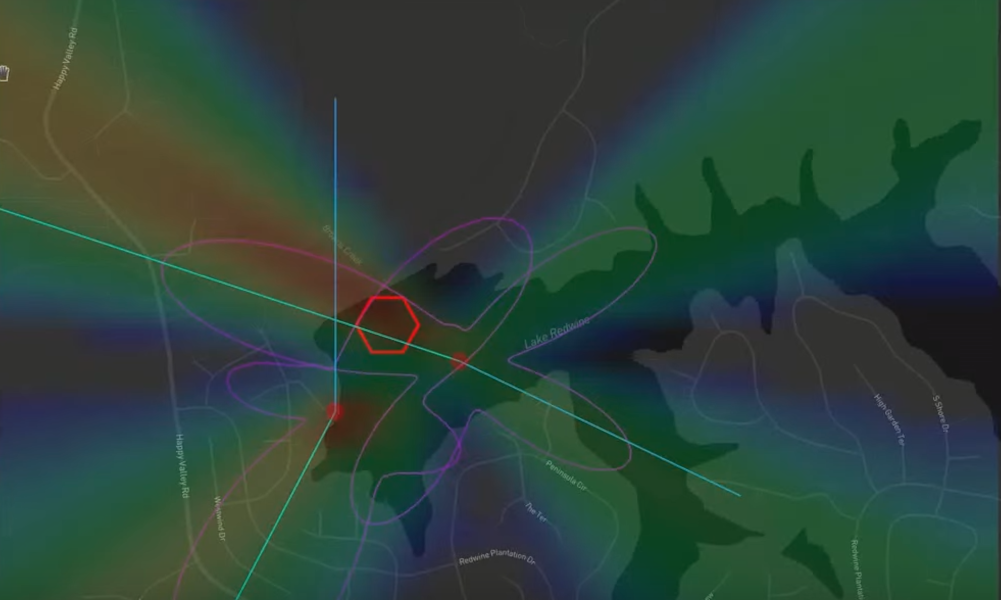
KrakenSDR software handles data acquisition, calibration, DSP, and bearing estimation. DF Aggregator can collect bearing data from one or more RDF stations and plot it on a map. This is where the system becomes genuinely exciting. One receiver station can sit in a fixed location while another moves. When bearings from multiple locations converge, the likely transmitter area becomes clearer. In the well-known lake demonstration, a Steam Deck-based station was placed on shore while another SDR-equipped station operated from a boat. The target transmitter was on the 70-centimeter band, and the combined bearings helped close in on the source.
The lesson is simple: one bearing is useful, two are better, and a stream of bearings from a moving platform can turn a confusing RF puzzle into a readable story. The Steam Deck makes that story easier to watch because it can run dashboards, map interfaces, and configuration screens in a handheld package.
How a Steam Deck Direction-Finding Session Might Work
A typical legal fox-hunt setup begins with a known frequency and a known search area. The hidden transmitter is low power, identifies properly, and is placed where participants can hunt safely. The Steam Deck is connected to the SDR hardware through USB-C, usually with a powered hub if the SDR draws more current than the Deck can comfortably provide. The antenna array is mounted on a vehicle roof, portable mast, tripod, or fixed surface. Software is launched in Desktop Mode or through a dedicated Linux installation, then calibrated before the hunt begins.
Once the target signal is active, the operator watches the bearing output. If the setup is fixed, that bearing becomes one line of evidence. If the setup is mobile, the operator drives, walks, or rides to new positions and logs new bearings. Mapping software can show a fan, line, or heat-like estimate of likely transmitter direction. As the operator moves, good bearings tend to intersect near the transmitter. Bad bearings wander, swing, or point suspiciously at reflective structures. This is normal. The trick is to collect enough data to let the truth outvote the reflections.
For a boat-based hunt, water adds its own personality. Reflections across a lake can be both helpful and annoying. A clean line of sight across open water may produce strong signals, but shoreline structures, docks, vehicles, and terrain can bend the apparent story. The Steam Deck’s portability helps because the operator can keep the map and spectrum close while moving, rather than balancing a laptop somewhere it can become an expensive flotation device.
What the Steam Deck Does Better Than a Laptop
The most obvious advantage is ergonomics. The Steam Deck is built to be held. It has built-in controls, a touchscreen, speakers, and battery power. For field radio work, fewer separate pieces mean fewer things to forget, drop, or connect backward. A laptop is often faster and roomier, but it is awkward when standing outside, moving around a vehicle, or working in tight spaces.
The Deck also encourages experimentation. Because it is already a Linux-capable handheld, users can test SDR dashboards, write Python scripts, run web interfaces, use terminal tools, and store configurations on a microSD card. It can be a field computer one hour and a game console the next. That dual identity is part of the charm. A device that can run an SDR direction-finding dashboard and then reward you with a racing game after the hunt feels like the correct kind of ridiculous.
What the Steam Deck Does Not Magically Fix
The Steam Deck cannot overcome poor RF practice. If the antenna array is badly mounted, the target signal is too weak, the receiver is overloaded, the calibration is wrong, or the environment is full of reflections, the display may look confident while being confidently wrong. This is a classic SDR trap: the graph is beautiful, therefore the conclusion must be true. Not necessarily. Beautiful graphs can lie with excellent typography.
Power is another limitation. Multi-channel SDR hardware, GPS accessories, USB hubs, external network adapters, and bright screens all consume energy. Some devices require external power. A serious field kit should include a reliable USB-C PD power bank, short quality cables, a powered hub, spare adapters, and a way to protect connectors from rain, dust, and accidental knee attacks.
Heat and sunlight are also worth planning around. The Steam Deck is designed for mobile gaming, so it can handle sustained workloads, but SDR processing plus outdoor heat can still make thermal management important. Use shade when possible, keep vents clear, and avoid leaving the unit baking on a dashboard. The RF hunt is supposed to find the transmitter, not slow-cook the computer.
Legal and Ethical Direction Finding
Receiving radio signals is generally much less restricted than transmitting, but that does not mean every use is wise or legal. Amateur radio fox hunts should use authorized frequencies, appropriate power, and proper station identification. In the United States, amateur stations must identify with their assigned call sign at required intervals and at the end of a communication. Anyone placing or operating the transmitter should understand the rules before the event begins.
Direction finding can be used for good reasons: locating interference, training emergency volunteers, finding hidden beacons, supporting technical education, or making club events more exciting. It should not be used to harass people, stalk operators, interfere with public safety systems, or encourage unauthorized transmissions. The best RDF operators are not just clever with antennas; they are disciplined, patient, and respectful of the spectrum.
Practical Tips for Better Steam Deck RDF Results
Start With a Friendly Signal
Practice with a known transmitter before chasing mysteries. A low-power beacon in a park, a club fox hunt, or a controlled test signal will teach more than jumping straight into a noisy urban environment. Known signals help separate software problems from RF problems.
Calibrate Before You Trust the Bearing
Coherent systems depend on calibration. Follow the hardware and software workflow carefully. If the system offers a calibration page, phase display, or quality indicator, use it. Skipping calibration because “it looked fine yesterday” is how yesterday becomes a villain.
Use Multiple Locations
Triangulation is your friend. Bearings from different positions reduce the risk of being fooled by one reflection. Move far enough that the geometry changes meaningfully. Two readings from nearly the same spot are often just one reading wearing a fake mustache.
Watch Signal Strength, Not Just Bearing Lines
A bearing display is only one clue. Signal strength, spectrum shape, timing, terrain, and common sense all matter. If the bearing points across a lake but signal strength rises as you move along the shore, pay attention to both facts.
Build a Field Kit Before the Field Needs It
Pack cables, adapters, a power bank, antenna mounts, tape, small tools, weather protection, and a paper notebook. Yes, a paper notebook. Batteries fail, apps crash, and pencils do not ask for firmware updates.
Specific Example: The Lake Hunt Pattern
The lake-style Steam Deck RDF scenario is a great example because it combines a fixed station, a moving station, and a target transmitter. Imagine one station on shore with a Steam Deck running the SDR stack. It listens on the target frequency and feeds bearings into mapping software. A second station on a boat does the same while moving across the water. As the boat changes position, its bearings sweep from different angles. The fixed station adds another reference line. When several bearings begin to converge near the same shoreline area, the team gains confidence that the fox is nearby.
This workflow shows why direction finding is more than gadget worship. The Steam Deck is helpful, but the real power comes from combining synchronized receivers, good antennas, mapped bearings, movement, and operator interpretation. It is a system, not a single magic box.
Experiences From the Field: What Steam Deck Direction Finding Feels Like
The first experience most people have with Steam Deck direction finding is surprise. The device feels like a toy until the Linux desktop appears, the SDR dashboard loads, and real RF data starts moving across the screen. Suddenly the handheld that usually launches games is showing spectrum activity, bearing plots, and configuration tabs. There is a small moment of delight when the operator realizes, “Oh, this is a field computer.” Then the cables begin multiplying like electronic spaghetti, and humility returns.
In practice, the Steam Deck makes RDF feel more immediate. A traditional laptop setup often creates a small command center: table, screen, keyboard, mouse, power brick, and a cautious relationship with gravity. The Deck changes the posture. You can stand beside a vehicle, glance at the map, adjust a setting with the touchscreen, and keep moving. That matters during a fox hunt because momentum is part of the fun. You are not just analyzing; you are chasing.
There is also a learning curve that no article can fully remove. The first few bearings may jump around. The map may look like an overcaffeinated spider drew lines on it. The antenna array may need a better ground plane. A USB hub may behave until the exact moment other people are watching. This is normal field-radio comedy. The successful operator learns to slow down, check calibration, confirm the target frequency, look at the spectrum, and ask whether the result makes sense geographically.
One of the best field lessons is that “closer” does not always mean “clearer.” As you approach a transmitter, the signal can become strong enough to overload the receiver or swamp subtle bearing differences. In old-school fox hunting, operators use attenuation to reduce signal strength near the target. With SDR-based setups, gain control becomes just as important. Too much gain can make the display dramatic but less useful. The goal is not the biggest signal; the goal is a signal the system can measure cleanly.
The Steam Deck also encourages teamwork. One person can watch the Deck, another can navigate, and another can sanity-check the bearings against terrain. In a club event, this makes RDF more accessible to newcomers. People who might be intimidated by a rack of radio gear understand a handheld screen and a moving map. The Deck lowers the social barrier without watering down the technical depth. That is a rare combination.
Finally, there is the satisfaction factor. Direction finding turns invisible energy into a physical chase. You move, the bearing changes. You cross an intersection, the signal strengthens. You stop near a park shelter, and suddenly three lines agree. The hidden transmitter is no longer an abstract point; it is somewhere nearby, possibly under a bench, behind a sign, or in the backpack of a grinning ham operator pretending to be innocent. When the Steam Deck helps reveal that path, it feels less like using a gadget and more like gaining a new sense.
Conclusion: The Steam Deck Is a Surprisingly Serious RDF Platform
Direction-finding with help from the Steam Deck is a perfect example of modern hobby technology getting delightfully weird. A gaming handheld becomes a Linux field computer. A software-defined radio becomes a multi-channel signal analyzer. A hidden transmitter turns into a chase across roads, parks, shorelines, or open water. The result is part engineering lab, part outdoor game, and part reminder that radio is still wonderfully physical.
The Steam Deck is not the only platform for SDR direction finding, and it is not always the most rugged or power-efficient choice. A Raspberry Pi, dedicated laptop, Android tablet, or purpose-built receiver may fit some jobs better. But the Deck offers a compelling mix of portability, processing power, built-in controls, and Linux flexibility. For amateur radio operators, SDR experimenters, educators, and technically curious explorers, it is a surprisingly capable companion.
The best way to think about it is this: the Steam Deck does not replace radio knowledge. It rewards it. Pair it with good antennas, proper SDR hardware, careful calibration, legal operating habits, and patient field technique, and it can help turn radio direction finding into a faster, clearer, and more entertaining adventure. Not bad for a device that was originally supposed to help you clear your Steam backlogwhich, let’s be honest, remains impossible.