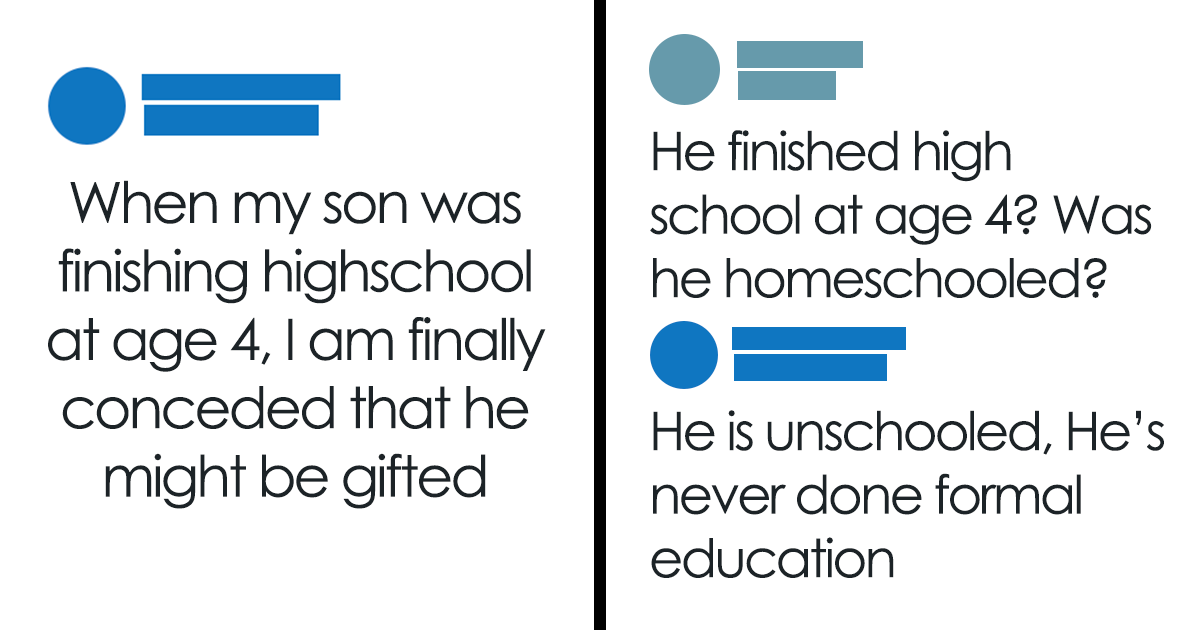
There are few things more powerful than parental pride. It can move mountains, fill camera rolls, and somehow turn an average Tuesday into a full-blown TED Talk about a 4-year-old who “basically taught himself astrophysics.” And that, dear reader, is where the comedy begins.
The internet has been dining out for years on screenshots, family anecdotes, and social media posts from parents who swear their child is not just bright, but suspiciously one step away from running NASA, rewriting the Constitution, and gently correcting the pediatrician’s grammar. The result is a glorious genre of secondhand embarrassment: adults overselling their kids so hard that reality eventually strolls in wearing juice-stained pajamas.
But beneath the laughs, this topic taps into something real. Parenting culture in America is steeped in comparison, achievement anxiety, and the endless pressure to prove your child is thriving. Experts have warned for years that when adults fixate on “smart” as an identity, they can accidentally heap pressure onto kids, confuse giftedness with performance, and turn childhood into a personal branding exercise with snack breaks.
So, in the spirit of humor with a side of truth, here are 30 original, painfully familiar, composite-style examples inspired by the kinds of viral “genius kid” stories that keep making the rounds online.
30 Times Parents Embarrassed Themselves By Lying About Their “Genius” Kids
-
The Shakespeare toddler. A parent claims their 2-year-old “asked for Hamlet before bed.” In reality, the child wanted the purple book with the dog on it and then licked the cover.
-
The tiny theologian. Mom announces her preschooler stunned church by quoting Scripture from memory. A nearby aunt recognizes the line immediately. It is, in fact, from Power Rangers.
-
The womb scholar. Dad insists the baby was “responding to classical music in utero with discernment.” Sir, the baby was kicking. That is not a dissertation defense.
-
The miniature economist. A family Facebook post says a first grader “asked about inflation at breakfast.” More likely, he asked why cereal costs more and then spilled it on the dog.
-
The early reader miracle. Grandma swears the child was reading full sentences at 18 months. What the child actually did was identify the Target logo with sniper-level accuracy.
-
The gourmet philosopher. A proud parent claims their kindergartner said, “I prefer kale because I value longevity.” The child took one bite, cried dramatically, and demanded dinosaur nuggets.
-
The coding prodigy. Dad calls his 6-year-old a programmer because she dragged cartoon blocks around in a beginner app. That is adorable. It is not yet Silicon Valley.
-
The baby linguist. A parent says their toddler is “picking up Mandarin naturally.” Translation: the child can say one word, mispronounces it, and mostly screams in fluent cracker-related rage.
-
The kitchen inventor. Mom posts that her son “developed a chemistry experiment” in the pantry. He mixed ketchup and shampoo in a bowl and called it lava soup.
-
The advanced moral thinker. A parent reports their 5-year-old asked, “Why do humans resist collective empathy?” Odds are decent the child actually said, “Why was that guy mean?”
-
The miniature professor. Dad tells everyone his daughter “corrected her teacher’s science lesson.” She did not. She loudly said, “Actually, whales are huge,” and then sneezed into her sleeve.
-
The strategic genius. A parent brags that their child “understands negotiation better than most adults.” The kid cried until bedtime got moved by seven minutes. That is not Wall Street. That is persistence.
-
The holiday-card overreach. “This year, Brayden showed early leadership, emotional intelligence, and entrepreneurial promise.” He ran a lemonade stand for 14 minutes and ate the profits in gummies.
-
The museum snob. Mom says her 8-year-old “prefers documentaries to cartoons.” Fascinating, except he watched the museum gift shop train set for forty minutes and called it history.
-
The poetic genius. A proud parent shares a “poem” supposedly written by their second grader. It contains suspiciously polished metaphors and exactly the voice of a 38-year-old English major.
-
The pediatrician impressor. Dad claims the doctor was stunned by how “advanced” his child sounded. Doctors are often polite, and children often say surprising things. These are not the same phenomenon.
-
The startup founder. A child once taped three rocks together and called it a phone stand. By dinner, the parent was describing him as “a born product designer.”
-
The accidental humblebrag. “Ugh, my daughter is so weird, she only wants atlases and microscopes.” Congratulations on inventing the least convincing complaint in modern parenting.
-
The elite test-prep legend. Mom jokes that her 7-year-old “asked for SAT practice just for fun.” That joke mysteriously gets less funny every time she repeats it.
-
The precocious debater. A parent insists their child “wins every argument with logic.” No, your child keeps asking “but why?” until you surrender like a hostage negotiator.
-
The tiny therapist. Dad claims his son gave him life advice that “changed everything.” The advice was probably “just calm down” from a kid wearing one shoe and a superhero cape.
-
The art-world breakthrough. A finger-paint blob gets introduced as “surprisingly expressionist.” It is a beautiful mess, which also describes most of parenting.
-
The sports savant. A parent says their child has “high-level field awareness.” The child mostly chased butterflies in left field and hit one accidental double.
-
The mini historian. “He’s obsessed with the Roman Empire,” the parent says proudly. The child likes helmets, ruins, and yelling the word “empire” with dramatic hand gestures.
-
The charity saint. A routine school fundraiser becomes evidence that little Madison has “a deeply developed civic conscience.” Madison wanted pizza and a sticker.
-
The math myth. Dad says his daughter is “basically doing calculus already.” After further review, she is counting on fingers and strongly disapproves of fractions.
-
The brunch performance review. One parent turns a casual meal into an annual report on their child’s milestones, vocabulary, and “executive functioning.” Everyone else quietly attacks the waffles.
-
The selective genius story. A parent celebrates every advanced comment but edits out the equally real moment when the same child wore underwear on his head and barked at the Roomba.
-
The humble social media essay. A post begins, “I never share this stuff, but…” and then launches into a six-paragraph tribute to the child’s unmatched brilliance, moral depth, and suspiciously good penmanship.
-
The final self-own. The parent spends years selling the child as a prodigy, only for the grown kid to say, at a family gathering, “I was just a normal kid, and honestly, that would’ve been fine.” Oof. Curtains.
Why These Stories Hit So Hard
They’re funny because they’re familiar. Most people know at least one parent who can turn “my kid tied his shoes” into a heroic origin story. But these moments are also relatable because they reveal a very modern fear: if your child is not extraordinary, will the world overlook them? In a culture obsessed with rankings, enrichment, performance, and polished family optics, it can start to feel like ordinary childhood needs a publicist.
That pressure doesn’t come out of nowhere. Parents are bombarded with milestone charts, school stress, social media comparison, and the quiet suggestion that a “good” parent should always be optimizing something. The result is a temptation to confuse love with promotion. Sometimes bragging is really just anxiety wearing a nicer outfit.
There is also a sneaky ego component. When adults boast about their children, they’re often doing something more complicated than sharing joy. They may be announcing their own success, taste, sacrifice, or parenting skill by proxy. In other words, “Look what my child did” can quietly become “Look what I produced.” That is where pride can slide into performance, and performance can slide into embarrassment.
What Real Giftedness Actually Looks Like
Here’s the part that gets lost in all the noise: giftedness is real, but it is not the same thing as sounding like a tiny professor at Thanksgiving. Truly advanced kids are not always the ones with the flashiest stories. They may be deeply curious, unusually intense, fast learners, or kids who need more challenge in specific areas. They may also be uneven, sensitive, perfectionistic, quirky, distractible, or struggling in ways adults don’t expect.
That last point matters. A child can be bright and still have ADHD. A child can be talented and still hate school. A child can have advanced vocabulary and still melt down because their sandwich was cut into triangles instead of rectangles. Kids are not résumés with shoelaces. They are developing humans, and development is gloriously messy.
So when parents sell a fantasy version of brilliance, they often miss the richer, truer story: the actual child standing in front of them.
How Parents Can Be Proud Without Becoming That Person
Talk about effort, not identity
“You worked really hard on that” lands better than “You’re the smartest kid ever born.” One builds resilience. The other builds panic the first time life gets hard.
Leave room for normal kid behavior
A child can be clever and still say ridiculous things, forget homework, cry over socks, and think a cardboard box is better than the expensive toy inside it. That’s not evidence the genius is fading. That’s childhood.
Don’t turn social media into a press office
Every cute moment does not need to become a public statement about your child’s exceptional destiny. Sometimes the kindest thing you can do is let a moment stay small and private.
Value character as much as achievement
Kindness, humor, honesty, curiosity, patience, and grit may not sound as flashy as “reads three grades ahead,” but they travel farther in real life.
Remember the audience
Bragging about your child can unintentionally sting other parents, especially those whose kids are struggling socially, academically, physically, or emotionally. Pride is lovely. A one-family parade is less so.
Experiences That Make This Topic So Relatable
Part of what makes the whole “genius kid” phenomenon so entertaining is that it rarely shows up in dramatic, movie-worthy fashion. Usually, it appears in painfully ordinary places: the school pickup line, the family group chat, the sidelines of a soccer game, the neighborhood barbecue, or that one holiday gathering where someone starts comparing milestones like they’re reading Olympic scores off a clipboard.
You can almost set your watch by it. One parent casually mentions that their child likes drawing, and another immediately counters with, “That’s adorable. Ava doesn’t really draw anymore. She’s moved into architectural concepts.” Suddenly everyone is trapped in a conversational escape room built out of humblebrags. Nobody asked for this, yet here we are, pretending it is completely normal for a 6-year-old to have a “design philosophy.”
Then there’s social media, the natural habitat of the inflated anecdote. A child says something mildly funny, and within fifteen minutes it has been translated into a polished monologue that makes the kid sound like a miniature philosopher-king. The original quote was probably something like, “Why moon follow car?” The uploaded version becomes, “Tonight my son reminded me that we are never alone under the universe.” Same child. Wildly different marketing team.
Many adults also recognize the flip side because they lived it. Some people grow up being treated as the smart kid, the gifted one, the family prodigy, the child who was always supposed to impress everyone all the time. From the outside, that sounds flattering. From the inside, it can feel like being drafted into a role before you even know who you are. Every mistake feels public. Every average moment feels illegal. Every struggle feels like bad branding.
That is why so many people laugh at these stories with a wince. They’re not just laughing at over-the-top parents. They’re laughing at a culture that can make childhood feel like a performance review. And they’re laughing at the gap between what adults say and what kids actually are: weird, funny, creative, inconsistent, surprisingly wise one second, absolutely feral the next.
Honestly, that gap is where the beauty is. A child does not need to be a prodigy to be delightful. They do not need to impress dinner guests, dominate the group chat, or appear destined for greatness by age 4. Sometimes the best thing about kids is not that they are tiny geniuses. It is that they are unmistakably, unapologetically kids.
Conclusion
The funniest part of parents lying about their “genius” kids is not just the exaggeration. It is the desperate seriousness of it all. Adults puff up ordinary moments, trying to prove something to relatives, strangers, classmates’ parents, or maybe even themselves. But the truth is a lot simpler and a lot better: children do not need inflated legends to be worth admiring.
A kid who is kind, curious, resilient, funny, thoughtful, or gloriously odd is already bringing plenty to the table. No fake Shakespeare quotes required. The most impressive children are not the ones with the best publicity. They are the ones given room to grow into themselves without carrying a family PR campaign on their backs.