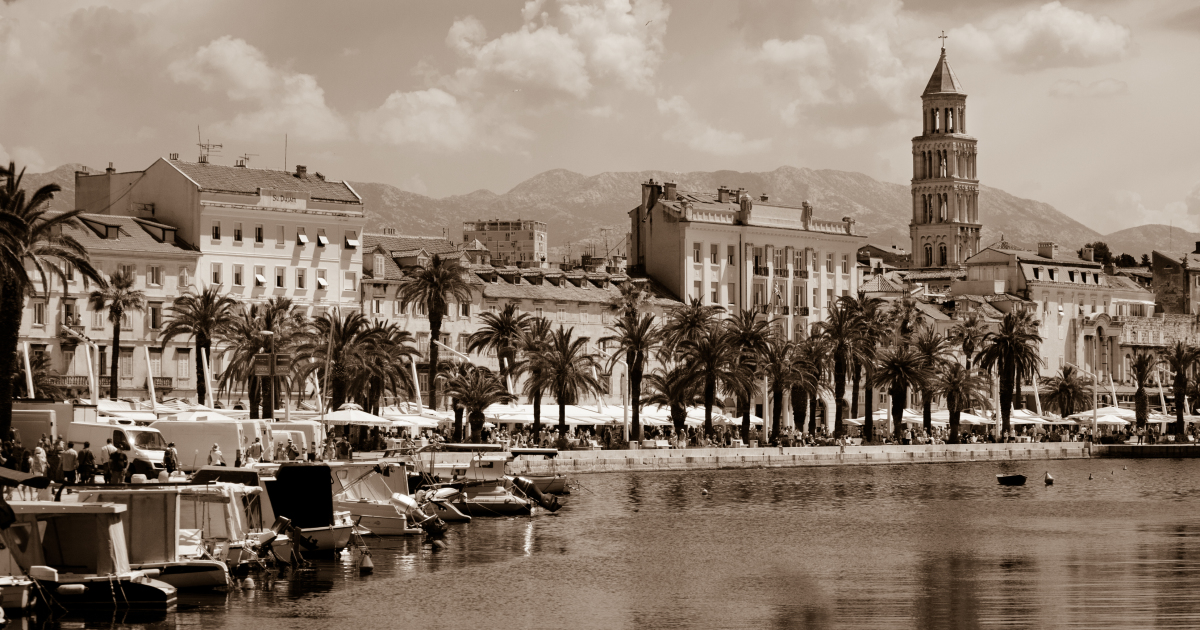
Split in Croatia is not the kind of city that politely waits for you to notice it. It flashes marble under your feet, throws Roman columns into your morning coffee routine, sends sea wind through laundry lines, and then casually says, “Oh yes, this old thing? It’s a 1,700-year-old palace.” Through my lens, Split is not simply a destination on the Dalmatian Coast. It is a living collage of empire, saltwater, stone alleys, market noise, beach towels, ferry horns, espresso cups, and sunsets that behave like they have a publicist.
Many travelers treat Split as a gateway to Croatian islands such as Brač, Hvar, Šolta, and Vis. That is understandable. The ferry port is busy, the Adriatic is ridiculously blue, and island hopping from Split feels dangerously easy. But to rush through the city is to miss the best part. Split is not a waiting room for paradise. It is paradise wearing sneakers, Roman ruins, and a slightly mischievous smile.
This travel story explores Split through a photographer’s eye: the historic core, Diocletian’s Palace, the Riva promenade, Marjan Hill, local beaches, food scenes, day trips, and the small details that make the city unforgettable. Whether you are planning your first Croatia itinerary or searching for visual inspiration, Split rewards anyone willing to slow down, look twice, and keep the camera ready.
First Impressions: A City Built for Wandering
The first thing I noticed about Split was the texture. Some cities introduce themselves with skylines. Split introduces itself with stone. The Old Town is paved in pale limestone polished by centuries of footsteps. In the morning, it glows softly. At noon, it reflects the sun with the confidence of a mirror. At night, it turns cinematic, as if the entire city has switched to golden-hour mode and refuses to leave.
Split is Croatia’s second-largest city, but its historic center feels intimate. You can move from a Roman courtyard to a seafood restaurant, from a medieval chapel to a souvenir shop, from a narrow alley into a square where someone is playing guitar, all in a few minutes. The best way to explore is not to over-plan. Put away the checklist for a while. Follow the sound of bells, the smell of grilled fish, or the suspiciously confident cat that clearly knows more about the city than you do.
For travel photography, this is a dream. Split offers layers: ancient walls, modern life, blue sea, green hills, red roofs, white stone, and people who seem to have mastered the art of lingering. The city does not need filters. It already comes with contrast, color, and character.
Diocletian’s Palace: The Heartbeat of Split
No visit to Split makes sense without Diocletian’s Palace. Built for Roman Emperor Diocletian around the turn of the 4th century, the palace is not a museum in the traditional “please do not touch anything or breathe too loudly” sense. It is a living neighborhood. People live inside it. Restaurants operate inside it. Shops, apartments, courtyards, churches, and laundry lines all share space with Roman walls.
That is what makes the palace extraordinary. It is not frozen history. It is history with Wi-Fi, gelato, and someone arguing cheerfully over coffee. The UNESCO-listed historic complex includes Roman ruins, medieval additions, Gothic and Renaissance architecture, and narrow passages that seem designed to make photographers whisper, “Just one more shot,” approximately 400 times.
The Peristyle: Split’s Open-Air Stage
The Peristyle is one of the most striking spaces inside Diocletian’s Palace. Framed by columns and ancient stone, it feels like a stage where every hour brings a new performance. Tour groups gather, musicians play, travelers sit on the steps, and sunlight shifts across the architecture like a slow spotlight.
Photograph it early in the morning if you want quiet lines and soft shadows. Return at night if you want mood, music, and warm lighting. The same square tells two different stories depending on the hour. Morning says “history.” Evening says “history, but make it jazz.”
The Cellars: Cool, Shadowy, and Dramatic
The palace cellars are another essential stop. Their arches, stone corridors, and underground atmosphere create a dramatic visual contrast with the bright waterfront outside. For photographers, the cellars are excellent for experimenting with symmetry, shadows, and depth. For overheated summer travelers, they also provide a practical bonus: blessed cool air. Rome may have given Split imperial architecture, but the cellars give modern visitors a place to stop melting.
Cathedral of Saint Domnius and the Bell Tower
The Cathedral of Saint Domnius sits inside what was once Diocletian’s mausoleum, which is the kind of historical plot twist Split handles casually. The bell tower offers one of the city’s classic views: rooftops, palace walls, the harbor, and the Adriatic stretching toward the islands. The climb is not for anyone who dislikes narrow steps, heights, or discovering new muscles in their calves. Still, the reward is worth it. From above, Split looks like a city assembled from sunlight, terracotta, and sea breeze.
The Riva: Where Split Goes to Exhale
The Riva promenade is Split’s waterfront living room. Palm trees line the harbor, cafés spill onto the walkway, and the Adriatic glitters with the kind of sparkle that makes every photo look slightly more expensive. Locals stroll, travelers take pictures, children chase pigeons, and everyone seems to agree that sitting with a coffee for a long time is not laziness but culture.
Through my lens, the Riva is best captured in motion. Ferries drift in the background. Waiters weave between tables. Sunglasses appear on every third face. In the late afternoon, the light softens, the sea deepens in color, and the promenade becomes a theater of silhouettes. If Diocletian’s Palace is the city’s heartbeat, the Riva is its long, satisfied sigh.
For a strong photo, stand near the water and frame the promenade with palm trees on one side and the palace walls behind. Better yet, wait for a ferry horn, a cyclist, or a couple sharing ice cream. Split’s beauty is architectural, yes, but its real charm appears when people move through the scene.
Marjan Hill: The Best View of Split
Marjan Hill is where Split changes pace. Just west of the Old Town, this green peninsula rises above the city with pine forests, walking paths, viewpoints, chapels, and rocky swimming spots. It is often called the lungs of Split, and after a few hours in crowded lanes, you understand why. The air feels fresher. The noise drops. The city opens beneath you like a map someone painted by hand.
The most famous viewpoint near the Vidilica area gives a sweeping look over the Old Town, harbor, mountains, and islands. It is a classic sunrise or sunset location. Sunrise gives you quiet, cool air, and gentle light over the rooftops. Sunset gives you drama, glowing water, and a strong chance of taking 80 nearly identical photos because each one seems “a little better.”
Marjan is also ideal for slower travel. Walk the trails, stop near small churches, look for angles between pine branches, and listen to the cicadas in summer. If the palace shows Split’s ancient power, Marjan shows its softer side: nature close enough to reach on foot, but peaceful enough to feel like an escape.
Beaches in Split: From Bačvice to Kašjuni
Split is not only a city of ruins and promenades. It is also a beach town, though the beaches vary in personality. Bačvice Beach is the most famous and one of the easiest to reach from the center. It has shallow water, a lively atmosphere, and a sandy surface, which is less common along this part of the Croatian coast. It is also the spiritual headquarters of picigin, a traditional ball game played in shallow water with impressive dedication and very little concern for looking dignified.
Bačvice is fun, social, and photogenic, especially when locals are playing picigin at sunset. It can also be crowded in peak summer, so arrive early if you want space. Nearby Firule Beach is smaller and often more relaxed, popular with families and swimmers who prefer shallow water.
For a more scenic frame, head toward Kašjuni Beach near Marjan Hill. With pebbles, clear water, surrounding greenery, and a more tucked-away feeling, Kašjuni is excellent for beach photography. The water shifts from turquoise to deep blue, and the rocky edges add natural composition. Bring water shoes unless you enjoy walking on pebbles like a confused flamingo.
Food, Markets, and Dalmatian Flavor
Split tastes like the sea, olive oil, herbs, grilled fish, black risotto, fresh bread, and coffee that somehow lasts for two hours. Dalmatian cuisine is simple in the best way: good ingredients, honest flavors, and enough seafood to make you consider apologizing to every fish you have ever met.
The Green Market, often called Pazar, is a colorful place to photograph and snack your way through local life. You will see fruit, vegetables, lavender, figs, olive oil, and vendors who can communicate price, quality, and personality with one eyebrow. The fish market is another sensory experience, though it is best visited early. Fish markets do not wait for sleepy travelers. By late morning, the best catches have already gone off to become lunch.
For meals, look for traditional konobas, or taverns, serving grilled fish, octopus salad, pašticada, seafood pasta, and local wine. The most memorable meals in Split are often not the fanciest ones. They happen at small tables tucked into stone lanes, where the waiter recommends whatever is fresh, the wine arrives cold, and the bill reminds you that happiness can, occasionally, be itemized.
Split as a Base for Day Trips
One reason Split works so well for travelers is its location. It sits at the center of many excellent day trips. Trogir, another UNESCO-listed gem, is close enough for a half-day visit and offers medieval streets, waterfront views, and beautiful stone architecture. Klis Fortress rises above Split and delivers sweeping views over the city and coastline. It is also famous among fans of television fantasy worlds, but even without that connection, the fortress is dramatic enough to deserve the trip.
For nature, Krka National Park is a popular excursion with waterfalls, walking paths, and river scenery. Island trips are another major draw. Brač offers beaches and stone villages, Hvar brings glamour and lavender-scented landscapes, Šolta feels quieter and more local, and Vis has an off-the-edge-of-the-map romance. From a photography perspective, each island changes the palette. Split gives you white stone and red roofs. The islands give you vineyards, coves, boats, cliffs, and sunsets that look personally edited by the universe.
Photographing Split: Practical Tips
To capture Split well, think in layers. Shoot wide scenes of the palace walls and Riva, then move closer for details: door knockers, carved stone, café cups, market hands, laundry, cats, shutters, reflections, and worn steps. Split rewards attention to small things. A single sunlit alley can tell as much of the story as a famous landmark.
Best Times for Photos
Early morning is perfect for quiet palace streets, empty squares, and gentle light. Late afternoon and golden hour are best for the Riva, Marjan viewpoints, and beach scenes. Midday can be harsh in summer, but it works inside narrow alleys where shadows create contrast. Night photography is also excellent around the Peristyle, palace gates, and waterfront cafés.
What to Bring
Comfortable shoes are essential because Split’s stone streets are beautiful but unforgiving. Bring a wide-angle lens for architecture, a standard lens for street scenes, and a small zoom if you want details from viewpoints. A phone camera also works wonderfully here because the city is naturally photogenic. Split is proof that great light can make even a casual snapshot look like you planned it with a committee.
Why Split Feels Different
What separates Split from many historic destinations is that it never feels like a preserved shell. It is ancient, but not fragile. Beautiful, but not polished into boredom. Touristy, yes, especially in summer, but still deeply local in its rhythms. People buy groceries beneath Roman walls. Teenagers meet in palace squares. Elderly residents sit in doorways. Boats leave for islands. Church bells ring. Coffee takes as long as it wants.
Through my lens, Split is a city of contrasts: Roman and modern, crowded and quiet, grand and ordinary, sunlit and shadowed. It has postcard views, but its best moments are not always postcard-shaped. Sometimes they are a waiter laughing with regulars. Sometimes they are wet footprints on stone after a swim. Sometimes they are the sudden view of blue sea at the end of a narrow lane.
Extended Experience: Split In Croatia Through My Lens
The longer I spent in Split, the more I realized that the city is not meant to be consumed quickly. It is meant to be revisited at different hours, like a favorite song that changes depending on your mood. My first walk through the palace was full of obvious photos: columns, arches, gates, towers. They were beautiful, of course. Split does not really do ugly from the waist up. But the photos I loved most came later, when I stopped chasing landmarks and started watching the city breathe.
One morning, I entered the Old Town before the tour groups arrived. The stones were still cool, shutters were opening, and a delivery cart rattled through an alley barely wider than ambition. A café owner arranged chairs with the seriousness of a stage director. Nearby, a cat sat on a windowsill like it owned a minority stake in the Roman Empire. That was the moment Split became more than a destination. It became a character.
At the market, the colors were louder than any guidebook description could manage. Tomatoes glowed red, figs sat in soft purple piles, lavender bundles added a postcard scent, and vendors called out with the practical poetry of people who know exactly what they are selling. I took photos of fruit, hands, baskets, and old scales, but I also tried to capture the rhythm: the exchange of coins, the nods, the jokes, the tiny negotiations that make a market feel alive.
Later, on the Riva, I learned that Split has a special relationship with time. In some cities, people drink coffee as fuel. In Split, coffee is an event, a pause, a philosophy, and possibly a mild competitive sport. People sit facing the sea as if they have signed a contract with leisure. Watching them, I understood that “doing nothing” here is not empty. It is observation. It is belonging. It is letting the city enter your memory without forcing it to pose.
My favorite sunset came from Marjan Hill. The climb was warm, and I briefly questioned my life choices, as one does when walking uphill with camera gear. Then the viewpoint opened. The palace roofs turned copper, ferries moved across the harbor, and the mountains behind the city faded into blue-gray layers. From above, Split looked both ancient and temporary, like something built by emperors but borrowed by the evening.
On another day, I walked to Kašjuni Beach. The water was so clear it made every pebble look important. People floated quietly, boats rocked offshore, and Marjan’s green slopes framed the scene. I took wide shots first, then close-ups: water around ankles, towels on stones, sunglasses reflecting the sea. The beach reminded me that Split is not just a place to look at. It is a place to feel: heat on shoulders, salt on skin, stone underfoot, wind in your shirt.
By the end, my lens had collected the famous sights, but my memory held the smaller ones. Split gave me palace walls and Adriatic views, yes, but also laundry, cats, coffee cups, market voices, ferry horns, and the glow of stone after sunset. That is the real beauty of Split in Croatia. It looks magnificent in photographs, but it feels even better between them.
Conclusion
Split in Croatia is more than a stop on the Dalmatian Coast. It is a city where history is not hidden behind glass, where Roman walls hold modern life, where the sea is always nearby, and where every corner seems ready for a photograph. Diocletian’s Palace gives Split its ancient soul. The Riva gives it rhythm. Marjan Hill gives it perspective. The beaches give it ease. The markets, cafés, and side streets give it personality.
Through my lens, Split is not perfect in a sterile way. It is better than that. It is textured, lively, sun-worn, salty, funny, crowded, peaceful, and deeply human. Come for the palace, stay for the light, and leave with enough photos to make your storage warning panic. That, too, is part of the Split experience.