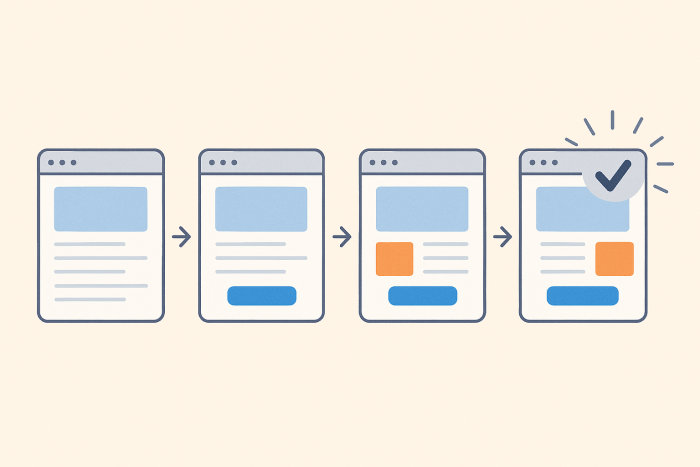
Conversion rate optimization sounds fancy enough to wear a blazer, carry a clipboard, and say things like “synergy” near a whiteboard. But at its core, CRO testing is simple: find where people get stuck, make a thoughtful improvement, test it properly, and learn from the result. No magic. No “change your button color and retire by Friday.” Just disciplined curiosity.
The real goal is not to run more A/B tests. The goal is to run better teststests tied to user behavior, business value, and clear hypotheses. A CRO testing win is not always a dramatic 40% lift. Sometimes it is a small increase in form completions, a lower cart abandonment rate, a cleaner checkout flow, or one less confused customer emailing support with the digital equivalent of “Where am I?”
This guide explains a basic, no-hype strategy for finding CRO testing wins. It is built for marketers, founders, ecommerce teams, SaaS teams, and anyone who has ever stared at a dashboard and whispered, “Okay, but what do we test next?”
What Counts as a CRO Testing Win?
A CRO testing win is an experiment result that improves a meaningful business outcome without damaging another important metric. That second part matters. If a test increases free trial signups but attracts low-quality users who cancel immediately, congratulationsyou have optimized your way into a tiny parade of bad leads.
Good CRO wins usually affect one of these areas:
- More qualified leads
- Higher purchase completion
- Better product page engagement
- Lower checkout or form abandonment
- More demo requests, bookings, or account creations
- Higher average order value without hurting conversion rate
- Improved user experience that supports long-term revenue
Notice that “made the CEO like the homepage more” is not on the list. CRO is not interior decorating for websites. It is a structured way to reduce friction and help real users complete valuable actions.
Start With Measurement Before Ideas
The fastest way to waste a CRO budget is to brainstorm test ideas before confirming that your tracking works. If your analytics setup is messy, every test becomes a guessing contest wearing a lab coat.
Before choosing experiments, define your primary conversion actions. For ecommerce, that might include product page views, add-to-cart events, checkout starts, purchases, and revenue. For B2B, it may include demo requests, pricing page visits, form submissions, webinar signups, and qualified lead creation. In Google Analytics 4, important actions are typically tracked as key events. Your analytics platform should show not only whether users convert, but where they drop off.
Build a Simple Conversion Funnel
Create a basic funnel from first meaningful visit to final conversion. For example:
- Landing page visit
- Product or service page view
- Pricing or cart visit
- Form start or checkout start
- Completed lead or purchase
Now look for leaks. If many visitors reach the pricing page but few request a demo, the pricing page deserves attention. If people add items to cart but vanish during checkout, the checkout flow is waving a little red flag. If nobody clicks the main call-to-action, either the offer is unclear, the page is weak, or the button is hiding like it owes someone money.
Use Three Kinds of Research to Find Better Test Ideas
Great CRO programs do not rely on one source of truth. They combine quantitative data, qualitative feedback, and UX observation. Each tells a different part of the story.
1. Quantitative Data: What Is Happening?
Quantitative data shows patterns at scale. Use analytics reports to find pages with high traffic, high exit rates, low conversion rates, or unusual device differences. Segment by traffic source, device, geography, campaign, and new versus returning users. A landing page that works beautifully on desktop may behave like a shopping cart with square wheels on mobile.
Useful CRO questions include:
- Which high-traffic pages underperform?
- Where do users abandon forms or checkout?
- Which device type has the biggest conversion gap?
- Which traffic sources bring visitors who do not convert?
- Which pages influence conversion even if they are not final-step pages?
2. Qualitative Feedback: Why Might It Be Happening?
Analytics tells you where the smoke is. User feedback helps you find the toaster. On-page surveys, customer interviews, sales call notes, support tickets, chat logs, and cancellation reasons can reveal objections that dashboards cannot.
For example, if users repeatedly ask whether shipping is free, that is not just a support question. It may be a test idea: clarify shipping earlier in the product or cart experience. If prospects say pricing is confusing, test a simpler pricing layout, better plan comparison, or a short FAQ under the pricing table.
3. Behavior Tools: How Are People Actually Using the Page?
Heatmaps, scroll maps, and session recordings help you see user behavior in context. They can show whether visitors ignore important content, rage-click non-clickable elements, miss the form, stop scrolling before key information, or get tangled in navigation.
These tools are especially useful when analytics says a page is underperforming but does not explain why. A session recording may reveal that mobile users cannot see the CTA without scrolling through a heroic wall of brand poetry. Beautiful? Maybe. Helpful? Not if it hides the next step behind three screens of “reimagining possibilities.”
Prioritize Pages Before Prioritizing Test Ideas
Not every page deserves immediate testing. Start where the opportunity is largest. The best pages for CRO testing usually have enough traffic, a clear business role, and visible friction.
Use this simple page prioritization checklist:
- Traffic: Does the page get enough visitors to support a test?
- Business impact: Is the page close to revenue, leads, or activation?
- Friction: Is there evidence users are confused, hesitant, or dropping off?
- Ease: Can the team realistically change and test it?
A high-traffic homepage may be tempting, but a pricing page or checkout step may produce clearer wins because users there already have stronger intent. In CRO, intent is gasoline. Do not pour all your effort on pages where visitors are still casually browsing in flip-flops.
Turn Problems Into Testable Hypotheses
A weak test idea sounds like this: “Let’s make the button bigger.” A strong hypothesis sounds like this: “Because mobile users are not seeing the primary CTA above the fold, moving the CTA higher and simplifying the hero copy will increase trial starts from mobile traffic.”
A good CRO hypothesis includes four parts:
- Observation: What did you find?
- User problem: What friction or uncertainty may be happening?
- Change: What will you alter?
- Expected outcome: Which metric should improve?
Here are a few examples:
- Landing page: If we replace dense paragraphs with benefit-led bullets and a clearer CTA, form starts should increase because visitors can understand the offer faster.
- Product page: If we add size guidance and customer photos near the buy button, add-to-cart rate should improve because shoppers feel less uncertainty.
- Pricing page: If we add a short FAQ addressing contract length, cancellation, and support, demo requests should rise because common objections are answered before the form.
- Checkout: If we remove optional fields and show delivery costs earlier, checkout completion should improve because the process feels shorter and more transparent.
Score Test Ideas With a Simple Framework
Once you have a list of hypotheses, score them. You do not need an overbuilt spreadsheet that looks like it was assembled by NASA during a thunderstorm. A simple scoring system works.
Rate each idea from 1 to 5 on:
- Impact: How much could this affect a key metric?
- Confidence: How strong is the evidence?
- Ease: How simple is it to design, build, and launch?
Add the scores and sort from highest to lowest. This is similar to common ICE-style prioritization. The goal is not mathematical perfection. The goal is to avoid choosing tests based on whoever speaks loudest in the meeting.
Choose Tests That Are Big Enough to Matter
Tiny changes can win, but beginners often test changes too small to detect. A button shade change may not move behavior unless the original button was nearly invisible or looked disabled. Stronger tests usually address motivation, clarity, anxiety, relevance, or friction.
High-Potential CRO Testing Areas
- Offer clarity: Does the page explain what users get and why it matters?
- CTA wording: Does the call-to-action describe a valuable next step?
- Form length: Are you asking for information you do not truly need yet?
- Trust signals: Are reviews, guarantees, security notes, or proof points visible?
- Objection handling: Are price, timing, shipping, returns, setup, or cancellation questions answered?
- Mobile usability: Is the page fast, readable, tappable, and mercifully free of pop-up chaos?
- Checkout flow: Are costs, steps, and required fields clear before users lose patience?
The best tests often feel obvious after research. That is a good sign. CRO wins are usually found in plain sight, buried under assumptions, internal jargon, and that one hero section everyone loves because it “feels premium.”
Run the Test Cleanly
A test is only useful if the setup is trustworthy. Decide the primary metric before launching. Use secondary metrics to watch for side effects. For example, a pricing page test may track demo requests as the primary metric while monitoring lead quality, bounce rate, and downstream sales opportunities.
Make sure the test has enough traffic and enough time to produce a reliable result. Avoid stopping a test early because the first day looks exciting. Early results can be dramatic in the same way a toddler can be dramatic: loud, unpredictable, and not always a reliable guide to reality.
Before launch, check:
- The variation works on major browsers and devices.
- Analytics events fire correctly.
- The test audience is properly defined.
- The primary metric is clear.
- The test does not conflict with other experiments.
- Marketing campaigns will not distort results unexpectedly.
Analyze Results Beyond “Winner” or “Loser”
A CRO test can be useful even when it does not win. A losing test may reveal that your assumption was wrong, your audience segment behaves differently, or the page problem is elsewhere. A flat result can still save the company from rolling out a redesign based on vibes.
After every test, document:
- The hypothesis
- The page and audience tested
- The primary and secondary metrics
- The result
- What you learned
- What should be tested next
Over time, this creates a learning library. That library becomes more valuable than any single test because it shows patterns: which objections matter, which messages resonate, which page types are fragile, and which ideas keep failing no matter how charmingly they are presented.
Practical CRO Testing Examples
Example 1: A SaaS Pricing Page
A SaaS company notices that many users visit the pricing page, scroll halfway, and leave without clicking “Start Free Trial.” Survey responses mention uncertainty about cancellation and support. The test: add a concise FAQ under the pricing table, simplify plan names, and change the CTA from “Submit” to “Start Free Trial.” The expected win: more trial starts and fewer support questions about plan differences.
Example 2: An Ecommerce Checkout
An online store sees strong add-to-cart behavior but weak checkout completion. Session recordings show users hesitating after shipping costs appear late. The test: show estimated shipping earlier and reduce optional checkout fields. The expected win: higher checkout completion because shoppers feel fewer unpleasant surprises.
Example 3: A Lead Generation Landing Page
A B2B landing page gets paid traffic but has a low form completion rate. The page explains the company but not the offer. The test: rewrite the headline around the visitor’s pain point, add three benefit bullets, include a customer proof point, and shorten the form. The expected win: more qualified form submissions from the same ad spend.
Common CRO Mistakes to Avoid
The first mistake is testing random ideas. Random testing feels productive because things are moving, but motion is not strategy. A hamster wheel also has motion. Nobody calls it a growth engine.
The second mistake is copying competitors. You do not know whether their page works, what audience they serve, or whether their design came from research or a conference room argument. Competitor research can inspire questions, but it should not replace your own data.
The third mistake is chasing tiny cosmetic changes before fixing major friction. If your checkout hides shipping costs, your product page lacks sizing details, or your demo form asks for a company fax number, button color is not the emergency.
The fourth mistake is ignoring qualitative evidence. Analytics may show that users leave the page, but customers often tell you why. Read support tickets. Listen to sales calls. Watch recordings. The clues are usually there, politely waiting while everyone argues about gradients.
A Basic Weekly CRO Workflow
Here is a simple routine for teams that want steady CRO progress without turning optimization into a circus:
- Monday: Review funnel data and identify one friction point.
- Tuesday: Check recordings, heatmaps, surveys, and customer feedback for context.
- Wednesday: Write two or three hypotheses and score them by impact, confidence, and ease.
- Thursday: Prepare the highest-priority test plan and QA requirements.
- Friday: Launch, monitor, document, or review completed experiments.
This rhythm is not glamorous, but it works because it builds a habit of evidence-based testing. CRO success usually comes from consistent, boringly useful work. Boring is underrated. Boring pays invoices.
Experiences From Real CRO Work: What Usually Finds Wins
In practical CRO work, the biggest wins often come from fixing uncertainty, not from inventing clever tricks. Visitors rarely fail to convert because the website lacks “wow.” They fail because they do not understand the offer, do not trust the next step, cannot find the information they need, or feel that the process asks too much too soon. When a team starts by watching users and reading actual customer language, the test roadmap gets better almost immediately.
One common experience is that internal teams overestimate how clear their pages are. A company may use phrases like “modern workflow intelligence platform” because everyone inside the building knows what that means. New visitors, however, may read it and quietly wonder whether they have stumbled into a software séance. Rewriting the headline in plain language can outperform more visually dramatic changes because clarity reduces mental effort.
Another frequent lesson is that form friction is usually underestimated. Teams add fields because each department wants “just one more detail.” Sales wants company size. Marketing wants industry. Product wants use case. Someone mysterious wants phone number. Suddenly, a simple download form feels like applying for a mortgage. Testing shorter forms, progressive profiling, or clearer privacy reassurance can uncover wins because users feel less trapped.
For ecommerce, trust and expectation-setting are often the quiet heroes. Product pages may need better photos, size guidance, return information, delivery estimates, customer reviews, or comparison details. Checkout pages may need earlier shipping costs, fewer distractions, clearer payment options, and stronger reassurance. These changes are not flashy, but they answer the shopper’s private questions before hesitation becomes abandonment.
In B2B CRO, strong wins often come from matching page content to visitor intent. A cold visitor from a search ad may need education and proof. A returning visitor on a pricing page may need specifics, objection handling, and a low-friction next step. Treating every visitor like they are ready to “Talk to Sales” can be too aggressive. Sometimes the better test is a softer CTA such as “View Plans,” “See Demo Options,” or “Get the Checklist.”
The most reliable CRO teams also learn to respect inconclusive results. Not every test wins. That is normal. What matters is whether each test improves the team’s understanding of users. A disciplined failed test can prevent a costly redesign. A flat test can show that a suspected issue is not the main blocker. A segment-level result can reveal that mobile visitors need a different solution from desktop visitors.
Finally, CRO wins are easier to find when the team stops treating testing as a one-time campaign. The best strategy is a loop: measure, observe, ask, prioritize, test, learn, and repeat. No hype required. Just better questions, cleaner experiments, and a willingness to let users prove what actually works.
Conclusion
Finding CRO testing wins is not about collecting hacks. It is about building a practical system for discovering friction and testing improvements with discipline. Start with clean measurement. Study your funnel. Combine analytics, user feedback, heatmaps, recordings, and support insights. Prioritize pages with traffic and business impact. Write hypotheses that connect evidence to expected outcomes. Run tests carefully, analyze honestly, and document what you learn.
The no-hype version of CRO is not less powerful. It is more powerful because it avoids guesswork disguised as creativity. When you focus on real user problems, your tests become sharper, your roadmap becomes easier to defend, and your wins become more repeatable. That is how CRO turns from a random testing habit into a growth practice that actually earns its seat at the table.