Some family stories arrive like a warm hug. Others arrive like a suitcase full of emotional laundry, customs forms, and one very confused teenager asking, “Wait, you remembered I exist now?” The story behind “I Just Don’t Want To”: Parents Return After 7 Years Of World Traveling, Expect Teen Daughter To Live With Them Again is one of those internet tales that makes people pause, blink twice, and quietly move “consistent parenting” to the top of their life priorities.
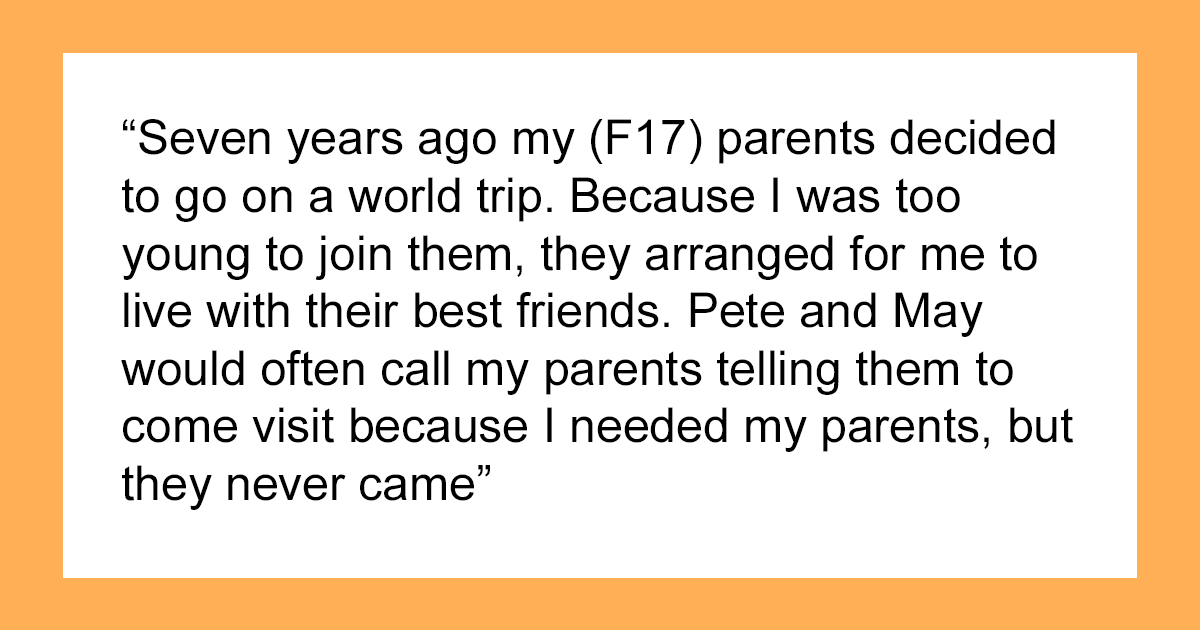
At the center is a 17-year-old girl whose biological parents left years earlier for a world trip. Because she was too young to join them, they arranged for her to live with close family friends. What may have been presented as temporary became seven years. During that time, the girl adjusted to a completely different life: moving from Chicago to a horse ranch in Montana, learning to ride, forming deep bonds with her guardians, attending school virtually, and building a home that felt stable, safe, and real.
Then her parents returned and expected her to move back in with them. Her answer was not dramatic, rebellious, or cruel. It was simple: she did not want to. And honestly, that short sentence carries more emotional weight than a checked bag full of souvenirs.
When “Temporary” Becomes a Childhood
Seven years is not a long weekend. It is not a gap semester. It is not even “we lost track of time at the airport lounge.” For a child, seven years can contain almost an entire identity shift. In this case, the daughter was around 10 when her parents left and 17 when they came back. That span covers the bridge from late childhood into young adulthood, including puberty, friendships, school transitions, values, independence, and the slow construction of a personal future.
During those years, her guardianscalled Pete and May in the original storydid more than provide a roof. They helped her process feelings of abandonment, treated her like their own daughter, included her in ranch life, taught her responsibility through caring for horses, and created routines that felt meaningful. The teen did maintain occasional contact with her parents through calls, emails, postcards, and voice messages, but occasional contact is not the same as daily parenting.
This is where many readers reacted strongly. The issue was not that the parents traveled. Travel can be educational, adventurous, and life-changing. The issue was that they chose a long-term adventure while their child’s day-to-day emotional life was outsourced. Parenting is not a subscription service you can pause for seven years and reactivate when you return from Bali.
Why the Teen’s Refusal Makes Emotional Sense
The daughter’s “I just don’t want to” may sound blunt, but it is not irrational. It reflects attachment, stability, trust, and autonomy. She had spent years building a life that fit her. She loved the ranch, loved the horses, loved the natural environment, and felt that Pete and May were more like parents than her biological mother and father. Asking her to leave that behind simply because her parents had finished traveling ignores the emotional reality of the years they missed.
Teenagers are not furniture. You cannot store them somewhere safe, return later, and expect them to match the room exactly as before. Adolescence is a time when young people form opinions, test independence, and decide who feels trustworthy. A teen who has experienced a major caregiving disruption may become especially protective of the relationships and routines that helped her feel secure.
That does not mean the biological parents are forever banned from her life. It means they cannot demand instant closeness. Trust is not claimed by title. It is earned by presence, accountability, and patience. “We missed you” may be emotionally sincere, but if that missing did not translate into visits, caregiving, or consistent involvement, the words may land like a postcard from someone who skipped the hard chapters.
Biological Parents vs. Real-Life Parents
One reason this story spread online is that it touches a sensitive question: What makes someone a parent? Biology matters, but daily care matters too. Children attach to the adults who show up when they are sick, scared, proud, bored, confused, and trying to figure out algebra at 9:47 p.m. Those moments may look ordinary, but they are the bricks of family life.
Pete and May appear to have provided the kind of consistent caregiving the teen needed. They helped her adapt to a new place, respected her feelings, and offered her a stable home. They also reportedly told her she could stay as long as she wanted and that they considered her their daughter. That sentence likely mattered more than any dramatic speech. It gave her choice. It gave her safety. It told her she was not a package waiting for pickup.
By contrast, her parents seemed to assume that because they were her original family, the old structure could simply restart. But relationships do not work like saved browser tabs. If you leave one open for seven years, something is probably broken, expired, or asking you to sign in again.
The Role of Neglect, Absence, and Emotional Availability
Discussions around the story often use the word “abandonment,” and it is easy to understand why. In a legal sense, child abandonment and neglect depend on state law, court findings, guardianship documents, financial support, contact, and other details. But emotionally, a child may feel abandoned even when adults believe they made “arrangements.”
Neglect is not only about hunger, unsafe housing, or lack of clothing. Emotional neglect can involve a lack of interest, nurturing, attention, and involvement in a child’s life. A child may have food, shelter, and school access but still feel unwanted if their parents repeatedly choose not to be present. In this story, the daughter’s pain was not only that her parents were physically away; it was that they stayed away while she grew up without them.
Long-term absence can teach a child painful lessons: “My needs are inconvenient,” “Adults leave,” or “I should not depend on people who say they love me.” Fortunately, supportive caregivers can help buffer that harm. Stable, responsive relationships are one of the strongest protective factors for young people facing adversity. Pete and May’s ranch may have been more than a scenic backdrop; it may have become the emotional structure that helped the teen rebuild.
Why the Parents’ Return Feels Like a Second Disruption
From the parents’ point of view, returning may have felt like a joyful reunion. From the teen’s point of view, it may have felt like another upheaval. She had already been uprooted once, from city life to ranch life. Now, just as she felt settled, the same parents who left wanted to uproot her again.
That matters. Stability is not boring to a child who has lost it. Stability is gold. It is the same breakfast table, the same animals to feed, the same trusted adults, the same mountain rides, the same bedroom, the same school rhythm, and the same sense of “I belong here.” Moving back to a city with parents who had become semi-distant figures could feel less like going home and more like being removed from home.
The parents may have imagined that love would solve the gap. But love without repair can feel like pressure. If they truly want a relationship, the healthier path would be gradual: acknowledge the harm, ask what she needs, respect her current home, avoid guilt, and accept that reconnection may happen slowlyor not in the form they prefer.
What a Healthy Reconnection Could Look Like
If this family wanted to move forward, the first step would not be packing boxes. It would be listening. The daughter should not have to defend her love for the ranch, her bond with Pete and May, or her reluctance to move. A healthy parent response might sound like: “We understand that we hurt you. We were gone for a long time. We do not expect you to pretend nothing changed. We want to rebuild trust at your pace.”
That kind of response does several things. It validates the teen’s reality. It avoids making her responsible for the parents’ guilt. It recognizes that family repair requires more than a dramatic return. It also gives the daughter room to consider future contact without feeling trapped.
Practical steps could include family therapy, mediated conversations, regular visits that do not pressure her to move, and clear agreements about school, guardianship, finances, and future plans. If she is close to adulthood, her preferences should carry serious weight. Courts in custody-related situations often consider a child’s maturity, reasoning, current stability, and best interests, especially with older teenagers. While legal outcomes vary by state, the common-sense principle remains: a 17-year-old’s voice is not background noise.
The Internet’s Reaction: Sympathy, Suspicion, and Side-Eye
Online commenters were largely supportive of the teen. Many argued that her parents had forfeited the right to expect immediate obedience. Others questioned why a world trip lasted exactly seven years, whether the full story had been disclosed, and how two adults could afford long-term travel while leaving their child behind. Some comments were speculative, but the emotional consensus was clear: the daughter was not wrong for wanting to stay where she felt loved and settled.
That reaction reveals a broader cultural belief: children are not accessories to adult dreams. Parents can have ambitions, adventures, reinventions, and passports full of stamps, but those choices do not erase a child’s need for presence. If adults decide to become parents, they inherit responsibilities that cannot be casually delegated for most of a decade.
The story also resonated because many people know what it feels like when a parent returns only after the hardest work is done. Some caregivers appear when the child is older, easier to talk to, less dependent, or nearly independent. But the missed years do not disappear. The bedtime tears, school milestones, lonely birthdays, and identity-forming seasons still count.
Is the Teen Being Ungrateful?
No. Wanting to stay with the people who raised her during critical years is not ingratitude. It is attachment. It is also self-protection. A teenager can be grateful for being born, grateful for financial support, or open to future contact while still refusing to move back into a home that no longer feels like hers.
Adults sometimes confuse obedience with love. They assume that if a child loves them, the child will comply. But healthy love includes boundaries. The daughter’s boundary is not “I hate you.” It is “I do not want to leave my life.” That distinction matters.
Her parents may feel hurt, but their hurt does not automatically outrank hers. In fact, this may be their first real opportunity to parent her properly: not by taking control, but by absorbing discomfort, putting her needs first, and accepting consequences with maturity.
Lessons for Parents: You Cannot Outsource the Bond
This story offers a sharp lesson for parents, guardians, stepparents, and anyone helping raise a child: bonds are built through repetition. Showing up once is nice. Showing up consistently is parenting. Children notice who attends the school meeting, who remembers their favorite food, who listens when they are angry, who teaches them how to handle disappointment, and who stays when life is inconvenient.
Temporary guardianship can be necessary and loving in some situations. Military deployment, medical crises, financial hardship, immigration complications, or family emergencies may require alternative caregiving. But when parents leave for personal fulfillment, return years later, and expect the child to reorganize her life around them, the moral math changes.
The better model is child-centered decision-making. Before making a major life choice, parents should ask: How will this affect my child’s stability? Who will provide emotional care? How often will I be physically present? What happens if the arrangement lasts longer than planned? Am I making this decision for the child’s well-being or for my own convenience?
Lessons for Teens: Your Feelings Are Information
For teens in similar situations, the story offers another important message: your feelings are not automatically disrespectful. Feeling angry, detached, loyal to another caregiver, or afraid of another move does not make you bad. It means your mind is responding to what happened.
That said, major family decisions are easier with support. A teen facing pressure to move should talk with trusted adults, school counselors, therapists, legal advocates, or guardians who understand the situation. Writing feelings down can help, especially when direct conversation feels overwhelming. The teen in this story planned to write a response with help from Pete, which was a wise choice. Emotional messages are easy to overheat; written messages give everyone a chance to breathe before the family volcano starts doing volcano things.
A clear response might include appreciation for contact, honesty about the pain caused by the long absence, a statement of current wishes, and a request for gradual relationship-building rather than forced relocation. Boundaries are easier to respect when they are specific.
Related Experiences: When a Child’s “No” Is Really a History
Stories like this do not happen in a vacuum. Many families experience moments when an absent parent, distant relative, or inconsistent caregiver suddenly wants closeness. Sometimes the returning adult imagines a beautiful reunion. The young person, however, remembers the long silence before it. That mismatch can create conflict, not because the child is cold-hearted, but because the adult is reading the final page while the child is still holding the whole book.
Consider a teenager whose father missed most school events but appears senior year wanting proud-parent privileges. The teen may not reject him because she is cruel. She may reject the performance because it feels disconnected from reality. Or imagine a mother who leaves a child with grandparents during a difficult chapter, then returns years later expecting to resume authority immediately. The child may love her, but still trust Grandma more. Love and trust are related, but they are not identical twins. Trust has to clock in.
Another common experience involves children raised by relatives or family friends who become psychological parents. These caregivers may not have started with a grand plan. They simply made lunches, signed forms, handled fevers, drove to practice, listened after bad days, and became home by accumulation. When biological parents return, the child may feel torn, guilty, and defensive. They may worry that choosing stability means betraying biology. But children should not be forced to treat emotional safety as betrayal.
For returning parents, the most powerful repair often begins with humility. Not excuses. Not “You don’t understand what we went through.” Not “After everything we sacrificed.” A better opening is: “You have every right to feel the way you feel.” That sentence does not fix the past, but it stops adding new damage. It tells the child that their inner world matters.
For guardians, the challenge is also delicate. Pete and May-like caregivers should avoid turning the child into a prize in an adult tug-of-war. Their role is to support the teen’s voice, document practical realities, and encourage safe communication where possible. The goal is not to “win” the child, but to protect the child’s stability and dignity.
For the teen, the future can remain flexible. Refusing to move back now does not mean refusing every relationship forever. She might choose occasional visits, holiday contact, therapy sessions, letters, or a slow rebuilding process. She might also decide that distance is healthiest. Both paths require adults to respect her pace.
The larger lesson is simple: children grow around whoever consistently loves them. If parents leave for years, they may return to find that their child has not been frozen in place. She has grown roots somewhere else. And when a teenager says, “I just don’t want to,” wise adults should hear the sentence underneath it: “My life happened while you were gone.”
Conclusion
“I Just Don’t Want To”: Parents Return After 7 Years Of World Traveling, Expect Teen Daughter To Live With Them Again is more than a viral family drama. It is a story about attachment, responsibility, stability, and the painful consequences of assuming biology can replace presence. The teen’s refusal is not selfish. It is the understandable response of someone who built a real home after being left behind.
Parents who want strong relationships with their children must do more than return. They must remain. They must show up through ordinary days, not just emotional finales. And when they fail, repair begins with accountability, not demands. A child’s trust is not luggage waiting at baggage claim. It is a living thing, and it grows best where it is cared for every day.