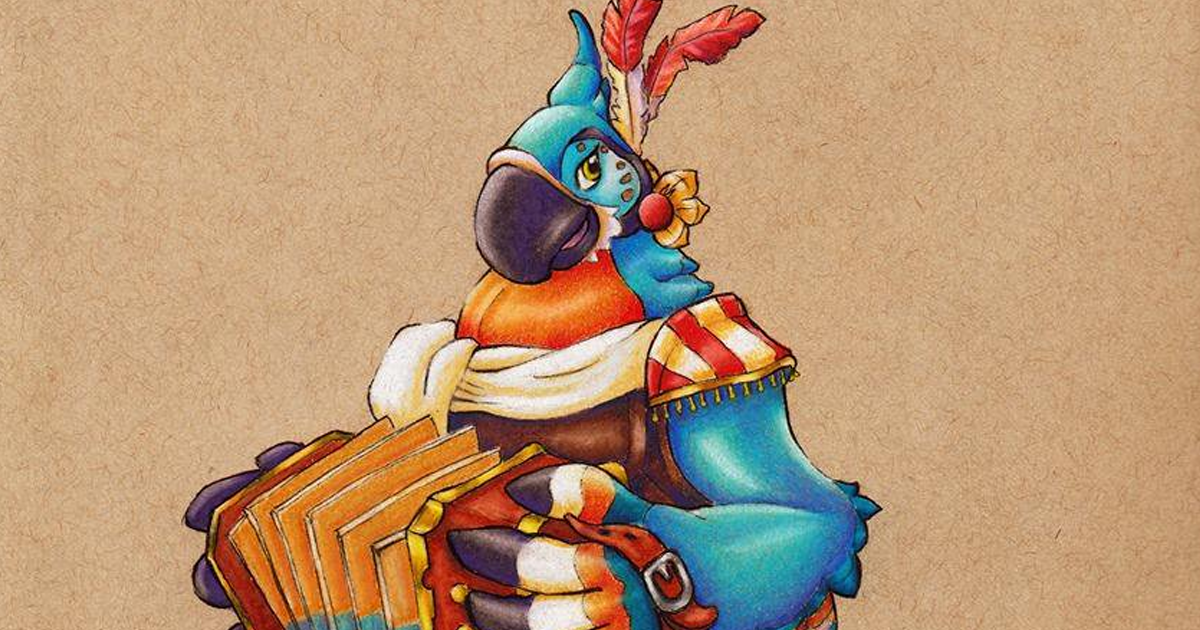
Some people are born knowing exactly what they want to do. Others need a few detours, three existential crises, a drawer full of half-used pencils, and one suspiciously expensive art-supply receipt. For Bûbûche, a self-taught illustrator from France, the road to art was not a straight, glitter-covered highway. It was more like a side street with potholes, part-time jobs, and colored pencils rolling under the couch.
She was advised against studying art. Like many creative people, she heard the familiar chorus of “be practical,” “choose something stable,” and “art is nice, but how will you eat?” Spoiler: artists also enjoy eating. But instead of letting that advice erase her creative instincts, she kept drawing. In notebooks, during spare moments, through uncertainty, and with the kind of stubborn love that turns practice into progress.
Today, her illustrations show what happens when imagination refuses to behave. Her work blends fantasy, emotion, human-animal hybrids, mysterious characters, bold color, and a slightly strange charm that feels like a fairy tale wandered into a dream and forgot to leave.
From Doodles to a Self-Taught Illustration Journey
The phrase “self-taught illustrator” can sound romantic from the outside, as if someone simply woke up one morning, whispered “portfolio,” and was magically gifted with anatomy skills. In reality, self-teaching usually means learning through repetition, mistakes, observation, online resources, personal experiments, and the occasional drawing that looks like it lost an argument with perspective.
Bûbûche’s story began with constant doodling. School notebooks became sketchbooks. Fan art became practice. Personal feelings became images. This is how many artists begin: not with a grand announcement, but with a pencil, a blank margin, and a brain that says, “What if this creature had antlers, a cape, and emotional baggage?”
She did not follow a traditional art-school path. After being discouraged from formal art studies, she pursued English at university, later stepped away, and worked small jobs while continuing to build her artistic voice. That detail matters because it reflects a reality many creatives know well: the dream often has to share rent with the day job.
Why Being Advised Against Art Studies Can Hurtand Help
Being told not to study art can land like a wet sock on the soul. It may come from concern, fear, or outdated ideas about creative careers. Still, the message often feels the same: your passion is too risky to be taken seriously.
Yet discouragement can sometimes sharpen an artist’s resolve. It forces hard questions: Do I love this enough to keep going without permission? Can I build skill outside a classroom? Am I willing to make work before anyone applauds? For a self-taught illustrator, these questions become part of the training.
Formal art education can be valuable. It offers structure, critique, community, and access to mentors. But it is not the only doorway into illustration. Many creative careers depend heavily on a strong portfolio, a consistent visual voice, reliability, and the ability to communicate ideas clearly. A diploma can open doors, but the work still has to walk through them wearing decent shoes.
The Power of Color in Her Illustrations
One of the strongest features in Bûbûche’s art is color. Her pieces often rely on layered colored-pencil work, rich shading, and careful contrast. Color is not just decoration here; it is mood, atmosphere, and storytelling. A blue shadow can make a creature feel lonely. A burst of warm yellow can make a strange figure feel almost holy. A deep red can whisper, “This character knows secrets and probably owns dramatic curtains.”
Colored pencils are sometimes underestimated because people associate them with school supplies. But in skilled hands, they can create luminous layers, soft gradients, sharp textures, and surprisingly deep saturation. The process is slow, physical, and meditative. Every layer adds depth. Every highlight changes the emotion. Every mistake teaches patience, which is art’s least glamorous but most loyal friend.
15 Picture-Worthy Highlights From a Self-Taught Illustrator’s World
The original series features fifteen images, each with its own atmosphere and personality. Rather than treating them like random drawings, it helps to see them as a visual diary of an artist building a universe one character at a time.
1. Lambou
This piece feels like an invitation into the artist’s world: strange, colorful, soft around the edges, and full of personality. It suggests that fantasy illustration does not need to explain itself immediately. Sometimes mystery is the hook.
2. Guardian of Pebbles
A title like this proves that small things can feel mythic. Pebbles are ordinary. A guardian of pebbles is not. That contrast gives the artwork a playful, storybook energy.
3. Neptune III
This illustration leans into cosmic imagination. The name suggests water, mythology, distance, and mystery. It is the kind of piece that makes viewers invent a backstory before they realize they are doing it.
4. Kass Fan Art
Fan art is often dismissed by people who forget that it teaches composition, likeness, stylization, and audience connection. For many self-taught artists, fan art is not a shortcut; it is a training ground with built-in enthusiasm.
5. Guardian of the Forgotten Knowledge
This title practically arrives wearing a cloak. It shows the artist’s interest in characters that feel symbolic, as if they belong to a larger mythology waiting just off the page.
6. Almost Free
The emotional tension in this concept is powerful. “Almost” is a tiny word with a dramatic workload. It suggests movement, longing, and the delicate moment before escape.
7. Untitled
Not every artwork needs a name. Sometimes “Untitled” leaves space for the viewer to step in. It can also mean the artist is letting the image breathe without pinning it down like a butterfly in a museum case.
8. Harpinup
This piece plays with character design and stylized identity. The title has a fun rhythm, and the artwork likely carries that same mix of elegance and oddness.
9. Kaw the Wise
Bird-like imagery often brings associations of prophecy, intelligence, and mischief. “Kaw the Wise” sounds like a creature who knows your future and would still steal your sandwich.
10. Fantasy Creatures With Human Feelings
One recurring strength in the series is the way nonhuman or hybrid characters still feel emotionally readable. That is a key skill in illustration: making the impossible feel relatable.
11. Abstract Eyes and Otherworldly Faces
The artist’s characters often use unusual eyes and facial details to create distance from realism. These choices make the figures feel dreamy, alien, or symbolic rather than simply decorative.
12. Nature-Inspired Details
Leaves, feathers, animal features, stones, and organic shapes help build a world that feels alive. Nature is not just background material; it becomes part of the character’s identity.
13. Layered Pencil Textures
The visible softness of pencil layering gives the work a handmade quality. In a digital age, that tactile feeling can make an illustration stand out.
14. Emotional Storytelling Without Long Explanations
Great illustration does not always need a paragraph of lore. A pose, a color palette, or a single expression can suggest grief, wonder, courage, or loneliness.
15. A Portfolio That Feels Personal
The strongest takeaway from the series is not just technical skill. It is personality. The artwork feels specific, and specificity is what turns a drawing into a memorable visual voice.
What Self-Taught Artists Can Learn From This Story
There is a practical lesson hidden inside the romance of this journey: talent helps, but consistency builds the bridge. A self-taught illustrator needs more than inspiration. They need a routine, a portfolio, a way to receive feedback, and enough patience to survive the awkward middle stage where the idea in your head looks like a potato wearing a wig on paper.
For artists without formal training, the portfolio becomes especially important. It should show range, but not chaos. It should demonstrate style, but not repetition. It should tell potential clients, editors, art directors, or fans what kind of visual problem the artist can solve. Personal projects can be powerful portfolio pieces when they look intentional and finished.
A good creative portfolio also needs context. Titles, short descriptions, process notes, and clear contact information help people understand the work and hire the artist. The internet has made it easier for illustrators to share their art, but it has also made the competition louder. Posting consistently matters, but so does building a recognizable point of view.
Can You Become an Illustrator Without Art School?
Yes, but “without art school” does not mean “without study.” A self-taught illustrator still has to learn fundamentals: drawing, composition, color theory, anatomy, storytelling, visual hierarchy, and professional communication. The difference is that the classroom is replaced by books, tutorials, practice challenges, artist communities, critiques, museum visits, online classes, and obsessive observation of how other artists solve problems.
The best self-taught artists often become excellent researchers. They study master painters, contemporary illustrators, film stills, album covers, comics, animation, folklore, fashion, photography, and real life. They collect references, analyze why an image works, and apply those lessons to their own style. They do not simply “wait for inspiration.” They hunt it down with a net and snacks.
Art school can speed up certain parts of the process, but it cannot replace personal discipline. Self-teaching can be slower and lonelier, but it can also create unusual artistic voices because the artist is not following a fixed curriculum. That freedom can become a strength when paired with serious practice.
The Reality Behind the Dream
Stories about creative success often skip the unglamorous middle: the jobs, the bills, the doubt, the price of supplies, the algorithm behaving like a moody raccoon, and the emotional workout of showing personal work to strangers online. Bûbûche’s story includes that reality. She works while making art. She buys supplies when she can. She keeps going anyway.
That honesty makes the story more inspiring, not less. It reminds readers that becoming an illustrator is not always a cinematic montage. Sometimes it is drawing after work when you are tired. Sometimes it is choosing paper over takeout. Sometimes it is posting a piece and receiving three likes, one spam comment, and a mysterious message from someone asking for a logo “for exposure.”
Still, the work accumulates. One drawing becomes ten. Ten become a portfolio. A portfolio becomes a conversation. A conversation becomes a commission. The path is rarely neat, but creative careers are built from repeated acts of showing up.
Why This Story Resonates With So Many Artists
Many people have been talked out of a dream by someone who meant well. The advice may have been practical, but the result can feel like a small betrayal of the self. This story resonates because it pushes back without pretending the journey is easy.
It says: you can be discouraged and still continue. You can take another path and still return to art. You can be self-taught and still serious. You can work ordinary jobs while building an extraordinary inner world. You can start with doodles and slowly develop a body of work that strangers recognize, share, and remember.
Extra Experience Notes: What This Topic Teaches Aspiring Illustrators
For anyone who has ever been advised against art studies, the first experience is usually confusion. You may feel pulled in two directions: one voice says to be responsible, while another voice keeps drawing dragons in the corner of your planner. The challenge is not simply choosing art or not choosing art. The real challenge is learning how to treat your creativity with respect even when the people around you do not understand it yet.
One useful experience is creating a personal “mini art school.” This does not require a fancy studio. It can start with a notebook, a weekly schedule, and a list of fundamentals to practice. Monday can be gesture drawing. Tuesday can be color studies. Wednesday can be character design. Thursday can be master studies. Friday can be portfolio cleanup. Saturday can be experimental chaos, also known as “what happens if I draw a mushroom knight with trust issues?” Sunday can be rest, because burnout is not a personality trait.
Another important experience is learning to accept critique without letting it flatten you. Not every comment deserves a throne in your brain. Some feedback is useful: “The composition feels crowded.” Some feedback is preference: “I do not like purple.” Some feedback is just a raccoon knocking over trash cans: “Real artists only paint landscapes.” A growing illustrator must learn the difference. Good critique points you toward improvement. Bad critique makes you feel smaller without making the work stronger.
Building confidence also comes from finishing projects. Many beginners collect unfinished sketches like emotional souvenirs. Finishing teaches decision-making. It forces you to solve problems instead of escaping into a new idea every time the old one becomes difficult. A finished imperfect drawing teaches more than a perfect imaginary one.
Sharing work online is another milestone. It can feel terrifying at first, like placing a tiny piece of your soul on a cafeteria table and asking the internet not to spill soup on it. But visibility matters. Artists are discovered through portfolios, social platforms, community features, newsletters, shops, conventions, and client referrals. The goal is not to become viral overnight. The goal is to become findable, memorable, and steadily better.
Finally, aspiring illustrators should understand that a creative life can be built in layers. There is the art layer: skill, style, ideas, and practice. There is the business layer: pricing, emails, deadlines, licensing, invoices, and contracts. There is the emotional layer: courage, patience, comparison, rejection, and joy. A self-taught illustrator has to develop all three. It is a lot, yes. But so is any meaningful path. The difference is that this one lets you turn your inner world into something visibleand occasionally gives you an excellent excuse to buy more pencils.
Conclusion
I Was Advised Against Art Studies But Now I’m A Self-Taught Illustrator (15 Pics) is more than a catchy title. It is a reminder that creative identity does not disappear just because someone calls it impractical. Bûbûche’s journey shows the beauty of persistence, the value of self-directed learning, and the emotional power of illustration that feels personal rather than polished into sameness.
Her work proves that art does not always need permission. Sometimes it needs a pencil, a stubborn heart, a few jobs to pay for supplies, and enough belief to keep adding color layer by layer. For anyone who has been told not to pursue art, this story offers a gentle but firm answer: advice can shape your path, but it does not have to own your destination.