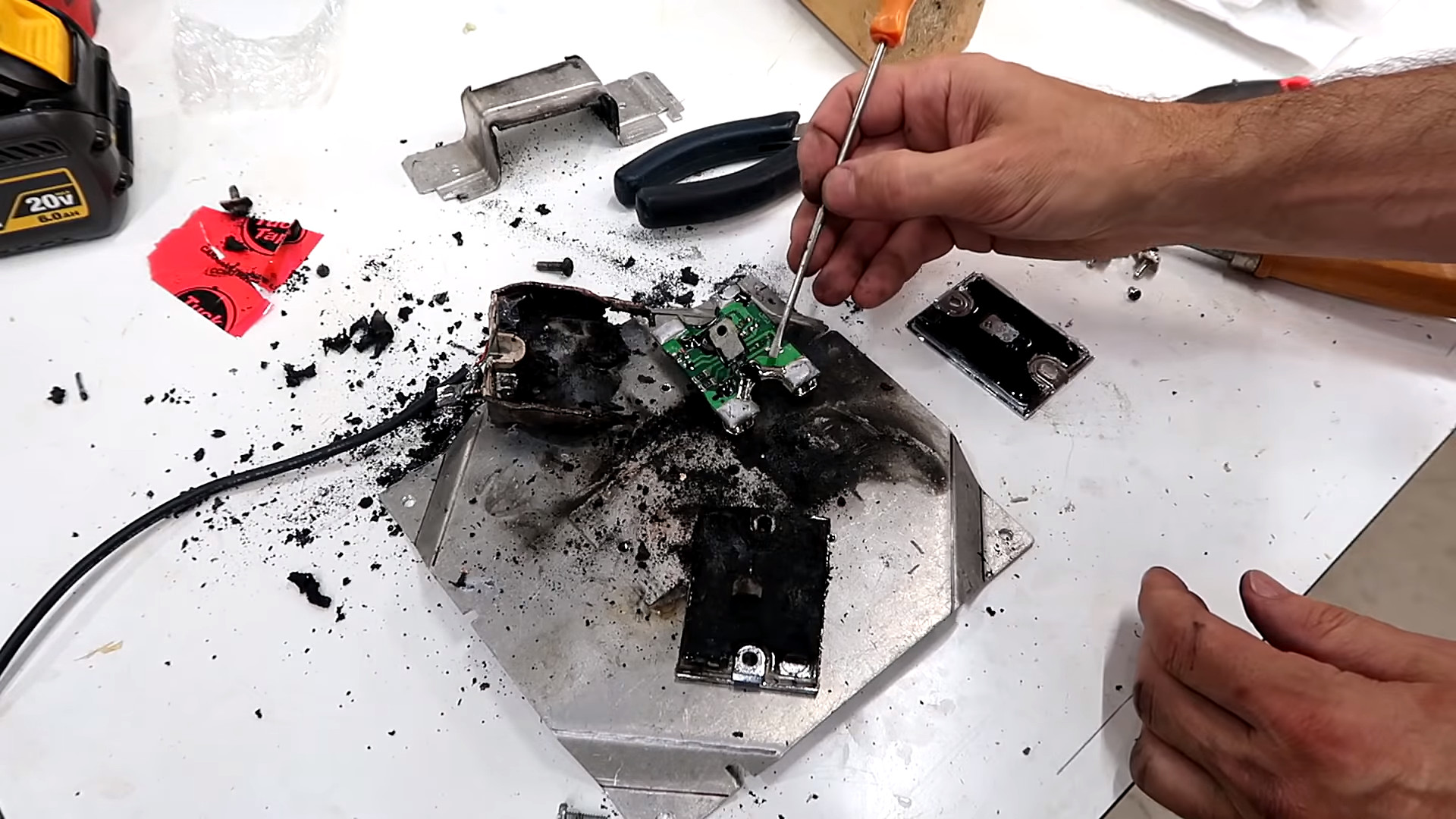
Every good electronics story begins with optimism. A tidy box. A clever controller. A component with a datasheet that looks trustworthy at 1 a.m. Then, somewhere between “this should be fine” and “why does the garage smell like toasted plastic?”, reality walks in wearing safety glasses and carrying a fire extinguisher.
That is the spirit behind “Fail Of The Week: Solid State Relay Fails Spectacularly”: a reminder that solid state relays, or SSRs, are not magic black rectangles that switch large loads forever without complaint. They are powerful, quiet, fast, and extremely useful. They can also fail in ways that are dramatic, expensive, and deeply educationalespecially when heat, current, questionable component quality, or weak fail-safe design join the party.
This article breaks down what likely goes wrong when a solid state relay fails, why SSRs deserve more respect than they often get, and how designers, makers, technicians, and curious readers can understand the lessons without needing to personally create a smoke machine out of a control box.
What Is a Solid State Relay?
A solid state relay is an electronic switching device that turns a load on or off using semiconductor components instead of mechanical contacts. A mechanical relay has moving parts: a coil, an armature, and contacts that physically open and close. An SSR replaces that clicky little drama with components such as triacs, thyristors, MOSFETs, optocouplers, and control circuitry.
That gives SSRs several attractive advantages. They switch silently, they do not bounce like mechanical contacts, they can handle frequent switching, and they offer electrical isolation between a low-voltage control signal and a higher-power output side. For heaters, lamps, industrial equipment, temperature controllers, ovens, pumps, and automation systems, SSRs can be wonderfully convenient.
But “solid state” does not mean “solid luck.” An SSR still has limits. It dissipates heat. It needs proper installation. It must be sized for the load. It may need a heatsink. It may need surge protection. And when it fails, it may not fail politely.
The Spectacular Failure: When the Relay Becomes the Heater
The famous “Fail Of The Week” case involved a solid state relay controlling a high-power heating load. The setup reportedly worked for months, which is exactly the kind of detail that tricks people into thinking a design is healthy. But electronics can survive in a bad thermal situation for a while before finally waving the white flagand sometimes that flag is made of smoke.
The relay in question was rated close to the operating current of the load. On paper, that sounds reasonable. In real life, it can be a trap. SSR current ratings are not permission slips to run the component at the edge of its limits inside a warm enclosure with limited airflow. Ratings depend on temperature, mounting surface, heatsink performance, load type, duty cycle, and the honesty of the device itself. When those details are ignored, a “25 amp” relay can become a 25 amp lesson.
The scary part is not simply that the SSR got hot. The scary part is what it was controlling: a heater. A failed relay on a harmless indicator lamp is annoying. A failed relay on a heating element can continue energizing the load, overheat nearby materials, and create a real fire risk. That is why SSR failures are not just component failures; they are system-design failures waiting to be judged by physics, and physics is a very strict reviewer.
Why Solid State Relays Fail
1. Heat Is the Usual Villain
Most SSR failure stories eventually arrive at the same suspect: heat. Unlike a mechanical relay contact that ideally has very low resistance when closed, an SSR has a voltage drop across its output device. Current through that voltage drop creates power dissipation. Power dissipation creates heat. Heat needs somewhere to go. If it cannot leave, it moves into the relay’s internal components like an uninvited houseguest who brought a soldering iron.
This is why many panel-mount SSRs require heatsinks at higher currents. A small metal backplate alone may not be enough. A painted enclosure wall may not transfer heat well. A relay mounted crookedly with no thermal compound may behave like it is wearing a winter coat in July. Even when the SSR is technically rated for the load, its real usable current may drop sharply as ambient temperature rises.
2. Current Ratings Are Not a Dare
A common mistake is choosing an SSR with a rating barely above the expected load current. A heater that draws 22 amps on a relay labeled 25 amps may appear acceptable to a beginner. To an experienced designer, that margin looks thinner than a gas station napkin.
Electrical ratings are tied to specific test conditions. Real installations add heat, dust, terminal resistance, enclosure temperature, line voltage variation, cycling, and aging. A safe design normally uses derating, meaning the component is operated below its maximum rating. Derating is not cowardice. It is engineering with a memory.
3. Poor Mounting Turns a Good Relay Into a Bad Idea
An SSR’s metal base is usually meant to move heat into a heatsink or metal plate. But heat transfer depends on contact quality. If the surface is painted, dirty, uneven, oxidized, or missing thermal interface material, heat transfer suffers. The relay may look properly mounted while internally cooking itself like a tiny lasagna.
Screw torque matters too. Loose terminals create resistance, and resistance creates more heat. Overtightening can damage hardware. Wire size, crimp quality, enclosure airflow, and terminal condition all matter. In power electronics, small mechanical details become large thermal details.
4. Counterfeit or Low-Quality SSRs Make Everything Worse
Some budget SSRs have earned a notorious reputation in maker circles because their labels can promise more than their internals can deliver. The outside may claim a generous current rating, while the inside contains smaller-than-expected switching devices, poor thermal coupling, weak construction, or inconsistent quality control.
This does not mean every inexpensive relay is doomed. It means a high-power load is not the place to gamble on mystery parts. When an SSR controls a heater, oven, motor, or other serious load, buying from a reputable supplier and checking the datasheet is not “being fancy.” It is basic survival for the project.
5. Surge, Inrush, and Load Type Can Punish the Output Device
Not all loads behave like simple resistors. Motors, solenoids, transformers, lamps, and capacitive loads may create inrush current or voltage spikes. An SSR chosen only by steady-state current may be badly undersized for startup behavior. A motor may draw several times its running current when starting. A tungsten lamp can have a cold-filament surge. An inductive load can kick back when switched.
For these situations, designers may need an SSR rated for the load type, plus protective devices such as MOVs, snubbers, fuses, or other protection specified by the manufacturer. The key is not to throw random parts at the problem like electrical confetti. The key is to design protection around the actual load and the relay’s ratings.
The Most Dangerous SSR Failure Mode: Stuck On
Mechanical relays often fail open because contacts wear, burn, or stop making good contact. SSRs are different. When the semiconductor output device is damaged, a common failure mode is a shorted output. In everyday language: the relay may stay on even when the control signal says off.
That is a big deal. A stuck-on SSR controlling a light may waste electricity. A stuck-on SSR controlling a heater can become a serious hazard. A stuck-on SSR controlling machinery can create unexpected motion or operation. This is why a responsible design does not assume the software, microcontroller, or relay will always behave. It includes independent safety layers.
For heating systems, that may mean a thermal cutoff, thermostat, fuse, contactor, over-temperature switch, or a separate safety controller depending on the application. The exact solution depends on the equipment and electrical code, but the philosophy is simple: one failed component should not be allowed to turn a normal device into a toaster with ambition.
Why “It Worked for Months” Means Almost Nothing
One of the most misleading phrases in electronics troubleshooting is, “But it worked fine for a while.” A weak design can pass casual testing and still be unsafe. Heat damage accumulates. Solder joints fatigue. Semiconductor junctions degrade. Plastic housings discolor. Terminals loosen. Enclosure temperatures change with the season. A relay that survives winter in a cool garage may struggle in summer inside a sealed box.
Intermittent success is not proof of good design. It is only proof that failure has not arrived yet. A solid state relay near its limit may spend months aging quietly before failing suddenly. That suddenness is what makes SSR failures feel dramatic. The problem was not born at the moment of smoke; it was raised there over time.
How to Think About SSR Safety Without Turning This Into a Wiring Tutorial
High-voltage and high-current work can be dangerous, so the safest advice is also the least glamorous: follow electrical codes, use listed components, read datasheets, and involve a qualified professional when mains power or high-power loads are involved. There is no shame in respecting electricity. Electricity has been undefeated for quite a long time.
From a design-analysis point of view, safer SSR applications usually ask several questions before power is applied:
- What is the real steady-state current of the load?
- What is the startup or inrush current?
- Is the load resistive, inductive, capacitive, or mixed?
- What is the ambient temperature inside the enclosure?
- Does the SSR require a heatsink at this current?
- Is the heatsink sized using the manufacturer’s derating data?
- What happens if the SSR fails shorted?
- What independent device stops overheating or unsafe operation?
- Is the relay genuine, properly rated, and purchased from a reliable source?
That list is not meant to make SSRs look terrifying. It is meant to make them look real. They are excellent components when used correctly. They are also unforgiving when treated like decorative stickers for a control panel.
Specific Example: The Heater Control Trap
Imagine a temperature controller driving an SSR, which switches power to a heating element. The controller reads a temperature sensor and tells the SSR to turn on or off. At first glance, the system is elegant. No clicking relay. Smooth control. Long switching life. Nice.
Now imagine the SSR fails shorted. The controller can shout “off” all day, but the heater may continue receiving power. If there is no independent high-temperature cutoff, the system depends on the very component that failed to prevent the consequence of its failure. That is not a safety strategy. That is a trust fall with a component that just left the room.
A safer design treats the controller and SSR as normal operating controls, not final safety devices. The final safety device should be independent enough to interrupt dangerous operation even if the normal control path fails. In professional equipment, this distinction matters enormously.
Signs an SSR System Deserves Immediate Attention
Some warning signs are obvious: discoloration, melted plastic, buzzing, burning smell, tripped breakers, erratic load behavior, or a load that remains energized when it should be off. Others are more subtle. A relay that is too hot to touch, terminals that darken, an enclosure that warms unexpectedly, or a system that behaves differently after long operation can all point toward trouble.
Temperature is especially important. SSRs are expected to warm up under load, but “warm” and “slowly becoming a campfire” are not the same category. If heat management is uncertain, the correct response is not to keep using the system and hope the relay develops character. The correct response is to shut it down safely and have the design reviewed.
Lessons From the Failure
Lesson 1: Datasheets Are Not Optional
The datasheet tells you what the relay can do under defined conditions. It also tells you what assumptions the rating depends on. Ignoring that information is like buying hiking boots and refusing to check whether they are your size because the box has a mountain on it.
Lesson 2: Heat Sinks Are Part of the Circuit
For high-current SSR applications, the heatsink is not an accessory. It is part of the design. A relay without proper heat sinking may be electrically connected but thermally doomed.
Lesson 3: Derating Is Cheaper Than Repairing Smoke Damage
Using a larger relay, adding thermal margin, improving airflow, and following mounting instructions may feel conservative. That conservative approach costs less than replacing scorched hardware, damaged wiring, or worse.
Lesson 4: Fail-Safe Design Matters More Than Normal Operation
Anyone can design something that works when every component behaves. The serious question is what happens when something fails. A system controlling heat, motion, or high power must be designed for the ugly day, not just the sunny demo.
Common Myths About Solid State Relays
“No Moving Parts Means No Failure”
No moving parts means fewer mechanical wear mechanisms. It does not mean no heat, no surge damage, no semiconductor breakdown, no manufacturing defects, and no installation mistakes. SSRs can be very reliable, but reliability depends on correct application.
“A 25 Amp Relay Can Run 25 Amps Forever”
Only under the correct conditions. Current rating, ambient temperature, heatsink rating, duty cycle, load type, and airflow all affect real-world operation. Maximum ratings are not a lifestyle recommendation.
“If It Turns On and Off, the Design Is Done”
Functional testing is not safety testing. A relay can switch properly during a short bench test and still overheat after hours of operation. Long-duration thermal behavior matters.
“The Controller Will Save It”
A controller cannot save a load from a relay that has failed shorted unless the system includes an independent way to remove power. Software is useful. Independent hardware safety is better when the stakes are high.
Experience Notes: What This Failure Teaches in the Real World
The best experience from a spectacular SSR failure is the kind you borrow from someone else. When a relay burns, melts, or sticks on, the lesson becomes unforgettablebut it is much nicer to learn it from a story than from the smell of your own project turning into modern art.
One practical experience is that enclosure temperature is often underestimated. A maker may test a control box open on the bench, where air moves freely and the relay seems only mildly warm. Later, the same parts are sealed inside a plastic enclosure, mounted near a heater, tucked into a cabinet, or operated during a hotter season. The relay now lives in a tiny sauna. The circuit did not change, but the thermal environment did. Many failures begin with that quiet difference.
Another common experience is overconfidence in labels. A big number printed on the front of an SSR feels comforting. It says “40A” or “25A” with the confidence of a gym poster. But the real story is in the fine print: heatsink requirements, derating curves, surge current, load category, maximum case temperature, terminal torque, and approval marks. A component label is a headline. The datasheet is the article. And as every editor knows, headlines sometimes oversell.
People also learn that heaters are wonderfully simple and wonderfully dangerous. A resistive heater may look like an easy load because it does not have the startup weirdness of a motor. Yet heaters create the worst consequence when control fails: more heat. If a relay controlling a heater gets hot, fails shorted, and keeps the heater energized, the system can enter a nasty feedback loop. That is why independent thermal cutoffs are so valuable. They are the responsible adult in the room.
Field experience also shows that terminals deserve respect. A loose screw, poor crimp, undersized wire, or oxidized connection can create a hot spot. That hot spot may heat the relay, stress the enclosure, and make troubleshooting confusing because the SSR gets blamed for a problem partly created by the connection. In power wiring, neatness is not just aesthetic. It is thermal management with better manners.
The final experience is humility. SSRs are not bad components. They are not tiny villains hiding in control cabinets. They are excellent tools when selected, mounted, cooled, protected, and supervised correctly. The failure is usually not “solid state relays are terrible.” The real failure is assuming that a convenient module removes the need for engineering judgment. Convenience is useful, but it is not a substitute for safety margin.
Final Thoughts: The Smoke Was the Teacher
A spectacular solid state relay failure is funny only after everyone is safe and the lesson has been learned. The burned relay becomes a tiny blackened professor, teaching thermal design, derating, sourcing, failure modes, and the value of independent protection.
The main takeaway is simple: SSRs are powerful, but they are not magic. They need proper current margin, heatsinking, airflow, mounting, surge consideration, and fail-safe planning. When they control high-energy loads, especially heaters, the design must assume that the relay can fail. Not because we are pessimists, but because we have met electronics before.
So the next time a solid state relay looks like an easy solution, use it wisely. Read the datasheet. Check the derating curve. Respect the heat. Plan for failure. And remember: if your relay becomes the hottest part of the project, it may be trying to resign.