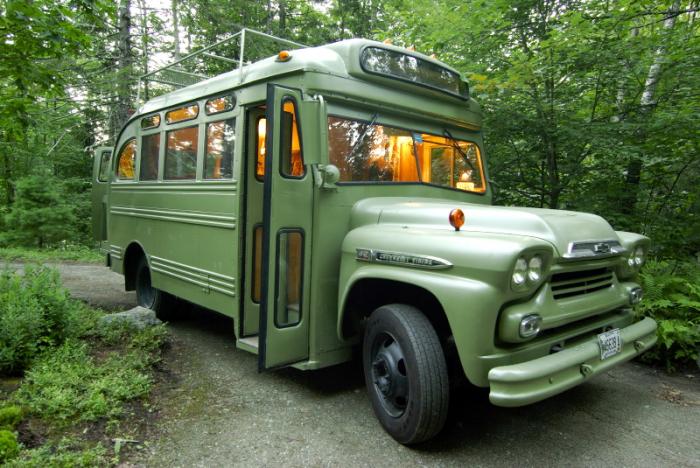
Some renovation projects begin with a blank wall. Others begin with a 1959 Chevrolet Viking bus, a dream, a toolbox, and the brave belief that a vehicle once built for transportation can become a rolling guest room with personality. “On the Road: A Makeover for a Maine Bus” is more than a charming design story. It is a case study in creative reuse, compact living, travel-ready craftsmanship, and the joyful art of turning something old into something unforgettable.
In Maine, where roads bend through pine forests, rocky coastlines, lobster towns, and quiet inland lakes, a renovated bus feels right at home. It can be a family shuttle, a weekend camper, a guest bedroom, or a conversation starter parked beside a cottage. And unlike a typical spare room, this one has headlights. That is a design feature your average guest suite simply cannot compete with.
A Vintage Maine Bus With a Second Act
The project that inspired this article centered on a 1959 Chevrolet Viking bus transformed by Portland, Maine architect Will Winkelman. The owners wanted more than a restored vehicle. They wanted a flexible space that could transport people, host guests, and serve as a camper. That is a tall order for any old bus, especially one that had already spent decades earning its dents, squeaks, and road stories.
The bus was not simply cleaned up and given a cheerful throw pillow. Its body was carefully restored, with damaged parts repaired, fabricated, or replaced. Inside, the design team approached the project with the precision of boat builders, which makes perfect sense in Maine. Boats and buses share a secret: every inch matters. In a narrow, moving space, wasted room is the enemy, and storage must behave like a polite houseguestuseful, compact, and not in the way.
The finished interior blended white oak millwork, salvaged flooring, warm textiles, playful fringe, flexible benches, a sink, a bathroom, and seating that could convert into sleeping space. The result was not a sterile showroom camper. It had a funky, hippie, Moroccan-inspired personality, the kind of interior that suggests someone might offer you coffee, a map, and a story about a wrong turn that became the best part of the trip.
Why a Bus Makeover Works So Well in Maine
Maine has a landscape that rewards slow travel. Coastal Route 1, the Schoodic Peninsula, Acadia’s gateway roads, Rangeley Lakes, and the Old Canada Road Scenic Byway all encourage drivers to stop, look around, and stay a little longer than planned. A renovated bus supports that kind of travel because it is less about rushing from point A to point B and more about making the journey part of the destination.
A Maine bus makeover also fits the state’s practical spirit. Mainers understand reuse. They understand weather. They understand that a thing worth keeping is worth fixing well. A bus conversion taps into that same logic: preserve the bones, solve the problems, and add just enough beauty to make the object feel loved again.
The appeal is not only nostalgic. It is functional. A bus offers strong structure, generous windows, wide interior volume compared with a van, and enough floor space for seating, storage, sleeping, and basic utilities. When renovated thoughtfully, it can become a tiny home on wheels, a mobile office, a family adventure rig, or a guest house that does not require pouring a foundation.
The Design Philosophy: Make Every Inch Earn Its Keep
The best bus conversions begin with one rule: nothing gets a free ride. Every cabinet, bench, cushion, panel, and light fixture must justify its place. In a traditional house, a bad corner may simply collect dust and one lonely sock. In a bus, a bad corner becomes a daily annoyance.
Flexible Seating and Sleeping
One of the smartest ideas in the Maine bus makeover was convertible seating. Benches placed along the sides can serve as lounge seats during the day and sleeping platforms at night. When designed to slide, bridge, or join together, they can create a larger bed. This is classic small-space design: a seat is not just a seat; it is also a bed, a storage box, and possibly the place where someone eats blueberry pie at midnight.
Built-In Storage
Storage under benches is essential in a bus makeover. It keeps bedding, tools, cookware, and travel gear out of sight while preserving open floor space. Overhead storage can work too, but it must be carefully secured. Anything loose in a moving vehicle becomes a tiny missile with a bad attitude. Smart builders use latches, marine-grade hardware, and cabinet designs that stay closed even on bumpy roads.
Warm Materials
Wood can soften the hard metal shell of a bus. White oak, pine, plywood, and other durable materials help create a cabin-like feeling while keeping weight in mind. A renovated bus should feel warm, not heavy. The goal is to create comfort without turning the vehicle into a rolling lumberyard.
Mechanical Reality: Beauty Still Needs Brakes
A bus makeover can look dreamy in photos, but the romance ends quickly if the engine overheats on a hill outside Camden. Before investing in tile, upholstery, solar panels, or custom cabinetry, a buyer should evaluate the vehicle’s mechanical condition. Brakes, tires, suspension, steering, rust, fuel systems, cooling systems, and electrical basics deserve priority.
Older buses have character, but character sometimes leaks oil. A pre-purchase inspection by a mechanic familiar with commercial vehicles can prevent expensive surprises. Vintage buses may require specialty parts, custom fabrication, or patient searching. That does not make them bad candidates; it simply means the budget should include mechanical restoration, not just interior design.
Weight is another major consideration. Cabinets, water tanks, batteries, flooring, appliances, passengers, and luggage all add up. A safe build respects gross vehicle weight ratings and maintains balanced distribution. Too much weight behind the rear axle or on one side can affect handling. In other words, do not put the entire kitchen, water system, battery bank, cast-iron skillet collection, and your emotional baggage on the same corner.
Safety, Registration, and Road Rules
Anyone converting a bus into a camper or motorhome should research state requirements before the first screw goes into the first wall panel. In Maine, motor homes must be registered and inspected annually after registration. Depending on the vehicle age, title status, and intended use, owners may need documentation, insurance, and inspection compliance. Requirements can vary, so a smart builder confirms details with the Bureau of Motor Vehicles and local municipal office.
Federal guidance from FMCSA states that vehicles used strictly for non-business personal purposes generally do not require a commercial driver’s license unless the driver’s home state requires one. However, that does not mean every converted bus is automatically simple to drive legally. State rules, vehicle weight, air brakes, passenger capacity, insurance classification, and registration type can all matter.
Safety standards are equally important inside the build. RV industry standards cover fuel systems, fire and life safety, plumbing, electrical systems, and vehicle requirements. DIY builders should take these categories seriously, especially if installing propane, shore power, inverters, batteries, heaters, or water systems. A beautiful bus is delightful. A beautiful bus with safe wiring, ventilation, emergency exits, smoke alarms, carbon monoxide detectors, and secured cabinets is delightful and much less likely to star in a cautionary tale.
Insulation and Moisture: The Maine Weather Test
Maine weather is not shy. A bus parked near the coast may face fog, salt air, rain, snow, summer humidity, and winter cold. Because most buses have metal bodies, condensation can become a serious issue. Warm indoor air meeting cold metal surfaces creates moisture, which can lead to mold, corrosion, and musty smells. Nobody wants a camper that smells like a wet wool sock with a steering wheel.
Good insulation and air sealing are essential. The Department of Energy notes that reducing uncontrolled air leaks can improve comfort, durability, energy efficiency, and indoor air quality. In bus conversions, builders often use spray foam, rigid foam board, mineral wool, or other insulation strategies. Spray foam is popular because it can seal gaps and help reduce condensation, though it must be installed correctly and paired with ventilation.
Ventilation matters as much as insulation. Roof fans, operable windows, screened vents, and bathroom ventilation help move moisture out. A well-sealed bus without ventilation can become stuffy. A ventilated bus without insulation can become cold and damp. The sweet spot is a balanced shell that keeps heat where you want it and moisture where you do not.
Power, Plumbing, and Practical Comfort
A Maine bus makeover can be simple or sophisticated. Some owners want a weekend lounge with basic lights and a cooler. Others want solar panels, lithium batteries, an inverter, shore power, refrigeration, heat, a sink, a toilet, and enough outlets to charge every device invented since the Clinton administration.
Electrical Planning
A typical camper solar setup may include solar panels, a charge controller, batteries, an inverter or inverter-charger, fuses, wires, a battery monitor, distribution blocks, and shore-power components. This system should be designed around actual energy use. Lights, fans, refrigerator, water pump, laptops, induction cooking, and heating all draw power differently. Guessing is not planning; it is just math wearing sunglasses.
Water and Waste
Water systems should be simple, serviceable, and winter-conscious. Freshwater tanks, gray-water tanks, pumps, faucets, drain lines, and traps need secure mounting and easy access. In cold climates, builders must consider freeze protection. A composting toilet, cassette toilet, or small RV toilet can work, but each option has trade-offs in cost, maintenance, odor control, and space.
Heating and Cooking
Heating may come from diesel heaters, propane heaters, electric systems, or campground shore power. Cooking can be handled with propane, induction, portable stoves, or outdoor setups. Whatever system is chosen, ventilation and fire safety must come first. Good food tastes better when the smoke alarm is not screaming backup vocals.
Budget: What a Bus Makeover Can Cost
Costs vary widely depending on vehicle condition, size, materials, labor, and ambition. A modest DIY school bus conversion can often require tens of thousands of dollars in materials and systems, not counting the bus itself. Professional labor, custom cabinetry, welding, body restoration, electrical work, plumbing, upholstery, and mechanical repairs can raise the total quickly.
The Maine bus makeover was a highly designed custom project, not a weekend paint-and-curtain operation. For a similar build, owners should create separate budget categories: purchase price, mechanical repairs, rust repair, tires, registration and insurance, insulation, flooring, electrical, plumbing, heat, cabinetry, upholstery, safety equipment, tools, and contingency. The contingency line is not optional. In a vintage bus project, something will surprise you. It may be charming. It may be expensive. It may be both.
Reclaimed materials can save money and add character, especially in Maine where salvage, boatbuilding, and old-house culture run deep. However, reuse should never compromise safety. Salvaged flooring is charming. Salvaged mystery wiring from a box labeled “probably fine” is not.
Interior Style: Retro Without Becoming a Costume
The original Maine bus makeover leaned into a groovy, 1960s-inspired mood with warm woods, patterned textiles, fringe, and relaxed seating. That approach worked because it respected the bus’s era without turning the interior into a theme-party prop. The design felt playful but still functional.
For modern bus conversions, the best interiors usually combine personality with restraint. A coastal Maine palette might include warm wood, cream walls, navy textiles, brass fixtures, woven shades, and durable outdoor fabrics. A mountain-inspired version might use wool blankets, dark green cabinetry, maple counters, and rugged rubber flooring near the entrance. A retro build might feature curved seating, patterned cushions, amber lights, and period-inspired hardware.
The trick is to pick a clear design language and repeat it thoughtfully. Too many styles in a small bus can feel chaotic. One minute you are in a Scandinavian cabin, the next you are in a Moroccan lounge, then suddenly the bathroom says “industrial farmhouse.” That is not eclectic; that is decorative traffic.
Driving a Renovated Bus Through Maine
A renovated bus is larger and heavier than a car, so Maine trip planning requires care. Coastal roads can be narrow. Village parking can be limited. Some scenic areas restrict oversized vehicles. Acadia National Park, for example, limits vehicles larger than 15-passenger vans to paved roads and paved parking lots, and bus travel on unpaved surfaces is generally prohibited. Campground reservations in Acadia must be made in advance online when sites are available.
That does not make a bus a bad Maine travel vehicle. It simply means drivers should plan routes, check bridge clearances, verify campground length limits, arrive early, and avoid trying to squeeze a large rig into tiny lots during peak summer traffic. A bus is best enjoyed with patience. It is not a sports car. It is a porch with wheels.
Great Maine routes for a bus-inspired adventure include the Schoodic National Scenic Byway, the Rangeley Lakes National Scenic Byway, Old Canada Road, and sections of Route 1 where parking and turning allow. The reward is huge: harbors, spruce forests, blueberry barrens, mountain overlooks, roadside diners, antique shops, and the kind of small-town general stores where coffee tastes better because the floor creaks.
Lessons From the Maine Bus Makeover
The biggest lesson is that good design begins with purpose. The Maine bus was not renovated merely to look cute online. It was designed to transport, host, sleep, and charm. Those goals shaped the layout, materials, furniture, and details.
The second lesson is that craft matters. In a small mobile space, sloppy work has nowhere to hide. Doors must close. Drawers must latch. Beds must convert easily. Water systems must be accessible. Electrical panels must be organized. Ventilation must work. The difference between a dreamy bus and an exhausting bus often comes down to details nobody notices until they fail.
The third lesson is that personality is not the enemy of practicality. A bus can be safe, organized, weather-ready, and still have fringe, pattern, color, and humor. In fact, personality may be the point. People do not restore vintage buses because they want something invisible. They do it because they want a vehicle that makes strangers smile at gas stations.
Additional Road Experience: What Living With a Maine Bus Makeover Really Teaches You
Spending time with a renovated bus teaches lessons that do not appear on design mood boards. The first is that every trip begins before the engine starts. You check tire pressure, fluids, lights, cabinet latches, water levels, battery charge, propane connections, window locks, and whether the coffee is packed. Forget the coffee and morale drops faster than a phone battery in the cold.
On the road, a bus changes your pace. You stop accelerating like someone late for a meeting and start driving like someone transporting a small wooden cottage. Turns become wider. Braking becomes earlier. Parking becomes a strategy game. You learn to scan for low branches, soft shoulders, tight fuel stations, and restaurant lots that welcome large vehicles instead of punishing them with decorative boulders.
In Maine, the experience becomes even richer. Morning fog can wrap the windows while the cabin stays warm and quiet. A simple breakfast tastes better when eaten with the side door open to salt air. At a roadside farm stand, the bus becomes part of the scene: blueberries on the counter, pine trees behind you, and someone inevitably asking, “Did you build that yourself?” Even if you did not, you will suddenly understand why bus owners carry photos of the renovation like proud grandparents.
Nighttime teaches another lesson: lighting matters. Harsh overhead lights can make a bus feel like a dentist’s office on wheels. Soft reading lamps, warm LEDs, and task lighting near the galley create comfort. Good curtains or shades add privacy, help with temperature control, and prevent the slightly awkward campground moment of realizing your entire dinner routine has become community theater.
Weather also becomes personal. Rain sounds wonderful on a bus roof until you discover a leak. Cold weather feels romantic until condensation appears on poorly insulated metal. Summer heat feels manageable until the afternoon sun turns the windshield into a greenhouse. These challenges are not failures; they are feedback. A good bus evolves after every trip. You add a vent fan, improve a seal, rearrange storage, upgrade a latch, or move a hook three inches because three inches can change your life in a tiny space.
The best experience, however, is the way a renovated bus creates shared memory. Families remember where they slept, where they got stuck, where they watched the sunrise, and where the dog refused to leave the beach. Friends remember the ridiculous card game at the table, the lobster rolls eaten from paper trays, and the time someone packed six sweaters but no socks. A bus makeover is not just design. It is a machine for collecting stories.
That is why the Maine bus idea continues to inspire. It combines craft, travel, nostalgia, and usefulness in one lovable package. It says a vehicle can be more than transportation. It can be shelter, style, hospitality, and adventure. It can be a guest room that follows the coast, a camper with character, and a reminder that the road is not only something you drive on. Sometimes, if you are lucky, it becomes part of home.
Conclusion
“On the Road: A Makeover for a Maine Bus” captures everything people love about creative renovation: history, function, craftsmanship, and just enough whimsy to make the project memorable. A vintage bus conversion is not the easiest way to create a guest room or camper, but easy is rarely the point. The reward is a space that feels personal, flexible, and alive with possibility.
For anyone dreaming of a Maine bus makeover, the formula is clear. Start with a solid vehicle. Respect safety and registration rules. Plan the layout around real use. Insulate for the climate. Build storage everywhere. Choose materials that can handle motion and weather. Then add personalitythe pattern, the wood, the warm lights, the funny little details that make people grin when they step inside.
A well-designed bus is not merely renovated. It is reimagined. And somewhere between the first sketch and the first road trip, an old machine becomes a rolling room with a second life. That is the magic of a Maine bus makeover: it proves that home does not always need a fixed address. Sometimes, it just needs good brakes, better storage, and a view through wide vintage windows.