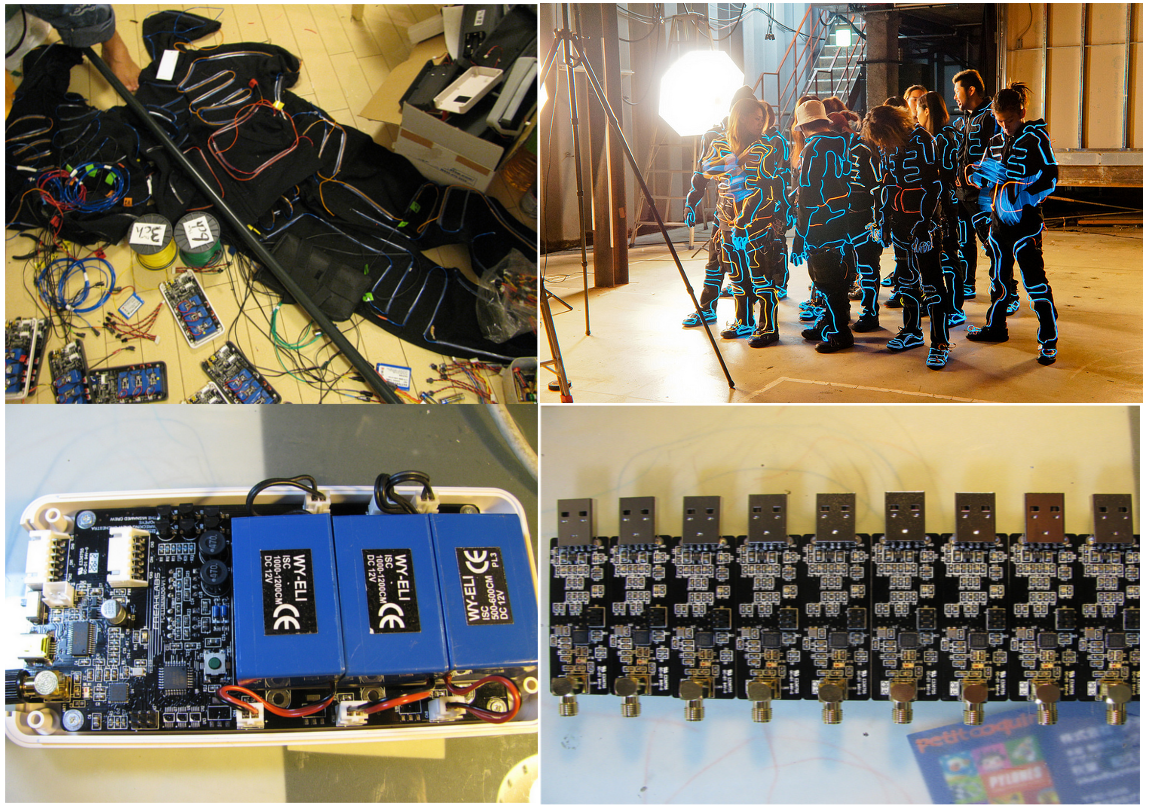
Some technologies politely sit on a desk and blink. Others sneak into a dance performance, wrap themselves around a costume, glow like cyberpunk spaghetti, and make everyone in the audience whisper, “Wait, how did they do that?” Electroluminescent wire, better known as EL wire, belongs firmly in the second category. It is flexible, glowing, dramatic, and just troublesome enough to keep engineers humble.
The title “Get Tangled Up In EL Wire With Freaklabs” points to one of the most fascinating intersections in maker culture: wearable electronics, stage performance, wireless control, and the delightful chaos of building something that must work while humans are jumping, spinning, sweating, and pretending physics signed a permission slip. FreakLabs, associated with Chris “Akiba” Wang and wireless Arduino-compatible hardware, became part of that story through projects involving illuminated dance costumes, theatrical synchronization, and the challenge of making electronics behave in a hostile live-performance environment.
At first glance, EL wire seems simple. Plug it into a driver, and it glows. Easy, right? That is the cute brochure version. In real builds, especially performance builds, EL wire is a little like a cat wearing a tiny astronaut helmet: amazing to look at, but full of opinions. It needs the right inverter, the right length, careful routing, enough brightness for the environment, and a control system that does not panic when the room is full of wireless noise.
What Is EL Wire, And Why Do Makers Love It?
EL wire is a thin, bendable lighting material made from a central conductor coated with phosphor, wrapped with fine wires, and protected by a plastic outer jacket. When powered by the correct alternating-current signal from an inverter, the phosphor glows. The effect looks less like a flashlight and more like a clean line of neon drawn with a magic marker.
That clean line is the secret sauce. LEDs are bright and powerful, but they often look like dots unless diffused. EL wire gives a continuous outline, which makes it perfect for costumes, props, signs, helmets, bicycles, backpacks, stage suits, Halloween builds, futuristic furniture, and anything else that needs to say, “I arrived from a better-lit timeline.”
EL Wire Versus LEDs
EL wire is not usually as bright as LEDs, so it performs best in dim spaces. A dark stage, a night ride, a themed room, or a photo shoot can make EL wire look spectacular. In direct daylight, however, it may look like it called in sick. That is why many successful EL wire projects are designed around contrast: black costumes, dark backgrounds, controlled lighting, and choreographed movement.
Its biggest advantage is shape. EL wire can curve, bend, and trace outlines without needing a row of individual light sources. Want a glowing ribcage effect on a jacket? EL wire understands the assignment. Want animated outlines on a dance suit? EL wire is ready, although it may request hazard pay.
Where FreakLabs Enters The Glow Show
FreakLabs has long been connected with wireless hardware, Arduino-compatible boards, and open-source sensor-network ideas. Akiba’s work has crossed from practical monitoring systems into creative performance technology, which is exactly where EL wire becomes interesting. A costume with one glowing wire is a craft project. A whole dance troupe wearing synchronized glowing suits is an engineering project wearing sneakers.
In the case often associated with FreakLabs and Wrecking Crew Orchestra, the technical challenge was not simply turning lights on. It was coordinating illuminated costumes during live performance, where timing matters, movement is intense, and the wireless environment is messy. Stage lighting systems, audience phones, Wi-Fi signals, cameras, and other electronics can create interference. In other words, the room is basically yelling in radio language while your tiny wearable receiver is trying to hear choreography instructions.
That is where engineering becomes performance art. A reliable system must think about antenna direction, transmitter placement, signal strength, battery life, connectors, software timing, repairability, and the fact that dancers are not mannequins. They bend. They sweat. They collide. They do dramatic arm movements. Electronics, being electronics, prefer sitting calmly on a bench. The job is to make both worlds cooperate.
The Stage Problem: Pretty Lights Must Also Be Reliable
A stage show using EL wire is a harsh test. The audience only sees the magic: glowing bodies appearing from darkness, lines pulsing in rhythm, and suits turning performers into living graphics. Behind the scenes, every meter of wire is a potential failure point. Every connector is a tiny drama queen. Every battery pack has an opinion about runtime.
For Wrecking Crew-style performances, costumes may use many meters of EL wire. That creates several issues at once. Longer EL wire loads can reduce brightness when the inverter is pushed too far. More wire also means more routing complexity and more opportunities for physical stress. If the suit must look bright under stage conditions, designers may be tempted to drive the wire harder. That can improve visibility, but it can also shorten the working life of the wire. Art says, “Make it brighter.” Engineering says, “Sure, but it may burn out faster.” Then production says, “The show starts in eight minutes.”
Why Wireless Control Is Harder Than It Looks
Wireless control sounds elegant until you place it in a live venue. The transmitter must reach moving performers consistently. The receivers must respond on cue. Lighting changes must remain synchronized with music and choreography. If one dancer lights up late, the audience may not know the technical reason, but they will notice that the glowing robot army has one confused robot.
FreakLabs’ background in wireless development makes the story especially relevant. Boards such as the Freakduino were designed for Arduino-compatible wireless prototyping, helping makers transmit data without adding a pile of extra modules. That kind of thinking fits wearable performance systems: keep hardware compact, keep the protocol understandable, and make the system practical enough to repair when something inevitably gets stepped on.
How EL Wire Works In Real Projects
EL wire does not run directly from ordinary DC battery power like a simple LED. It requires an inverter or driver that changes low-voltage battery power into the higher-voltage AC signal needed to make the phosphor glow. That does not mean EL wire is automatically dangerous when used correctly with commercial drivers, but it does mean builders should respect the electronics. Use the right driver, follow manufacturer instructions, insulate connections well, and do not treat exposed wiring like a snack.
EL wire is also capacitive, which means the total length attached to a driver matters. More wire increases the load. A small pocket inverter may handle a short decorative strand beautifully but struggle with a long costume layout. This is where planning saves tears. Before sewing or taping anything permanently, a builder should test the full length, brightness, battery runtime, and physical comfort.
Common EL Wire Design Choices
For costumes, designers often choose between outlining body shapes, creating symbols, or building animated segments. Outlining gives a strong visual identity. Symbols are great for logos, characters, or themed events. Animated segments require more control channels but create a bigger “wow” factor. The more channels you add, the more complex the wiring becomes. This is the moment when your project table starts to look like a glowing bowl of noodles.
For stage work, modularity is king. If a strand fails, it should be replaceable. If a connector loosens, it should be accessible. If a battery dies, it should be swappable. A costume that looks beautiful but takes thirty minutes to repair is not performance gear; it is a museum exhibit with anxiety.
FreakLabs, Maker Culture, And The Beauty Of Practical Hacking
The FreakLabs angle is not just about one glowing performance. It represents a broader maker philosophy: build tools that solve real problems, then adapt them creatively. Wireless sensor networks, Arduino-compatible boards, open-source libraries, and stage wearables might seem like separate worlds, but they share the same core questions. How do we collect or send data? How do we make hardware reliable? How do we keep the system understandable enough that real people can use it?
That is why EL wire projects are so charming. They make electronics visible. Many embedded systems hide inside boxes, quietly doing useful work. EL wire does the opposite. It says, “Look at the circuit. It has entered show business.” When the wire glows in sync with music or movement, the audience sees engineering translated into emotion.
Practical Lessons From EL Wire Builds
The first lesson is simple: test before final assembly. EL wire can look different depending on length, color, driver, battery condition, and ambient light. A strand that looks amazing on a workbench may look shy on stage. Always test in conditions as close as possible to the final environment.
The second lesson is strain relief. Movement destroys lazy wiring. Every bend point, shoulder seam, knee area, glove, and connector should be protected from repeated pulling. Costumes need flexible routing and secure attachment points. A dancer should be able to move naturally without yanking the electronics apart like an overexcited raccoon opening a snack bag.
The third lesson is brightness management. EL wire brightness can be affected by voltage, frequency, driver capacity, and length. Pushing brightness too hard can reduce lifespan. That trade-off may be acceptable for a short performance, but it is not ideal for long-term installations. For durable projects, choose the right wire and driver combination rather than forcing a small inverter to perform heroic acts.
The fourth lesson is repair planning. Bring spare strands, spare connectors, batteries, tape, heat shrink, and basic tools. In theatrical environments, “It worked yesterday” is not a maintenance plan. It is an invitation for the universe to laugh.
Creative Uses For EL Wire Inspired By FreakLabs
EL wire is perfect for more than dance suits. Makers can use it to create animated wall art, cyberpunk signs, glowing backpacks, cosplay armor, bicycle safety outlines, stage props, musical instruments, gaming-room decor, and interactive installations. Add a microcontroller or sequencer, and the wire can pulse, chase, blink, or react to sound.
A beginner-friendly concept is a glowing jacket outline. Keep the design simple: one or two colors, short runs, and a small driver. A more advanced project could divide the jacket into multiple zones: shoulders, sleeves, chest, and back. With sequencing, the suit can create motion effects even when the wearer is standing still. Congratulations, you are now a human loading screen.
Another strong idea is a performance prop. A staff, hoop, mask, or guitar decorated with EL wire can be visually dramatic without needing high LED brightness. Props are often easier than clothing because they flex less. That means fewer broken connections and fewer moments where you discover that your left sleeve has achieved electrical independence.
Safety And Comfort Matter More Than The Glow
A glowing costume should still be comfortable, breathable, and safe. Battery packs should be secured where they do not jab the wearer. Inverters may produce a faint high-pitched sound, so placement matters. Wires should not restrict joints or create trip hazards. Any project worn by a performer should be tested during real movement, not just while standing heroically in front of a mirror.
For younger makers, classrooms, or workshops, adult supervision is smart when cutting, soldering, or wiring EL materials. Pre-soldered EL wire and ready-made drivers can make projects easier and safer. The goal is to learn, build, and glownot to turn a weekend project into a tiny electrical mystery novel.
Why This Topic Still Feels Fresh
EL wire is no longer the newest shiny object in the maker drawer. Addressable RGB LEDs, flexible LED strips, and tiny microcontrollers have become incredibly popular. Yet EL wire still has a visual personality that LEDs do not fully replace. It is soft, continuous, and graphic. It turns outlines into light. It feels retro-futuristic, like something designed by a 1980s arcade cabinet after drinking espresso.
FreakLabs’ connection to EL wire performance reminds us that great maker projects are not always about using the newest part. They are about choosing the right tool for the desired effect. EL wire was ideal for glowing outlines on moving bodies. Wireless control made the performance dynamic. Engineering made the illusion dependable enough to survive showtime.
Experiences Related To Getting Tangled Up In EL Wire With FreakLabs
Anyone who has worked with EL wire learns quickly that the word “wire” is both accurate and wildly inadequate. It behaves like craft material, electrical component, costume trim, and stage diva all at once. The first experience many builders have is pure joy: the room lights go down, the inverter clicks on, and suddenly a plain object looks like it belongs in a science-fiction parade. That first glow is addictive. It makes people immediately ask dangerous questions like, “What if I cover the entire jacket?” or “Could I outline the dog?” For the record, leave the dog out of it.
The second experience is the tangle. EL wire loves to loop around itself, twist under tools, and hide its ends at the exact moment you need them. A neat project can become a glowing nest if the wire is not labeled and organized. Builders who work on costumes often learn to route one section at a time, tape it temporarily, test it, and only then make it permanent. This slow approach feels less glamorous than throwing wire everywhere like a cyberpunk pasta chef, but it prevents headaches later.
The third experience is discovering that performance changes everything. A design that works on a table may fail when attached to a moving person. Knees bend. Elbows swing. Fabric stretches. Connectors tug. A performer may love the look but hate the battery pack placement. The best wearable builds come from testing with the person who will actually wear them. Comfort is not a luxury; it is part of the circuit.
The fourth experience is learning to respect darkness. EL wire looks best when the environment supports it. In a bright room, the glow may feel subtle. In a dark room with thoughtful contrast, it becomes stunning. This is why dance groups, theater productions, and night events can use EL wire so effectively. The technology does not need to overpower the world; it needs the world to dim the lights and let it speak.
The fifth experience is realizing how much engineering hides behind “cool.” A synchronized EL wire show may look effortless, but it depends on planning, wireless reliability, timing, battery management, and fast repair. That is what makes the FreakLabs connection so compelling. It shows maker culture at its best: playful on the surface, serious underneath, and always ready to solve problems with a mixture of science, stubbornness, and probably too much coffee.
Conclusion: EL Wire Is Still A Glowing Invitation To Experiment
“Get Tangled Up In EL Wire With Freaklabs” is more than a catchy title. It is a reminder that technology becomes memorable when it leaves the desk and enters the real world. EL wire may be flexible and fun, but using it well requires planning, testing, and respect for its limitations. FreakLabs’ work around wireless control and performance lighting shows how maker tools can transform costumes into synchronized visual instruments.
For beginners, EL wire offers an approachable way to explore wearable electronics. For advanced builders, it opens questions about sequencing, radio control, stage reliability, and human-centered design. For everyone else, it delivers the simple pleasure of glowing lines in the darkwhich, frankly, is still cooler than most things hiding in a parts drawer.
Note: This article is written as original, publication-ready SEO content based on real EL wire, FreakLabs, Arduino-compatible wireless hardware, and maker-stage performance information. It does not include source links in the article body so it can be copied cleanly into a publishing system.