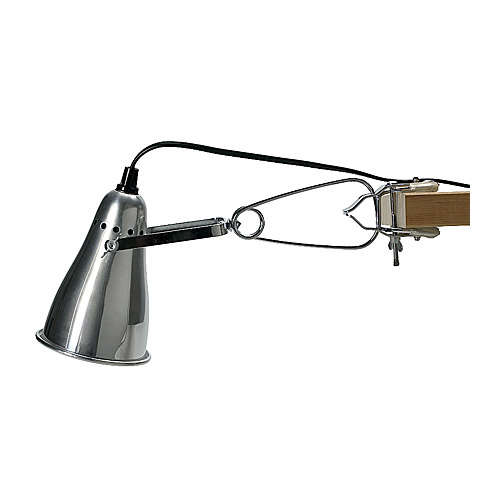
The Fas Clamp Spotlight is the kind of little lamp that looks too simple to deserve a full conversationuntil you actually use one. Then it becomes the lighting equivalent of a pocketknife: compact, practical, slightly industrial, and suspiciously useful in places where a normal lamp would simply stand there looking confused.
Originally known as an IKEA clamp spotlight associated with designer Tord Björklund, the FAS earned attention because it solved a very ordinary problem with very little drama: how do you aim light exactly where you need it without buying a table, installing a wall fixture, or sacrificing half your desk to a giant lamp base? The answer was a clamp, an adjustable head, and a clean metal look that slid easily into bedrooms, studios, workshops, dorm rooms, home offices, shelves, and reading corners.
Today, the Fas Clamp Spotlight has a second life in vintage IKEA circles, DIY lighting projects, and small-space design conversations. It is no longer just “that cheap clip-on light.” It is a reminder that good design does not always arrive wearing a tuxedo. Sometimes it arrives with a clamp.
What Is the Fas Clamp Spotlight?
The Fas Clamp Spotlight is a small, portable clamp lamp designed to attach to a surface and direct light toward a specific area. Unlike a standard desk lamp, it does not need a flat tabletop. Unlike a wall sconce, it does not require permanent installation. Its main trick is flexibility: clamp it, angle it, switch it on, and let it do its tiny spotlight job.
Its original appeal came from three practical features. First, the clamp made it movable. Second, the adjustable lamp head allowed users to direct light toward a book, keyboard, shelf, artwork, craft table, or workbench. Third, the silver metal finish gave it a simple, utilitarian look that felt at home in both minimalist interiors and slightly chaotic creative spaces.
In plain English, the FAS was not trying to be a chandelier. It was trying to help you read page 42 without waking up the whole room. That is a noble mission.
Why the Fas Clamp Spotlight Still Gets Attention
Some products disappear and are forgotten. Others disappear and somehow become more interesting. The Fas Clamp Spotlight belongs to the second category. Part of the reason is nostalgia. Vintage IKEA has become collectible because many pieces combine accessible pricing, memorable forms, and practical Scandinavian design thinking.
The FAS also benefits from being genuinely useful. It is small, direct, and adaptable. In an era when many people work from bedrooms, kitchen counters, shared apartments, and improvised home offices, clamp lights make sense all over again. A lamp that does not demand permanent space is a lamp that understands modern life.
There is also a design lesson hiding inside this humble object. The FAS does not rely on decoration. Its beauty comes from proportion, purpose, and restraint. It has the confidence of an object that knows exactly what it is supposed to do. That confidence is rare. Many home accessories today behave like they are auditioning for a lifestyle commercial. The Fas Clamp Spotlight just clamps on and gets to work.
The Design: Small, Industrial, and Very Scandinavian
The Fas Clamp Spotlight fits neatly into the broader language of Scandinavian-inspired design: simple lines, practical materials, and a focus on everyday use. Its metal shade gives it a light industrial personality, while its compact size keeps it from feeling heavy or overly technical.
Minimalism Without Feeling Cold
Minimal design can sometimes feel like a room is judging you for owning socks. The FAS avoids that problem because it is minimal in a useful way. There is no unnecessary ornament, but there is also no arrogance. It looks like a tool, and tools have their own charm. The silver finish works with white walls, wood shelves, black metal furniture, concrete textures, and colorful creative corners.
Adjustability as the Main Feature
The adjustable head is the star of the show. Directional light matters because tasks rarely happen directly under a ceiling fixture. Reading, sketching, sewing, model building, laptop work, and late-night journaling all benefit from focused illumination. A clamp spotlight gives you light exactly where your eyes need it instead of blasting the entire room like an airport runway.
Clamp Design for Small Spaces
The clamp is what makes the FAS special. It can attach to a shelf edge, desk side, storage unit, bench, temporary work surface, or craft station. For renters and students, this is a major advantage. There is no drilling, no mounting plate, and no awkward conversation with a landlord named Gary who believes every wall hole is a personal betrayal.
Best Uses for the Fas Clamp Spotlight
The FAS works best when used as a focused task light or accent light. It is not meant to replace all room lighting. Instead, it supports specific activities and adds a concentrated beam where general lighting falls short.
1. Reading Light
Clamp it to a shelf near a chair, a side table, or a sturdy bed-adjacent surface, and it becomes a compact reading light. The key is to position it so the beam lands on the page without shining directly into your eyes. The result is cozy, practical, and far better than trying to read under a ceiling light that makes your novel look like office paperwork.
2. Desk and Study Light
For a desk, the Fas Clamp Spotlight is especially useful when space is limited. Since it does not need a wide base, it leaves room for notebooks, monitors, tablets, coffee mugs, and the mysterious pile of cables that appears in every workspace after three days.
For screen work, place the light off to the side and slightly behind the main writing area. This reduces glare on the monitor while still illuminating notes, keyboards, or printed material.
3. Craft and Hobby Lighting
Artists, model makers, jewelry hobbyists, and DIY fans often need directional light. A clamp spotlight can be attached to a table edge or shelving unit to brighten detailed work. The ability to reposition the lamp is valuable because different projects create different shadows.
4. Shelf and Display Accent
The FAS can also work as a small accent lamp. Clamp it onto shelving and aim it toward books, ceramics, plants, framed prints, or a favorite object. It creates a focused highlight without the commitment of wired display lighting.
5. Workshop or Utility Corner
In a garage, laundry area, or utility space, clamp lights are helpful because they can be moved to the exact spot where visibility is poor. Just make sure the lamp is securely attached, the cord is safely routed, and the bulb stays away from flammable materials.
Lighting Performance: What to Know Before Using One
A clamp spotlight is only as good as the bulb and placement behind it. The original FAS was designed before today’s LED bulbs became the default choice for many homes, so choosing the right modern bulb matters.
Use Lumens, Not Just Watts
Wattage tells you how much power a bulb uses. Lumens tell you how bright it is. For task lighting, many users prefer a moderate brightness that illuminates clearly without creating harsh glare. A compact LED bulb can often provide useful brightness while using far less energy than an older incandescent bulb.
Choose the Right Color Temperature
Warm white light, usually around 2700K to 3000K, feels cozy and works well for bedrooms and reading corners. Neutral white, around 3500K to 4000K, can feel better for desks, crafts, and focused work. Cooler light may look crisp, but in a relaxing room it can also feel like someone invited a dentist’s office to dinner.
Watch Heat and Clearance
Clamp spotlights concentrate light in one direction, so safe placement matters. Keep the lamp away from curtains, bedding, paper stacks, clothing, and other materials that can burn. Do not exceed the fixture’s rated bulb wattage. Even a charming vintage lamp deserves basic electrical respect.
Vintage Appeal: Why Collectors Like the FAS
Vintage IKEA pieces have developed a loyal audience, and the Fas Clamp Spotlight fits that world nicely. It is affordable compared with many collectible lamps, easy to recognize, and practical enough to use rather than merely admire. It also reflects a time when IKEA’s design identity leaned hard into functional, democratic objects: good-looking pieces that ordinary people could actually buy.
Collectors often appreciate the FAS for its aluminum or metal look, compact shade, clamp mechanism, and association with 1990s IKEA design. It has the clean utility of an industrial work light but the scale of a home accessory. That balance makes it easy to mix with mid-century furniture, contemporary desks, Scandinavian shelves, and even colorful postmodern interiors.
Because the original lamp is no longer widely available at IKEA, shoppers usually find it through vintage sellers, resale platforms, local marketplaces, and secondhand shops. Condition matters. Buyers should check the clamp strength, shade dents, cord condition, plug type, socket compatibility, and whether the lamp has been tested safely.
How to Style the Fas Clamp Spotlight at Home
The Fas Clamp Spotlight is not fussy, which is exactly why it is fun to style. It can look intentional in many rooms as long as you treat it like part of the design rather than a random emergency lamp.
For a Minimal Home Office
Clamp the lamp to a floating shelf above the desk or to the side of a worktable. Pair it with a clean desk mat, a simple chair, and neutral storage boxes. The silver finish adds a small industrial note without overpowering the setup.
For a Cozy Reading Corner
Attach it to a bookshelf and aim the beam downward toward an armchair. Add a textured throw, a small side table, and a warm LED bulb. Suddenly your corner says “literary retreat” instead of “forgotten chair near outlet.”
For a Creative Studio
Use two clamp spotlights on opposite sides of a workbench to reduce shadows. One can serve as primary task light while the other fills in darker areas. This works well for sketching, hand lettering, miniature painting, or small product photography.
For Open Shelving
Clamp the light to a shelf and aim it at a display object or plant. This creates depth in the room and makes shelves feel styled rather than simply loaded with things you promised to organize last month.
Fas Clamp Spotlight vs. Modern Clamp Lights
Modern clamp lights often include built-in LEDs, dimming controls, USB power, flexible necks, and touch switches. Those features are convenient, especially for people who want precise brightness control or a lamp for long hours of computer work. However, the FAS has something many newer models lack: a simple, replaceable-bulb design and a classic metal personality.
A built-in LED lamp can be sleek, but when the LED component fails, repair may be difficult. A traditional socket lamp can often accept a new bulb, making it easier to maintain. That does not automatically make one better than the other. It depends on your priorities. If you want modern controls, choose a modern lamp. If you want vintage charm and straightforward function, the FAS remains appealing.
Buying Tips for a Fas Clamp Spotlight
If you are shopping for a vintage Fas Clamp Spotlight, inspect carefully before buying. A lamp may look beautiful in photos but still have issues that matter in daily use.
- Check the clamp: It should grip firmly without wobbling or slipping.
- Inspect the cord: Avoid cracked, brittle, frayed, or poorly repaired wiring.
- Confirm bulb compatibility: Make sure the socket and plug type work for your country or can be safely adapted by a qualified person.
- Look for heat marks: Scorching near the shade or socket may signal past overheating.
- Review dimensions: Confirm the clamp opening fits your desk, shelf, or planned surface.
- Prefer tested lamps: A seller who confirms working condition gives more confidence than one who simply writes “looks cool.”
Safety Tips for Using Clamp Spotlights
Clamp lamps are convenient, but they need sensible placement. Always attach the lamp to a stable surface. Do not clamp it to loose fabric, thin cardboard, unstable boards, or anything that may shift. Keep the cord away from walking paths and avoid pinching it under furniture.
Use the correct bulb wattage for the fixture. If you are unsure, choose a low-wattage LED that delivers the brightness you need without producing excessive heat. Keep the shade and bulb away from curtains, blankets, paper, dried flowers, and other combustible materials. If a lamp smells hot, flickers, buzzes, sparks, or shows damaged wiring, stop using it.
This may sound less glamorous than a design magazine photo, but safety is part of good design. A lamp should brighten your room, not audition for a fire department training video.
DIY Ideas Inspired by the Fas Clamp Spotlight
The FAS has inspired creative projects because the basic form is so adaptable. Some people use clamp spotlights as temporary sconces by attaching them to mounted blocks or shelves. Others use them to create studio lighting, reading stations, or display highlights. The important rule is to avoid unsafe electrical modifications unless you know exactly what you are doing or consult a qualified professional.
Cosmetic upgrades are easier. You can pair the lamp with a warm LED bulb, route the cord neatly with clips, place it against a contrasting wall color, or use it as part of a shelf styling arrangement. The goal is not to disguise the lamp. The goal is to let its practical personality become part of the room.
Experience Notes: Living With a Clamp Spotlight
After using clamp-style spotlights in real rooms, the first thing you notice is how often they solve small lighting problems that bigger lamps ignore. A floor lamp may look elegant, but it cannot always reach the exact corner of a desk where your notebook sits. A ceiling light may brighten a room, but it often creates shadows right where your hands are working. A clamp spotlight quietly fixes those issues without demanding applause.
The best experience comes from experimenting with placement. At first, most people clamp the lamp in the most obvious spot, aim it directly at the task, and call it done. That works, but a little adjustment makes a big difference. Moving the lamp a few inches higher can soften shadows. Angling it slightly across the work surface can reduce glare. Turning it toward a wall can create indirect light that feels calmer in the evening. The FAS rewards this kind of tinkering.
In a bedroom, the clamp spotlight works best when treated as a reading companion rather than a main lamp. A warm bulb makes the room feel comfortable, and the focused beam keeps light from flooding the space. This is useful if one person wants to read while someone else wants to sleep. The lamp should be clamped securely to furniture that does not move, and it should never be buried near pillows, blankets, or curtains.
In a home office, the experience is more practical. A clamp light frees up desk space, which is a blessing if your desk is already hosting a laptop, charger, notebook, water bottle, and the emotional support sticky notes required for modern productivity. The FAS-style lamp is especially useful on compact desks because it provides task lighting without adding visual clutter. It also makes a workspace feel more intentional, even if that workspace is technically one corner of a dining table.
For creative work, a clamp spotlight can become surprisingly important. When drawing, repairing small objects, sorting hardware, or photographing items, light direction changes everything. Shadows can hide details, distort color, or make a simple task feel harder than it should. A movable spotlight lets you chase the shadow away. That sounds dramatic, but anyone who has tried to thread a needle under bad lighting understands the heroic value of a well-aimed beam.
The biggest lesson is that small lighting choices can change how a room functions. The Fas Clamp Spotlight proves that a lamp does not need to be expensive, oversized, or packed with smart features to be valuable. It needs to be easy to place, easy to aim, and pleasant enough to leave visible. That combination is why clamp spotlights continue to earn loyal fans. They are practical, humble, and oddly satisfyinglike finding an extra outlet exactly where you need one.
The only real drawback is that clamp lamps can look messy if the cord is ignored. A neat cord path makes the whole setup feel designed rather than temporary. Use the back edge of a shelf, the side of a desk, or adhesive cord guides to control the line. Once the cord is handled, the lamp looks cleaner, works better, and stops giving “college dorm emergency solution” unless that is the aesthetic you are proudly maintaining.
Conclusion
The Fas Clamp Spotlight remains interesting because it does one thing extremely well: it puts light where you need it. Its compact clamp design, adjustable head, metal look, and vintage IKEA background make it useful for small spaces, creative rooms, workstations, shelves, and reading corners.
It is not the flashiest lamp in the world, and that is part of the charm. The FAS is practical design with a wink. It proves that a small object can improve daily life without shouting about innovation, lifestyle transformation, or “premium illumination architecture.” Sometimes a good lamp simply clamps onto a shelf and helps you see.
For anyone who loves functional lighting, vintage IKEA pieces, Scandinavian design, or clever small-space solutions, the Fas Clamp Spotlight deserves its little moment in the spotlight. Yes, the pun was unavoidable. The lamp made me do it.
Note: This is original, publish-ready HTML body content written in standard American English. Source-link artifacts and unnecessary citation placeholders have been removed from the article body for clean web publishing.