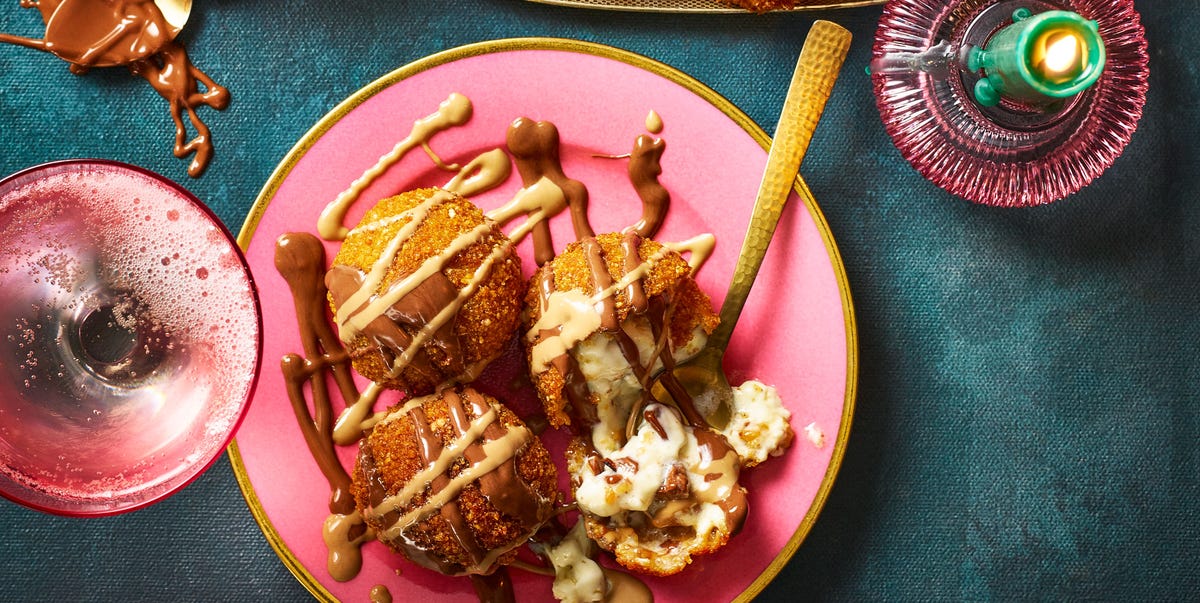
Deep-fried ice cream already sounds like a dessert invented by someone who looked at a freezer, looked at a pot of hot oil, and said, “Let’s make physics nervous.” Now add a Florentine-inspired coatingcrisp almonds, caramel notes, a hint of orange, and a glossy chocolate finishand suddenly this dessert becomes the kind of dramatic finale that makes dinner guests pause mid-sentence.
This crispy and gooey deep-fried Florentine ice cream recipe combines two dessert worlds: the cold, creamy center of classic fried ice cream and the delicate crunch of almond Florentine cookies. The result is a golden shell that shatters lightly, a caramelized nutty aroma, and a soft, melty middle that feels almost illegal in the best possible way.
The secret is not magic. It is temperature control, a strong coating, and patience. The ice cream must be frozen rock-solid, the coating must be layered, and the oil must be hot enough to crisp the outside before the inside realizes what is happening. Think of it as a tiny dessert escape mission.
What Is Florentine Ice Cream?
Florentine ice cream is inspired by Florentine cookies, also called lace cookies. These thin, crisp cookies are typically made with almonds, butter, sugar, honey or syrup, and sometimes orange zest or chocolate. They are known for their delicate snap, caramel flavor, and elegant appearance.
In this recipe, we borrow those flavors and textures but use them in a coating for fried ice cream. Instead of wrapping ice cream in a full baked Florentine cookie, which can crack and melt unevenly, we create a Florentine-style crumb mixture using crushed cornflakes, toasted almonds, brown sugar, cinnamon, orange zest, and a little butter. This gives the dessert the same almond-caramel personality while making it practical for home kitchens.
Why This Recipe Works
The best deep-fried ice cream has contrast. The outside should be crisp and fragrant, while the inside stays cold and creamy. This version works because the coating is sturdy enough to protect the ice cream and flavorful enough to taste like more than just cereal crumbs.
A Double Freeze Keeps the Center Creamy
Ice cream softens quickly, especially once you start handling it. Freezing the scoops before and after coating gives them structure. The colder the ice cream, the more time the outer shell has to brown before the center melts.
Florentine Crumbs Add Caramel Crunch
Classic fried ice cream often uses crushed cornflakes and cinnamon. That is delicious, but this recipe goes further by adding toasted almonds, brown sugar, orange zest, and optional crushed Florentine cookies. The flavor becomes deeper, nuttier, and more bakery-style.
Hot Oil Makes the Shell Crisp Fast
The oil should be around 375°F. At this temperature, the outside crisps in seconds. If the oil is too cool, the coating absorbs oil and the ice cream melts. If it is too hot, the coating burns before it turns beautifully golden. A kitchen thermometer is your best friend here. A brave friend, but still a friend.
Ingredients
For the Ice Cream Balls
- 1 quart premium vanilla ice cream, slightly softened just enough to scoop
- 1 cup all-purpose flour
- 3 large egg whites, lightly beaten
- 1 tablespoon milk
- Vegetable, canola, or peanut oil, for frying
For the Florentine-Style Coating
- 3 cups cornflakes, crushed into coarse crumbs
- 1 cup sliced almonds, toasted and finely chopped
- 1/3 cup light brown sugar
- 1 teaspoon ground cinnamon
- 1/4 teaspoon fine sea salt
- 1 teaspoon finely grated orange zest
- 2 tablespoons unsalted butter, melted
- 1/2 cup crushed Florentine cookies or almond lace cookies, optional but highly recommended
For Serving
- 1/2 cup dark chocolate sauce or melted chocolate
- Honey or caramel sauce
- Whipped cream
- Extra toasted almonds
- A pinch of flaky salt
- Maraschino cherries or fresh berries, optional
Step-by-Step Instructions
Step 1: Scoop and Freeze the Ice Cream
Line a baking sheet with parchment paper. Scoop the vanilla ice cream into 6 to 8 firm balls, each about 1/2 cup. Place them on the prepared sheet and freeze for at least 2 hours, or until completely firm.
For smoother balls, use clean hands to gently round the scoops after they have firmed up for 30 minutes. Work quickly. Ice cream waits for no one, not even people with excellent intentions.
Step 2: Make the Florentine Coating
In a large bowl, combine crushed cornflakes, toasted almonds, brown sugar, cinnamon, salt, orange zest, and crushed Florentine cookies if using. Drizzle with melted butter and toss until the mixture is evenly coated.
The crumbs should smell buttery, nutty, and slightly citrusy. If the almonds are too large, chop them smaller so they cling well to the ice cream. A coating that falls off in the fryer is not a coating; it is a tiny kitchen protest.
Step 3: Build the Protective Layers
Place flour in one shallow bowl. In a second bowl, whisk egg whites with milk. Place the Florentine crumb mixture in a third bowl.
Working with one frozen ice cream ball at a time, roll it lightly in flour, dip it into the egg white mixture, then coat it thoroughly in the Florentine crumbs. Press gently so the crumbs stick. Repeat the egg white and crumb coating one more time for extra protection.
Return each coated ice cream ball to the parchment-lined baking sheet. Freeze again for at least 3 hours, preferably overnight. This second freeze is essential. Do not skip it unless you enjoy dessert soup with crunchy islands.
Step 4: Heat the Oil
Add 3 inches of oil to a heavy-bottomed pot or Dutch oven. Heat to 375°F. Use a thermometer to monitor the temperature and adjust the heat as needed.
Keep the pot no more than halfway full to prevent bubbling oil from rising too high. Set a wire rack or paper towel-lined plate nearby. Have toppings ready before frying, because once the ice cream is fried, dessert time moves fast.
Step 5: Fry Quickly
Remove only one or two coated ice cream balls from the freezer at a time. Carefully lower one ball into the hot oil using a spider strainer or slotted spoon. Fry for 10 to 20 seconds, turning gently if needed, until the coating is golden and crisp.
Transfer immediately to the prepared rack or plate. Repeat with the remaining ice cream balls, allowing the oil to return to 375°F between batches.
Step 6: Garnish and Serve Immediately
Place each fried ice cream ball in a chilled bowl. Drizzle with dark chocolate sauce and honey or caramel. Add whipped cream, toasted almonds, flaky salt, and berries if desired. Serve right away while the outside is hot and crisp and the center is still cold and creamy.
Flavor Variations
Chocolate Florentine Fried Ice Cream
Use chocolate ice cream and add 2 tablespoons cocoa powder to the crumb mixture. Finish with warm chocolate sauce and chopped hazelnuts for a richer dessert.
Orange-Almond Florentine Ice Cream
Use vanilla bean ice cream and add extra orange zest to the coating. Serve with dark chocolate and candied orange peel for a classic Florentine flavor profile.
Salted Caramel Florentine Ice Cream
Use caramel swirl ice cream, add a pinch of flaky salt to the coating, and finish with caramel sauce. This version is sweet, salty, crunchy, and wildly persuasive.
Coffee Florentine Ice Cream
Use coffee ice cream and add crushed espresso cookies to the coating. Chocolate sauce turns it into a café-style dessert with main-character energy.
Tips for Perfect Deep-Fried Florentine Ice Cream
Use Dense, Premium Ice Cream
Premium ice cream tends to have less air and a richer texture, which helps it hold its shape. Very light or airy ice cream can melt faster during handling and frying.
Freeze Longer Than You Think
The most common mistake is rushing the freezing step. The ice cream balls should feel hard, not merely cold. Overnight freezing gives the best results.
Crush the Coating Correctly
The crumbs should be coarse, not powdery. Fine crumbs can become dense and greasy, while overly large pieces may fall off. Aim for a sandy mixture with small crunchy bits.
Do Not Overcrowd the Pot
Frying too many ice cream balls at once drops the oil temperature. That leads to greasy coating and faster melting. One at a time is safest and most reliable.
Serve in Chilled Bowls
Chilled bowls help slow melting and make the dessert feel restaurant-level. It is a tiny step with a big payoff.
Common Mistakes to Avoid
Mistake 1: Skipping the Flour Layer
The flour helps the egg white adhere, and the egg white helps the crumbs stick. Without this structure, the coating may slide off like it has somewhere better to be.
Mistake 2: Using Warm Coating
If you toast the crumb mixture, cool it completely before coating the ice cream. Warm crumbs soften the ice cream before it reaches the fryer.
Mistake 3: Frying Too Long
This dessert only needs seconds in the oil. The goal is to crisp the shell, not cook the ice cream. Once the outside is golden, remove it immediately.
Mistake 4: Guessing the Oil Temperature
A thermometer removes the drama. Without one, the oil may be too cool or too hot, and both situations can ruin the texture. Save the drama for the chocolate drizzle.
Make-Ahead Instructions
You can prepare the coated ice cream balls up to 3 days ahead. Once fully frozen, wrap each coated ball tightly in plastic wrap and store them in a freezer-safe container. Keep them in the coldest part of the freezer, not near the door.
For best texture, fry straight from frozen. Do not thaw before frying. If the coating looks frosty, gently brush away ice crystals before adding the ice cream to the hot oil.
Serving Ideas
This crispy and gooey deep-fried Florentine ice cream recipe is already impressive, but the right toppings make it unforgettable. Dark chocolate balances the sweetness, honey emphasizes the Florentine cookie inspiration, and flaky salt sharpens every flavor.
For a dinner party, serve each portion in a small bowl with a spoonful of warm chocolate sauce underneath. Place the fried ice cream on top, drizzle with caramel, and finish with almonds and orange zest. It looks fancy, but nobody needs to know the coating started with cornflakes. That can remain between you and the pantry.
Storage and Reheating
Deep-fried ice cream is best eaten immediately. Once fried, it does not store well because the hot shell and cold center continue changing texture. However, unfried coated ice cream balls can be stored in the freezer for several days.
If you have extra Florentine crumb coating, store it in an airtight container in the refrigerator for up to one week. Sprinkle it over sundaes, yogurt, baked apples, or brownies. It is too good to waste and too crunchy to ignore.
Nutrition Notes
This is a rich dessert, not a Tuesday morning smoothie pretending to be cake. Deep-fried ice cream contains sugar, fat, and all the joyful chaos that comes with special-occasion food. Serve smaller portions if you want a lighter finish, or share one fried ice cream ball between two people after a large meal.
To make the dessert slightly lighter, use smaller scoops, choose a high-quality ice cream with simple ingredients, and keep the frying time short so the coating does not absorb excess oil.
Experience Notes: What I Learned Making Deep-Fried Florentine Ice Cream
The first thing you learn when making deep-fried Florentine ice cream is that confidence is helpful, but freezer space is more helpful. This recipe rewards planning. The ice cream balls need room to sit flat, freeze hard, and avoid touching anything warm. If your freezer is crowded with mystery leftovers and one heroic bag of peas, clear a shelf before you begin.
The second lesson is that texture matters more than perfection. The ice cream balls do not need to look like they were shaped by a pastry chef with a ruler and a dream. Once they are coated in almond crumbs and fried, small bumps become golden crags of crunch. In fact, a slightly uneven surface can be a good thing because it creates more crisp edges.
When testing this style of dessert, the coating makes the biggest difference. Plain cornflakes give crunch, but the Florentine-inspired ingredients make the dessert taste intentional. Toasted almonds bring nuttiness, brown sugar adds caramel depth, orange zest lifts the richness, and chocolate sauce ties everything together. Without those details, fried ice cream can taste like a carnival snack. With them, it becomes a plated dessert that feels elegant but still fun.
Another important experience is learning to fry with speed. This is not the moment to answer a text, adjust music, or discuss whether the dishwasher is clean. Once the ice cream hits the oil, the clock is running. Ten to twenty seconds is enough. The coating should turn golden quickly, and the ice cream should come out before the center softens too much. If the shell looks beautiful but the ice cream is leaking, it stayed in too long.
Serving also matters. Deep-fried Florentine ice cream is at its best in the first minute. That is when the outside is crisp, the chocolate is glossy, and the center is still cold. Have plates, toppings, spoons, and guests ready before frying. This dessert does not enjoy waiting. It is dramatic, delicious, and slightly impatient.
My favorite way to serve it is with dark chocolate sauce, a thin ribbon of honey, toasted almonds, and one tiny pinch of flaky salt. The salt is not optional in spirit, even if it is optional on paper. It makes the caramel notes pop and keeps the sweetness from becoming too heavy. A little orange zest on top adds color and aroma, making the whole bowl feel brighter.
The final lesson is simple: this recipe looks harder than it is. The process has several steps, but none are complicated. Scoop, freeze, coat, freeze again, fry quickly, and serve. The real skill is patience. Give the ice cream enough time to freeze, keep the oil hot, and do not panic when the pot bubbles. The reward is a dessert that delivers crunch, creaminess, warmth, coldness, caramel, almond, chocolate, and a little kitchen applause all in one bite.
Conclusion
This crispy and gooey deep-fried Florentine ice cream recipe is the kind of dessert that turns a regular meal into a small celebration. It blends the nostalgic thrill of fried ice cream with the refined flavor of almond Florentine cookies, creating a contrast of hot, cold, crisp, creamy, nutty, and sweet.
The key is preparation: freeze the scoops until solid, build a strong double coating, keep the oil at the right temperature, and serve immediately. Once you master those basics, you can experiment with chocolate, caramel, orange, coffee, or salted honey variations. It is playful, dramatic, and just fancy enough to make everyone think you have a secret pastry degree hidden in a kitchen drawer.