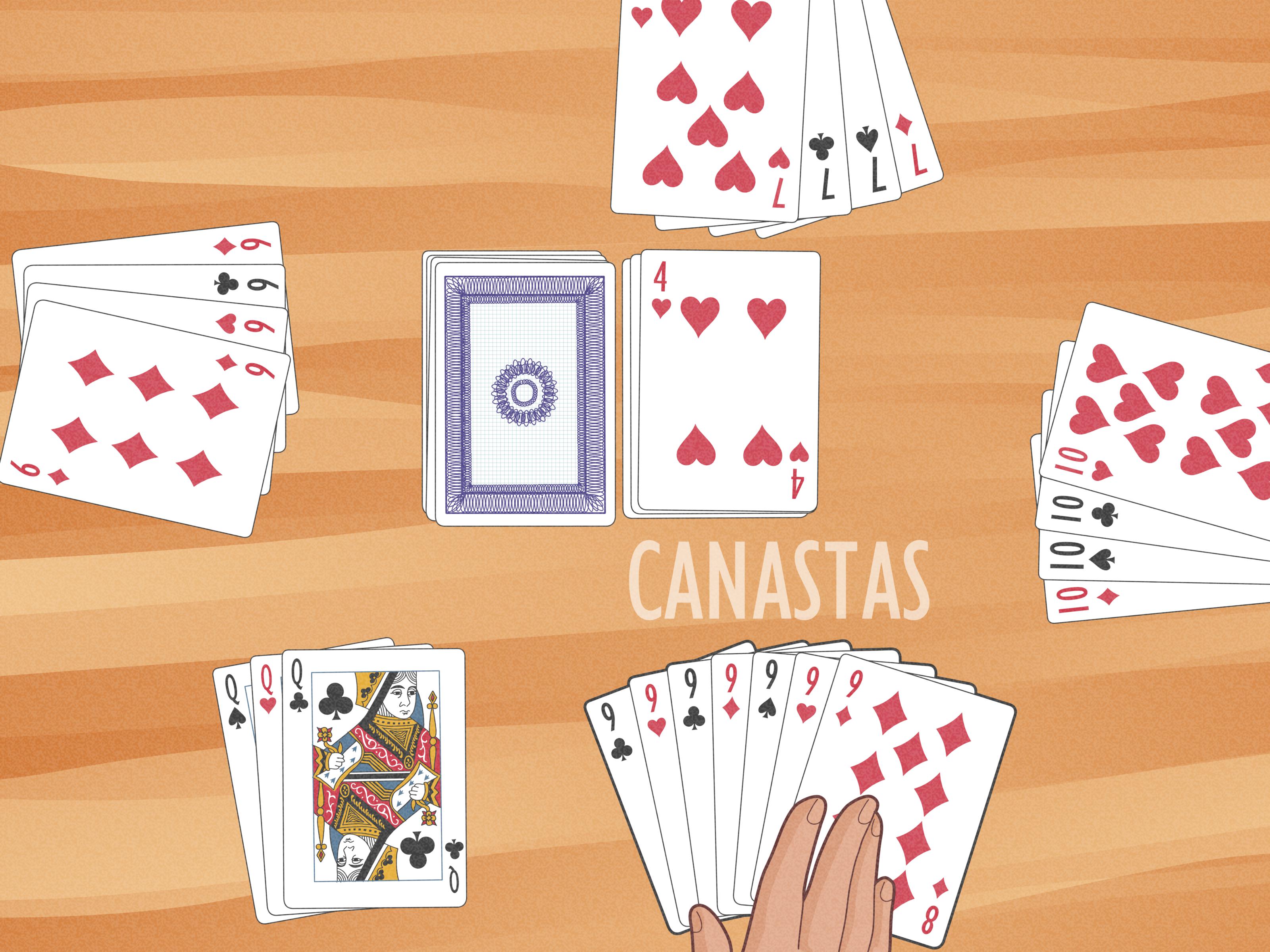
Four players, one table, and a deck of cards: that is all you need to create a game night that can go from “friendly warm-up” to “we need a family meeting” in about six minutes. The best 4 player card games work because they balance luck, memory, strategy, social reading, and just enough chaos to keep everyone leaning forward.
Whether you want a serious partnership battle like Bridge, a sharp trick-taking contest like Spades, a low-pressure family favorite like Crazy Eights, or a loud party sprint like Spoons, this guide gives you the rules, objectives, setup, and practical tips for ten of the best card games for four players. Most use a standard 52-card deck. Some need two decks, jokers, spoons, or a slightly stripped deck, but none require a PhD in cardboard science.
Below, you will find easy-to-follow rules, clear objectives, and examples that help you choose the right game for your group. Pick your vibe: strategic, silly, competitive, relaxed, or “everyone suddenly accuses Uncle Mike of counting cards.”
Quick Comparison: Best 4 Player Card Games
| Game | Best For | Deck Needed | Main Objective |
|---|---|---|---|
| Spades | Team strategy | Standard 52-card deck | Bid accurately and win enough tricks |
| Hearts | Individual strategy | Standard 52-card deck | Avoid penalty cards and keep the lowest score |
| Euchre | Fast partnership play | 24-card stripped deck | Win tricks after choosing trump |
| Bridge | Deep strategy | Standard 52-card deck | Bid and make contracts with your partner |
| Rummy | Relaxed matching play | Standard 52-card deck | Create sets and runs, then go out |
| Canasta | Longer team games | Two decks plus jokers | Build melds and canastas |
| Pinochle | Melds and tricks | 48-card pinochle deck | Score through bidding, melds, and tricks |
| Crazy Eights | Families and beginners | Standard 52-card deck | Be first to discard all cards |
| Spoons | Party chaos | Standard deck plus 3 spoons | Collect four of a kind and grab a spoon |
| Presidents | Casual social play | Standard 52-card deck | Get rid of all cards first |
1. Spades
Objective
Spades is one of the best 4 player card games for people who like teamwork, prediction, and dramatic eye contact across the table. Players form two partnerships. The goal is to bid how many tricks your team expects to win, then win at least that number. Spades are always trump, which means they beat cards from other suits when trumping is allowed.
Basic Rules
Use a standard 52-card deck. Deal all cards evenly, giving each player 13 cards. Each player bids a number of tricks. Partners combine their bids into a team contract. The player to the dealer’s left leads the first trick, and everyone must follow suit if possible. If a player cannot follow suit, they may play a spade or discard another card. The highest card in the led suit wins unless a spade is played; in that case, the highest spade wins.
Spades usually cannot be led until they are “broken,” meaning someone has played a spade because they could not follow suit. Many groups score 10 points per bid trick and 1 point per overtrick. Overtricks, often called bags, can become dangerous if your house rules penalize too many of them.
Why It Is Great for Four Players
Spades shines at exactly four players because partnerships create tension without making the game too complicated. You must help your partner without table-talking, which means every card becomes a tiny message. Sometimes that message is “I have control.” Sometimes it is “Please forgive me.”
2. Hearts
Objective
Hearts flips the normal trick-taking idea upside down. Instead of trying to win valuable cards, you usually try to avoid them. The goal is to finish with the lowest score. Every heart is worth 1 penalty point, and the queen of spades is worth 13 penalty points.
Basic Rules
Use one standard 52-card deck. Deal 13 cards to each player. Before many hands, players pass three cards to another player according to the rotation: left, right, across, then no pass. The player with the 2 of clubs leads first. Players must follow suit if they can. There is no trump suit. The highest card of the suit led wins the trick.
Players may not lead hearts until hearts are broken, usually when someone discards a heart because they cannot follow suit. At the end of each hand, players count their penalty points. The game often ends when someone reaches 100 points, and the player with the lowest score wins.
Strategy Tip
Do not simply dump high cards at random. Watch which suits players are void in. If someone cannot follow clubs early, they may be ready to unload hearts or the queen of spades. Hearts is a game of avoiding trouble, unless you try to “shoot the moon,” which means taking all penalty cards and giving everyone else a painful surprise.
3. Euchre
Objective
Euchre is fast, bold, and perfect for four players in two teams. The objective is to win at least three of five tricks after a trump suit is chosen. If the team that chose trump fails to win three tricks, they are “euchred,” and the opponents score instead.
Basic Rules
Euchre uses a stripped deck, usually 9 through ace in each suit, for 24 cards total. Deal five cards to each player. The remaining cards form a small kitty, and the top card is turned up. Players decide whether to accept that suit as trump. If everyone passes, there is a second round where players may name a different trump suit.
The jack of the trump suit is the highest card and is called the right bower. The jack of the same color is the second-highest trump and is called the left bower. This one rule is responsible for many beginners staring at a jack like it just changed citizenship.
Why Players Love It
Euchre is quick. A hand lasts only five tricks, so decisions feel important immediately. It is also social without being slow. You can play several rounds in the time it takes someone to explain Bridge bidding.
4. Bridge
Objective
Bridge is the heavyweight champion of 4 player card games. It is played by two partnerships, with partners sitting opposite each other. The objective is to bid a contract, then win enough tricks to make that contract. Points come from successful contracts, defeated contracts, bonuses, and the exact scoring format your group uses.
Basic Rules
Use a standard 52-card deck. Deal 13 cards to each player. Bidding begins with the dealer. A bid states how many tricks above six the partnership expects to take and names a trump suit or no-trump. For example, a bid of “1 Spade” means the partnership aims to take seven tricks with spades as trump.
When the final bid is followed by three passes, it becomes the contract. The player who first named the contract suit or no-trump becomes declarer. The partner becomes dummy and places their hand face up after the opening lead. Declarer then plays both their own hand and dummy’s hand.
Best For
Bridge is ideal for players who enjoy long-term learning. It rewards memory, communication, probability, and discipline. It is not the easiest game on this list, but once it clicks, it becomes less like a card game and more like a lifelong hobby with snacks.
5. Rummy
Objective
Rummy is one of the easiest 4 player card games to teach because the objective is visual and satisfying: create matched sets and sequences. A set is three or four cards of the same rank. A run is three or more consecutive cards in the same suit. The goal is to get rid of all your cards by melding, laying off, and discarding.
Basic Rules
Use a standard 52-card deck. With four players, each player usually receives seven cards. The rest of the deck becomes the stock pile, and the top card is turned face up to start the discard pile. On your turn, draw from the stock or discard pile, place melds if you can or want to, lay off cards on existing melds, then discard one card.
When a player gets rid of all cards, the hand ends. Opponents count the value of cards left in their hands. Face cards usually count 10, aces often count 1, and number cards count their pip value.
Why It Works
Rummy is relaxed but not mindless. You must decide whether to keep a card for a future run, discard safely, or risk helping the next player. It is a great bridge between beginner card games and more strategic games like Canasta.
6. Canasta
Objective
Canasta is a partnership rummy game for four players. The main objective is to form melds of cards of the same rank, especially canastas, which are melds of seven or more cards. A natural canasta contains no wild cards, while a mixed canasta includes wild cards.
Basic Rules
Canasta uses two standard decks plus jokers. Deal 11 cards to each player. Jokers and twos are wild. Players draw, meld if possible, and discard. Melds must usually contain at least two natural cards and no more than three wild cards. Players may take the discard pile under certain conditions, which can create huge swings in momentum.
A team must usually complete at least one canasta before going out. Points come from card values, canasta bonuses, red threes, going out, and penalties for cards left in hand. Games often continue until one team reaches a target score such as 5,000 points.
Best For
Canasta is excellent when your group wants a longer, more strategic evening. It has enough drama to feel competitive but enough structure that partners can plan together. Also, few things in card games feel better than completing a clean canasta and pretending you meant to do it all along.
7. Pinochle
Objective
Pinochle combines bidding, melds, and trick-taking. Four-player partnership pinochle is played by two teams of two. The goal is to score points through meld combinations and cards won in tricks, while also making your bid.
Basic Rules
Pinochle usually uses a 48-card deck made of two copies each of the 9, 10, jack, queen, king, and ace in all four suits. Players bid for the right to name trump. After bidding, players reveal melds such as marriages, runs, arounds, and the famous pinochle combination: queen of spades and jack of diamonds.
After meld points are recorded, players take tricks. Card ranking in pinochle is unusual for many newcomers: ace is high, followed by 10, king, queen, jack, and 9. Teams need enough total points from meld and tricks to satisfy their bid.
Why It Deserves a Seat
Pinochle feels old-school in the best way. It rewards hand evaluation, partnership trust, and bold bidding. If your group likes Spades but wants more layers, Pinochle is a strong next step.
8. Crazy Eights
Objective
Crazy Eights is simple, quick, and friendly to beginners. The goal is to be the first player to get rid of all cards in your hand. Eights are wild, which means they can be played on almost anything and allow the player to choose the next suit.
Basic Rules
Use a standard 52-card deck. Deal five cards to each player. Place the remaining cards face down as the stock pile, then turn one card face up to start the discard pile. On your turn, play a card that matches the top discard by suit or rank. If you cannot play, draw until you can, or pass if your group uses a limited-draw rule.
An eight may be played at any time on your turn. After playing it, name the suit that the next player must follow. The first player with no cards left wins the hand. Some groups score points based on cards left in opponents’ hands.
Best For
Crazy Eights is perfect for families, mixed ages, or a warm-up game before heavier card games. It has enough luck to keep beginners alive and enough timing to let experienced players feel clever.
9. Spoons
Objective
Spoons is not a quiet game. It is a fast matching game where players try to collect four of a kind. Once someone does, that player grabs a spoon from the center. Everyone else must grab one too. Since there is one fewer spoon than players, one person loses the round.
Basic Rules
Use a standard 52-card deck and three spoons for four players. Place the spoons in the center of the table. Deal four cards to each player. The dealer draws one card from the deck, keeps it or passes it, then passes one card to the left. Each player continues passing unwanted cards to the left while receiving cards from the right.
When a player gets four cards of the same rank, they quietly or dramatically grab a spoon. Everyone else may grab a spoon as soon as they notice. The player left without one earns a letter in the word S-P-O-O-N. Spell the whole word and you are out, or use a shorter elimination format for faster play.
Why It Is Hilarious
Spoons turns card night into a reflex test. It is less about deep strategy and more about observation, timing, and not launching cutlery across the room. For safety, use plastic spoons if your group contains competitive cousins.
10. Presidents
Objective
Presidents is a social climbing card game where the goal is to get rid of all your cards before everyone else. The first player out becomes President for the next round, while the last player receives the lowest rank. Different groups use different names for the ranks, so choose friendly terms that fit your table.
Basic Rules
Use a standard 52-card deck and deal all cards. The first player leads with a single card, pair, three-of-a-kind, or another valid set. The next player must either pass or play the same number of cards at a higher rank. For example, a pair of kings can beat a pair of sixes, but a single ace cannot beat a pair.
Play continues until everyone passes after a winning play. The player who made the last successful play clears the pile and leads the next round. Players keep going until only one person has cards left.
Best For
Presidents is great for casual groups because it is easy to learn and naturally funny. It also creates mini-rivalries because rankings carry into the next hand. Nobody forgets who made them sit in last place. Nobody.
How to Choose the Right 4 Player Card Game
For Strategy Lovers
Choose Bridge, Pinochle, Spades, or Canasta. These games reward planning, careful communication, and long-term thinking. They are best when all four players enjoy learning rules and improving over time.
For Beginners
Choose Crazy Eights, Rummy, Spoons, or Presidents. These games are easier to teach and do not punish new players too harshly. They are excellent for family gatherings, casual nights, and mixed-skill groups.
For Fast Games
Euchre and Spoons are the top choices. Euchre gives you compact strategy in five-trick hands, while Spoons gives you instant laughter and occasional table-related athleticism.
For Partnership Play
Spades, Euchre, Bridge, Canasta, and Pinochle all work beautifully as two-versus-two games. Partnership games are especially fun because success depends on trust. Or at least on not glaring at your partner when they miss the obvious play you were silently begging for.
Common House Rules Worth Agreeing On First
Before you start any 4 player card game, agree on house rules. This prevents the classic mid-game sentence: “That is not how we played it at my grandma’s house.” Grandma may be right, but the game still needs one rulebook tonight.
- Scoring target: Decide whether Spades ends at 200, 500, or another total.
- Penalty rules: Clarify bags in Spades, shooting the moon in Hearts, and going-out rules in Canasta.
- Draw limits: For Crazy Eights, decide whether players draw until they can play or draw only one card.
- Rank order: Confirm unusual rankings in Euchre and Pinochle before play begins.
- Table behavior: In partnership games, agree that secret signals, table talk, and dramatic coughing are not legal strategy unless the game is Kemps.
Personal Experience: What Makes 4 Player Card Games So Addictive?
The best thing about 4 player card games is that they create a perfect social square. Two players can feel too intense, like a duel in an old movie. Five or six players can become noisy and unpredictable. But four players? Four gives you balance. There is enough information to read, enough competition to care, and enough downtime to sip a drink without missing your entire life.
In my experience, Spades is the easiest game to turn into a tradition. It has that magical mix of teamwork and blame management. You and your partner make a bid, then spend the rest of the hand trying to look calm while secretly wondering whether the other person has any idea what “cover my nil” means. Even when a hand goes badly, it creates stories. “Remember when you trumped my ace?” is the kind of sentence that can survive for years.
Hearts, on the other hand, brings out everyone’s suspicious side. A quiet player suddenly becomes dangerous. Someone passes you three high cards, and now you are wondering whether this was strategy or a personal attack. The queen of spades has a way of turning the table into a crime scene. Hearts is wonderful because it teaches restraint. Winning fewer tricks can be smarter than winning more, which feels backwards until the score sheet proves it.
Euchre is my favorite choice when the group wants something quick but not brainless. The small deck makes every card matter. Calling trump feels brave, especially when your hand is only “good” if you squint at it. A five-trick hand moves so fast that nobody gets bored. It is also one of the best games for teaching partnership instincts because you learn when to trust your partner and when to go alone like a tiny cardboard superhero.
Bridge is different. Bridge is not just a game you play; it is a game you enter. The first few sessions can feel like learning a new language, but the reward is huge. Every bid carries meaning. Every lead gives information. Every mistake becomes a lesson, usually delivered by someone who says, “Interesting choice,” which is card-table language for “What on earth was that?” If your group enjoys depth, Bridge can become the centerpiece of game night for years.
For lighter nights, Crazy Eights and Spoons are unbeatable. Crazy Eights is easy to teach to almost anyone, and it keeps younger players involved because the wild eights create surprise turns. Spoons is pure chaos, but in the best possible way. The first time someone quietly grabs a spoon and everyone else notices two seconds late, the room erupts. It is not elegant. It is not strategic in a grandmaster sense. But it is memorable, and that matters.
Canasta and Pinochle are excellent when players want a longer session with layers. Canasta feels generous and dramatic because the discard pile can become a treasure chest. Pinochle feels more traditional and tactical, with melds and trump decisions creating a rhythm that experienced players love. Presidents and Rummy sit comfortably in the middle: easy enough for casual play, but still full of small decisions that separate lucky wins from clever ones.
My practical advice is simple: choose the game based on the mood, not just the rules. If everyone is tired, do not start Bridge at 10:30 p.m. unless your friendships are heavily insured. If the group is energetic, Spoons or Euchre can wake up the room. If people want conversation, Rummy or Crazy Eights leaves space for it. If everyone wants a serious contest, Spades, Canasta, Pinochle, or Bridge will deliver.
The real objective of any 4 player card game is not just winning. It is creating a table where people laugh, compete, complain about luck, ask for one more hand, and somehow stay seated long after the snacks are gone. That is the secret power of a deck of cards: fifty-two little rectangles, endless excuses to spend time together.
Conclusion
The best 4 player card games offer something for every kind of group. Spades and Euchre are perfect for partnership competition. Hearts is ideal for sneaky individual strategy. Bridge and Pinochle reward serious learners. Rummy and Crazy Eights welcome beginners. Canasta gives teams a longer, richer challenge. Spoons brings laughter, speed, and harmless panic. Presidents turns a simple deck into a social ladder.
If you are planning a game night, start with the group’s energy level. Want a quick laugh? Play Spoons. Want strategy without a huge learning curve? Play Spades or Euchre. Want a long-term classic? Learn Bridge. Want something everyone can pick up in minutes? Crazy Eights and Rummy are ready. With four players and the right card game, you do not need screens, batteries, or complicated equipment. You just need a deck, a table, and someone willing to shuffle without bending every card like a taco.