Beneath the stone ribs, stained glass, and centuries of prayers at Notre-Dame de Paris, history recently pulled off one of its best dramatic entrances. During restoration work after the 2019 fire, archaeologists uncovered two lead coffins beneath the cathedral. One belonged to Antoine de La Porte, a well-known church figure who died in 1710. The other was a mystery: an unnamed man, buried with unusual care, showing signs of wealth, suffering, and a life spent on horseback.
Researchers nicknamed him “The Horseman,” which sounds like the title of a Gothic novel and, honestly, Notre-Dame was already doing most of the staging. But this was no fictional character. After years of forensic study, archival research, and historical comparison, scientists proposed that the mysterious remains belonged to Joachim du Bellay, the celebrated French Renaissance poet who died in 1560.
The identification has fascinated historians, archaeologists, literature lovers, and anyone who enjoys a good centuries-old cold case. It is not just a story about bones in a coffin. It is a story about poetry, illness, status, memory, and the strange ways the past sometimes waits patiently under our feet.
The Discovery Beneath Notre-Dame
The excavation took place as part of the massive effort to stabilize and restore Notre-Dame after the devastating fire of April 15, 2019. Before new scaffolding could be installed, archaeologists examined areas beneath the cathedral floor. What they found was extraordinary: burials, architectural fragments, traces of earlier structures, and two lead sarcophagi hidden beneath the crossing of the transept.
Lead coffins were not ordinary burial containers. They were expensive, technically demanding, and associated with elite status. In the world of historic burial customs, a lead coffin was less “basic box” and more “VIP lounge for eternity.” The material helped preserve remains by limiting air and moisture exposure, which made it especially valuable for people of rank.
The first coffin was easier to identify because it carried an inscription. It contained Antoine de La Porte, a canon of Notre-Dame and an important patron connected to the cathedral’s history. The second coffin, however, had no convenient nameplate. It held the remains of a man who had died young, likely between his thirties and early forties, and whose skeleton carried several unusual clues.
Why Researchers Called Him “The Horseman”
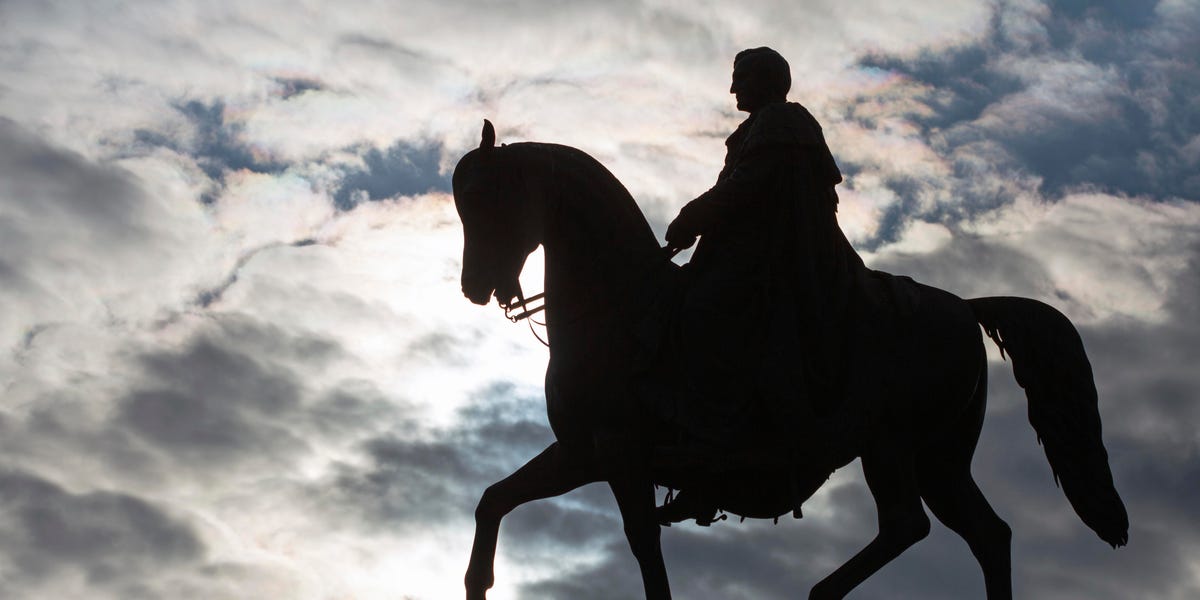
The nickname “The Horseman” came from skeletal evidence suggesting that the man had spent much of his life riding horses. The shape and stress marks on parts of his pelvis and hip area indicated long-term equestrian activity. This was not the occasional “look at me, I rented a horse on vacation” type of riding. The evidence suggested years of serious time in the saddle.
That detail mattered because horseback riding was not simply a hobby in the 16th century. It was a marker of social rank, education, travel, military culture, and elite mobility. For an aristocratic or court-connected person, riding was part transportation, part skill, and part social signal. A person who rode regularly could move between cities, serve powerful patrons, and participate in the political and cultural life of Renaissance Europe.
The skeleton also showed signs of severe illness. Researchers identified evidence consistent with bone tuberculosis and chronic meningitis. These were not minor ailments. They would have caused significant pain, weakness, headaches, and neurological symptoms. The man in the coffin had likely endured a difficult final period of life.
The Poet at the Center of the Mystery
Joachim du Bellay was born around 1522 in Anjou, in western France. He became one of the major literary figures of the French Renaissance and was closely associated with La Pléiade, a group of poets who wanted to elevate French literature. Their mission was bold: prove that French could be as expressive, elegant, and worthy of great art as Latin, Greek, and Italian.
Du Bellay is especially remembered for La Défense et illustration de la langue française, published in 1549. In that influential work, he argued that French writers should enrich their language by learning from classical and Italian models while still creating something distinctly French. In plain modern terms, he was telling writers, “Stop treating French like the understudy. Give it the starring role.”
He also wrote Les Regrets, a collection shaped by his time in Rome and his longing for home. His poetry often carries a mix of elegance, melancholy, satire, and personal vulnerability. That emotional range is part of why his work still matters. Du Bellay could praise grandeur, mock vanity, and confess homesickness without sounding dusty. Not bad for a man whose “content strategy” involved quills, candles, and probably terrible back support.
How the Evidence Points to Joachim du Bellay
The case for identifying The Horseman as Joachim du Bellay rests on several overlapping clues. None of them alone would be enough to close the case forever, but together they create a persuasive historical pattern.
1. The Age Matches
The remains belonged to a man who died relatively young, likely in his thirties. Du Bellay died in 1560 at about 37 or 38 years old. That age range fits the skeleton’s biological profile and immediately narrowed the field of possible candidates.
2. The Illness Matches
The skeletal signs of bone tuberculosis and chronic meningitis are central to the identification. Du Bellay was known to have suffered from poor health, and historical references to his symptoms align with the conditions detected by forensic analysis. His poetry also contains passages that researchers have linked to physical suffering, headaches, and mental distress.
3. The Horseback Riding Matches
Du Bellay was known as a capable rider. He traveled between Paris and Rome, and in the 16th century that meant serious endurance, not sipping espresso at the airport gate. The skeletal evidence of long-term horseback riding fits what is known about his life and movements.
4. The Burial Location Makes Historical Sense
Du Bellay had strong ties to Notre-Dame. He had been connected to the cathedral’s clerical world, and his powerful uncle, Cardinal Jean du Bellay, was an important church figure. Records indicate that Joachim du Bellay was meant to be buried in Notre-Dame’s Saint-Crépin chapel. However, when that area was searched in the 18th century, his remains were not found. The newly discovered coffin may help explain why: his body may have been moved, or a temporary burial may have become permanent.
5. The Elite Burial Fits His Social World
The lead coffin, signs of embalming, and careful treatment of the body indicate a person of status. Du Bellay came from a noble family and moved within powerful religious and political circles. He was not a random parishioner tucked away quietly. His burial treatment fits someone with social importance, even if he was not among the cathedral’s highest-ranking clergy at the time of death.
Why Some Experts Still Urge Caution
As exciting as the identification is, responsible archaeology does not run on dramatic music alone. Some experts have emphasized that the case is strong but not completely airtight. One point of caution comes from isotope analysis of the teeth, which suggested that the individual may have grown up in the Paris or Lyon region. Du Bellay, however, is traditionally associated with Anjou.
That does not necessarily sink the identification. Childhood movement, family placement, elite education, and complex upbringing patterns could explain the discrepancy. Du Bellay’s family connections may have taken him beyond his birthplace earlier than simple biographies suggest. Still, the isotope evidence reminds us that scientific clues sometimes complicate neat historical stories.
DNA would be the dream tool here, but definitive comparison is difficult without reliable reference material from known relatives. So the identification remains a powerful hypothesis supported by converging evidence rather than a courtroom-style verdict stamped “case closed.” In archaeology, that is often how truth arrives: not as a lightning bolt, but as a careful stack of clues.
Notre-Dame as a Living Archive
The discovery also reveals something larger about Notre-Dame itself. The cathedral is not only a monument of Gothic architecture. It is a layered archive of human life. Kings, clergy, artisans, patrons, workers, worshippers, tourists, and now archaeologists have all left marks on the building.
The post-fire excavations showed that beneath the famous floor lay a dense record of burials and architectural remains. Researchers found numerous graves, fragments of the medieval rood screen, and traces that deepen understanding of the cathedral’s long development. Notre-Dame is often admired upward: towers, rose windows, vaults, spire. This discovery asks us to look downward too.
That shift is powerful. The cathedral’s beauty is not only in what rises toward heaven but also in what remains hidden below. The Horseman’s coffin reminds us that great buildings are never just stone. They are memory machines.
Why This Identification Matters
At first glance, identifying one skeleton may seem like a narrow academic matter. But the story matters because it connects three forms of history that are often kept apart: literary history, medical history, and architectural history.
For literature, the discovery gives physical presence to a poet often encountered only on the printed page. Du Bellay is no longer just a name in a Renaissance anthology. He becomes a human body: sick, mobile, ambitious, connected, and mortal.
For medical history, the remains offer a rare look at disease in a high-status Renaissance individual. Bone tuberculosis and chronic meningitis were serious conditions, and their presence helps researchers understand how illness shaped lives before modern medicine.
For Notre-Dame, the discovery adds another chapter to the cathedral’s restoration story. After the fire, global attention focused on rebuilding the roof, spire, and interior. But restoration also opened a window into the past. The disaster created grief, but it also made possible one of the most important archaeological investigations in the cathedral’s recent history.
The Strange Poetry of Archaeology
There is something almost poetic about a Renaissance poet being rediscovered under Notre-Dame during a modern restoration. Du Bellay spent his career defending the power of language, and centuries later, his possible remains speak through bones, burial customs, and archival records. It is not exactly a sonnet, but archaeology has its own meter.
Every clue becomes a line. The lead coffin suggests status. The pelvis suggests riding. The skull and embalming suggest elite treatment. The disease marks suggest suffering. The missing grave in Saint-Crépin chapel creates the mystery. The historical record provides the rhyme.
And like a good poem, the meaning is rich but not simplistic. The identification invites wonder and debate at the same time. It gives us an answer while leaving room for scholarly humility. That balance is what makes the story so compelling.
Experience and Reflection: Meeting “The Horseman” Through History
Reading about Notre-Dame’s Horseman is not like reading an ordinary archaeological update. It feels more intimate, almost as if a sealed room in history has been opened and someone has whispered, “Come closer.” For modern readers, the experience begins with surprise. Notre-Dame is already one of the most recognizable buildings on Earth, yet it still had secrets hidden beneath its floor. That alone is enough to make even the most casual history fan sit up straighter.
Imagine walking through the cathedral after its restoration, hearing the soft echo of footsteps, seeing light filter through the stained glass, and knowing that beneath the stones lay stories that remained unknown for centuries. The experience changes the building. It is no longer only a landmark to photograph from the outside. It becomes a layered human place where art, faith, illness, politics, and poetry overlap.
The Horseman also changes how we experience Joachim du Bellay. Many people meet Renaissance poets through school assignments, which is not always the most romantic introduction. A student may see the name, memorize a date, and politely hope the exam is merciful. But a discovery like this gives the poet a body and a drama. Suddenly, du Bellay is not just a writer from a distant century. He is a young man who rode long distances, struggled with illness, moved among powerful families, wrote with longing, and may have been buried in one of the most sacred spaces in Paris.
For writers, the story offers a sharp reminder that words can outlive almost everything. Du Bellay argued for the dignity of the French language, and his literary reputation endured even when the location of his grave was lost. That is both humbling and encouraging. A body may disappear from the record, a coffin may be moved, a chapel may change, but a well-made sentence can keep walking through time with surprisingly sturdy shoes.
For travelers, this discovery adds emotional depth to visiting Notre-Dame. The cathedral is not only a restored masterpiece; it is a site where investigation continues. Knowing the story of The Horseman encourages visitors to slow down. Instead of rushing from rose window to nave to exit, they can think about the invisible histories underfoot. Every stone has been near someone’s grief, ambition, prayer, or memory.
For anyone who loves mysteries, the case is satisfying because it is intelligent rather than sensational. It does not rely on fantasy. It relies on forensic science, archival records, literary biography, and careful disagreement. That makes it more exciting, not less. Real history rarely hands us perfect answers wrapped in ribbons. It gives us fragments, and then asks us to be patient enough to assemble them.
The most moving experience related to the Horseman is the feeling that the past is not finished. It can still be revised, clarified, and reintroduced. A poet who defended the expressive power of language may have been quietly waiting beneath Notre-Dame, identified not by a signature but by the marks left on his bones. That is the kind of historical twist no novelist would dare make too tidy. Life, as usual, writes the stranger draft.
Conclusion: A Poet, a Cathedral, and a Mystery with Hoofbeats
Notre Dame’s “The Horseman” remains identified by researchers as likely Joachim du Bellay, one of the defining poets of the French Renaissance. The case is compelling because the clues fit so unusually well: age, illness, elite burial, horseback riding, Notre-Dame records, and the long-standing mystery of du Bellay’s missing grave.
Yet the story is strongest when told with nuance. There are still questions, especially around isotope evidence and the limits of definitive proof. But that uncertainty does not weaken the fascination. It makes the discovery feel more real. History is not a vending machine that dispenses perfect answers when we insert enough research coins. It is a conversation between evidence and interpretation.
The Horseman’s coffin gives Notre-Dame another unforgettable layer. It connects the cathedral’s restoration to Renaissance poetry, forensic science, and the human desire to be remembered. Whether readers come to the story through archaeology, literature, travel, or simple curiosity, they find the same powerful lesson: the past is never as silent as it seems. Sometimes it is merely waiting beneath the floor, wearing the marks of a life once lived at full gallop.
Note: This article is based on synthesized historical, archaeological, and cultural information from reputable reporting and institutional research. It avoids source links in the body for clean web publication while preserving factual accuracy and scholarly caution.