Most clocks bark the time at us. Digital clocks flash it. Phone screens shove it between weather alerts, meeting reminders, and that one app notification you keep meaning to silence. But every so often, a design comes along that whispers instead of shouts. “The Hours: Measuring Time with Wooden Beads” explores one of those rare ideas: a clock that turns time into touch, rhythm, color, and a necklace of wooden beads.
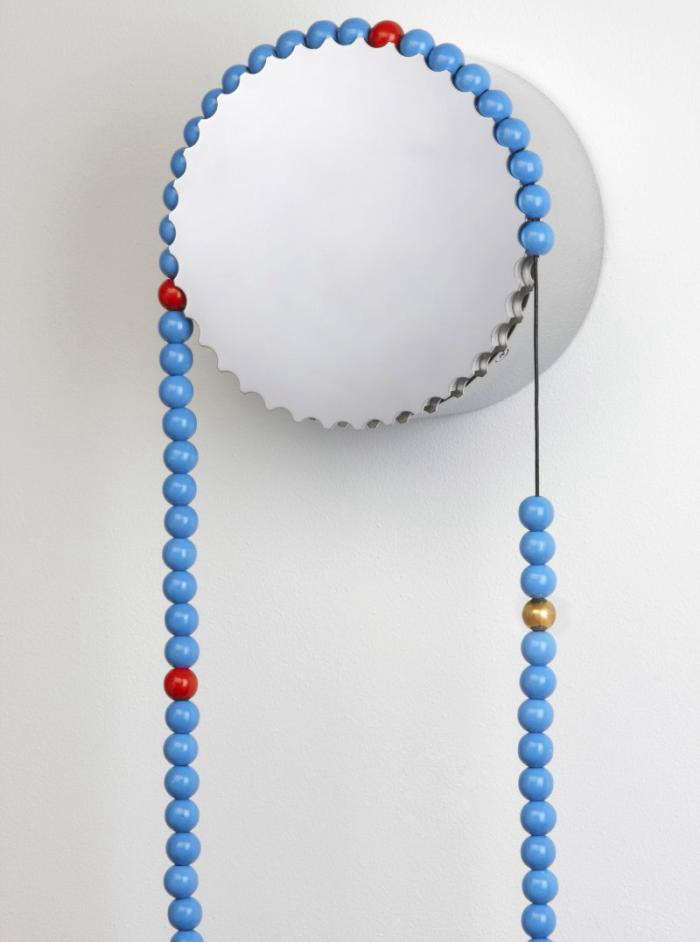
At the center of this story is the Sasa Clock, a beautifully simple timekeeping object created by Icelandic designer Thorunn Arnadottir. Instead of hands racing around a dial or numbers glowing from a screen, the Sasa Clock uses a string of wooden beads placed over a slowly rotating carousel. Every five minutes, one bead slips down the cord. The most recently dropped bead tells you where you are in the hour. In other words, time does not tick. It slides.
This wooden bead clock is not merely a clever gadget. It is a small rebellion against the anxious culture of precision. It asks a surprisingly big question: what happens when we stop treating time as a bossy spreadsheet and start experiencing it as something physical, personal, and beautifully imperfect?
What Is a Wooden Bead Clock?
A wooden bead clock is a timekeeping design that uses beads as visible units of time. In the case of the Sasa Clock, the beads function like a tactile timeline. The cord is arranged around a wall-mounted mechanism, and as the carousel turns, beads drop one by one. Each bead represents five minutes. Colored beads mark hours, while special metallic beads identify noon, midnight, or the twelve o’clock point depending on the version.
That sounds simple because it is simple. Delightfully simple. The kind of simple that makes you wonder why every clock in your house needed to look like either a corporate conference room or a microwave with commitment issues.
The Sasa Clock is available in twelve-hour and twenty-four-hour versions. The twenty-four-hour version can distinguish noon from midnight, while the twelve-hour version treats the cycle more like a familiar analog clock. To read the time, you locate the most recent marker bead, count the hour beads, and then count the minute beads in five-minute steps. It is slower than glancing at a phone, but that is exactly the point.
How Measuring Time with Wooden Beads Works
The basic mechanism is wonderfully poetic. A necklace of wooden beads rests over a rotating hub or carousel. As the device turns at a controlled speed, gravity takes over at regular intervals. Every five minutes, one bead slips downward. The cord gradually changes shape as time passes, becoming a record of the day in progress.
The Five-Minute Bead
Each regular bead equals five minutes. This creates a visual and tactile counting system. Instead of seeing “2:25” as a fixed digital number, you understand it as a sequence: two hours, plus five beads. The time becomes countable in your hands and eyes. It is not abstract anymore. It is a tiny procession of wooden dots.
The Hour Beads
Hour beads are typically distinguished by color. This makes the clock easier to read and gives the object a patterned beauty. The user does not need to decode every bead from scratch. The hour beads act like landmarks on a trail, while the minute beads are the steps between them.
Noon and Midnight
Special beads mark important points in the cycle. In a twenty-four-hour arrangement, noon and midnight may be represented separately, often through metallic or contrasting beads. These markers give the clock a sense of ceremony. Noon is no longer just “12:00 PM.” It becomes a bead you can find, touch, and count from.
Why Wooden Beads Make Time Feel Different
Modern timekeeping is obsessed with accuracy. Atomic clocks, GPS systems, financial markets, computer networks, and telecommunications all depend on extraordinary precision. That precision is essential. Nobody wants air traffic control running on “about lunchtime.” But daily human life is not always improved by measuring everything to the second.
A wooden bead clock changes the emotional texture of time. It does not eliminate accuracy; it reframes it. By measuring time in five-minute increments, it encourages a softer relationship with the day. You still know where you are, but you are not stabbed in the eyeballs by seconds.
This is where the Sasa Clock becomes more than decor. It belongs to a wider design conversation about slow design, tangible interfaces, and mindful living. Slow design values reflection, material awareness, and deeper engagement with objects. Tangible design reminds us that physical interaction can make information more memorable and meaningful. Wooden beads do both at once. They make time visible, countable, and oddly calming.
The Meaning of “Sasa”: Time as “What Is Now”
The name “Sasa” comes from Swahili and is commonly associated with “now” or “at present.” That meaning matters. The Sasa Clock is not only about measuring hours; it is about returning attention to the present moment. It invites users to think about time not as an enemy chasing them down the hallway, but as something unfolding right here.
Western time culture often slices life into tiny units: seconds, minutes, calendar blocks, deadlines, alarms, productivity metrics, and automated nudges. This structure is useful, but it can also become exhausting. A clock made of wooden beads challenges that system with a simple alternative: count slowly, look carefully, and remember that time is lived before it is measured.
The most charming feature of the Sasa Clock may be its invitation to “stop time.” Because the bead strand is also a necklace, the user can remove it from the clock and wear it. Mechanically, the clock stops functioning as a timekeeper. Symbolically, the person takes control. That is design with a wink, a philosophy, and a very good accessory game.
A Short History of Measuring Time
To appreciate the wooden bead clock, it helps to look backward. Humans have measured time in many ways long before phones began pretending to be our personal assistants. Ancient civilizations used the sun, shadows, water, sand, candles, incense, bells, gears, pendulums, quartz crystals, and atoms. Each method reveals what a culture needed from time.
From Shadows to Water
Sundials were among the earliest timekeeping tools, turning the movement of the sun into a readable pattern of shadow. They were elegant, but they had one obvious flaw: clouds. Also night. Night is a famously inconvenient time for sundials.
Water clocks, also called clepsydras, solved part of that problem by measuring time through the controlled flow of water. They did not need sunlight, making them useful for courts, rituals, astronomy, and nighttime measurement. Like the wooden bead clock, water clocks make time physical. You can see the level change. You can witness time moving through matter.
Mechanical Clocks and Public Time
Mechanical clocks changed society by making time more public, regular, and shared. Clock towers helped communities coordinate prayer, work, markets, and civic life. Later, portable watches brought clock time closer to the body. Time moved from the sky to the tower, from the tower to the pocket, from the pocket to the wrist, and finally from the wrist into the phone that is somehow always at 3 percent battery when you need it.
Standard Time and Modern Life
In the United States, standardized time became deeply connected to railroads, commerce, communication, and national coordination. Once trains, factories, and cities needed synchronized schedules, local solar time was no longer enough. The modern world required shared time. Today, official time is maintained with scientific precision, and atomic clocks help support navigation, networks, finance, and communication.
Seen against that background, the wooden bead clock is not trying to replace official time. It is doing something subtler. It reminds us that the human experience of time is richer than synchronization. We need precision for systems, but we need meaning for life.
Design Analysis: Why the Sasa Clock Works
The Sasa Clock succeeds because it combines function, metaphor, and material warmth. Many conceptual objects are clever for five seconds and annoying forever. This one has staying power because its concept is built into the way it works.
It Turns Time into a Sequence
Digital time is instant. Analog time is spatial. Bead time is sequential. You read it by following a path. That path makes the day feel like a string of lived moments rather than a set of numerical deadlines. The design encourages patience because reading it requires small acts of attention.
It Uses Familiar Materials
Wooden beads are warm, modest, and familiar. They belong to jewelry, craft, prayer beads, counting tools, toys, and handmade objects. Using them in a clock softens the emotional distance between person and machine. Instead of a device that looks engineered to judge your lateness, it looks like something a thoughtful artist might hang near a kitchen table.
It Makes Time Wearable
The necklace feature is not a gimmick. It completes the idea. When the bead strand is on the clock, time is measured mechanically. When it is worn, time becomes personal. The object shifts from instrument to statement. That transformation is memorable because it gives the user agency.
Wooden Beads, Tactile Learning, and the Human Brain
Beads have long been used for counting, learning, memory, and ritual. Their appeal is not mysterious. They are easy to hold, easy to group, easy to move, and easy to understand. A row of beads can teach number patterns, prayer rhythms, craft sequences, or time intervals without needing a screen.
This tactile quality matters. People often understand abstract ideas better when they can manipulate something physical. A five-minute bead is not just a symbol; it is a unit with shape and weight. The Sasa Clock borrows that ancient wisdom and applies it to timekeeping. It turns minutes into objects.
That is also why the clock feels surprisingly modern. In an age of invisible data, tangible interfaces are gaining renewed attention. Designers and technologists continue to explore ways to make digital or abstract information physically graspable. The wooden bead clock belongs to that family of ideas, even though it feels charmingly low-tech.
Where a Wooden Bead Clock Fits in the Home
A wooden bead clock is not ideal for every place. It does not belong in an emergency room, an airport control tower, or the kitchen of a restaurant where twelve orders are already on fire. But in the right space, it can be wonderful.
It fits beautifully in a reading nook, studio, meditation room, hallway, creative office, or slow-living interior. It works especially well where time should be noticed but not weaponized. A wooden bead clock says, “You are in the afternoon,” not “You have failed to answer seven emails.” That distinction is healthy.
As a decorative object, it also brings texture to the wall. The beads cast small shadows, the cord creates a vertical line, and the rotating hub adds a quiet mechanical presence. It is part clock, part sculpture, part conversation starter. Guests will ask what it is. You will explain. They will either be delighted or suspicious. Both reactions are useful at dinner parties.
Specific Example: Reading 2:25 with Beads
Imagine the clock is showing 2:25 PM. Instead of reading a digital display, you find the most recent twelve o’clock marker. From there, you count two hour beads. Then you count five smaller five-minute beads. Two hours plus twenty-five minutes. The time is 2:25.
This process takes a few seconds longer than checking a phone, but it creates a tiny ritual. You pause. You look. You count. You interpret. That small delay is not a flaw. It is the feature. The clock gives you the time while also giving you a moment to return to yourself.
Why This Matters in a Hyper-Scheduled World
Our schedules are more fragmented than ever. Work meetings stack against school pickups, messages arrive across time zones, and calendars now send reminders for reminders. The result is that many people do not experience time as spacious. They experience it as pressure.
Measuring time with wooden beads will not magically fix overwork, missed deadlines, or the mysterious disappearance of every pair of scissors in the house. But it can change the mood of time. It can make an hour feel less like a trap and more like a passage. That may sound small, but design often works through small shifts.
A wooden bead clock asks us to slow down just enough to notice the day. It offers a practical reminder that precision and presence are not the same thing. A phone can tell you the exact second. A bead clock can remind you that you are alive inside that second.
Experiences Related to Measuring Time with Wooden Beads
Living with a wooden bead clock would likely feel different from living with an ordinary wall clock. The first experience is curiosity. You glance at it and realize you cannot read it instantly. There is no bright number, no sweeping second hand, no impatient tick. You have to participate. At first, that may feel inconvenient. Then, after a few days, the inconvenience begins to feel like a small luxury.
In a home office, the wooden bead clock could become a gentle boundary-maker. Instead of setting harsh alarms for every task, you might use the bead intervals to structure work. Six beads become half an hour. Twelve beads become one hour. A writing session might last eighteen beads. A break might last three. Suddenly, time feels less like a command and more like a string of choices.
In a family setting, the clock could become a playful teaching tool. Children learning to tell time often struggle because hours and minutes are abstract. A bead clock makes the relationship visible. Five minutes is one bead. Thirty minutes is six beads. An hour is a pattern. Children can count it, point to it, and understand it without staring at a worksheet that looks like it was designed by a very tired adult.
In a creative studio, the bead clock could support focus. Artists, designers, writers, and makers often work best when time is present but not oppressive. A standard clock can create pressure. A phone creates temptation. A wooden bead clock offers awareness without distraction. It does not invite you to check social media. It does not flash breaking news. It simply drops the next bead and minds its own elegant business.
There is also an emotional experience in the act of “stopping time” by removing the necklace. Imagine ending a long workday by lifting the bead strand from the clock and wearing it. The gesture is symbolic, but symbols matter. It says the measured portion of the day is over. The schedule can loosen. The evening belongs to conversation, cooking, music, rest, or whatever version of freedom fits into your life.
The clock may also change how a room feels. Many clocks create nervous energy because they constantly remind us that time is escaping. Wooden beads create a softer impression. They suggest accumulation rather than loss. The day is not vanishing; it is gathering bead by bead. That shift can make time feel more generous.
Of course, this kind of clock requires patience. If you are late for a flight, do not stand in front of a bead clock counting five-minute intervals like a philosopher in linen pants. Use your phone. Run. But for daily life, where most moments are not emergencies, a slower clock can be surprisingly practical. It helps separate urgent time from meaningful time.
The best experience related to measuring time with wooden beads is the reminder that time is not only something we spend. It is something we inhabit. Every bead is a small invitation to notice the hour before it disappears into memory. And honestly, if a handful of wooden beads can make Monday feel slightly less like a spreadsheet with weather, that is no small achievement.
Conclusion
“The Hours: Measuring Time with Wooden Beads” is more than a charming design story. It is a meditation on how objects shape our relationship with the day. The Sasa Clock takes one of humanity’s oldest concernshow to measure timeand answers with wood, color, gravity, and a little bit of humor. It does not reject precision; it simply reminds us that precision is not the only way to understand an hour.
By turning minutes into beads, the clock makes time tactile. By allowing the necklace to be removed and worn, it makes time personal. By slowing down the act of reading, it gives attention back to the user. In a culture that often treats every second as a tiny productivity invoice, that feels almost radical.
A wooden bead clock may not be the future of timekeeping, but it is a beautiful argument for a better relationship with time. It tells us that the hours are not just numbers. They are sequences, textures, rituals, pauses, and choices. Sometimes, they are wooden beads slipping quietly down a cord, reminding us to be here now.