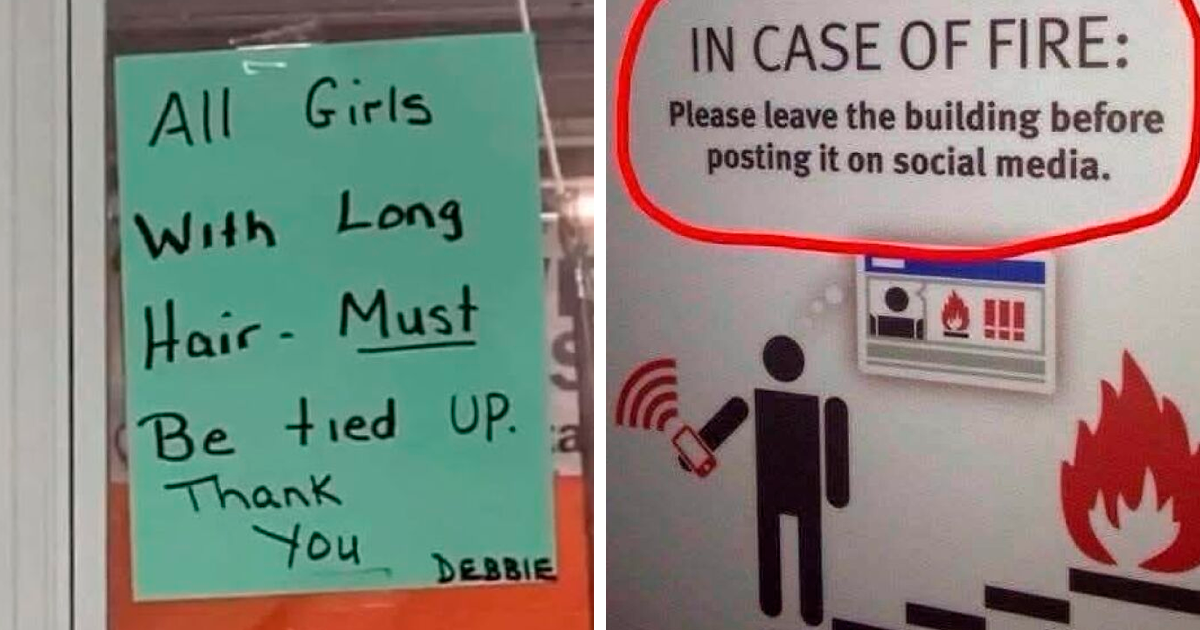
Some signs politely tell us where to park. Others warn us not to touch electrical wires, which is thoughtful because most of us prefer our skeletons to remain an internal feature. And then there are the truly hilarious signsthe ones so strange, blunt, badly timed, or accidentally poetic that they become tiny public comedy shows.
The title “Helping Ugly People Get Laid” comes from the kind of cheeky, old-school novelty sign that makes people stop scrolling, squint, laugh, and immediately wonder, “Who approved this?” It is not exactly a sentence you expect to see printed next to everyday warnings, menu boards, church marquees, or roadside advertisements. Yet that is the magic of funny signs: they interrupt ordinary life with a punchline wearing reflective paint.
In a world where everyone is rushing, public signs are supposed to be fast, clear, and useful. A good sign says “Exit,” “No Parking,” or “Wet Floor.” A hilarious sign says the same thing with a wink, a raised eyebrow, and the chaotic confidence of a raccoon wearing sunglasses. That is why collections of funny signs keep going viral. They combine surprise, human error, local personality, and the universal joy of reading something you absolutely did not expect.
This article explores why hilarious signs are so memorable, what makes them work, why some of them fail beautifully, and how a simple board with a few words can become funnier than half the jokes on the internet. We will also look at the different types of signs that deserve their own comedy category, from business signs with attitude to warning signs that sound like they were written by someone on their fifth cup of gas-station coffee.
Why Hilarious Signs Work So Well
Funny signs succeed because they are short, public, and unexpected. A joke inside a comedy club arrives with warning. You bought a ticket. You are seated. You know laughter is on the menu. But a funny sign catches you while you are buying coffee, walking a dog, waiting in traffic, or trying to find the bathroom. The surprise does half the work.
Signs also have a built-in advantage: they must be brief. A message on a storefront chalkboard or roadside display does not have room for a three-paragraph setup. It needs to land fast. That is why the funniest signs often use one sharp twist. They begin like a normal notice and end like your funniest friend hijacked the marker.
The best signs create a tiny story
A hilarious sign often makes readers imagine the backstory. If a shop posts “Please do not lick the windows,” the joke is not just the sentence. The joke is the mystery. Who did it? How often did it happen? Was there a meeting? Did someone sigh deeply before printing it? The reader becomes a detective, and the crime scene is absurd.
That is why funny public notices are so shareable. They do not simply deliver information; they invite imagination. A normal sign closes a question. A hilarious sign opens ten more.
The “Helping Ugly People Get Laid” Style of Humor
The quoted phrase in the title belongs to a long tradition of outrageous bar-sign humor and novelty wall decor. It is blunt, old-fashioned, and intentionally ridiculous. The joke is not meant to be taken as a serious statement about anyone’s appearance. In a modern article, it is worth saying plainly: humor works best when it punches up, plays with language, or laughs at a situationnot when it genuinely targets real people.
That is an important line. A sign can be edgy without being cruel. The funniest versions of this type of humor feel like a cartoon exaggeration, not an invitation to insult strangers. When people laugh at a sign like that, they are usually laughing at the shameless confidence of the wording. It is the sign equivalent of someone bursting into a room wearing a cape for no reason.
Why outrageous wording gets attention
Public signs compete with phones, traffic, conversations, store windows, weather, and whatever snack you just dropped on your shirt. Outrageous wording cuts through the noise. It makes the brain pause because the sentence does not match the setting. You expect a bar sign to say “Happy Hour.” You do not expect it to sound like it was written by a stand-up comic who lost a bet.
That mismatch is the core of many hilarious signs. The message appears in the wrong tone, the wrong place, or with the wrong level of emotional intensity. A small coffee shop sign that says “Come in, we are open and only slightly judging your order” feels funny because it turns a routine commercial message into a social moment.
68 Hilarious Signs: What They Usually Have in Common
A collection of 68 hilarious signs may look random at first, but most funny signs fall into recognizable categories. Once you see the pattern, you start spotting them everywhere: on sidewalks, restaurant windows, office doors, school boards, fences, gyms, churches, farms, and vehicles.
1. The brutally honest business sign
Some businesses do not politely advertise; they confess. A restaurant might post, “Soup of the day: whiskey.” A mechanic might write, “We fix what your cousin tried to repair.” A bookstore might say, “Yes, we have Wi-Fi. No, that is not why you should come in.”
These signs work because honesty feels refreshing. Most ads are polished until they squeak. A brutally honest sign feels human. It sounds like a real person behind the counter decided to skip the marketing meeting and just tell the truth with better timing.
2. The warning sign with too much personality
Warning signs are supposed to be serious. “Do Not Enter.” “Caution: Wet Floor.” “Beware of Dog.” But some warnings sound like they were written after the problem happened one too many times.
For example, a fence sign that says “Trespassers will be judged by the dog” is funnier than a standard warning because it gives the dog a personality. Suddenly, the animal is not just barking. It is reviewing your choices like a tiny furry courtroom.
3. The accidental sign fail
Some hilarious signs are not intentionally funny at all. They become funny because of spacing, poor punctuation, missing letters, strange line breaks, or unfortunate placement. A menu board might split a phrase in the worst possible way. A restroom sign might point in two directions at once. A sale sign might accidentally suggest that customers, not products, are 50% off.
These are the comedy gifts of human error. Nobody planned the joke, which somehow makes it better. The sign tried to be professional and tripped over its own shoelaces.
4. The church or community marquee with a punchline
Community marquees have become their own genre of wholesome public comedy. They often use puns, gentle warnings, seasonal jokes, or clever reminders. A good marquee can make a driver smile at a red light without needing to be mean or shocking.
The best ones use familiar themespatience, kindness, forgiveness, bad weather, school starting againand turn them into compact jokes. They prove that a sign can be memorable without sounding like it was written by a caffeinated pirate.
5. The “rules exist because someone did this” sign
Few things are funnier than a very specific rule. “Do not put tacos in the printer” would instantly raise questions. Even if the sign is fictional, the format works because it implies a history. Somebody did something. Somebody else had to make a sign. Society moved forward, but not without paperwork.
Specificity is powerful. “Please behave” is boring. “Please stop using the display couch as a trampoline” is a whole sitcom in one sentence.
The Secret Ingredients of a Funny Sign
Not every joke belongs on a sign. A funny sign has to be quick, readable, and easy to understand from a distance. If the joke needs a footnote, a family tree, and a documentary crew, it is probably too complicated for a sidewalk board.
Short wording
The best hilarious signs are usually brief. They use everyday words, direct phrasing, and strong rhythm. That does not mean every sign must be three words long, but it should feel effortless to read. A sign that makes people stop because it is funny is great. A sign that makes people stop because they need to decode it like ancient ruins needs editing.
Clear setup and twist
Many funny signs follow a simple structure: normal beginning, unexpected ending. “Today’s special: coffee and questionable decisions.” The setup is familiar. The twist adds personality. This structure works because readers understand the message instantly, then get rewarded with surprise.
A human voice
Corporate language rarely makes people laugh unless it does so by accident. Human language does. A sign that says “Our Wi-Fi is strong, but so is our desire for you to talk to each other” feels like someone real wrote it. That voice creates a connection.
Visual timing
Funny signs are not just written; they are staged. The font, location, line breaks, colors, and nearby objects all affect the joke. A sign reading “Watch your step” next to one comically tiny stair has a different effect than the same message on a flat wall. Context is the secret sauce.
Why We Love Reading Funny Signs Online
Funny signs travel well online because they are visual, quick, and easy to share. You do not need a long explanation. A photo of a ridiculous sign is self-contained. It has the setup, the punchline, and the evidence all in one frame.
They also feel more authentic than many polished jokes. A funny sign found “in the wild” carries the thrill of discovery. It feels like the world accidentally told a joke. That makes readers feel like they are part of a scavenger hunt for public weirdness.
They give us harmless chaos
Life is full of signs telling us what not to do. Do not park here. Do not enter there. Do not feed the birds. Do not touch the thermostat unless you want a family argument. Hilarious signs soften all that instruction with personality. They turn rules into entertainment.
That is why a funny sign can feel oddly comforting. It reminds us that behind public messages are peopletired people, clever people, sarcastic people, people who have absolutely had enough of customers asking whether the “closed” sign means closed.
When Funny Signs Go Too Far
There is a difference between playful and harmful. A sign can be bold, sarcastic, or silly without making real people feel attacked. Jokes about appearance, identity, disability, or personal struggles can age badly because they turn someone’s lived experience into a punchline.
The most durable hilarious signs usually aim at shared situations: bad parking, confusing instructions, office habits, pets behaving like tiny criminals, customers ignoring obvious rules, or the universal need for caffeine. These topics let everyone laugh together instead of making someone feel like the joke is pointed at them.
A better rule: make the situation the target
If a sign says, “Please do not make us explain this twice before coffee,” the joke is about morning chaos. If it says, “Only foolish people ask questions,” the joke becomes insulting. The difference matters. Good funny signs create a shared wink. Bad ones create a shared wince.
Examples of Funny Sign Ideas That Actually Work
Here are some safe, clever sign-style examples inspired by the general spirit of hilarious public signage:
- “Push. If that fails, pull. If that fails, we are closed.”
- “Unattended children will be given espresso and a puppy.”
- “Please do not tap the glass. The employees startle easily.”
- “Free Wi-Fi. Strong coffee. Mild emotional support.”
- “Our plants are fake, but our prices are emotionally real.”
- “Beware of dog. Also beware of owner. Dog is nicer.”
- “Today’s forecast: 100% chance of snacks.”
- “If you can read this, you are close enough to buy something.”
Notice that these examples are easy to understand, not overly long, and built around everyday situations. They do not require the reader to know a niche reference. They simply take a normal message and tilt it slightly until the joke slides out.
What Businesses Can Learn From Hilarious Signs
Funny signs are not just entertainment. They can be surprisingly effective branding tools when used wisely. A clever sidewalk board can make a cafe seem friendly before a customer even opens the door. A witty shop sign can turn a routine errand into a photo opportunity. A memorable message can help a small business stand out in a street full of ordinary storefronts.
However, humor should fit the brand. A playful ice cream shop can get away with jokes that would feel strange at a medical office. A pet groomer can use silly animal humor. A law firm probably should not post “We object to your parking” unless it is truly committed to the bit.
Keep it readable
A funny sign still has to do its job. Use large lettering, simple contrast, and enough spacing. The joke should not hide the important message. If people remember the punchline but miss the fact that the store is closed on Mondays, the sign has become a tiny comedian with poor work ethic.
Keep it kind
Kind humor lasts longer. A joke that makes people feel included is more likely to be photographed, shared, and remembered fondly. Mean humor may get attention, but it often brings the wrong kind. The internet has a long memory and a short temper.
The Experience of Finding a Truly Hilarious Sign
There is a special kind of joy in spotting a funny sign in real life. It usually happens when you are not looking for entertainment at all. You are walking through a small town, waiting outside a restaurant, driving past a hardware store, or standing in line with a drink you paid too much for. Then a few words on a board catch your eye, and suddenly your day has a plot twist.
The best part is the little pause before the laugh. Your brain reads the sign once as information, then again as comedy. That split second of realization is the whole reward. It is like the world slipped a joke into your pocket.
I once saw a handwritten shop sign that said, “Closed because we are tired of pretending Monday is normal.” Nothing about it was fancy. The marker was fading. The letters leaned in different directions like they had just finished a marathon. But it worked because it felt true. Everyone understands Monday. Everyone has, at some point, wanted to resign from the concept of Monday.
Another unforgettable sign was posted near a garden: “Please do not pick the flowers. They are trying their best.” That one did not need sarcasm or shock. It was gentle, funny, and oddly persuasive. You suddenly felt emotionally responsible for the flowers. Nobody wants to be the villain in a plant’s character arc.
Funny signs are also social. When you notice one with a friend, you almost always point it out. Then both of you read it, laugh, and probably take a photo. That shared laugh turns a random object into a memory. It is not just a sign anymore; it becomes “that sign we saw near the taco place” or “the one outside the hotel where the automatic door was clearly having trust issues.”
Travel makes these moments even better. Every city has its own sign personality. Beach towns lean into puns. Mountain towns love bear warnings with attitude. College towns produce signs that sound like they were written by sleep-deprived philosophy majors. Small diners are masters of the chalkboard joke. Hardware stores, for reasons science has not fully explained, often have the driest sense of humor in the building.
Hilarious signs also reveal how people cope with repetitive questions. A coffee shop that writes, “Yes, we are open. Yes, the door is heavy. No, it is not personal,” has probably watched hundreds of customers hesitate at the entrance. A bathroom sign that says, “Employees must wash hands. Everybody else should strongly consider it,” turns a basic hygiene reminder into a tiny public service announcement with eyebrows.
What makes these experiences memorable is not perfection. In fact, perfect signs are often less funny. The crooked letters, the slightly too-dramatic punctuation, the homemade layout, the weirdly specific rulethose details make the sign feel alive. A polished billboard may be clever, but a handwritten notice taped to a freezer that says “Do not climb in here, even emotionally” feels like literature.
The deeper reason people enjoy these signs is simple: they make public space feel less robotic. Streets, offices, stores, and parking lots can feel impersonal. Funny signs remind us that humans are still in charge, even if the printer is jammed and the laminator has given up. They show frustration, wit, patience, impatience, kindness, and local flavor in just a few words.
That is why collections of 68 hilarious signs are so satisfying. They are not just random jokes. They are evidence that humor keeps leaking into everyday life. People may be tired, busy, annoyed, or under-caffeinated, but they still find time to write something ridiculous on a board and share a laugh with strangers.
Conclusion: Funny Signs Are Tiny Public Masterpieces
Hilarious signs prove that comedy does not always need a stage, a microphone, or a perfectly timed drum sound. Sometimes it only needs cardboard, chalk, paint, vinyl lettering, or one employee who has officially had enough.
The phrase “Helping Ugly People Get Laid” may be outrageous, but its viral power comes from the same formula that fuels countless funny signs: surprise, brevity, bold wording, and a strong sense of human mischief. The best signs make us laugh without needing a long setup. They transform warnings, ads, rules, and directions into moments worth remembering.
In the end, funny signs are tiny public masterpieces. They interrupt our routines, brighten dull errands, and remind us that language can still sneak up on us. Whether the sign is clever on purpose or hilarious by mistake, it gives readers a small gift: proof that the world is still wonderfully weird.