There are two kinds of people in this world: people who know exactly where their ping-pong paddles are, and people who discover them three days later under a sofa, behind a bean bag, or somehow in the laundry room. If your game room looks like a tiny tornado wearing gym socks blew through it, the ping-pong-paddle solution might be the storage upgrade you never knew you needed.
This idea is simple, clever, and refreshingly low-drama. Instead of tossing paddles into a drawer, balancing them on the table edge, or treating them like wandering houseguests with no permanent address, you create a dedicated wall-mounted home for them. Think of it as a tiny parking garage for your table tennis gear. The beauty of the concept is that it blends practical storage with design appeal. It keeps paddles easy to grab, protects them from everyday abuse, and makes the whole play area look more intentional.
In other words, it is not just about where to put the paddles. It is about how to make a game space work better, look better, and feel less like a “we’ll deal with that later” zone. And honestly, that is the dream.
Why the Ping-Pong-Paddle Solution Works So Well
The smartest storage ideas do three things at once: they save space, improve access, and reduce clutter. A ping-pong-paddle rack checks all three boxes. By moving equipment onto the wall, you free up floor area, clear off tabletops, and make the paddles visible at a glance. That matters more than it sounds. When gear is visible, people are more likely to put it back where it belongs. When it has a dedicated home, the room instantly feels more organized.
This is why vertical storage keeps showing up in smart organization advice. Walls are often underused, especially in compact rooms, basements, garages, bonus rooms, and office game spaces. A slim rack, floating shelf, or pegboard-style installation lets you use that vertical real estate without making the room feel crowded. It is the difference between “stuff is everywhere” and “everything has a place.”
For ping-pong gear specifically, wall storage also keeps paddles from getting squashed under board games, bent under piles of random household junk, or coated in dust from a neglected corner. Table tennis equipment may look casual, but it performs better when it is kept clean and treated with a little respect. So yes, your paddle deserves better than the junk drawer.
What the Ping-Pong-Paddle Solution Actually Looks Like
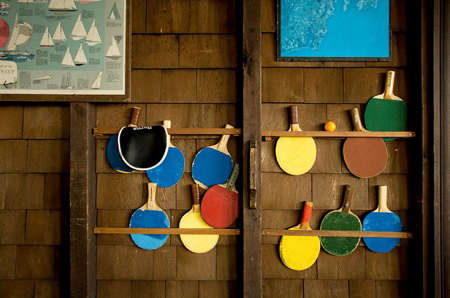
At its core, the ping-pong-paddle solution is a compact storage rack designed to hold paddles by the handle or support them in shallow individual slots. The original charm of the idea lies in its simplicity: a few strips of wood, a handful of nails or pegs, and a hammer can become a tidy, wall-mounted system that solves a surprisingly annoying problem.
The design can be as minimal or as polished as you want. A rustic version might use stained wood strips and evenly spaced pegs. A more refined build could combine painted wood, a backboard, labeled slots, and a small shelf or lip for balls. A family-friendly version might add lower hooks so kids can reach their gear without climbing like tiny, determined raccoons.
Basic Elements of a Good Paddle Storage Setup
- A narrow wall-mounted rack or backboard
- Hooks, dowels, or slots sized to support each paddle cleanly
- Space for ping-pong balls, whether in a bin, tray, or small basket
- A nearby spot for the net, cleaner, or case if you want a full station
- Enough room between items so everything is easy to grab
If you want the storage to feel more built-in, you can combine the rack with floating shelves, a bench below, or a small pegboard panel beside it. That turns one storage fix into a mini activity zone.
Where to Install It
The best location is the one that makes cleanup almost automatic. If people have to hike across the house to put the paddles away, they will not. The rack should live close to the table, but not so close that an enthusiastic backswing turns into accidental interior design.
Best Places for a Ping-Pong-Paddle Rack
Game room: This is the obvious choice. Mount the rack near the table and add a floating shelf above or beside it for balls, score pads, or drink-safe extras.
Basement: Basements often become catch-all recreation spaces, which means they also become clutter magnets. A defined storage station helps the room feel more deliberate and less like a place where furniture goes to retire.
Garage play zone: If the table lives in the garage, wall storage is especially useful. Use sturdy hardware, keep the rack off the floor, and make sure the paddles are not sitting in a damp corner.
Office break room: In workplaces with a ping-pong table, a small rack keeps gear visible, organized, and less likely to vanish into someone’s desk drawer forever.
Small apartment or bonus room: If you have a compact or folding table, pair it with a compact rack so the whole setup feels intentional instead of temporary.
How to Build a Simple DIY Version
You do not need a workshop worthy of a reality show to build this. A basic version is absolutely beginner-friendly.
Materials
- Wood strips or a small wood board for the back panel
- Wooden dowels, pegs, or sturdy nails
- Screws and wall anchors
- Sandpaper
- Paint, stain, or sealant if desired
- Level, measuring tape, and drill
Step-by-Step
- Measure your paddles. Check handle width, overall length, and how much spacing you want between each paddle. Give them breathing room so players are not playing an aggressive game of “remove one without knocking down three.”
- Cut and prep the wood. Sand the board or strips so nothing splinters. If you are painting or staining it, do that before mounting.
- Map out the layout. Mark where each peg, slot, or holder will go. Keep the design symmetrical unless you are deliberately going for artsy chaos.
- Install the supports. Attach dowels, pegs, or nails securely. Make sure each paddle rests neatly without wobbling.
- Mount it on the wall. Use anchors or fasten into studs when possible. If you are using a pegboard variation, leave the proper gap behind it so hooks can function correctly.
- Add extras. A small shelf, cup, or basket for balls makes the whole system much more useful.
If you go the pegboard route, use a sturdy board and mount it properly. Pegboard generally works best with a support gap behind it, which is why furring strips are often recommended. In damp areas, sealing the board can help prevent swelling or warping over time. That may sound dramatic for a few ping-pong paddles, but moisture loves to ruin a perfectly good DIY project.
Design Ideas That Make It Better
The difference between a basic rack and a great one often comes down to thoughtful extras. If you want the storage to feel polished instead of improvised, add one or two of these upgrades.
1. Add Ball Storage
Loose ping-pong balls are chaos in spherical form. Give them a lidded jar, a wire basket, a mounted cup, or a small tray with a lip so they stay put. If your room is family-oriented, clear containers make it easier to see when your ball supply has mysteriously dropped to one lonely survivor.
2. Group Similar Items Together
Keep paddles with balls, the net, cleaner, and maybe a scorekeeper or stopwatch. The more complete the station, the less likely gear gets scattered around the room.
3. Mix Open and Closed Storage
Open storage is great for frequently used items like paddles. Closed storage is better for messy-looking extras such as replacement parts, wipes, batteries, and random game accessories. The combination keeps the room functional without looking busy.
4. Make It Fit the Room
In a modern room, use sleek painted wood, black hooks, and a clean-lined shelf. In a rustic or family basement, stained wood and simple pegs feel right at home. In a kid-friendly space, go bright and playful. Function matters, but style is what makes the system feel like part of the room instead of an afterthought.
How Storage Protects Your Paddles
A lot of people think of paddle storage as pure organization. It is also about basic equipment care. Table tennis brands regularly emphasize that dust, sweat, and grime can affect grip, spin, and control. Cleaning the paddle with a soft cloth and a lightly damp sponge is a common recommendation, and specialty cleaners are designed to help remove buildup and reduce dust. Translation: if you care even a little about how the paddle performs, you should care where it lives between games.
A wall rack helps by keeping paddles off dirty surfaces and away from stacks of heavy objects that can press on the rubber or ding the edges. If you want extra protection, add edge tape or use a padded case for backup storage or transport. Some table tennis storage products even use foam padding, elastic straps, or water-resistant materials because keeping the paddle protected is part of preserving performance.
The best setup is simple: a clean, reachable storage spot for daily use, and a protective case for travel or long-term backup. Your paddle does not need a penthouse. It just needs a better life.
Common Mistakes to Avoid
Making It Too Decorative to Use
If the rack looks beautiful but is awkward to reach, people will stop using it. Storage should be convenient first and pretty second. Ideally, it is both.
Putting It Too Far From the Table
Storage works best when it supports the natural routine of the room. Near the action is good. In another wing of the house is not.
Ignoring Humidity and Dust
A garage or basement can work well, but do not mount the rack where moisture, grime, or temperature swings constantly hit the gear. Clean, dry, and reasonably protected wins every time.
Forgetting the Balls
A paddle rack without ball storage is only half a solution. It is like buying a lovely bookshelf and then leaving all the books in the car.
Underbuilding the Hardware
If you use a pegboard or wall-mounted board, install it properly. Solid fasteners, correct spacing, and good support matter. The goal is “clean and clever,” not “fell off the wall during doubles night.”
Why This Idea Has Real Staying Power
Some storage trends are here for a season and gone by the time you finish assembling them. The ping-pong-paddle solution lasts because it solves a specific problem with almost no wasted motion. It uses vertical space, improves access, protects equipment, and can scale up or down depending on your room. It works in stylish homes, family basements, office lounges, garages, and small apartments. That kind of flexibility is why simple systems outlast gimmicks.
It also has personality. A paddle rack is practical, sure, but it also signals that the room is meant to be used. It says this is a place for fun, for games, for pickup matches, for friendly rivalries, and for somebody loudly insisting that edge balls absolutely count. It turns clutter into a feature and storage into part of the experience.
Experiences With the “Storage: Ping-Pong-Paddle Solution”
One of the most relatable experiences with this kind of storage happens in the family basement. Before the rack goes up, the room usually has the same pattern: paddles on the table, balls under the sofa, a missing net clamp, and at least one person asking, “Did anyone see the good paddle?” Once a simple wall rack is installed, the room changes fast. Cleanup gets easier because the rule becomes obvious. Paddles go here. Balls go there. Suddenly the basement feels less like a holding pen for sports gear and more like an actual recreation room. The funny part is that the rack often ends up improving the whole room, not just the ping-pong setup. People start organizing the board games, folding blankets, and speaker cables too. Order is contagious when it starts in plain sight.
Another common experience comes from small-space living. In an apartment, bonus room, or shared office, there is rarely room for clutter to sprawl. A folding or compact ping-pong table may already be doing double duty, so the storage needs to be just as efficient. That is where the paddle solution shines. Even a tiny rack keeps the setup from looking temporary or chaotic. Instead of feeling like somebody leaned game equipment against a wall and hoped for the best, the room feels planned. Residents often notice that once the paddles are mounted neatly and the balls have a small container, the area feels lighter. There is less visual noise. The room can shift from work mode to game mode and back again without a mess hanging around like an uninvited guest.
In households with kids, the experience is even more dramatic. Children are far more likely to put things away when the storage system is visible, low enough to reach, and simple enough to understand in one glance. A labeled hook or a row of obvious paddle slots beats a drawer every time. Parents often find that a paddle rack becomes a low-conflict system. No one has to lecture, hunt, or nag nearly as much because the destination is clear. The storage itself becomes part of the routine. Play, laugh, argue over the score, then hang the paddles back up. Done.
Then there is the style factor, which people tend to underestimate until the rack is installed. A well-made wood rack with a small shelf or basket can look surprisingly good. It adds warmth, function, and a little character. Guests notice it. They read it as intentional, almost like a tiny custom detail that says, “Yes, we actually use this room.” That may be the best experience of all. The solution does not just hide clutter. It makes the space feel smarter, calmer, and more lived-in in the best possible way.
Conclusion
The ping-pong-paddle solution is one of those rare ideas that is both charming and useful. It does not require a huge budget, a giant room, or a contractor named Chad with seven power tools and strong opinions about trim. It just asks you to use your wall space wisely and give your game gear a proper home. Whether you build a rustic wooden rack, install a sleek shelf-and-hook setup, or create a full mini station with ball storage and accessories, the payoff is the same: a cleaner room, easier access, and a setup that looks intentional instead of accidental. Small fix, big win, fewer lost paddles. That is the kind of storage story everyone can get behind.