Ranking the best Jodie Foster characters is a little like trying to pick the most useful key on a keyboard: sure, some are flashier, but remove the wrong one and the whole machine starts making weird noises. Foster has been acting since childhood, grew into one of Hollywood’s most intelligent dramatic performers, and somehow built a career that includes child-star breakthroughs, Oscar-winning icons, sci-fi philosophers, steely mothers, legal warriors, detectives with emotional frostbite, and the occasional comedy grenade tossed into a dinner party.
The best Jodie Foster characters are not simply “strong women,” which is one of those lazy phrases Hollywood uses when it wants applause but forgot to write a personality. Foster’s greatest roles are sharp, conflicted, guarded, funny in dry little sparks, and often trapped in systems bigger than they are. They survive by thinking. They endure by refusing to blink first. And when they do finally break, the moment usually lands like a chair dropping in a silent room.
Below is a carefully chosen, SEO-friendly, movie-lover-approved look at the most memorable Jodie Foster performances, from Clarice Starling to Liz Danvers, with analysis of why these characters still matter. No tired fan-service ranking herejust character, craft, and a little popcorn on the floor.
Why Jodie Foster Characters Stand Out
Jodie Foster has a rare screen presence: she can make silence feel like dialogue. Her characters often look calm from the outside, but inside they are running a full courtroom, chess match, and emergency weather alert system at once. That is why so many of her roles remain memorable decades later. Foster does not just “play smart.” She shows the burden of being smart in rooms that underestimate you.
Her performances also have emotional restraint. Instead of announcing pain with fireworks, she lets it leak through posture, a pause, or a glance that says, “I have already calculated seventeen ways this could go badly.” That quality makes her characters unusually rewatchable. The more closely you look, the more you notice.
The Best Jodie Foster Characters, Ranked and Remembered
1. Clarice Starling The Silence of the Lambs
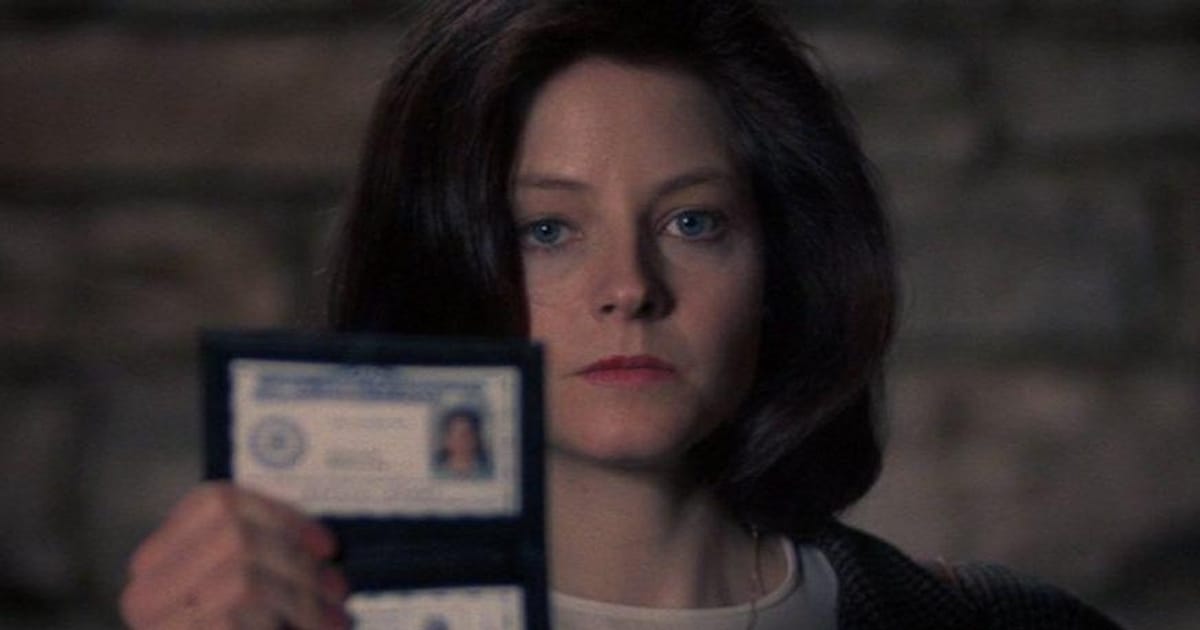
Clarice Starling is not just one of the best Jodie Foster characters; she is one of the most influential screen heroines in modern thriller history. As an FBI trainee sent into a psychological maze, Clarice is surrounded by people who test, dismiss, study, or manipulate her. Yet she keeps moving forward with a steady moral compass and a mind sharp enough to cut glass.
What makes Foster’s Clarice unforgettable is her combination of vulnerability and control. She is not invincible. She is aware of fear, class judgment, sexism, and danger. But she does not let those pressures define her. Foster gives Clarice a quiet Appalachian-rooted dignity, making every interview, every hallway walk, and every confrontation feel like a test of self-possession.
Clarice remains the gold standard because she proves that courage does not always roar. Sometimes it asks the right question, holds eye contact, and refuses to be reduced to a case file.
2. Sarah Tobias The Accused
Sarah Tobias is one of Foster’s most demanding roles, and one of her most powerful. The character is a survivor fighting to be believed in a world eager to judge her before it hears her. Foster avoids turning Sarah into a symbol only. She plays her as messy, angry, funny, wounded, stubborn, and fully human.
That complexity matters. Sarah is not written as a perfect victim, and Foster does not soften her edges to make the audience comfortable. Instead, she asks viewers to recognize dignity even when society tries to make dignity conditional. The role won Foster her first Academy Award for Best Actress, and it still stands as a landmark example of emotionally fearless acting.
3. Iris Steensma Taxi Driver
Foster was still a teenager when she played Iris in Martin Scorsese’s Taxi Driver, yet the performance carries startling confidence. Iris is a young girl trapped in an exploitative adult world, and Foster plays her with a mix of bravado, sadness, and practiced detachment. She seems both older than she should be and painfully young at the same time.
The role could have become a one-note portrait of urban darkness. Instead, Foster gives Iris flashes of humor and personality. She is not merely a reflection of another character’s crisis; she has her own rhythm and contradictions. It remains one of the most remarkable early performances in American film because it showed, almost absurdly early, that Foster was not just a talented child actor. She was already a serious screen presence.
4. Dr. Ellie Arroway Contact
Dr. Ellie Arroway is the Jodie Foster character for anyone who has ever looked at the sky and thought, “There has to be more than traffic and email passwords.” In Contact, Foster plays a scientist searching for extraterrestrial intelligence, but the real story is about faith, evidence, grief, wonder, and the loneliness of being right before anyone believes you.
Ellie works because Foster makes intelligence emotional. Her curiosity is not cold; it is personal. The character’s scientific drive is connected to childhood loss and a deep need for meaning. Foster gives Ellie a rare blend of skepticism and awe, making her one of the most compelling scientists in mainstream cinema. She is rational, but never dull. Frankly, if every physics lecture had this much emotional tension, more people would remember equations.
5. Meg Altman Panic Room
Meg Altman in Panic Room is Foster in survival-thriller mode, and she is spectacularly watchable. As a recently divorced mother protecting her daughter during a home invasion, Meg is frightened but practical. She does not magically become an action superhero; she becomes what real people become under pressurecreative, desperate, and very interested in door locks.
The genius of the performance is physical. Foster turns the house into a battlefield of small decisions. Where to stand, when to breathe, when to move, when to risk everythingMeg’s intelligence is tactical. She is not solving a philosophical question like Ellie Arroway or a criminal puzzle like Clarice Starling. She is trying to keep her child alive through one terrible night. That immediacy makes her one of Foster’s most gripping mainstream characters.
6. Bonnie Stoll Nyad
Bonnie Stoll may not be the loudest character in Foster’s career, but she is one of the warmest and most lived-in. In Nyad, Foster plays the best friend and coach of long-distance swimmer Diana Nyad. The role depends on loyalty, patience, tough love, and the exhausting emotional labor of supporting someone with a dream large enough to require its own weather report.
Foster gives Bonnie humor and grounded realism. She is not there to clap politely from the sidelines. She challenges, comforts, argues, organizes, and keeps the human engine running. It is a beautiful late-career performance because it shows Foster’s generosity as an actor. She can dominate a film when needed, but here she strengthens the story by listening.
7. Liz Danvers True Detective: Night Country
Liz Danvers is Foster’s icy return to prestige television, and “icy” is not just because the story takes place in Alaska. Danvers is prickly, brilliant, impatient, and emotionally sealed off like a freezer full of unresolved issues. She is not designed to be instantly lovable, which is exactly what makes her interesting.
Foster plays Danvers as a woman who has survived by becoming difficult. Her authority is real, but so is her damage. The character fits beautifully into Foster’s larger career pattern: women who think clearly under pressure while carrying private histories they would rather not explain to strangers. Danvers earned Foster major awards attention and introduced her intensity to a new generation of TV viewers who may have arrived for the mystery and stayed for the emotional permafrost.
8. Nell Kellty Nell
Nell is one of Foster’s boldest acting challenges. The character has grown up isolated from society and communicates in a unique speech pattern shaped by her environment. A lesser performance might have leaned into gimmick. Foster instead builds Nell from the inside out, emphasizing innocence, fear, intelligence, and fierce selfhood.
What makes Nell memorable is that the film asks a deceptively simple question: who gets to decide what “normal” means? Foster’s performance pushes against easy answers. Nell is vulnerable, yes, but she is not empty. She has a world, a language, a sense of rhythm, and a right to be understood on her own terms.
9. Rynn Jacobs The Little Girl Who Lives Down the Lane
Rynn Jacobs is one of Foster’s most fascinating early characters: independent, watchful, secretive, and far too composed for someone her age. The film gives her a gothic atmosphere, but Foster gives her psychological weight. Rynn is not a helpless child waiting for rescue. She is a strategist, and every adult who underestimates her is basically walking into a chess game without knowing what chess is.
This role helped establish a recurring Foster theme: young women navigating dangerous adult spaces with intelligence as their primary defense. Rynn may not be as universally famous as Clarice or Ellie, but she is essential to understanding how early Foster developed her signature screen intelligence.
10. Annabel Andrews Freaky Friday
Before the prestige awards and intense thrillers, Foster had a gift for comedy. In Disney’s Freaky Friday, she plays Annabel Andrews, a teenager who swaps bodies with her mother. The premise is high-concept family chaos, but Foster grounds it with timing, attitude, and the universal teenage expression of “adults have no idea what they are doing.”
Annabel deserves a place among the best Jodie Foster characters because she shows Foster’s range. Not every great role needs a courtroom, a serial investigation, or a locked panic room. Sometimes greatness is making a body-swap comedy bounce without letting it float away like a balloon at a mall.
11. Erica Bain The Brave One
Erica Bain is a complicated character in a complicated film. After a traumatic attack changes her life, Erica becomes consumed by fear, grief, and revenge. Foster plays her not as a simple vigilante figure, but as someone whose identity fractures under pressure.
The performance is compelling because Foster understands moral discomfort. Erica’s choices are disturbing, but the acting never asks viewers to cheer blindly. Instead, Foster explores how trauma can distort a person’s relationship with safety and justice. It is not the easiest Jodie Foster character to love, but it is one of the hardest to dismiss.
12. Kyle Pratt Flightplan
Kyle Pratt in Flightplan is another excellent example of Foster weaponizing focus. As a mother whose daughter disappears during a flight, Kyle must battle disbelief, panic, and the terrifying social pressure of being treated as unstable. The airplane setting turns the story into a sealed container of anxiety.
Foster makes Kyle’s desperation feel logical. She does not simply run around shouting; she investigates, calculates, and refuses to accept the convenient answer. It is a classic Foster mode: a woman alone inside a system that would really prefer she sit down and stop asking smart questions.
13. Madeline White Inside Man
Madeline White in Spike Lee’s Inside Man is not Foster’s biggest role, but she steals attention with surgical precision. Madeline is polished, connected, and calmly intimidatingthe kind of fixer who probably has three phones, four secrets, and a lunch reservation that counts as a power move.
Foster clearly enjoys the elegance of the character. Madeline does not raise her voice because she rarely needs to. The performance is all smooth surfaces and hidden levers, proving Foster can be just as magnetic in a supporting role as she is at the center of a film.
14. Nancy Hollander The Mauritanian
Nancy Hollander is a principled defense attorney who works on a politically charged legal case involving Guantánamo Bay. Foster plays her with restraint, intelligence, and a refusal to sentimentalize the work. Nancy is not flashy. She is disciplined. Her power comes from preparation, clarity, and the stubborn belief that legal rights matter most when they are inconvenient.
This is one of Foster’s best later-career characters because it fits her mature screen persona so well. Nancy is sharp without being theatrical, compassionate without being soft, and brave without making a speech every three minutes. In other words, she behaves like an adult in a movie, which is rarer than it should be.
15. Penelope Longstreet Carnage
In Carnage, Foster plays Penelope Longstreet, a civilized parent whose manners slowly lose the will to live. The film is a pressure cooker of social politeness, parental ego, and middle-class hypocrisy. Foster’s Penelope begins with moral certainty and gradually reveals how fragile that certainty can be when trapped in a room with other people’s opinions.
The fun of this character is watching Foster weaponize discomfort. Penelope is articulate, passionate, and increasingly ridiculous, which makes her both painfully recognizable and very funny. It is a reminder that Foster’s dramatic intelligence can translate beautifully into acidic comedy.
What These Characters Say About Jodie Foster’s Career
Looking across the best Jodie Foster characters, a pattern emerges. Foster is drawn to people under pressure: investigators, survivors, mothers, outsiders, professionals, skeptics, and women whose inner lives are much bigger than the rooms they occupy. Her characters often face institutionslaw enforcement, courts, media, science, medicine, politics, or family systemsthat doubt them or demand proof beyond reason.
That is why her work ages well. Foster’s characters rarely feel like fashion trends. They are built around durable human questions: How do you stay sane when nobody believes you? How do you keep your ethics when fear is louder than reason? How do you protect someone without losing yourself? How do you keep searching when the universe, or the legal system, or the guy across the table, seems determined to be unhelpful?
Her best performances also refuse easy glamour. Even when Foster plays someone polished, there is usually a crack in the marble. Clarice is brilliant but not untouchable. Ellie is rational but emotionally haunted. Meg is brave because she has no other option. Bonnie is supportive but not saintly. Liz Danvers is competent and deeply difficult. These contradictions are the point.
Personal Viewing Experience: Why Jodie Foster Characters Stay With You
Watching Jodie Foster’s best characters over time feels different from watching many movie-star performances. Some actors invite you to admire them. Foster often invites you to study them. Her characters do not always explain themselves immediately, which makes the viewing experience more active. You lean in. You watch the corners of the frame. You notice when her jaw tightens, when her voice gets flatter, when a character decides not to reveal what she is feeling because revealing it would cost too much.
That is especially true with Clarice Starling. The first time you watch The Silence of the Lambs, the plot pulls you forward. On a rewatch, Foster’s performance becomes the main event. You notice how Clarice manages rooms full of men who underestimate her. You notice how she keeps professionalism in place like armor. You notice that her courage is not loud, because loud courage would be easier to dismiss. She survives by being precise.
With Contact, the experience is more emotional than expected. A science-fiction movie about signals from space could easily become a parade of equipment and dramatic government meetings. Foster makes Ellie Arroway’s search feel intimate. Her face carries the ache of wanting the universe to answer back. For viewers who love stories about curiosity, Ellie feels like a patron saint of asking one more question after everyone else has gone home.
Then there is Panic Room, which is the kind of movie that turns your couch into a stress device. Meg Altman is not one of Foster’s most awards-heavy characters, but she is one of the easiest to root for in real time. You do not watch Meg and think, “What a beautifully symbolic figure.” You think, “Please find a flashlight, please keep breathing, and please never buy a house with this many architectural problems.” That direct suspense shows how effective Foster can be in a pure genre machine.
Foster’s recent work adds another layer to the experience. Bonnie Stoll in Nyad feels relaxed in a way that many earlier Foster characters do not. Bonnie has humor, patience, and the exasperated affection of someone who knows exactly when to encourage a friend and when to tell that friend to stop being impossible. Liz Danvers, by contrast, feels like classic Foster intensity aged in a barrel of Arctic bitterness. Together, they show an actor still expanding her range rather than simply polishing old trophies.
The best part of revisiting Jodie Foster characters is realizing how little they beg for approval. They are not always nice. They are not always correct. They are not always easy company. But they are alert, specific, and alive. In a film culture that sometimes confuses “iconic” with “loudest poster image,” Foster’s characters remind us that lasting screen power often comes from control, intelligence, and emotional truth. Also, occasionally, from looking at someone like you have already solved the case and are just disappointed they made it this obvious.
Conclusion: The Lasting Power of the Best Jodie Foster Characters
The best Jodie Foster characters endure because they are more than memorable roles; they are portraits of intelligence under pressure. Clarice Starling changed what a thriller heroine could look like. Sarah Tobias gave voice to pain and defiance without sanding down human complexity. Iris announced Foster as a once-in-a-generation young performer. Ellie Arroway made scientific wonder feel personal. Meg Altman turned maternal fear into tactical suspense. Bonnie Stoll and Liz Danvers proved Foster’s later career is not a victory lapit is another chapter.
Jodie Foster’s greatness lies in her ability to make thinking cinematic. She can turn a pause into strategy, a stare into resistance, and a quiet line into the emotional center of a scene. Whether she is chasing truth through a prison interview, a courtroom, a panic room, a frozen town, or the far edge of the cosmos, Foster’s best characters keep asking the questions everyone else is afraid to ask. That is why they remain essentialand why ranking them is both a joy and a mild threat to one’s afternoon schedule.
SEO Tags
Note: This article is written in original standard American English for web publishing and is based on real film, television, and awards information, without inserting source links into the article body.