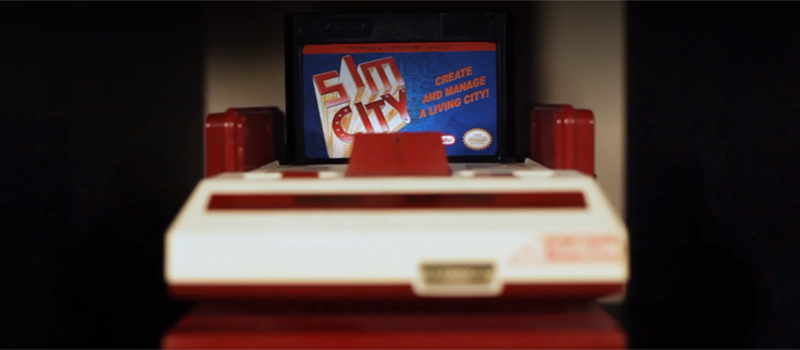
There’s something delightfully weird about the phrase “Manufacturing SimCity for the NES.” On paper, it sounds normal:
take the biggest “just one more hour” PC game of the late ’80s, squeeze it onto a Nintendo Entertainment System cartridge, and ship it.
In reality, it’s the kind of project that turns into a three-ring circuspart software port, part hardware puzzle, part factory pipeline,
and part “how are we going to explain this to the packaging team?”
And then there’s the twist: the NES version of SimCity didn’t properly release in the early ’90s. It became one of those
gaming ghost storiesspotted, whispered about, and then seemingly swallowed by timeuntil preservationists uncovered and documented a prototype
decades later. That means “manufacturing” has two meanings here: how Nintendo-era cartridges were manufactured back then, and how fans and
historians think about physical production now when an unreleased build suddenly exists in the real world.
The SimCity That Almost Shipped
A show-floor glimpse, then… nothing
The NES port of SimCity was shown publicly in the early 1990s (yes, people did in fact see it), which makes its disappearance
more intriguing than a typical “rumored but never real” cancellation. If you were a player back then, you could reasonably assume:
“Cool, SimCity is coming to NES.” And if you were Nintendo, you could reasonably assume: “Cool, we’re about to find out what it costs
to cram city planning into 8-bit memory.”
The prototype resurfacesand the story changes
When a prototype finally emerged years later, it revealed something important: this wasn’t a napkin sketch or a tech demo. The build had
real design decisions, real UI flow, and even a standout soundtrack. In other words, the game had progressed far enough that “manufacturing”
wasn’t just a metaphorit would have been a literal next step if schedules, budgets, and platform strategy had aligned.
That rediscovery also reframed what people mean when they talk about “lost games.” A lost game isn’t always a missing idea; sometimes it’s
a nearly-finished product that never went down the assembly line. And that assembly lineNintendo’s assembly linewas its own beast.
What “Manufacturing” Meant in the NES Era
In the NES days, “manufacturing” wasn’t just printing a label and tossing a download code in a box. The cartridge was the product.
The plastic shell, the printed label, the circuit board, the ROM chips, and any extra hardware (like a mapper for bank switching or a battery
for saves) were all part of the bill of materials. If your game needed more memory or extra features, manufacturing got more expensive fast.
Nintendo also treated cartridge manufacturing as a quality-control lever. The company’s brand depended on consumers believing that NES games
would work reliably, not crash randomly, not fry consoles, and not feel like bargain-bin chaos. That “we are protecting you from jank”
philosophy shaped how games were approved, produced, and distributed.
Inside an NES Cartridge: The Hardware You’re Actually Shipping
PRG, CHR, and why the cartridge is a tiny computer accessory
A typical NES cartridge contains program data (often called PRG ROM) and graphics data (often called CHR ROM), plus a circuit board to connect
everything to the console. Many games also include a “mapper,” which is hardware that lets the console access more data than it could otherwise
address at once. Think of it like a clever memory valet: “You can only park so many bytes here, but I can rotate the garage.”
Mappers weren’t optional for bigger or more complex games. Without them, you’d be stuck in the shallow end of the memory pool, waving at
ambitious ideas like “a city simulation” as they swim by in scuba gear.
Lockout chips, licensing, and the “this game is allowed to exist” handshake
On top of the game data, licensed NES cartridges in certain regions also had authentication hardware tied to Nintendo’s platform control.
That’s not just triviait affects manufacturing, because it affects which boards you can use, which components must be present, and how the
final product behaves when inserted into a console.
Saves: the expensive little promise
If a game saves progress, the cartridge may need additional RAM and, commonly for the era, a battery to keep that memory alive when the power
is off. For a long-form simulation like SimCity, saving isn’t a luxury feature; it’s the difference between “deep game” and
“urban planning speed-dating.”
Why SimCity Is a Manufacturing Challenge (Not Just a Port)
SimCity is deceptively demanding. It looks calmroads, zones, little buildings popping upbut it’s constantly simulating demand,
budgets, services, land value, and citizen behavior. On PCs, you can brute-force some of that with more memory and storage. On the NES,
the hardware is basically saying, “That’s adorable. Now do it with less.”
Memory pressure shows up everywhere
The game needs space for code, data tables, UI graphics, map state, and audio. Every additional featuremore tiles, more menus, more advisor
text, more simulation nuanceeither increases ROM size or forces clever compression and bank switching. And every jump in ROM size can mean a
different board configuration and higher per-unit cost.
The UI has to be controller-native
A mouse-driven game becomes a controller-driven game through UI design, not wishful thinking. The NES version’s interface choices matter to
manufacturing because UI affects memory layout: menus require tiles, icons, fonts, and cursor behavior, and those assets live in ROM like
anything else.
Audio is content, too
One of the most delightful revelations of the preserved prototype is that it included a robust soundtrack that differed heavily from other
versionseven while sharing composer DNA. Music data takes space. Sound effects take space. The more ambitious the audio, the more pressure
on ROM budget and build planning. In manufacturing terms, “nice soundtrack” can quietly translate to “different chip configuration,” which
translates to “different cost spreadsheet,” which translates to “why is the factory asking questions again?”
The Old-School Factory Pipeline: From Gold Master to Store Shelf
1) The gold master (aka “Please stop changing things”)
Before anything physical can be produced at scale, the game build has to be finalized. That “gold master” is the reference version used to
create the manufacturing ROM image. In the cartridge era, late changes were painful: you weren’t pushing a patch; you were redoing production.
The more complex the cart, the more expensive a last-minute change becomes.
2) Mask ROM and board planning (the invisible commitment)
Many classic cartridges used ROM chips whose contents were set during fabricationgreat for mass production, not great for indecision.
You plan your memory map, choose your board layout, validate your mapper logic, and lock it in. If you underestimated space, you don’t just
“optimize later.” You redesign.
3) Assembly and testing (because gravity is real)
Manufacturing is full of unglamorous truths: solder joints fail, connectors oxidize, plastics warp, and a tiny variation in component behavior
can become a “why are returns spiking in Ohio?” problem. So factories test cartridgesoften in batchesbecause the fastest way to lose consumer
trust is to ship a game that doesn’t boot reliably.
4) Shell, label, packaging, logistics (the part everyone remembers)
Once the board is built, it’s sealed in plastic, labeled, boxed, and distributed. This sounds simple until you consider the reality of
production: coordinating print runs, matching regional packaging standards, ensuring manuals are accurate, and syncing shipping schedules with
marketing calendars. “Manufacturing” is a team sport, and the cartridge is only one player.
So Why Didn’t It Happen?
Cancellations are rarely one dramatic reason. They’re usually a stack of practical reasons wearing a trench coat:
platform strategy shifts, schedules slip, costs creep upward, hardware constraints force compromises, and suddenly the SNES version becomes the
better headline. When a project like SimCity is also being shaped for newer hardware, the older platform can lose the internal argument
even if the build is impressive.
And that’s the core manufacturing lesson: a game can be “good enough to show” and still not be “right enough to mass-produce.”
Manufacturing is commitment. It’s spending real money on physical inventory. It’s saying, “We believe this will sell,” loudly enough that
a factory schedules time for it.
The Modern Meaning of “Manufacturing SimCity for the NES”
Once an unreleased prototype becomes publicly known, the conversation changes. Collectors want to understand the cart’s physical makeup.
Preservationists want to document the build responsibly. Retro hardware enthusiasts want a hands-on way to experience historyideally without
risking rare original artifacts.
This is where the idea of “manufacturing” returns in a modern form: not factory-scale, but small-scale physical reproduction for education,
display, and historical curiosity. People discuss things like compatible cartridge boards, mapper behavior, and how the game’s data is arranged
(program vs. character data) because those details explain how the prototype was meant to function in real hardware. The goal, ideally, isn’t
to turn history into a black-market productit’s to keep a fragile piece of software history from disappearing again.
What the NES SimCity Teaches Us About Games as Physical Objects
- Software design and manufacturing cost are intertwined. More features can mean more chips, not just more code.
- Hardware constraints shape creativity. UI decisions, audio ambition, and save systems are all “manufacturing decisions” in disguise.
- Preservation is part archaeology, part engineering. Prototypes don’t just need to be found; they need to be understood.
- “Unreleased” doesn’t mean “unfinished.” Sometimes it means “not worth committing to a production line.”
Extra: Experiences Around Manufacturing SimCity For The NES (A 500-Word Add-On)
The most memorable “experience” people report around the NES SimCity story isn’t a single momentit’s the slow realization that game
history can be physically fragile. At conventions and retro expos, there’s a particular hush that falls over a crowd when someone mentions a
prototype cartridge. Not because it’s magical (okay, a little because it’s magical), but because everyone understands the stakes: a plastic
rectangle can hold a version of a game that effectively doesn’t exist anywhere else. You’re not just looking at a collectible; you’re looking
at a fork in the timeline.
In the preservation community, the experience is often described as equal parts excitement and responsibility. When a long-rumored build shows
up, the first instinct is joyscreenshots! gameplay! confirmation!followed immediately by caution. Hardware can fail. Connectors can corrode.
Data can degrade. Even basic handling becomes deliberate: clean contacts gently, avoid unnecessary insertions, reduce wear, and document
everything. It’s the opposite of the childhood experience where you blew into a cartridge like it owed you rent. (It did not help then, and it
still does not help now, but nostalgia is stubborn.)
Then there’s the “listening experience,” which is oddly emotional for a city-building sim. The prototype’s soundtrack became a focal point for
many fans because it made the project feel alive. A prototype with placeholder audio can sound like a work-in-progress; a prototype with a
distinctive, carefully composed score sounds like something that was meant to ship. People talk about hearing those tracks and suddenly
picturing an alternate 1991 where players are building 8-bit skylines on living room floors while a very Nintendo-flavored soundscape plays in
the background. It’s a reminder that music isn’t garnishit’s part of the product plan.
The hands-on hardware experienceespecially for tinkerersoften turns into a lesson in respect for old manufacturing realities. Even when modern
enthusiasts discuss creating display or educational replicas, the conversation quickly becomes less “cool, let’s do it” and more “wow, there
are a lot of moving parts.” Memory mapping matters. Board compatibility matters. The difference between “boots consistently” and “glitches when
you open a menu” can come down to tiny electrical assumptions that a factory would have validated with testing rigs and QA processes. You come
away appreciating that the cartridge wasn’t just storage; it was a carefully selected hardware configuration.
Finally, there’s the fan experience of comparison. Once you know the NES version existed, you can’t help but compare it to the SNES release and
to the original computer editions. People trade observations like sports stats: interface flow, visual compromises, how information is surfaced,
how the game communicates problems, how much personality fits into limited pixels. That kind of comparison is more than triviait’s a window
into the practical decisions a team would have had to finalize before mass production. The “experience” becomes a way of understanding
manufacturing as a creative constraint: what a game is depends on what a platform can reliably produce.
In the end, “Manufacturing SimCity for the NES” feels like a story about a game that didn’t shipbut it’s really a story about how games
used to be made: as physical artifacts, shaped by hardware, budgets, and factories. And when a prototype resurfaces, it lets modern players
experience that lost industrial realityone cartridge, one careful decision, and one improbable rediscovery at a time.
Conclusion
The NES SimCity prototype is fascinating because it sits right at the intersection of creativity and manufacturing. It shows how a
brilliant idea can be technically feasible, artistically compelling, and still not make the leap into mass production. In the cartridge era,
shipping a game meant locking in hardware decisions, committing to manufacturing schedules, and betting real money on physical inventory.
Today, the story endures because it reminds us that games are not just codethey’re products, pipelines, and artifacts. When preservation
brings a “lost” build back into view, it doesn’t just resurrect gameplay. It resurrects the manufacturing context that defined an entire era of
gaming history.