War movies love tanks, paratroopers, and generals with maps spread dramatically across a table. What they almost never love is plumbing. That is a shame, because in World War II, plumbing helped decide the shape of victory. Not the kind under your kitchen sink, obviously. This was industrial, military, saltwater-soaked plumbing: pipes, pumps, depots, tanker offloads, jerrycans, truck routes, and the vast fuel web that kept the Allied armies moving after D-Day.
If you want the blunt version, here it is: the Allied armies did not just fight their way across France and into Germany. They were pumped, hauled, and dragged there by logistics. The famous undersea fuel system known as PLUTO, short for “Pipe-Lines Under The Ocean,” became one of the cleverest pieces of military engineering of the war. It did not work perfectly at first. It did not carry the entire burden by itself. And no, it did not literally deliver the Western Allies into Berlin, because Soviet forces would ultimately take the city. But it absolutely helped fuel the Western Allied drive into Germany, the smashing of the Ruhr, and the relentless pressure that left the Third Reich gasping for breath. In a campaign defined by speed, fuel was not a side issue. Fuel was the campaign.
The Real Superweapon Was a Full Tank
Modern armies burn through astonishing amounts of fuel, and the Allied armies of 1944 were among the most mechanized forces the world had ever seen. Trucks, tanks, bulldozers, ambulances, half-tracks, fighter-bombers, generators, bridging equipment, and recovery vehicles all ran on petroleum or depended on it. Ammunition matters. Food matters. Spare parts matter. But once an army outruns its fuel, it becomes a very expensive hiking club.
D-Day solved one huge problem by putting Allied soldiers back on the continent. It created another one immediately: how do you keep millions of men and mountains of equipment supplied once they start moving inland? Early on, the answer depended on beaches, temporary harbor facilities, coastal tanker offloads, and whatever port capacity could be repaired fast enough. Cherbourg was captured in late June 1944, but the Germans had wrecked it so thoroughly that reopening it took time. That delay mattered because success in Normandy soon turned into a transportation headache of heroic proportions.
Then came the breakout. On July 25, Operation Cobra punched a hole in the German line, and suddenly the Allies had the kind of “good problem” that can still ruin a campaign: they were moving faster than their supply plan had expected. Pursuit sounds glamorous until you realize every extra mile to the front doubles the misery for the truck carrying the next load of gasoline. The Allied armies were no longer creeping around a fixed beachhead. They were lunging across France. Victory had discovered its appetite.
What “Cross-Channel Plumbing” Actually Meant
PLUTO Was Ingenious, and Also Very Human
PLUTO has the kind of name that sounds half comic book, half bureaucratic memo, which is usually how you know wartime Britain had been thinking hard. The concept was elegant: instead of relying only on vulnerable tanker traffic and overloaded ports, send fuel beneath the English Channel through specially designed pipelines. It sounds obvious now, which is the highest compliment you can pay a difficult idea.
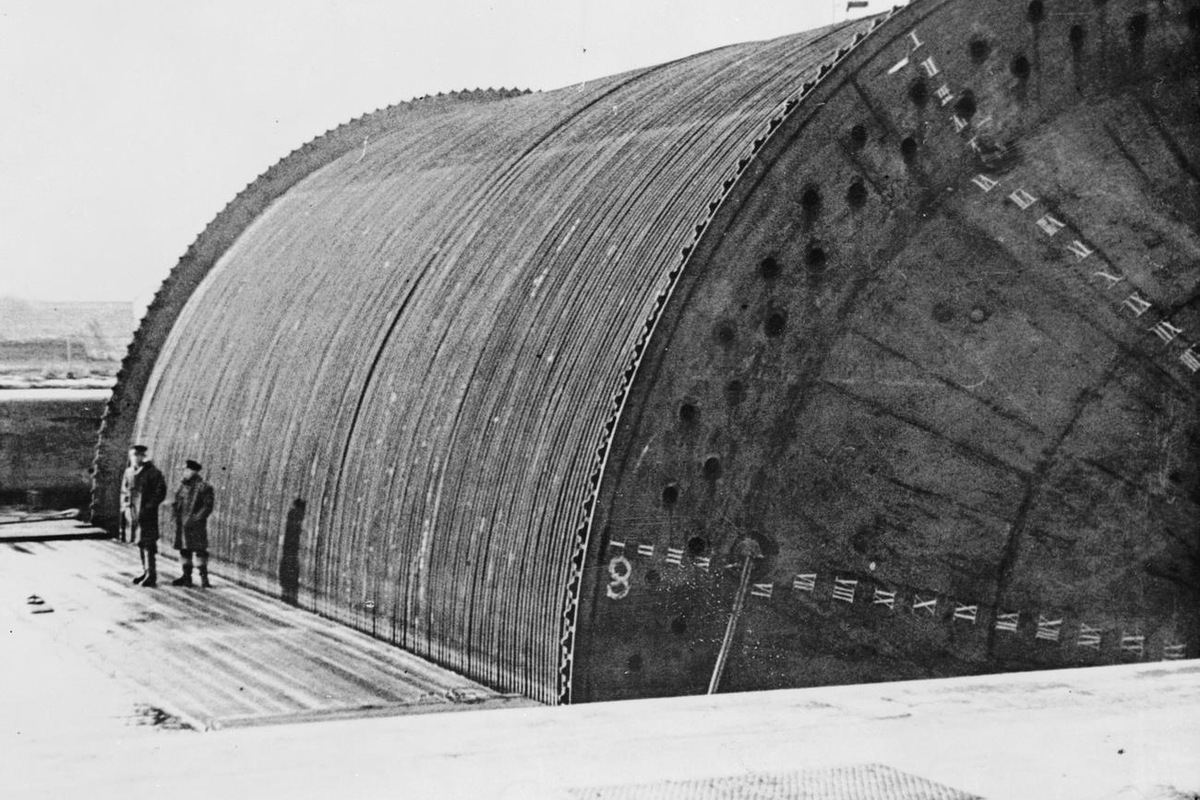
But building it was a devilish challenge. Engineers had to create pipe durable enough for saltwater use, flexible enough to be laid across the Channel, and practical enough to connect with the overland distribution network. Pumping stations on the English side had to feed the system quietly and efficiently. On the far shore, the fuel had to plug into continental depots and inland pipeline extensions. In other words, PLUTO was never just one pipe. It was a whole ecosystem wearing the disguise of a clever acronym.
The first attempts toward Cherbourg were more “bold experiment” than polished triumph. Some lines were damaged, some failed, and the early route never became the miracle hose people sometimes imagine. That matters because the legend of PLUTO can make it sound like one glorious underwater straw solved everything overnight. It did not. Early performance was limited, and other methods, especially tanker deliveries and truck distribution, continued carrying a heavy share of the load.
Where PLUTO truly began to show its muscle was later, when efforts shifted to the shorter Dover-to-Boulogne route. That network proved far more effective. By then, the system could move fuel at a much more serious scale and keep pace with the expanding needs of armies pushing through northwest Europe. In plain English, the plumbing matured. The first version struggled. The later version mattered a lot.
Why the Pipes Mattered Even Though They Were Not Alone
PLUTO’s importance lies partly in what it replaced. Every gallon sent through a pipe was a gallon that did not need one more ship, one more storage transfer, one more desperate truck journey from a distant port. Logistics is often about subtraction. Remove one burden here, and you create room somewhere else. The undersea lines helped free shipping, reduce handling, and support the inland fuel network feeding the armies as they moved east.
That is why “cross-channel plumbing” is the right phrase, even if it sounds delightfully unheroic. This was not one shiny invention operating in a vacuum. It was fuel infrastructure in layers: tankers, shoreline pumping, inland depots, jerricans, road convoys, repaired rail lines, and pipelines. PLUTO did not replace the rest of that machinery. It made the rest of it more survivable, more flexible, and more powerful.
When the Pipeline Met the Highway
The Red Ball Express Was the Sound of Logistics Running Out of Patience
If PLUTO was the hidden artery, the Red Ball Express was the pounding heartbeat. After the breakout from Normandy, the Allies had to deliver supplies over wrecked roads, bombed rail systems, and distances that kept getting more insulting by the day. So they built a nonstop truck network that has since become the stuff of legend, and deservedly so.
By late August 1944, the Red Ball Express was hauling gasoline, ammunition, rations, and equipment toward the front in a priority convoy system that barely paused to breathe. More than 6,000 trucks were involved. On an average day, around 12,000 tons of supplies moved forward. By the time the system wound down in November, it had delivered more than 412,000 tons to advancing Allied forces. That is not a supply line. That is an asphalt avalanche.
And here is the part history took too long to say loudly enough: much of this miracle was driven by African American servicemen. Roughly three-quarters of Red Ball Express drivers were Black soldiers serving in a segregated Army that depended on their labor while denying them equality. Many were very young. Many had little truck-driving experience before the war. Then the Army tossed them into blackout driving, mud, fatigue, breakdowns, speed, and impossible urgency. They delivered anyway.
The Red Ball Express reveals something crucial about PLUTO. Pipelines are wonderful, but pipelines do not drive themselves to the front. Fuel still had to be distributed from receiving points to armies on the move. The great Allied advantage was not one gadget. It was the marriage of systems. Undersea pipelines fed the fuel web. Trucks stretched that web forward. Depots caught the flow. Commanders spent it. Tanks and half-tracks turned it into battlefield motion.
So when people ask whether cross-channel plumbing fueled the Allied march east, the answer is yes, but only because the plumbing had wheels attached. Pipes without trucks would have been clever sculpture. Trucks without fresh fuel would have become roadside monuments to optimism.
Antwerp, the Scheldt, and the Shift From Emergency to Momentum
Why a Port Could Change the War
For all the ingenuity of PLUTO and the heroics of the Red Ball Express, the Allied system still suffered from a cruel basic fact in the fall of 1944: the armies were too far from their main supply bases. Antwerp, one of the great ports of Europe, had been captured intact in early September, but that did not mean it was ready to save the day. The approaches had to be cleared first, and that took time, hard fighting, and more patience than impatient generals tend to enjoy.
Only when Antwerp became operational on November 28, 1944, did the Allies gain the kind of port access that could seriously shorten the supply line to the front. Suddenly, logistics no longer had to lean so heavily on the Normandy beaches and long overland hauls from distant points. Antwerp did not make all problems disappear, because ports still had to be cleared, cargo still had to be moved onward, and German attacks with V-weapons continued to disrupt operations. But it shifted the entire balance.
This is where the story becomes less cinematic and more strategic. In the autumn of 1944, the Western Allies were not really racing straight for Berlin like tourists with bad maps. Their main strategic concern centered on the Ruhr, Germany’s industrial core, and on maintaining a broad-front advance that denied the Germans the chance to concentrate against one narrow thrust. That required continuous supply across a wide geography. The Allies needed not just fuel, but dependable fuel distribution at scale.
From the Rhine to the Elbe
Once the winter crises passed, especially after the Battle of the Bulge burned through Germany’s last great offensive gamble in the West, Allied logistical strength became even more decisive. By March 1945, the Western Allies were poised to cross the Rhine, cut into the Ruhr, and push deeper into the collapsing Reich. That advance did not happen on courage alone, though there was plenty of that. It happened because supply finally matched ambition.
PLUTO fed part of that strength. Antwerp amplified it. Rail and truck systems extended it. Together they gave the Western Allies the operational reach to hit the Rhineland, breach Germany’s defensive belts, and keep moving. The result was not a dramatic single road to Berlin, but something more effective: sustained pressure across a front so broad that Germany could no longer contain it.
By spring 1945, Western Allied armies were driving into the heart of Germany and advancing toward a meeting with the Soviet armies closing on Berlin from the east. That is the right way to understand the title of this story. Cross-channel plumbing helped fuel the march toward Berlin, toward the collapse of Nazi Germany, and toward the final military geometry that ended the war in Europe. It was a march measured in depots, tonnage, pipelines, bridges, and truck mileage as much as in battlefield glory.
Did Cross-Channel Plumbing Fuel the Allied March on Berlin?
Yes, with one giant asterisk shaped like a history textbook.
PLUTO did not single-handedly win the campaign in northwest Europe. It was not the first source of fuel ashore after D-Day, it suffered early setbacks, and it never carried all Allied petroleum by itself. But that is not the standard that matters. The real question is whether it expanded Allied operational endurance at the very moment endurance determined strategy. On that score, the answer is a firm yes.
PLUTO reduced strain on shipping, strengthened the fuel network in France and Belgium, and helped sustain armies whose mechanized appetite was almost comically large. Coupled with truck convoys like the Red Ball Express and later with the opening of Antwerp, it became part of the logistical machine that allowed the Western Allies to keep pressure on Germany from the west while the Soviets closed from the east.
Berlin itself would fall to Soviet assault in late April and early May 1945. History does not budge on that point, and pretending otherwise would be like claiming the moon landing was mostly a ladder story. But the Western Allied advance into Germany, the smashing of the Ruhr, the crossing of the Rhine, and the final linkup on the Elbe were all fueled by the systems that started across the Channel. In other words, the pipes mattered not because they delivered one city, but because they powered a whole strategic collapse.
That may be the least glamorous truth in military history and one of the most important. Armies do not merely advance. They are supplied into motion. The Allied road into Germany was paved with courage, steel, and sacrifice, but it was lubricated by engineering so practical it almost disappears from the story. Almost. Thankfully, not entirely.
500 More Words on the Human Experience Behind the Fuel Story
To really understand this subject, it helps to stop thinking only at map scale. Maps make campaigns look tidy. Red arrows sweep across France. Blue lines push toward the Rhine. A city gets circled, a front bends, and someone in a documentary voice says, “The Allies advanced rapidly.” Very elegant. Very clean. Real experience was neither.
Imagine a truck driver on the Red Ball Express in late 1944. He has been awake too long, the road is blacked out, the weather is miserable, and the truck in front of him is just far enough away to be dangerous but close enough to be necessary. He is hauling fuel, which means a wrong turn is not just embarrassing; it is operationally stupid on a grand scale. He knows the men at the front need what he is carrying. He also knows the engine is temperamental, the road signs are improvised, and the whole operation seems to run on equal parts discipline and nerve. There is no parade at the end of that trip. There is another trip.
Now imagine the engineer or technician behind PLUTO. His war is not foxholes and machine-gun bursts. It is testing, fittings, pumping pressure, shore connections, seabed problems, and the glorious discovery that even genius can be defeated by salt water, mechanical failure, bad luck, or a ship’s anchor dropped in exactly the wrong place. He is fighting the kind of war where success is invisible. If the fuel arrives, nobody throws a dramatic celebration for the coupling that held. But if it fails, the whole army feels it eventually.
Then picture the front-line tanker or mechanized infantryman somewhere farther east. He may never see the Channel. He may never hear the acronym PLUTO. What he experiences is simpler: today there is fuel, so the column moves. The radios stay on. The vehicles start. The bridging unit gets forward. The recovery crew can pull out a wreck. The artillery tractors can reposition. The ambulance can run. A campaign that looks bold in memory often feels mundane in the moment. Can we move? Can we keep moving? That was the daily emotional weather of logistics.
There is another experience here too: frustration. The Allies were winning, but not in the magical, frictionless way later myth sometimes suggests. Ports were delayed. Roads choked. Weather interfered. Supply estimates broke under the strain of unexpectedly rapid success. Commanders argued because logistics forced them to argue. Every grand strategic debate eventually backed into the same ugly garage: who gets the fuel?
That is what makes the story compelling. Cross-channel plumbing was not just a tale of clever engineering. It was a tale of endurance. The endurance of drivers, depot workers, mechanics, port crews, pipeline specialists, railroad troops, and the ordinary soldiers who discovered that victory often arrived disguised as another can of gasoline. The march into Germany was powered by bravery, yes, but also by people whose heroism smelled less like gunpowder and more like diesel, mud, wet canvas, hot engines, and paperwork. History should make room for that smell. It is, after all, the scent of armies that kept going.