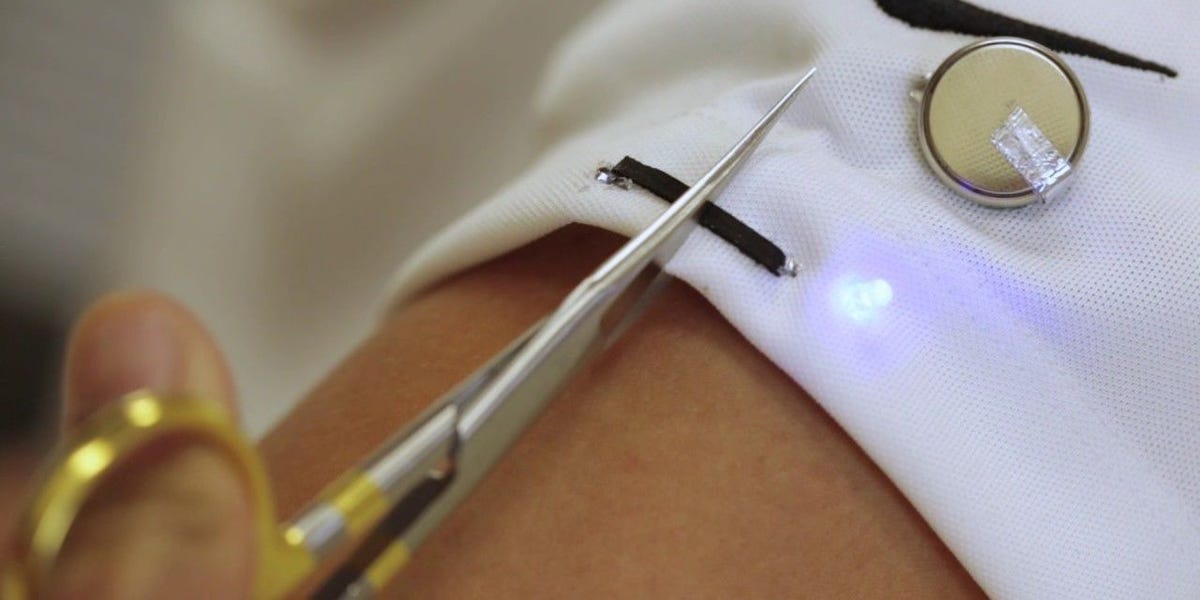
Imagine snapping a battery in two, pressing the broken pieces back together, and watching it return to work like nothing happened. It sounds like a scene from a superhero movie where the battery has better recovery skills than the hero. Yet self-healing battery technology is real, and it is one of the most fascinating directions in energy storage research.
The phrase “break this battery in half and it heals itself” may sound like clickbait with a lab coat, but the science behind it is serious. Researchers have been developing batteries that can repair cracks, restore electrical pathways, survive bending, and even continue operating after physical damage. These self-healing batteries could one day make wearable electronics safer, smartphones longer-lasting, electric vehicles more durable, and medical devices more reliable.
To be clear, this does not mean you should take scissors to your phone battery. Please do not audition for a battery safety disaster. Today’s commercial lithium-ion batteries can be dangerous if punctured, crushed, overheated, or charged incorrectly. The self-healing batteries discussed here are research prototypes and specialized designs, not an invitation to perform kitchen-table science with a power bank and a steak knife.
What Is a Self-Healing Battery?
A self-healing battery is an energy storage device designed to repair some forms of internal or external damage without full replacement. In most cases, the “healing” happens through special materials: stretchable polymers, hydrogels, conductive carbon networks, gel electrolytes, or chemical bonds that can break and reconnect.
Think of it like giving a battery a tiny version of skin. Human skin closes small cuts because biological systems are designed to rebuild themselves. Battery materials, by contrast, are usually stubborn. When they crack, they stay cracked. A self-healing battery changes that by using materials that can reconnect after stress, keeping ions moving and electrons flowing.
That matters because batteries live stressful lives. They charge, discharge, heat up, cool down, swell, shrink, bend, vibrate, and sometimes get dropped by humans who swear they “barely touched it.” Over time, those stresses damage the battery’s internal structure. Once the internal pathways break down, performance drops. The device charges poorly, drains faster, or fails completely.
Why Batteries Break in the First Place
Most rechargeable devices today use lithium-ion batteries. Inside a lithium-ion battery, lithium ions move between two electrodes during charging and discharging. The anode, commonly made with graphite in commercial cells, stores lithium during charging. Researchers have long wanted to use silicon in the anode because silicon can theoretically store far more lithium than graphite.
Here is the catch: silicon behaves a bit like a sponge that gets overly excited. When lithium enters silicon during charging, the silicon can expand dramatically. When the battery discharges, it contracts again. Repeat that cycle hundreds of times, and the material can crack, crumble, and lose electrical contact. It is like inflating and deflating a balloon until the surface starts giving up on life.
This is why self-healing chemistry is so attractive. Instead of trying only to make battery materials rigid and unbreakable, scientists are exploring materials that can flex, absorb stress, and repair damage when cracks appear. A battery that can heal small injuries could last longer and waste fewer resources.
The Stanford Breakthrough: A Battery Electrode That Repairs Itself
One of the best-known breakthroughs came from researchers at Stanford University and the U.S. Department of Energy’s SLAC National Accelerator Laboratory. They developed a self-healing coating for silicon battery electrodes. The idea was elegant: coat silicon particles with a stretchy conductive polymer that holds the electrode together and repairs tiny cracks during battery cycling.
The polymer was not magic. It used weak, reversible chemical bonds that could break and reconnect. When tiny cracks formed, the broken ends were chemically attracted back together. The team also added carbon nanoparticles so the polymer could conduct electricity, because a battery coating that blocks electrical flow is about as useful as a chocolate teapot.
The result was impressive for a lab prototype. Silicon electrodes protected by the self-healing polymer lasted much longer than comparable electrodes without the coating. The researchers reported that cracks could repair within hours and that the coated electrodes maintained useful capacity for many charge-discharge cycles. This did not instantly create a perfect electric vehicle battery, but it showed a practical path toward longer-lasting, high-energy lithium-ion batteries.
Can a Battery Really Heal After Being Broken Apart?
Yes, in certain experimental designs. Researchers have also developed flexible lithium-ion batteries for electronic textiles that can grow back together after being completely broken. In these designs, the magic is not one single material. The electrodes, electrolyte, and supporting layers all need self-healing behavior.
One approach used carbon nanotube sheets, lithium compounds held securely in the electrode layers, a self-healing polymer substrate, and a safer gel electrolyte. After damage, the broken ends could be pressed together for a few seconds. The carbon nanotube network and polymer layers reconnected, allowing the battery to keep functioning without major loss of electrochemical performance.
This matters for wearable technology. A battery sewn into clothing cannot behave like a fragile glass ornament. Smart shirts, medical patches, flexible fitness trackers, and heated garments may bend, twist, fold, and get knocked around. If a wearable battery breaks and leaks flammable or toxic materials, that is not innovation. That is a lawsuit wearing sneakers.
The Newer Wave: Hydrogel Batteries That Survive “Torture Tests”
More recently, researchers have pushed self-healing battery concepts toward stretchable hydrogel systems. Hydrogels are soft, water-containing polymer networks. They can be flexible, tough, and sometimes self-repairing. In battery research, hydrogels can act as electrolytes and separators, helping ions move while also giving the device mechanical resilience.
One newer stretchable lithium-ion battery design used a water-scarce hydrogel electrolyte with a fluorine-free lithium salt. The battery was tested under bending, twisting, puncturing, cutting, heat, and humidity. It remained stable through hundreds of charge-discharge cycles and recovered much of its capacity after physical damage. In plain English: scientists bullied the battery, and the battery said, “Nice try.”
These hydrogel designs are especially interesting because many conventional lithium-ion batteries rely on flammable organic electrolytes and rigid protective packaging. A water-based or gel-based system can improve safety for flexible electronics, though it usually comes with trade-offs. Hydrogel batteries may not yet match the energy density of standard lithium-ion cells used in electric vehicles, but they could be ideal for wearable devices, biosensors, soft robotics, and medical electronics.
How Self-Healing Batteries Work
1. Reversible Chemical Bonds
Many self-healing materials use bonds that can separate and rejoin. Hydrogen bonds, ionic interactions, and other reversible connections allow polymers to repair small breaks. When damaged surfaces touch again, the material can reconnect at the molecular level.
2. Stretchable Conductive Networks
A battery must conduct electricity. Self-healing polymers alone are not enough if the electrical network is broken. Researchers often add carbon nanotubes, carbon black, graphene-like materials, or other conductive particles to maintain pathways for electrons.
3. Flexible or Gel Electrolytes
The electrolyte is the medium that lets ions move. Traditional liquid electrolytes can leak or ignite if the battery is damaged. Gel electrolytes and hydrogels can reduce leakage risk and help the battery survive bending, cutting, or compression.
4. Structural Design
Self-healing is not just about chemistry. Battery architecture matters. Layers must line up correctly after damage. Electrodes need to maintain contact. The separator must prevent short circuits. A good self-healing battery is not one clever ingredient; it is a carefully choreographed team.
Why This Technology Could Change Everyday Devices
The first big benefit is longer battery life. If a battery electrode can repair internal cracks, it may hold capacity for more cycles. That could mean fewer battery replacements, less electronic waste, and devices that remain useful longer.
The second benefit is safety. Batteries in wearables, medical patches, and soft robots may be exposed to bending, impact, and moisture. Self-healing designs with safer electrolytes could reduce the risk of leakage, fire, or sudden failure. Nobody wants a fitness tracker that turns into a wrist-mounted drama queen.
The third benefit is design freedom. Rigid batteries limit product design. Flexible, self-healing batteries could power electronics woven into clothing, attached to skin, placed inside soft robots, or built into unusual shapes. That opens doors for healthcare monitoring, sports performance gear, emergency equipment, and military applications.
Possible Applications of Self-Healing Battery Technology
Wearable Electronics
Smartwatches and fitness bands are only the beginning. Future wearables may include smart shirts that track breathing, patches that monitor glucose, compression sleeves that measure muscle activity, and jackets with built-in heating. These products need batteries that can bend and survive daily abuse.
Medical Devices
Medical sensors must be reliable, comfortable, and safe. A flexible self-healing battery could help power skin-mounted monitors or implant-adjacent devices where stiffness and failure risk are major concerns.
Soft Robotics
Soft robots are built from flexible materials, often inspired by animals. A rigid battery can limit movement. Self-healing energy storage could allow robots to crawl, squeeze, stretch, and recover from minor damage.
Electric Vehicles
For EVs, the self-healing idea is more likely to appear first inside electrode materials than as a battery pack that physically repairs after a crash. Silicon anodes with self-healing binders or coatings could eventually help increase energy density and extend cycle life. That means longer range, slower degradation, and less battery waste.
Space and Extreme Environments
In space, underwater robotics, disaster response, and remote sensors, replacing a battery is expensive or impossible. A battery that tolerates mechanical stress and repairs small damage could be extremely valuable in environments where maintenance crews are not exactly around the corner.
The Big Limitations Nobody Should Ignore
Self-healing batteries are promising, but they are not miracle boxes. Many remain in the research or prototype stage. Scaling them for mass production is difficult. Materials must be affordable, stable, safe, and compatible with existing manufacturing processes.
Energy density is another challenge. Some hydrogel or aqueous battery designs are safer and more flexible, but they may store less energy than conventional lithium-ion batteries. That is acceptable for a biosensor or smart patch, but not for a long-range electric truck that needs serious power.
Healing also has limits. A self-healing battery may repair small cracks, cuts, or broken contact points, but it cannot magically recover from every disaster. Severe crushing, thermal runaway, contamination, or major short circuits can still destroy a battery. Even Wolverine had bad days.
What Makes This Field So Exciting?
The exciting part is that self-healing batteries rethink durability. Instead of asking, “How do we make a battery that never gets damaged?” researchers ask, “How do we make a battery that can survive damage intelligently?” That shift mirrors nature. Trees seal wounds. Skin repairs cuts. Bones remodel after stress. Materials science is learning to borrow those tricks.
This could lead to batteries that are safer, more sustainable, and better matched to the flexible electronics of the future. As devices move from pockets to wrists, clothing, medical patches, robots, and vehicles, batteries must evolve from rigid bricks into smarter, tougher, more adaptive systems.
Real-World Experience: What Self-Healing Batteries Teach Us About Better Technology
Anyone who has owned a phone for more than two years knows the quiet sadness of battery decline. At first, the phone lasts all day. Then one afternoon it drops from 38 percent to 12 percent like it just remembered an appointment. Eventually, you carry a charger everywhere and pretend this is normal adult behavior.
The idea of a self-healing battery feels exciting because it addresses a frustration people already understand: batteries age faster than we want them to. We replace phones not always because the screen is bad or the processor is useless, but because the battery no longer keeps up. A longer-lasting battery could change how often we upgrade devices, how much electronic waste we create, and how much money we spend replacing gadgets that still work perfectly well except for the tiny power plant inside.
Wearable devices make the issue even more personal. A smartwatch, fitness tracker, or medical patch moves with the body. It bends when you bend, gets bumped on doorframes, deals with sweat, and occasionally takes a surprise trip through the laundry because someone forgot to check a pocket. A rigid battery inside a flexible product is like wearing dress shoes to a trampoline park. It may technically work, but it is not built for the moment.
Self-healing battery research suggests a better design philosophy. Instead of building every device around the limitations of fragile power sources, future engineers could build power sources around real human behavior. People drop things. Clothing stretches. Kids step on devices. Pets chew objects they absolutely should not chew. A battery that can tolerate stress without failing dangerously would make everyday electronics more forgiving.
There is also an environmental lesson here. A battery that lasts longer can reduce waste. If self-healing electrodes help lithium-ion cells keep more capacity over more cycles, products could stay useful for longer. That matters because battery production requires mining, refining, transportation, manufacturing, and recycling systems that all carry environmental costs. The greenest gadget is often the one you do not need to replace yet.
For consumers, the best near-term expectation is not a commercial battery you can cut in half for fun. The more realistic future is quieter and more practical: phones that degrade more slowly, medical sensors that are safer to wear, flexible electronics that survive daily movement, and EV batteries that maintain performance for longer. The technology may arrive not as a dramatic “healing battery” label on a box, but as better durability hidden inside products.
That is often how real innovation works. The headline sounds wild: break this battery in half and it heals itself. The deeper story is even better: scientists are learning how to make energy storage behave less like brittle machinery and more like living tissue. If that future arrives, our devices may become tougher, safer, and a little less dramatic about low battery warnings.
Conclusion
Self-healing battery technology is one of the most intriguing frontiers in modern energy storage. From Stanford’s self-healing silicon electrodes to flexible batteries that reconnect after breaking and hydrogel batteries that survive cutting, twisting, and puncturing, the field is moving toward power sources that can handle real-world abuse.
The technology is not ready to replace every battery in every device tomorrow. Challenges remain in energy density, cost, manufacturing, and long-term safety testing. Still, the direction is powerful. Batteries are no longer being designed only to store more energy; they are being designed to endure, adapt, and recover. That could make the next generation of electronics more reliable, sustainable, and surprisingly resilient.