Seafood looks wonderfully peaceful once it reaches a dinner plate. The salmon sits politely beside the asparagus. The scallops behave themselves in a pool of butter. Even a lobster, after spending its life dressed like an armored knight, arrives looking surprisingly cooperative.
Out at sea, however, the story can be considerably less civilized.
For centuries, valuable fisheries have inspired piracy, arrests, naval deployments, diplomatic retaliation, economic sanctions and court cases complicated enough to make a maritime lawyer order a double espresso. Some confrontations were formally described as wars. Others received colorful nicknames from journalists, fishermen or politicians. Nearly all grew from the same combustible ingredients: shrinking fish stocks, disputed maritime boundaries, unequal regulations and communities whose incomes depended on getting to the catch first.
The following seafood conflicts demonstrate that control of marine resources can become a matter of national sovereignty, cultural survival and economic security. Nobody officially declared war on dinner, but history occasionally came close.
Why Fishing Rights Produce Such Serious Maritime Disputes
Wild fish do not carry passports. Salmon cross borders while migrating, mackerel follow changing water temperatures and shellfish remain inconveniently attached to seabeds claimed by competing governments. A nation may protect a nursery area only to watch another country’s fleet harvest the adult fish farther along their route.
Commercial fisheries also support much more than boats. They sustain processors, ports, restaurants, exporters, equipment suppliers and coastal towns. When access disappears, the economic damage can spread rapidly. Add an unclear boundary or an outdated treaty, and a disagreement over fishing rights can become a national insult before lunch.
That is how seafood conflicts begin: one side sees conservation, another sees exclusion, and both insist the other has stolen the last good seat at the ocean’s buffet.
1. The Chesapeake Oyster Wars
When oyster pirates met armed patrol boats
During the nineteenth century, oysters were one of the Chesapeake Bay’s greatest commercial resources. Expanding markets encouraged enormous harvests, but legal restrictions differed between Maryland and Virginia. Poachers crossed jurisdictional lines, dredged protected beds and sometimes worked at night to avoid enforcement.
Authorities responded with armed patrol vessels, particularly Maryland’s so-called Oyster Navy. Encounters included chases, gunfire and occasional deaths. Enforcement officers were not pursuing glamorous Caribbean pirates with parrots and treasure maps. They were chasing exhausted watermen carrying dredges and a highly valuable cargo of shellfish.
The violence reflected a classic common-resource problem. Each crew benefited by taking oysters immediately, while the cost of depleted reefs was shared by everyone. Regulations gradually improved, but overharvesting and disease eventually reduced the oyster population far more effectively than any patrol cannon could.
2. The Lobster War Between Brazil and France
The international crisis that asked whether lobsters swim
From 1961 to 1963, Brazil and France argued over French vessels catching spiny lobsters off northeastern Brazil. Brazil maintained that lobsters moved along its continental shelf and therefore belonged to Brazilian marine resources. France argued that the animals could swim and should be treated like fish available in open waters.
This produced one of history’s finest examples of zoology becoming foreign policy. A Brazilian naval officer reportedly mocked the French position by suggesting that if a lobster counted as a fish because it jumped, a kangaroo might qualify as a bird.
The humor did not make the confrontation harmless. Brazil deployed naval vessels and maritime aircraft, while France sent a warship to protect its fishing interests. Both governments prepared for escalation before diplomacy prevailed. French boats eventually withdrew, and a later agreement allowed limited fishing under negotiated conditions.
No major battle occurred, but the Lobster War showed how a technical debate about animal movement could summon actual military hardware.
3. The Cod Wars Between Iceland and Britain
A small country uses fishing limits as a strategic weapon
The Cod Wars were three confrontations between Iceland and the United Kingdom from the late 1950s through 1976. Iceland progressively expanded its protected fishing zone to 12, 50 and finally 200 nautical miles. Britain resisted because its distant-water fleet depended heavily on productive grounds around Iceland.
These were undeclared wars, but they were not merely sternly worded letters. British warships escorted trawlers. Icelandic Coast Guard vessels cut fishing lines and nets. Ships rammed one another, warning shots were fired and crews operated in dangerous North Atlantic conditions.
Iceland possessed fewer vessels but held considerable strategic leverage. Its location mattered to NATO during the Cold War, and Iceland threatened to reconsider defense cooperation if its fisheries claims were ignored. Britain ultimately recognized the 200-mile limit.
Iceland won control of its fishing grounds, while British ports such as Hull and Grimsby suffered severe economic losses. The conflict helped demonstrate why exclusive economic zones would become central to modern maritime law.
4. The Pacific Northwest Fish Wars
Tribal treaty rights versus state enforcement
In the Pacific Northwest, the Fish Wars were a civil rights struggle rather than a conflict between foreign governments. Treaties signed during the 1850s preserved the rights of Native nations to fish in their traditional locations. Washington State nevertheless imposed restrictions that tribal communities argued violated those agreements.
Beginning especially in the 1960s, Native fishermen staged fish-ins modeled partly on other civil rights protests. Participants deliberately fished in traditional waters, faced arrests and endured confrontations with state officers. Nisqually activist Billy Frank Jr. was arrested dozens of times while asserting treaty-protected rights.
The dispute reached a turning point in the 1974 Boldt decision. A federal court ruled that treaty tribes were entitled to a substantial share of harvestable fish and recognized them as important fisheries-management partners.
The case was about salmon, but also sovereignty, cultural identity and whether promises made by the United States would actually be honored when valuable natural resources were involved.
5. Canada’s Turbot War With Spain
Warning shots and a captured trawler on the Grand Banks
By the early 1990s, the collapse of Atlantic cod had devastated Newfoundland’s fishing economy. Canada feared that heavy foreign fishing for Greenland halibut, commonly called turbot, would create another ecological and economic disaster.
In March 1995, Canadian authorities pursued and seized the Spanish trawler Estai beyond Canada’s 200-mile exclusive economic zone. A Canadian patrol vessel fired warning shots, and officers later displayed fishing gear they said demonstrated violations. Spain and the European Union condemned the action, while Canada argued that extraordinary enforcement was necessary to protect a migrating stock.
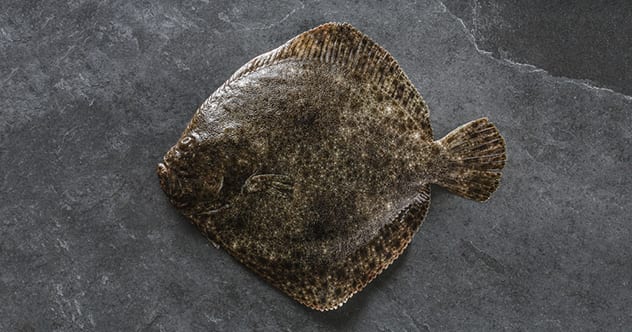
Canadian naval and coast guard vessels supported enforcement operations as Spanish ships gathered in the region. For several tense weeks, a flatfish managed to make NATO allies behave like neighbors arguing over a fenceexcept the fence was invisible and the neighbors had warships.
A negotiated settlement strengthened monitoring and conservation measures, although arguments about jurisdiction and fisheries management continued.
6. The Pacific Salmon War
When migrating fish strained U.S.-Canadian relations
The United States and Canada signed the Pacific Salmon Treaty to manage fish that hatch in one country, travel through another country’s waters and return home to spawn. This arrangement sounds reasonable until millions of dollars begin swimming past somebody else’s nets.
During the 1990s, negotiations repeatedly broke down over interceptions, conservation responsibilities and the distribution of catches among Alaska, British Columbia, Washington, Oregon and tribal fisheries. Canada introduced aggressive fishing policies and challenged American access through coastal passages. Fishermen protested on both sides.
Tensions peaked in 1997 when a large group of Canadian fishing boats surrounded the Alaska state ferry Malaspina in Prince Rupert. The ferry and its passengers remained trapped for three days as fishermen demanded action over American salmon catches.
A revised arrangement was reached near the end of the decade. The episode proved that migratory species can turn a shared resource into a traveling argument, with each nation convinced the other is collecting the benefits while exporting the conservation bill.
7. The North Atlantic Mackerel War
Climate-driven migration rearranges the negotiating table
Around 2010, greater numbers of Atlantic mackerel appeared in waters around Iceland and the Faroe Islands. Those governments argued that the stock’s changing distribution justified larger national quotas. The European Union, Norway and established fishing interests accused them of claiming an excessive share.
Iceland’s annual quota rose dramatically, while Faroese catches also expanded. Negotiations failed repeatedly, sustainability certifications were affected and the European Union considered or imposed trade and port restrictions. The Faroe Islands challenged European measures through international legal channels.
The Mackerel War illustrates a growing problem in fisheries management. Agreements are often based on where fish lived in the past, but warming seas can move populations across political boundaries. A quota formula that once appeared fair may become commercially intolerable when the fish relocate.
The mackerel did not attend negotiations or explain their travel plans. They simply followed suitable conditions and left governments to fight over the forwarding address.
8. The Anglo-French Scallop War
Ramming, projectiles and different harvesting calendars
British and French fishermen have repeatedly clashed over scallop beds in the English Channel, particularly near Normandy. French regulations restricted when domestic boats could harvest scallops, helping protect stocks during part of the year. British vessels operating legally outside French territorial waters were not always bound by the same seasonal rules.
French fishermen viewed year-round British harvesting as unfair and environmentally damaging. British crews argued that they were following the applicable law. Confrontations occurred in 2012 and erupted dramatically again in 2018.
Dozens of vessels surrounded rival boats. Crews reported collisions, thrown objects, smoke devices and other dangerous tactics. Government ministers discussed deploying additional patrol resources, while industry representatives attempted to negotiate limits.
The conflict was essentially caused by regulatory mismatch. Both sides could claim to be defending responsible fishermen, yet the rules gave them different opening dates for the same underwater pantry. When one fleet arrived early, the other treated it less like competition and more like burglary.
9. The Svalbard Snow Crab Dispute
A crab case with consequences for Arctic oil and minerals
Snow crab fishing around Norway’s Svalbard archipelago developed into a larger dispute between Norway and the European Union. The 1920 Svalbard Treaty recognized Norwegian sovereignty while granting treaty parties equal access to certain commercial activities. The disagreement centered on whether those rights extended to the continental shelf beyond the islands’ territorial waters.
The European Union issued snow crab permits to vessels from member states. Norway rejected those permits and arrested the Latvian vessel Senator in 2017 for fishing without Norwegian authorization.
Legal arguments examined whether snow crabs were sedentary resources associated with the continental shelf. In other words, lawyers once again found themselves debating how crustaceans move, proving that the Lobster War had not exhausted the world’s supply of shellfish philosophy.
Norway’s Supreme Court ultimately ruled that the Latvian company did not possess the claimed fishing right. The judgment mattered beyond seafood because the interpretation of continental-shelf rights could also influence future access to Arctic oil, gas and minerals.
10. The Yellow Sea Fishing Clashes
Blue crab, illegal fishing and deadly enforcement encounters
Disputes involving Chinese fishing vessels and the South Korean Coast Guard have produced some of the most violent modern confrontations over marine resources. Valuable catches include blue crab, croaker and other species found in the Yellow Sea, where depleted stocks and complicated maritime boundaries intensify competition.
South Korean authorities have accused large numbers of Chinese boats of entering restricted waters or operating illegally. Some crews have resisted boarding with metal bars, knives or other weapons. A South Korean officer was fatally stabbed during a 2011 enforcement operation. In 2016, three Chinese fishermen died after a fire broke out during another attempted seizure.
South Korea subsequently authorized stronger enforcement measures, including the use of firearms in dangerous circumstances. Coast guard vessels have fired large numbers of warning shots during encounters with groups of fishing boats.
This continuing conflict is more than a law-enforcement problem. It combines seafood scarcity, national jurisdiction and broader tensions involving China, South Korea and the heavily militarized waters near North Korea.
What These Seafood Conflicts Have in Common
The ten cases vary enormously, but several patterns appear again and again. Fisheries become dangerous when the resource is mobile, the legal boundary is uncertain and the economic stakes are concentrated in vulnerable coastal communities.
Overfishing also makes every disagreement worse. When stocks are abundant, governments can compromise without appearing to surrender. When catches decline, one vessel’s profit looks like another community’s unemployment. Conservation rules then become inseparable from questions of fairness: Who reduced fishing first? Who caused the decline? Who receives the remaining quota?
Strong institutions can prevent competitive fishing from becoming a race to the bottom. Shared scientific assessments, transparent catch records, enforceable quotas and credible dispute-resolution systems are less theatrical than gunboats, but considerably better at keeping both fish and fishermen alive.
Experiences That Change How You See Seafood Conflicts
Studying these disputes changes the experience of looking at an ordinary seafood counter. Labels such as “Atlantic cod,” “Pacific salmon” or “snow crab” begin to resemble miniature maps. Behind each name is a migration route, a fishing community, a management system and sometimes a disagreement that has occupied diplomats for decades.
One of the most useful experiences is comparing the political map with the ecological one. Political maps contain straight lines, exclusive economic zones and neatly colored territories. Fish maps are untidy. Salmon cross international borders twice during a single life cycle. Mackerel shift their range as ocean temperatures change. Scallops remain on one seabed while different fleets approach from different legal systems. The exercise makes one lesson immediately clear: nature has not agreed to respect human cartography.
Visiting a working harbor can make the economic stakes more understandable. A commercial fishing boat represents fuel payments, maintenance bills, crew wages, permits and loans. The catch supports auctions, trucking companies, processing plants and local restaurants. A quota reduction that looks modest in a policy document may determine whether a family business survives another season. This does not justify illegal fishing, but it explains why negotiations can become emotionally explosive.
Another revealing experience is reading each conflict from both sides. Icelandic accounts of the Cod Wars emphasize survival, sovereignty and conservation. British accounts remember the destruction of distant-water fishing communities. Canadian descriptions of the Turbot War celebrate protection of a threatened resource, while European critics focus on enforcement beyond Canada’s recognized economic zone. The facts do not become meaningless simply because perspectives differ. Instead, the comparison exposes which facts each side considers morally important.
Seafood purchasing can also become more thoughtful after examining these cases. Sustainability is not only about whether a species is currently abundant. It includes the quality of monitoring, respect for fishing rights, the treatment of crews and the ability of governments to prevent illegal catches from entering supply chains. Certification labels and traceability programs are imperfect, but they give consumers more information than a handwritten sign reading “fresh,” a word that has done heroic amounts of marketing work with very little supervision.
Finally, these conflicts offer an experience in humility. Many were fueled by certainty: certainty that a stock belonged to one country, that a fleet’s traditional access should never change or that the ocean would continue producing at historical levels. Marine ecosystems rarely reward that confidence. Stocks collapse, migration routes shift and old agreements become unsuitable.
The practical lesson is not that people should stop eating seafood. It is that every plate depends on cooperation taking place far beyond the restaurant. Scientists must estimate stocks, governments must negotiate access, officers must enforce rules and fishermen must accept limits even when another boat appears to be receiving a better deal. Seafood may be served locally, but managing it is an international experience.
Conclusion
The world’s seafood conflicts reveal how quickly a meal can become a matter of sovereignty. Oysters inspired armed patrols. Lobsters triggered naval mobilization. Cod strained relations between NATO allies. Salmon produced arrests and blockades, while scallops encouraged fishermen to turn working boats into improvised battering rams.
Beneath the memorable names lies a serious warning. Marine resources can renew themselves only when harvesting remains within ecological limits. Without trusted science and fair cooperation, fishing nations are tempted to seize as much as possible before someone else does. That strategy may win a season, but it can destroy the fishery everyone was fighting to control.
Editorial note: The word “war” is used here in its established historical or journalistic sense. Several cases were armed confrontations, legal struggles or prolonged diplomatic disputes rather than formally declared wars.